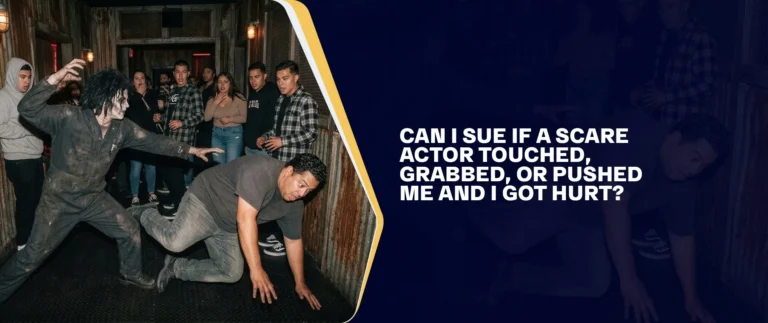
TL;DR: Yes. California law may allow injured haunted house visitors to seek compensation when unsafe premises, defective equipment, or staff misconduct causes harm. However, injuries resulting solely from ordinary scares may not support a claim. Liability waivers can also affect recovery, but they do not protect operators against every form of negligence or misconduct.
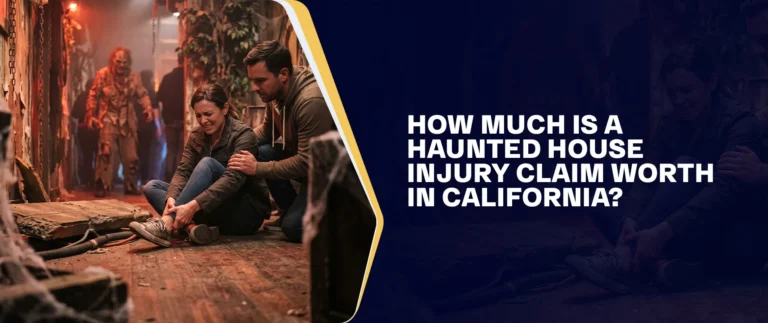
Yes, you can sue a haunted house in California if the operator’s negligence caused your injury. However, operators are not necessarily liable for injuries arising from risks inherent in the attraction. A broken handrail, a slippery floor caused by a leaking fog machine, or a blocked emergency exit may present a preventable hazard that supports a claim.
Signing a liability waiver does not automatically bar a claim, although an enforceable waiver may limit your ability to recover compensation. Whether you have a valid claim depends on what caused your injury, the operator’s conduct, and the applicable legal defenses.
Key Facts About Haunted House Injury Claims in California
- Duty of Care: California Civil Code § 1714 establishes a general duty of reasonable care, subject to limitations such as primary assumption of risk.
- Assumption of Risk: Under Griffin v. The Haunted Hotel, Inc. (2015), operators generally have no duty to eliminate inherent risks but must not unreasonably increase them.
- Liability Waivers: California Civil Code § 1668 and applicable case law limit releases involving gross negligence or willful misconduct.
- Comparative Fault: When comparative negligence applies, a visitor’s share of responsibility generally reduces their recovery proportionally.
- Fire and Ride Safety: Applicable regulations may govern exits, occupancy, emergency systems, and qualifying amusement rides.
- Filing Deadlines: Most personal injury lawsuits have a two-year deadline. Government claims may require action within six months.
Table of Contents

When Is a Haunted House Liable for Injuries in California?
A California haunted house may be liable when an operator or another responsible party breaches an applicable legal duty and causes an injury. The duty depends on whether the injury resulted from an inherent part of the attraction or a separate, preventable danger.
Under California Civil Code § 1714, private property owners and operators generally must exercise reasonable care in maintaining their premises. However, they are not required to eliminate every risk associated with frightening visitors.
For a premises liability claim involving a dangerous property condition, you generally must establish that:
- A dangerous condition existed on the property.
- The responsible party knew or reasonably should have known about the condition, when notice is required for the particular claim.
- The responsible party failed to address the unsafe condition or provide guests with an adequate warning.
- The dangerous condition was a substantial factor in causing your injury, and you suffered compensable harm.
Examples of potentially actionable hazards include:
- Broken stair treads or handrails.
- Slippery walking surfaces caused by spills or leaking equipment.
- Exposed electrical cords across guest pathways.
- Unsafe props or structures that collapse onto visitors.
- Blocked emergency exits or overcrowded corridors.
Applicable building and fire safety regulations may provide evidence of negligence. If an attraction includes a qualifying mechanical ride, the California Department of Industrial Relations (DIR) Amusement Ride and Tramway (ART) Unit may have relevant inspection or incident records.
Not every haunted house injury involves a defective property condition. Injuries caused by negligent crowd management, improper equipment operation, or a performer’s wrongful actions may involve other negligence or intentional-tort claims. Premises liability attorneys can evaluate how the injury occurred, identify potentially responsible parties, and determine what evidence may support a claim.
Can You Sue a City or Other Public Entity That Operated the Haunted House?
Yes, potentially. However, government liability follows different rules, and holding an attraction on public property does not automatically make the government responsible.
For claims involving a dangerous condition of public property, California Government Code § 835 generally requires proof that:
- The public property was in a dangerous condition when the injury occurred.
- The condition caused the injury and created a reasonably foreseeable risk of that type of harm.
- A public employee’s negligent or wrongful conduct within the scope of employment created the condition, or the public entity had actual or constructive notice of it for a sufficient period to take protective measures.
Public entity liability must rest on an applicable statute. If an attraction operated at a city park or public school, determining who controlled the event and the hazardous condition is essential.
Do Waivers and Assumption of Risk Prevent You from Suing?
Not always. Signing a liability waiver or accepting the inherent risks of a haunted house does not automatically bar an injury claim. However, either defense may limit or prevent recovery, depending on the circumstances of the haunted house accident.
Assumption of Risk
California’s assumption-of-risk doctrine generally protects haunted house operators from liability for injuries caused by risks inherent in the attraction. These may include:
- Sudden scares
- Frightening actors
- Loud noises
- Visitors running in fear
However, operators still have a duty not to increase those risks unreasonably (Knight v. Jewett (1992) 3 Cal.4th 296; Nalwa v. Cedar Fair, L.P. (2012) 55 Cal.4th 1148).
In Griffin v. The Haunted Hotel, Inc. (2015) 242 Cal.App.4th 490, a visitor at a San Diego haunted attraction ran from an actor carrying a chainsaw with its chain removed and fell, suffering injuries. The California Court of Appeal ruled in favor of the operator, finding that the visitor’s reaction was an inherent risk of the attraction and that the operator had not unreasonably increased that risk.
However, assumption of risk does not necessarily protect operators when a separate unsafe condition causes an injury. For example, a visitor who trips over a broken stair or slips on a hazardous floor may have grounds for a negligence claim, depending on the circumstances.
Liability Waivers
An enforceable waiver may protect an operator against ordinary negligence claims. However, California law limits releases involving gross negligence or willful misconduct.
Under City of Santa Barbara v. Superior Court (2007) 41 Cal.4th 747, a release cannot generally excuse future gross negligence in a recreational setting.
Gross negligence involves an extreme departure from reasonable care. Repeatedly ignoring warnings about a severely damaged stairway may support such a claim, depending on the evidence.
A waiver’s enforceability depends on its wording, the covered risks, and the conduct causing the injury.
Who Can Be Held Liable for a Haunted House Injury?
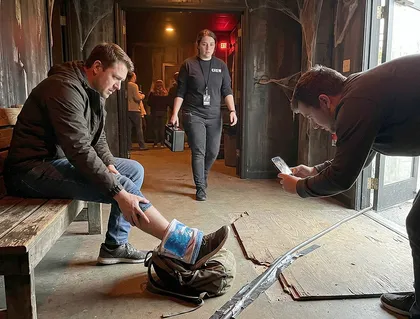
Depending on the circumstances, several parties may share responsibility. Determining who is responsible if a haunted house prop injures a guest may require examining who installed, maintained, or controlled it.
Potentially liable parties include:
- Property Owners: May be liable for dangerous conditions on property they own or control, depending on their duties, knowledge, and involvement.
- Event Operators: May be responsible for negligent attraction design, maintenance, crowd management, or other unsafe operational practices.
- Independent Contractors: Security providers, equipment operators, prop installers, and maintenance contractors may be liable for hazards arising from their work.
- Prop Manufacturers: May face product liability claims if a defective prop causes an injury. Depending on the circumstances, manufacturing defects, design defects, or inadequate safety warnings may support a claim.
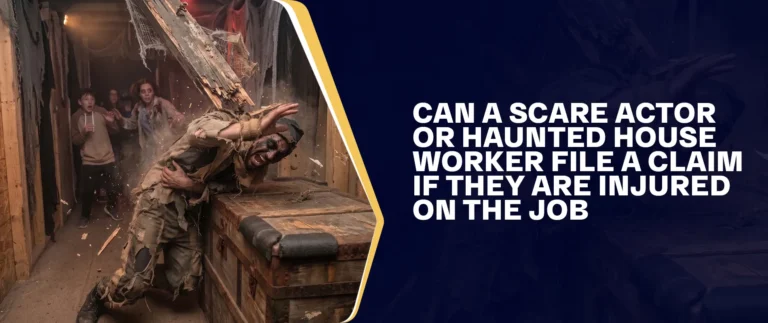
- Actors and Staff: May be personally responsible when their negligent or intentional actions cause an injury. An employer may also be liable for an employee’s wrongful conduct committed within the scope of employment.
Identifying everyone who may be responsible for your injury is important because each party may be required to pay only their share of certain damages, such as pain and suffering, under California Civil Code § 1431.2. Different rules apply to financial losses, such as medical bills and lost wages. If a responsible party is overlooked, it could affect how much compensation you recover.
Were you or a family member hurt at a haunted house or Halloween event in California? Arash Law has recovered over $1 billion for injured clients. Call (888) 488-1391 for a free case evaluation.
What if You Were Partly Responsible for the Accident?
California follows a pure comparative fault system. Under CACI No. 405, when comparative negligence applies, your recoverable damages generally decrease according to your percentage of responsibility.
For example:
- Your damages total $100,000, and you are found 25% responsible.
- Your recovery would generally be reduced to $75,000.
However, comparative fault does not create liability where the primary assumption of risk doctrine eliminates the defendant’s duty. The court must first determine whether the defendant owed a duty concerning the risk that caused the injury.
A guest who ran through a dark corridor and tripped over a separate concealed hazard may still have a claim, depending on the circumstances. By contrast, running and falling solely because of an inherent scare may fall within the rule established in Griffin.
What Compensation Can You Recover?
If your haunted house injury claim succeeds, you may recover certain damages based on the harm caused by the responsible party. Potential compensation includes:
- Medical Expenses: Emergency treatment, hospitalization, surgery, rehabilitation, and reasonably necessary future medical care.
- Lost Income: Earnings lost during recovery and reductions in future earning capacity.
- Property Damage: The reasonable cost of repairing or replacing damaged personal belongings.
- Pain and Suffering: Physical pain, emotional distress, and loss of enjoyment of life.
If a loved one died because of actionable misconduct at a haunted house, eligible surviving family members may pursue a wrongful death claim under California Code of Civil Procedure § 377.60.
Such claims may include funeral and burial expenses, lost financial support, and compensation for the loss of companionship and care. Code of Civil Procedure § 377.61 governs the damages available in wrongful death actions.
The amount recoverable depends on the nature of the injury, supporting evidence, applicable liability rules, and the parties’ respective responsibility.
What to Do After an Injury at a Haunted House
If you are injured at a California haunted house, seek medical care, report what happened, and preserve evidence that may help establish how the accident occurred.
- Get Medical Attention: Obtain appropriate care, especially for head injuries, breathing difficulties, or significant pain.
- Report the Incident: Notify event management and request a written incident report.
- Document the Scene: Photograph hazards, equipment, warning signs, and visible injuries. Collect witness information.
- Preserve Evidence: Keep admission tickets, waivers, photographs, medical records, and communications with the operator.
- Request Safety Records: Relevant documents may include inspection reports, maintenance logs, complaints, and fire safety records.
- Review Documents Before Signing: Understand any settlement agreement or post-incident release before accepting its terms.
- Consult a California personal injury attorney. An attorney can assess whether the injury arose from an inherent risk, determine which parties may be liable, review waivers, and evaluate the available evidence.
If the accident involved a regulated amusement ride, amusement park accident attorneys can review relevant DIR ART Unit inspection and incident records to help identify possible safety violations or evidence of negligence.
Deadlines to File a Haunted House Injury Claim in California
In California, you generally have two years from the date of your injury to file a personal injury lawsuit. This deadline may apply to injury cases involving haunted houses. Missing this deadline could prevent you from recovering compensation, even if you have a valid claim.
What if a Government Entity Was Involved?
If a city, county, school district, or another public entity is responsible for your injury, different deadlines may apply. Under Government Code § 911.2, you generally must submit a written administrative claim within six months of the injury before filing a lawsuit.
What happens next depends on how the public entity responds:
- If Your Claim Is Rejected: You generally have six months from the mailing or personal delivery of a legally sufficient written rejection notice to file a lawsuit.
- If No Qualifying Written Rejection Notice Is Provided: You generally have two years from the date the claim arose to file a lawsuit.
Claims against many California state agencies are handled by the Department of General Services’ Office of Risk and Insurance Management (DGS/ORIM). Other public entities have their own claim procedures, so it is important to identify the correct agency.
Simply holding a haunted house event on public property does not automatically make the government responsible for an injury. The applicable deadline depends on who may be legally liable and the type of claim involved.
Do Different Deadlines Apply to Minors?
Yes. For many personal injury claims against private parties, the filing deadline is generally paused until the injured person turns 18.
Government claims have stricter rules. Minors generally must still meet the six-month administrative claim deadline, although certain procedures may allow a late claim.
If you miss a government claim deadline, you may be able to request permission to file late under Government Code § 911.4. Such applications generally must be submitted within one year after the claim arises, subject to limited exceptions.
Because deadlines vary depending on the circumstances, California injury attorneys can help determine which filing requirements apply to your case.
Frequently Asked Questions About Haunted House Injuries in California
Can You Sue if Another Guest Knocks You Over at a Haunted House?
Yes, potentially. You may have a claim against another guest who negligently or intentionally injured you, and the operator may also be liable if its conduct created an unreasonable danger.
However, being bumped or knocked over during an ordinary fear-based reaction does not automatically establish operator liability. Under Griffin, risks inherent in the frightening experience may fall within primary assumption of risk.
An operator’s liability depends on whether it owed a duty under the circumstances, including whether inadequate crowd management or a separate unsafe condition unreasonably increased the danger.
Can I Sue if a Haunted House Actor Grabs or Injures Me?
Yes. You may have a claim if a haunted house actor causes injury through negligent, reckless, or intentional misconduct.
A performer may be personally responsible, while an employer may be vicariously liable under California’s respondeat superior doctrine if the wrongful act occurred within the scope of employment. This does not necessarily require separate proof that the operator negligently trained or supervised the employee.
The analysis may differ when the actor is an independent contractor or volunteer. Whether the operator is responsible depends on the working relationship, the conduct involved, and other applicable legal rules.
What Happens if I Trip in a Completely Dark Room and Get Hurt?
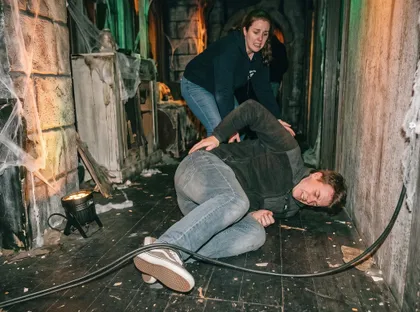
You may have a claim if an unsafe condition, rather than darkness alone, caused your fall.
Darkness may be an inherent feature of a haunted house. Under Griffin, an operator is not automatically liable for a fall caused by a visitor’s ordinary response to being frightened.
However, a broken step, a dangerously placed prop, or a defective walking surface may pose a separate hazard. Whether the operator is liable depends on the danger involved, the applicable duty, and the evidence of negligence.
Can a Parent or Guardian Sign Away a Minor’s Right to Sue?
A parent-signed liability waiver may be enforceable against a minor’s ordinary negligence claim in certain recreational settings. Its enforceability depends on the agreement and circumstances.
California law places important limits on releases involving gross negligence or willful misconduct. When a child’s injury involves a regulated ride or a safety violation, the relevant rules and waiver terms should be examined together. A regulatory violation does not automatically invalidate every waiver, but it may be relevant to whether the release is enforceable or to whether it covers the particular conduct.
Do I Have a Claim if I Suffered a Cardiac Event After Being Scared?
A claim based solely on an ordinary haunted house scare may be difficult to substantiate because frightening patrons is inherent to the attraction.
Under the primary assumption of risk doctrine, an operator generally is not required to eliminate the ordinary risks arising from that experience. A different analysis may apply if negligent physical contact, malfunctioning equipment, an independent dangerous condition, or other conduct beyond inherent risks contributed to the cardiac event. Medical evidence establishing causation would be particularly important.
How Does Arash Law Handle Legal Fees for Haunted House Injury Cases?
Arash Law handles personal injury cases on a contingency fee basis. You generally pay no attorney’s fees upfront. Our fees are payable from a recovery under the terms of the written agreement.
The fee structure depends on the case and will be explained before representation begins. Litigation costs, medical liens, and other expenses may be handled separately, as specified in the agreement.
Talk to Arash Law About Your California Haunted House Injury Claim
If you were hurt at a haunted house, Halloween event, or seasonal attraction in California, you may have a claim if someone else’s negligence caused your injury. Understanding what happened and who may be responsible can help you decide what to do next.
Evidence from seasonal attractions can be difficult to gather once the event closes. Medical records, witness statements, incident reports, and safety records can help show how the injury happened and who may be at fault.
Arash Law has recovered over $1 billion for injured Californians. We handle personal injury cases on a contingency fee basis, so you pay no attorney’s fees unless we recover compensation for you. Call (888) 488-1391 for a free consultation to discuss your situation and learn about your legal options.
Arash Law. Make Them Pay, Call AK.
Sources
- California Court of Appeal. Griffin v. The Haunted Hotel, Inc. (2015) 242 Cal.App.4th 490. Addresses the primary assumption of risk in haunted house attractions, including injuries from running and falling after being frightened. https://www.leagle.com/decision/incaco20151120050
- California Supreme Court. Knight v. Jewett (1992) 3 Cal.4th 296. Establishes the framework for distinguishing primary assumption of risk from comparative fault. https://www.leagle.com/decision/19922993cal4th2961294
- California Supreme Court. Nalwa v. Cedar Fair, L.P. (2012) 55 Cal.4th 1148. Discusses primary assumption of risk in an amusement park attraction. https://www.leagle.com/decision/incaco20121231041
- California Supreme Court. City of Santa Barbara v. Superior Court (2007) 41 Cal.4th 747. Addresses the enforceability of recreational liability waivers involving future gross negligence. https://www.leagle.com/decision/200758962calrptr3d5271542
- California Legislature. Civil Code § 1714 — General Duty of Care. https://leginfo.legislature.ca.gov/faces/codes_displaySection.xhtml?sectionNum=1714.&lawCode=CIV
- California Legislature. Civil Code § 1668 — Contractual Exemptions from Liability. https://leginfo.legislature.ca.gov/faces/codes_displaySection.xhtml?sectionNum=1668.&lawCode=CIV
- California Legislature. Civil Code § 1431.2 — Several Liability for Non-Economic Damages. https://leginfo.legislature.ca.gov/faces/codes_displaySection.xhtml?sectionNum=1431.2&lawCode=CIV
- Judicial Council of California. Judicial Council of California Civil Jury Instructions (CACI), 2026 Edition and 2026 Supplement. Relevant instructions include CACI No. 405 (Comparative Fault of Plaintiff), premises liability instructions, and product liability instructions. https://courts.ca.gov/partners/california-jury-instructions/civil-jury-instructions-resource-center/civil-jury-instructions
- California Legislature. Code of Civil Procedure § 377.60 — Persons Entitled to Bring Wrongful Death Actions. https://leginfo.legislature.ca.gov/faces/codes_displaySection.xhtml?sectionNum=377.60&lawCode=CCP
- California Legislature. Code of Civil Procedure § 377.61 — Damages in Wrongful Death Actions. https://leginfo.legislature.ca.gov/faces/codes_displaySection.xhtml?sectionNum=377.61&lawCode=CCP
- California Legislature. Government Code § 815 — Statutory Basis of Public Entity Liability. https://leginfo.legislature.ca.gov/faces/codes_displaySection.xhtml?sectionNum=815&lawCode=GOV
- California Legislature. Government Code § 815.2 — Public Entity Liability for Employees. https://leginfo.legislature.ca.gov/faces/codes_displaySection.xhtml?sectionNum=815.2&lawCode=GOV
- California Legislature. Government Code § 835 — Liability for Dangerous Conditions of Public Property. https://leginfo.legislature.ca.gov/faces/codes_displaySection.xhtml?sectionNum=835&lawCode=GOV
- California Legislature. Government Code § 835.2 — Actual and Constructive Notice of Dangerous Conditions. https://leginfo.legislature.ca.gov/faces/codes_displaySection.xhtml?sectionNum=835.2&lawCode=GOV
- California Legislature. Code of Civil Procedure § 335.1 — Two-Year Personal Injury Limitations Period. https://leginfo.legislature.ca.gov/faces/codes_displaySection.xhtml?sectionNum=335.1&lawCode=CCP
- California Legislature. Code of Civil Procedure § 352 — Tolling of Limitations Periods for Certain Disabilities, Including Minority. https://leginfo.legislature.ca.gov/faces/codes_displaySection.xhtml?sectionNum=352&lawCode=CCP
- California Legislature. Government Code § 911.2 — Government Claim Presentation Deadline. https://leginfo.legislature.ca.gov/faces/codes_displaySection.xhtml?sectionNum=911.2&lawCode=GOV
- California Legislature. Government Code § 911.4 — Applications to Present Late Claims. https://leginfo.legislature.ca.gov/faces/codes_displaySection.xhtml?sectionNum=911.4&lawCode=GOV
- California Legislature. Government Code § 911.6 — Grounds for Granting Late-Claim Applications. https://leginfo.legislature.ca.gov/faces/codes_displaySection.xhtml?sectionNum=911.6&lawCode=GOV
- California Legislature. Government Code § 945.6 — Time Limits for Filing Lawsuits Against Public Entities. https://leginfo.legislature.ca.gov/faces/codes_displaySection.xhtml?sectionNum=945.6&lawCode=GOV
- California Department of General Services. Government Claims Program — Office of Risk and Insurance Management. https://www.dgs.ca.gov/ORIM/File-a-Claim
- California Department of Industrial Relations. Amusement Ride and Tramway Unit. Covers inspection, permitting, and accident-reporting responsibilities under Labor Code §§ 7340–7357 and 7900–7932. https://www.dir.ca.gov/dosh/aroffices.htm
- California Department of Industrial Relations. Required Notifications — Amusement Ride and Tramway Unit. https://www.dir.ca.gov/dosh/Required-Notifications.html
- International Code Council. 2025 California Fire Code, Title 24, Part 9, including provisions for special amusement areas and applicable fire protection systems. https://codes.iccsafe.org/content/CAFC2025P2/chapter-9-fire-protection-and-life-safety-systems
- International Code Council. 2025 California Fire Code, Chapter 1 — Administration. Addresses applicability and adoption of code appendices. https://codes.iccsafe.org/content/CAFC2025P2/chapter-1-administration
Disclaimer
Past results do not guarantee future outcomes. Every case is different. The information on this page is for general educational purposes and does not constitute legal advice. No attorney-client relationship is formed by reading or relying on this content. If you were injured, consult a licensed California personal injury attorney about your specific situation.