TL;DR: No. Reporting an accident or opening an insurance claim does not automatically file the required SR-1 with the California DMV. The driver is responsible for ensuring it is submitted, although an insurance agent, broker, or legal representative may file it on the driver’s behalf. The DMV must receive it within 10 days if anyone was injured or killed, or the crash caused more than $1,000 in damage to the property of any one person. Failing to file when required can result in a license suspension.
Highlights:
- Ensure the SR-1 is filed within 10 days; reporting the crash to your insurer is not enough.
- Report if damage to any one person’s property exceeds $1,000 or if anyone is injured or killed.
- Submit the SR-1 online through dmv.ca.gov, by mail, or through your agent, broker, or attorney.
- Include objective facts only – date, time, location, driver details, insurance information, and estimated damage amount.
- Report accidents on private property, like parking lots, to the DMV if the thresholds are met.
- Missing the filing deadline can trigger a license suspension under California Vehicle Code § 16004.
Tip: Gather the crash date, time, location, insurance details, and damage estimates before filing to keep the DMV report accurate.
Table of Contents
Opening an insurance claim and notifying the California DMV are separate responsibilities. Your insurer may help with the process, but you must ensure the required SR-1 is submitted to the DMV on time.
The SR-1, or Traffic Accident Report, applies only when a crash meets California’s reporting thresholds. It provides the DMV with information about drivers, vehicles, insurance coverage, injuries, deaths, and qualifying property damage.
Understanding when the form is required, how to submit it, and what may happen if you miss the deadline can help protect your driving privileges.
What Insurance Companies Report To The DMV
Insurance companies provide the California DMV with certain policy information, including whether required vehicle insurance is active. The DMV may also contact the insurer identified on an SR-1 to verify whether coverage was in effect on the date of the accident.
However, these insurance-related communications are not the same as filing an accident-specific SR-1. Reporting the crash to your insurer or opening a claim does not satisfy your DMV reporting obligation. You must ensure that the SR-1 is submitted when required, although your insurance agent, broker, attorney, or another designated representative may file it for you.
The SR-1 is also separate from a police or CHP report. Filing either of those reports does not replace the driver’s SR-1.
When You Must File An SR-1
You must submit an SR-1 to the California DMV within 10 calendar days when the crash involves any of the following:
- More Than $1,000 In Property Damage: The crash caused more than $1,000 in damage to the property of any one person, including a vehicle, object, or structure.
- Any Bodily Injury: Someone suffered an injury, regardless of how minor it initially appeared.
- A Fatality: Someone died because of the crash.
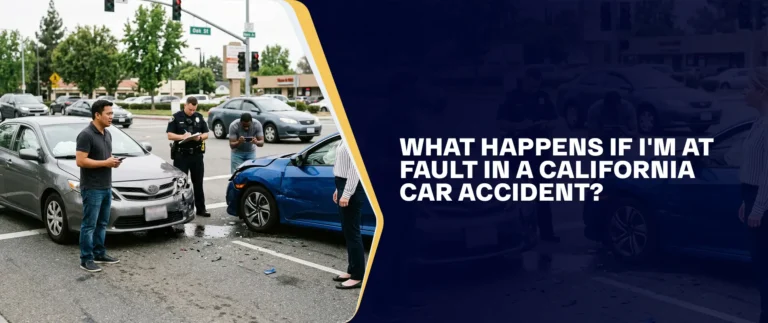
Each involved driver must ensure that a separate SR-1 is filed, regardless of who caused the accident. Even if the other driver was entirely at fault, your reporting obligation remains the same.
How To File The SR-1 Form After A California Car Crash
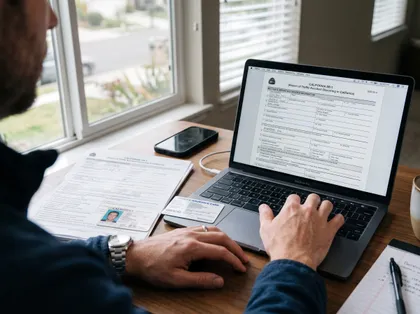
Once you determine that an SR-1 is required, gather the accident, vehicle, driver, and insurance information needed to complete it. You may submit the report yourself or have an authorized representative file it for you.
You can submit the SR-1 in one of three ways:
- Online: Submit through the DMV’s Virtual Office. This is the fastest option.
- By Mail: Download the SR-1 PDF from the DMV site and mail it to the address on the form.
- Through a Representative: Your insurance agent, broker, attorney, or another designated representative may submit the form on your behalf.
If someone else agrees to file the SR-1, ask for a completed copy and proof of submission. Motor vehicle accident attorneys can also help determine whether the reporting requirement applies and assist with preparing the form.
The form requires the following information:
- Date, time, and location of the crash.
- Your license number, plate number, and insurance details.
- The other driver’s name, address, license number, plate, and insurance information.
- Names of anyone hurt or killed, including passengers, pedestrians, or cyclists.
- A description of property damage and an estimated dollar amount.
Provide only the objective facts you can confirm. Questions of fault are decided in the legal process, not on a government form. Identify anyone you saw who was injured, anyone who complained of bodily injury, and anyone you know who died. The standard form does not require a detailed diagnosis or treatment history.
What Happens If You Fail To Report An Accident To The DMV?
The DMV may suspend your driving privilege if you fail, refuse, or neglect to file a required SR-1. A suspension for failing to report may remain in effect until the DMV receives the accident report or evidence that the required financial responsibility was in effect.
This rule applies regardless of who caused the crash. Each involved driver is responsible for submitting their own report.
A separate suspension may apply if you did not have acceptable proof of financial responsibility at the time of the reportable crash. Under California Vehicle Code §§ 16070 and 16072, the suspension may continue for up to four years. After the first year, you may generally restore your driving privilege for the remaining period by filing an SR-22 or another accepted form of proof and maintaining it as required.
Do I Also Need To Report The Accident To My Insurance Company?
Filing an SR-1 does not notify your insurance company, and notifying your insurer does not file the SR-1. These are separate obligations.
Notify your insurer promptly, even if you do not plan to file a claim. Policies often require timely notice and cooperation, and delays may affect coverage depending on the policy and the insurer’s ability to investigate.
Are DMV, Insurance, And Lawsuit Deadlines The Same?
No. DMV reporting, insurance notice, and legal claims each follow separate deadlines. Completing one requirement does not satisfy, pause, reset, or extend another. For example, filing an SR-1 with the DMV does not notify your insurer, preserve your right to sue, or extend the deadline for presenting a claim against a government entity.
Because these time limits serve different purposes, you may need to comply with several of them after the same crash. The applicable deadlines depend on who must receive the filing and the type of claim involved.
Here is how the main deadlines compare:
| Deadline | Who It’s Owed To | Time Limit |
|---|---|---|
| SR-1 filing | California DMV | 10 calendar days from the accident. |
| Notice to your insurer | Your insurance company | Varies depending on your policy. |
| Personal Injury Lawsuit | The court | 2 years, under Code of Civil Procedure § 335.1. |
| Government claim for personal injury or property damage | The appropriate public entity | Generally, 6 months from the incident. |
Filing your SR-1 on time doesn’t extend any of the other deadlines above.
How The DMV Report Can Affect Your Personal Injury Claim
The SR-1 creates a DMV record of the drivers, vehicles, reported insurance, injuries, deaths, and qualifying property damage involved in the crash. It does not contain a detailed liability investigation, assign fault, or determine whether an insurance claim is covered.
Filing an SR-1 is not an admission that you caused the accident. Insurers and courts determine fault separately based on evidence such as witness accounts, photographs, vehicle damage, police findings, and other available records.
Accuracy still matters. If the identifying information, insurance details, injury status, or property-damage information in the report conflicts with information provided later, an insurer or another party may ask for an explanation.
Using DMV Records For An Uninsured Motorist Claim
A person involved in the accident, or that person’s attorney, may use DMV Form SR-19C to request available financial-responsibility information, an uninsured motorist certificate, or a copy of an SR-1 filed by another driver.
The DMV’s response may help determine what insurance information was reported for the other vehicle or driver. However, the absence of insurance information in DMV records does not conclusively prove that no coverage existed, establish fault, or determine whether your uninsured or underinsured motorist claim is covered.
DMV records are only one possible source of evidence. Your insurer or attorney may also investigate the other driver, vehicle owner, applicable policies, and other potential sources of coverage.
Frequently Asked Questions About Reporting Car Accidents In California
California’s reporting rules are clear in simple cases. But real crashes are rarely simple. Drivers often have questions about parking lot accidents, informal agreements between drivers, or what happens when police have already filed a report. The answers below cover the edge cases that most commonly lead to license suspensions.
What If The Car Accident Happened On Private Property Like A Parking Lot?
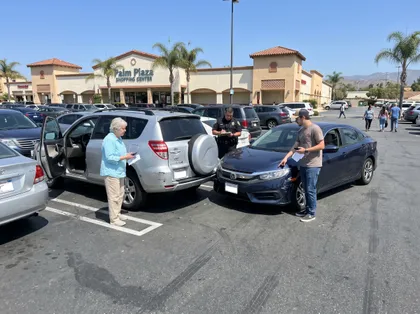
Most qualifying parking-lot and other private-property crashes involving a vehicle subject to registration must be reported. The SR-1 is required when the crash caused bodily injury, death, or more than $1,000 in damage to the property of any one person.
However, an off-highway crash is not reportable under this rule when the only damage is to property belonging to the driver or vehicle owner, and no one was injured or killed. Other exceptions may apply to certain vehicles and locations.
Should I Still Report The Accident To The DMV If The Other Driver Agrees Not To?
Yes. A verbal agreement with the other driver does not cancel your legal duty to file with the DMV. If the other driver later changes their mind and reports the accident, you could face a license suspension for failing to file. Your obligation is personal, and no other party can waive it for you.
Do I Need To File An SR-1 If The Police Already Took A Report At The Scene?
Yes. A report you or your representative makes to law enforcement under California Vehicle Code § 20008 is separate from the SR-1 required by DMV. Filing one does not satisfy the other. However, the DMV may record accident information separately when a law enforcement agency or the CHP investigates the crash and submits its own report. You must still file the SR-1 when the statutory thresholds are met.
Will An Accident Appear On My California DMV Record?
DMV may add a reportable accident to your driver record regardless of who caused it. How long related information remains visible depends on the type of entry, including whether the record also involves a conviction or an administrative action. You can request your current DMV driver record to see what appears.
What If I Was Driving An Employer’s Vehicle?
Reporting the crash to your employer does not necessarily replace your personal SR-1 obligation. Unless an exception applies, you should still ensure that the required DMV report is filed within 10 days.
Get Help With Your Car Accident Case
An SR-1 does not determine fault or insurance coverage, but the information reported to the DMV may become relevant when identifying available insurance after a crash. Arash Law has handled personal injury claims involving uninsured drivers, underinsured motorist coverage, and disputes with insurance companies.
-
$2,500,000 — Insurer’s Failure to Pay Policy Limits on Time
A speeding driver struck a client who was parked along the side of the road. Although the underlying claim initially resolved for the at-fault driver’s policy limits, the insurer failed to issue payment on time. The firm pursued the insurer over the delay and ultimately recovered $2.5 million for the client.
-
$1,003,000 — Uninsured At-Fault Driver Required a Shift in Liability Strategy
An overgrown bush obstructed a driver’s view and contributed to a crash. When the firm learned that the at-fault driver lacked insurance, it investigated other responsible parties and adjusted its liability strategy, ultimately securing a $1.003 million recovery for the client.
-
$1,000,000 — Underinsured Motorist (UIM) Arbitration
A rideshare driver was struck by another motorist who fled the scene. The available coverage did not fully account for the client’s losses, resulting in an underinsured motorist claim. After extensive litigation and preparation for arbitration, the case was resolved for the maximum available policy limits one week before the hearing.
Case results vary based on individual circumstances and do not guarantee future outcomes.
These results show why identifying insurance coverage is only one part of a car accident claim. Attorneys may also need to investigate additional responsible parties, pursue uninsured or underinsured motorist benefits, and address disputes over how an insurer handles the claim.
If you are wondering whether lawyers only get paid if they win, the answer lies in how we charge. We work on a contingency fee basis, so you owe nothing unless we win your case. AK Law handles every personal injury case on a contingency fee basis. Call us at (888) 488-1391 for a free consultation.