TL;DR: Fault in a sideswipe car accident often falls on the driver who made an unsafe lane movement or failed to signal when another vehicle may have been affected. For injured drivers and passengers, paint transfer, yaw marks, dashcam footage, or available EDR data can help show how the crash happened and who may be responsible.
Key Facts
- California Vehicle Code § 21658(a) requires a vehicle to be driven as nearly as practicable entirely within a single lane and not to be moved from that lane until the movement can be made with reasonable safety.
- California Vehicle Code § 22107 bars moving left or right on a roadway until it can be done with reasonable safety, and only after giving an appropriate signal when another vehicle may be affected.
- California applies pure comparative negligence under Li v. Yellow Cab Co. (1975) 13 Cal. 3d 804, using California Civil Code § 1714(a) as the general duty-of-care framework.
- You generally have two years from the date of injury to file a personal injury lawsuit under California Code of Civil Procedure § 335.1.
- If a public entity may be responsible, you may need to present a government claim within six months under California Government Code § 911.2(a).
- For an unidentified-driver hit-and-run UM claim, California Insurance Code § 11580.2 generally requires physical contact with the unidentified vehicle.
Table of Contents

The driver who made an unsafe lane movement is often found at fault in a California sideswipe crash, particularly when that movement caused the collision. That is the legal starting point, and the evidence your attorney must build on.
Sideswipe accidents can happen without warning. One car drifts or cuts into an adjacent lane, and within a fraction of a second, metal contacts metal, and vehicles lurch across the roadway. The crash is over before most drivers understand what happened, yet insurers may begin investigating liability and evaluating the claim soon after.
Physical evidence, like paint transfer, yaw marks, and electronic data, can support or weaken your story. If the evidence is unclear and drivers disagree, insurers may claim both drivers share the blame. Independent evidence can challenge this view. Knowing what evidence exists, where to find it, and how quickly it fades can mean the difference between full recovery and a significant loss.
How Is Fault Determined In A California Sideswipe Accident?
A driver who violates a lane-discipline law may be found responsible for a sideswipe collision if the unsafe movement caused or contributed to the crash. California’s negligence framework under Civil Code § 1714(a) requires every person to exercise ordinary care in the management of their vehicle. Two specific Vehicle Code sections define what that care looks like on a multi-lane roadway.
- California Vehicle Code § 21658(a) states that a vehicle shall be driven as nearly as practicable entirely within a single lane and shall not be moved from that lane until movement can be made with reasonable safety.
- California Vehicle Code § 22107 requires drivers to make sure a left or right movement can be made safely and to signal when another vehicle may be affected.
A driver who violates either section may be found negligent, meaning they failed to exercise the care a reasonable driver would use. Common fact patterns include distracted driving, aggressive lane changes during heavy traffic, merging at unsafe speeds, and impairment from alcohol or drugs.
The way the collision happened can affect the fault analysis:
- One vehicle changes lanes into another. The driver changing lanes is generally scrutinized first because that driver must ensure the movement can be completed safely.
- Both vehicles move into the same lane. If two vehicles simultaneously merge toward the same lane, either or both drivers may share responsibility. Vehicle positions, damage patterns, video, and witness statements can show which driver moved first. They also help determine if either driver could have avoided the collision.
- A vehicle drifts across a lane line. A driver who drifts off course because of distraction, fatigue, or impairment can still be held responsible. If that unsafe lane change causes a sideswipe, the driver may be liable.
- A sideswipe occurs while passing another vehicle. Investigators may examine whether the passing vehicle crossed a lane line, left adequate clearance, or returned to the lane before the maneuver could be completed safely.
- A sideswipe occurs during freeway merging. The driver entering or changing lanes must make the movement safe. Still, the conduct of surrounding drivers can also matter, including their speed, lane position, and other actions that contributed to the crash.
- A driver swerves because of another vehicle or a road hazard. The driver who physically strikes another vehicle is not necessarily the only party potentially responsible. Another motorist who forced the evasive maneuver, or in some circumstances, a public entity responsible for a dangerous roadway condition, may also be investigated.
Insurance companies make initial liability assessments when handling claims, but the parties can dispute those findings. If the case proceeds to litigation, a judge or jury may ultimately determine which parties were negligent and assign percentages of fault based on the evidence.
The Evidence That Decides Sideswipe Cases
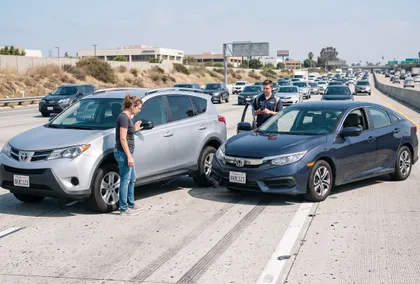
Physical evidence from the crash scene and electronic data from the vehicles can help resolve disputes when drivers give conflicting accounts. Sideswipe accident attorneys may also work with reconstruction experts to preserve and analyze this evidence before it is lost, overwritten, or altered.
A complete fault analysis may include physical damage, roadway evidence, electronic vehicle data, video footage, witness statements, and the collision report.
Physical evidence at the crash scene:
- Paint Transfer: Vehicle-to-vehicle contact may leave transferred paint or other material on either vehicle. The location, height, and direction of the transfer can help a reconstruction expert evaluate the vehicles’ relative positions and movement at the point of contact.
- Scrape Angle and Depth: The scrape location, direction, and depth may help indicate how the vehicles moved relative to one another, particularly when analyzed alongside photographs, vehicle damage, roadway evidence, and other available information.
- Crumple Patterns: The location, shape, and severity of vehicle damage can help a reconstruction expert evaluate the vehicles’ relative positions and movement at impact when considered with the other available evidence.
- Yaw Marks: When a vehicle yaws while its rotating tires slip sideways across the pavement, it may leave curved tire marks known as yaw marks. These marks can help reconstruction experts evaluate the vehicle’s path before or after impact when considered with other evidence.
Electronic and recorded evidence:
- EDR Data: Federal standards under 49 CFR Part 563 specify the data elements that EDRs in covered vehicles must be capable of recording. The precise fields recorded depend on the vehicle’s EDR design and the nature of the crash event. That data can confirm or contradict what either driver claims. EDR data isn’t necessarily permanent. Depending on the vehicle and how the event is classified, a later qualifying event can overwrite the earlier crash record.
- Dashcam Footage: A forward- or side-facing camera may show the vehicles’ positions relative to lane markings, when a lane change began, or how the contact occurred. When available and clear, the footage can be important evidence in a sideswipe fault dispute.
- Surveillance and Roadway Video: Private businesses, homes, buses, commercial vehicles, or some local traffic-camera systems may have recorded the crash. Retention periods vary, and footage may be overwritten quickly. Caltrans states that its live traffic-camera video and still images are not archived, so those cameras generally should not be treated as a source of historical crash footage.
- Witness Statements: Independent witnesses may help establish which vehicle changed lanes, whether a signal was used, whether either driver was speeding, or whether another vehicle caused an evasive maneuver.
- CHP or Local Police Collision Report: A California collision-report packet may contain a factual diagram, vehicle movement information, primary collision-factor findings, witness information, and a separate narrative or supplemental report. Those materials can help identify what the investigating officer observed, although the officer’s conclusions do not necessarily determine civil liability.
What Happens If Both Drivers Share Fault?
If both drivers share fault in a California sideswipe collision, you may still recover damages. California follows pure comparative negligence under Li v. Yellow Cab Co. (1975) 13 Cal. 3d 804. This means your compensation is reduced by your percentage of fault rather than completely barred.
For example, both drivers may try to merge into the same lane at nearly the same time. If the evidence shows that both contributed equally to the crash, a judge or jury could assign each driver 50% of the fault.
If your total proven damages were $200,000 and you were found 50% at fault:
- Your damages would be reduced by 50%.
- Your potential recovery would be $100,000.
- Other factors, such as insurance limits, medical liens, and case expenses, may affect the amount you ultimately receive.
Being partly at fault does not automatically end your claim. However, every percentage point can affect the value of your recovery, so evidence is important when fault is disputed. Some EDRs can provide information such as vehicle speed, braking, and accelerator use. Certain systems may also record steering input, but that information is not available from every EDR.
Sideswipe accident lawyers can work with reconstruction experts to compare this electronic data with physical evidence. This comparison helps them determine how the sideswipe occurred and whether one or both drivers contributed to the collision.
Sideswipe Evidence Disappears Fast: Get Help Now
Arash Law handles sideswipe accident claims across California on a contingency fee basis. Lines are open 24 hours a day.
Call (888) 488-1391 for a free case evaluation.
What Should You Do After A Sideswipe To Help Establish Fault?
After a sideswipe accident, the most useful steps are the ones that preserve evidence showing where each vehicle was, which vehicle moved sideways, and how the contact occurred.
- Photograph the vehicle damage and positions. Take close-up and wide-angle photos of scratches, dents, paint transfer, broken mirrors, and damage along the sides of both vehicles. If it is safe and possible before the vehicles are moved, capture where each vehicle stopped in relation to the lane lines, shoulder, merge area, or intersection.
- Document the roadway. Photograph lane markings, merge points, turn lanes, construction, debris, tire marks, potholes, or anything else that may explain why a vehicle moved sideways.
- Record video of the scene. A short video can preserve the overall roadway layout, traffic conditions, lane configuration, and vehicle positions better than isolated photos.
- Identify witnesses. Get the names and contact information of anyone who saw which vehicle changed lanes, drifted, merged, or crossed a lane line.
- Preserve dashcam footage. Save and copy any video from your vehicle before the system records over it.
- Look for other cameras. Note nearby businesses, homes, buses, commercial vehicles, or local traffic-camera systems that may have recorded the collision. Footage may be deleted quickly.
- Get the police report information. If law enforcement responds, obtain the report or incident number. The report may later include a diagram, vehicle movement information, witness statements, and the officer’s observations.
- Document the vehicle before repairs. Take detailed photos of the damage before the vehicle is repaired. A reconstruction expert may also need to inspect it or retrieve available EDR information.
When describing the crash to an insurer or police officer, stick to what you actually saw and experienced. Avoid guessing about speed, distance, or fault if you are unsure. Statements made shortly after the collision may later be compared with photographs, video, vehicle damage, witness accounts, and electronic data.
What Arash Law Has Recovered In Similar Fault Dispute Cases
Sideswipe accidents often involve conflicting accounts about which vehicle left its lane or caused the contact. The case results below were not identified as sideswipe collisions. Still, they show how evidence such as EDR data, accident reconstruction, disputed liability investigation, and roadway-position evidence can affect car accident claims. These same types of evidence may also be important when determining fault in a sideswipe accident.
Arash Law’s car accident lawyers have handled cases involving disputed fault, inaccurate police conclusions, and drivers crossing into another vehicle’s path.
$3,000,000 — Auto vs. Auto: Black Box Data Overturned an Inaccurate Police Report
The police report initially blamed Arash Law’s client for running a stop sign. After retrieving black box (EDR) data from the other vehicle, the firm’s team uncovered evidence that the other driver was speeding. Eventually, we recovered the full insurance policy limits for the client and their family.
$1,000,000 — Auto vs. Auto: Disputed Liability With No Witnesses
With no independent witnesses, the case came down to conflicting versions of how the crash happened. Arash Law maintained its position for the client, and the matter was resolved at mediation shortly before trial.
$6,000,000 — Car Accident: Fatal Head-On Collision After Driver Crossed the Double Yellow Line
A drunk driver crossed the double yellow lines on a two-lane highway and collided head-on with the client’s vehicle, killing the client’s wife. The defense attempted to dispute coverage and liability on behalf of their insured but was unsuccessful, and Arash Law obtained the maximum policy limits for the client.
Past results do not guarantee future outcomes. Every case is different, and results depend on the specific facts and evidence involved.
Frequently Asked Questions About Sideswipe Accident Fault In California
These frequently asked questions cover common issues that may come up after a sideswipe accident in California. They address fault, evidence, insurance, filing deadlines, and other claim-related concerns.
What If The Sideswipe Was A Hit-and-Run?
If the other driver leaves the scene, your uninsured motorist coverage may help pay for your losses if your policy includes it. For an unidentified hit-and-run driver, California law generally requires:
- Physical contact between the vehicles.
- A report to law enforcement within 24 hours.
- A sworn statement to the insurer within 30 days.
Paint transfer, scrape damage, dashcam footage, and witness statements can help prove that another vehicle made contact with yours. Your available UM/UIM benefits depend on your specific policy and coverage limits.
How Long Do I Have To File A Sideswipe Accident Claim In California?
You generally have two years from the date of injury to file a personal injury lawsuit under California Code of Civil Procedure § 335.1. If a public entity may be responsible, you may need to present a government claim within six months under Government Code § 911.2(a).
Different rules can apply to minors and certain specialized claims. Evidence may disappear much sooner than these deadlines, so it is important to preserve photos, video, vehicle data, and other proof as early as possible.
How Do Insurance Companies Handle Sideswipe Claims?
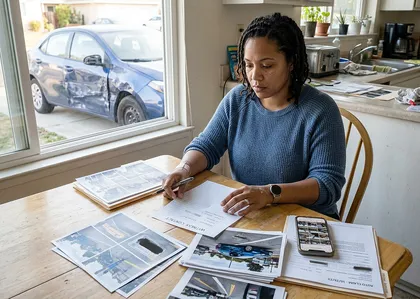
Insurance companies review the available evidence and assign fault based on how they believe the crash happened. They may consider vehicle damage, photos, dashcam footage, witness statements, police reports, and reconstruction evidence.
If the evidence is unclear or both drivers give conflicting accounts, an insurer may assign shared fault, such as 50/50. California law does not require an equal split. If you are ultimately found partly at fault, your recovery can be reduced by your percentage of fault under California’s comparative negligence rule.
The Other Driver Claims I Drifted Into Them. How Is This Resolved?
Physical evidence may help confirm or challenge either driver’s account. Yaw marks, scrape patterns, paint transfer, vehicle damage, video, and available electronic data can help reconstruction experts evaluate how the vehicles moved and made contact. In appropriate cases, a crash reconstruction expert may analyze this evidence and prepare an opinion about how the collision occurred.
Can A Sideswipe Collision Cause Serious Injuries?
Yes. A sideswipe collision can cause serious injuries, particularly if the impact causes a vehicle to spin, leave the roadway, strike another vehicle or object, or subject an occupant to significant forces. Possible injuries include head injuries, fractures, shoulder injuries, and neck or back injuries.
Some injuries may not cause obvious symptoms immediately. Anyone who has pain, neurological symptoms, or other signs of injury after a crash should seek appropriate medical evaluation. Medical records can also document the nature and timing of accident-related injuries.
Can The Driver Who Stayed In Their Lane Still Be Partly At Fault?
Yes. The driver who crossed the lane line is often the main focus of a sideswipe investigation. However, California’s comparative-fault rule looks at each driver’s actions. A driver who stayed mostly in their lane might still share some fault if they were speeding, distracted, or impaired, or if they drove partly outside the lane. Other negligent acts may also contribute to the collision.
For example, if one vehicle begins an unsafe lane change and the other driver accelerates to prevent it from merging, both drivers could potentially share fault if the evidence shows that both actions contributed to the collision.
Who Ultimately Decides Who Was At Fault For A Sideswipe?
An insurance company may first decide who is at fault when handling a claim. However, this decision is not final. Drivers and their lawyers can challenge the insurer’s stance and provide more evidence. They can also negotiate the extent of fault each party bears during settlement talks or mediation.
If the case goes to trial, a judge or jury will decide who was negligent and assign fault percentages based on the evidence. In California’s pure comparative negligence system, an injured person’s damages are reduced by their assigned percentage of fault.
Talk To Arash Law About Your Sideswipe Accident Claim
Arash Law has recovered over $1 billion for its injured clients. In sideswipe cases, our accident lawyers can investigate which vehicle made the unsafe lane movement, preserve video and EDR data, review paint transfer and damage patterns, work with reconstruction experts, and challenge unfair fault assessments by insurers.
Our attorneys handle every sideswipe accident case on a contingency fee basis. You pay no attorney’s fees unless we recover compensation for you. Call (888) 488-1391 for a free case evaluation; lines are open 24 hours a day, seven days a week.
Arash Law — Make ‘em pay. Call AK.
Sources
- California Legislative Information. California Vehicle Code § 21658(a) — Lane Discipline. leginfo.legislature.ca.gov
- California Legislative Information. California Vehicle Code § 22107 — Lane-Change Signal Requirement. leginfo.legislature.ca.gov
- California Legislative Information. California Civil Code § 1714(a) — General Negligence Duty of Care. leginfo.legislature.ca.gov
- California Legislative Information. California Code of Civil Procedure § 335.1 — Two-Year Statute of Limitations. leginfo.legislature.ca.gov
- California Legislative Information. California Government Code § 911.2(a) — Six-Month Government Claim Deadline. leginfo.legislature.ca.gov
- California Legislative Information. California Insurance Code § 11580.2 — Uninsured Motorist Coverage. leginfo.legislature.ca.gov
- California Department of General Services, Office of Risk and Insurance Management. File a Government Claim. dgs.ca.gov/orim/file-a-claim
- National Highway Traffic Safety Administration. Event Data Recorder. nhtsa.gov/research-data/event-data-recorder
- California Department of Motor Vehicles. Insurance Requirements — SB 1107 Minimum Liability Limits. dmv.ca.gov
Disclaimer
Past results do not guarantee future outcomes. Every case is different. The information on this page is for general educational purposes and does not constitute legal advice. No attorney-client relationship is formed by reading or relying on this content. If you were injured, consult a licensed California personal injury attorney about your specific situation.