TL;DR: Yes, you can still get legal help. If someone else hit you while walking, the fact that you don’t drive or carry an auto policy does not impact your legal right to pursue compensation through a personal injury claim. Consult an attorney as soon as possible, as seeking legal assistance and negotiating an insurance settlement do not pause California’s lawsuit-filing deadlines.
Yes, you can still get legal help after being hit while walking in California. A pedestrian’s ability to pursue compensation after an accident generally depends on who caused the crash, what injuries occurred, and whether a legally responsible party has available insurance or other means of paying a claim. It doesn’t depend on whether the injured pedestrian drives or carries car insurance.
You do not need to own a vehicle to pursue an injury claim against a negligent driver. However, a driver’s liability, available policy limits, and the evidence supporting your injuries all require review before anyone can determine what recovery may be possible.
California law also distinguishes pedestrians without auto insurance from people who drive uninsured vehicles. That distinction matters when assessing potential damages and deciding whether to contact an attorney.
Key Facts About Pedestrian Injury Claims Without Car Insurance in California
- You do not need personal auto insurance to pursue a pedestrian injury claim. California negligence law allows injured pedestrians to seek compensation from parties whose actions caused their injuries.
- The driver’s liability insurance may provide compensation. Coverage depends on the driver’s policy, liability, applicable limits, and any exclusions.
- Other insurance requires verification. A lawyer can investigate potentially applicable policies without assuming additional coverage exists.
- Witnesses and physical evidence may help establish fault. Statements, photographs, collision reports, and available video footage can help clarify what happened.
- A valid claim does not guarantee payment. If no applicable insurance is available, recovering compensation may depend on the responsible party’s ability to pay.
- Personal injury lawsuits generally have a two-year deadline. Claims involving property damage or government entities have different deadlines. Evidence may disappear much earlier.
Table of Contents

I Was Hurt as a Pedestrian and Do Not Drive or Have My Own Auto Policy. What Can an Injury Lawyer Review Before I Assume I Have No Claim?
An injury lawyer can review the driver who struck you, the vehicle involved, what witnesses saw, what your medical records say about your injuries, and what insurance policies may apply. You do not need to carry personal auto insurance for an attorney to assess whether another party may be legally responsible.
Consider a pedestrian who was struck by a vehicle but does not drive and has no uninsured motorist coverage of their own. Several people witnessed the collision, although the injured pedestrian has not yet obtained their statements. The driver’s insurance information may also be incomplete.
In this situation, a consultation can establish what is known and what still requires investigation. It cannot establish that another policy exists simply because the pedestrian lacks personal coverage.
Pedestrian Claim-Path Checklist: What Should an Injury Lawyer Review?
A consultation can help separate what you already know from what still needs to be confirmed. The checklist below outlines information that may help establish fault, document your injuries, and determine whether any insurance coverage applies.
| What Needs Review | What You Can Provide or Ask About | What the Lawyer Needs to Determine |
|---|---|---|
| Your injuries | Medical records, treatment bills, injury photographs, and your account of the crash. | What injuries are documented, what treatment may be needed, and which losses may be recoverable. |
| The driver who hit you | The driver’s name, contact details, license information, or collision report number. | Whether the driver was negligent and what evidence supports responsibility for the crash. |
| The vehicle involved | License plate information, photographs, registration details, or the vehicle’s description. | Who owned the vehicle and whether ownership raises additional liability or insurance questions. |
| Witnesses and crash evidence | Witness names, contact information, photographs, available recordings, and the police report. | What witnesses observed, whether their accounts support the claim, and what additional evidence can be obtained. |
| The driver’s insurance | Any insurance details provided at the scene, in the collision report, or by the insurer. | Whether liability coverage existed, whether it applies, and what policy limits or exclusions may affect recovery. |
| Other potentially responsible parties | Information suggesting the driver was working or that a roadway condition contributed to the collision. | Whether an employer, vehicle owner, or public entity may share legal responsibility under the facts. |
| Other potentially relevant insurance | Any identified commercial or vehicle-related policies and available insurance documents. | Whether additional coverage actually exists, applies to the incident, or is unavailable. No household coverage is assumed. |
| Records that are still missing | A list of unavailable reports, medical documents, witness statements, or possible video recordings. | Which records should be requested, whether they remain available, and how missing evidence may affect the claim. |
| Coverage and recovery questions | Any insurer’s denial, confirmation of no coverage, policy exclusions, or information about the responsible party’s ability to pay. | Which policies are verified, which have been ruled out, which remain unknown, and whether recovery may be possible without applicable insurance. |
The key distinction is that the absence of information does not automatically mean the absence of legal rights. A lawyer can review the available evidence and investigate unresolved questions without assuming that another insurance policy exists or that compensation is guaranteed.
What if the Driver’s Insurance Is the Only Potentially Relevant Policy?
A pedestrian may have a claim even when the driver’s liability policy is the only identified source of insurance. The lawyer would examine whether the driver was negligent, whether the policy applies, and what compensation the evidence supports.
If that policy is unavailable, insufficient, or subject to a coverage dispute, the review should explain those limitations rather than assume another insurer will pay.
The absence of personal auto insurance does not create additional coverage. Likewise, finding another potentially responsible party does not establish that the party has an applicable policy or the ability to pay.
If the investigation confirms that no applicable insurance is available, an attorney can assess whether pursuing the legally responsible party directly is practical. This includes reviewing available information about the party’s ability to satisfy a judgment. A valid claim does not guarantee that compensation can be collected.
What if Witnesses Have Information but Have Not Given Statements?
Witnesses may help establish how the collision occurred, where the pedestrian was walking, and what the driver did before impact.
A lawyer may review witness contact details, request available statements, and compare their accounts with photographs, police records, and video. Witnesses may remember different details, so their observations should be evaluated rather than treated as automatic proof of fault.
If surveillance recordings exist, a timely preservation request may help prevent their loss. However, preservation requests cannot guarantee that footage is still available.
How Can a Lawyer Help When Coverage Remains Uncertain?
A consultation helps identify what records must be reviewed before reaching conclusions about liability and insurance.
An attorney can review available information, identify any additional documentation that may be needed, and explain whether the known facts support further investigation. That review may confirm available coverage, uncover a legitimate coverage question, or establish that a potential source does not apply.
California pedestrian accident lawyers can assess these issues without requiring you to assume that another policy exists.
If you were injured while walking and have limited insurance information, Arash Law offers a free case evaluation. Call (888) 488-1391 to discuss a records-based review of your accident and potential legal options.
Why Is Walking Without Insurance Different From Driving Uninsured?
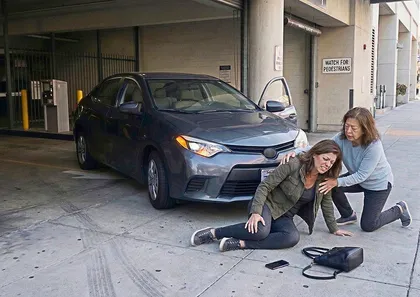
A pedestrian who does not own auto insurance is not automatically subject to the same limitations that California law imposes on uninsured drivers.
California Civil Code §3333.4, commonly associated with Proposition 213, restricts certain non-economic damage claims involving uninsured vehicle owners and operators. Simply being a pedestrian without personal auto insurance does not trigger that restriction.
This distinction matters because non-economic damages may include physical pain, emotional distress, and loss of enjoyment of life.
A pedestrian’s potential compensation still depends on negligence, comparative fault, available evidence, and other applicable legal rules. An attorney can review those questions without treating the absence of personal coverage as proof that the pedestrian cannot recover damages.
Which Insurance Policies Might Apply After a Pedestrian Accident?
The at-fault driver’s liability insurance is often the first policy examined after a vehicle strikes a pedestrian. Other policies may be relevant, but their existence and applicability must be established through the facts and available documents.
Potentially applicable insurance policies include:
- Driver’s liability insurance. A policy may cover bodily injuries caused by the insured driver’s negligence, subject to its terms and limits.
- Vehicle-related coverage. If someone other than the driver owns the vehicle, the ownership records and applicable insurance documents may need to be reviewed.
- Employer or commercial coverage. If the driver was performing work duties, an employer’s potential responsibility and applicable commercial insurance may warrant investigation.
- Uninsured motorist coverage. In California, uninsured motorist coverage may also apply to pedestrian accidents in certain circumstances. Coverage under California Insurance Code §11580.2 depends on the specific policy and who qualifies as an insured. It should not be assumed merely because the injured pedestrian lives with someone else.
- Health insurance or Medi-Cal. These programs may help pay covered medical expenses. They are not substitutes for determining liability, and reimbursement rights may affect a later recovery.
Health coverage and liability insurance serve different purposes. Health insurance may address eligible treatment bills, while a liability claim may include other legally recoverable losses.
An attorney can also examine whether a policy has been denied, whether coverage is disputed, or whether no applicable policy has been identified. Those findings help clarify the available claim options.
A policy that has not been identified is not necessarily the same as one that does not exist. Similarly, identifying a policy does not prove that it covers the accident. An attorney can distinguish missing documentation, confirmed exclusions, denied claims, and verified coverage when reviewing the available insurance records.
What Evidence Helps Show Who Caused a Pedestrian Crash?
A pedestrian injury claim generally requires evidence showing that another party failed to use reasonable care and that the failure caused harm.
California drivers have duties to exercise reasonable care around pedestrians. Pedestrians also have legal responsibilities, and their actions may affect a fault assessment.
Evidence that may help establish what happened includes:
- Collision Reports: Reports may identify the parties, vehicles, witnesses, and observations recorded by responding officers.
- Witness Accounts: People who observed the crash may provide details about traffic signals, vehicle movement, and pedestrian behavior.
- Photos and Videos: Visual evidence can document the intersection, vehicle damage, visibility, and conditions surrounding the collision.
- Medical Records: Treatment notes, diagnoses, and bills can help connect documented injuries to the incident.
- Vehicle and Roadway Evidence: Physical damage, impact locations, and relevant roadway conditions may help reconstruct events.
The California Highway Patrol (CHP) maintains the Statewide Integrated Traffic Records System (SWITRS), which contains collision data. However, not every collision is investigated by the CHP, and a statewide database is not a substitute for obtaining the actual report from the responding agency.
If the California Highway Patrol investigated your accident, you may be able to obtain the collision report through the agency’s Request a Crash Report service. The CHP identifies injured pedestrians among the parties who may request these records, which can help an attorney review the driver, vehicle, and documented collision details.
What if the Driver Blames the Pedestrian?
A driver’s allegation does not settle responsibility. Witness statements, available footage, traffic conditions, and physical evidence may support or challenge that account.
The California Department of Motor Vehicles’ Driver Handbook explains that drivers must yield to pedestrians in marked and unmarked crosswalks, while pedestrians must also follow applicable traffic rules. These responsibilities can help an attorney evaluate whether the driver, pedestrian, or both contributed to the collision.
California follows pure comparative negligence under Li v. Yellow Cab Co., 13 Cal.3d 804 (1975). This rule allows an injured pedestrian to still recover compensation, even if they are partly at fault for getting hit. However, their percentage of fault reduces the amount they may recover.
For example, if proven damages total $100,000 and the pedestrian is assigned 25% of the fault, the recoverable amount would be $75,000 before other applicable limitations or adjustments.
What Compensation May Be Available Without Personal Auto Insurance?
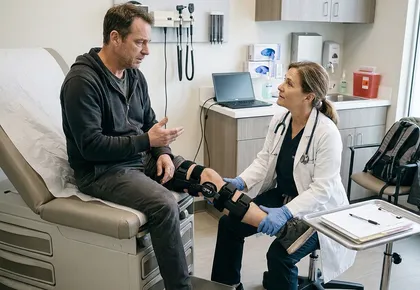
A pedestrian who establishes another party’s legal responsibility may seek compensation for economic and non-economic losses. The absence of a personal auto policy does not, by itself, eliminate those categories of damages.
Depending on the documented injuries and circumstances, compensation may include:
- Medical Expenses: Reasonable costs of necessary treatment, rehabilitation, and related care.
- Lost Earnings: Income lost because injuries prevented the pedestrian from working.
- Reduced Earning Capacity: Future income losses resulting from lasting injuries that affect the person’s ability to earn.
- Pain and Suffering: Physical discomfort and emotional effects supported by the evidence.
- Other Documented Losses: Additional legally recoverable expenses resulting from the accident.
An attorney can review medical records, employment documentation, and available insurance information to assess potential damages. A damages calculation does not guarantee that sufficient coverage or other resources will exist to pay the full amount.
How Can an Injured Pedestrian Protect Important Evidence?
An injured pedestrian can protect a potential claim by obtaining medical attention, identifying witnesses, and preserving accident-related records.
These steps are especially useful when the driver disputes responsibility or the pedestrian has incomplete insurance information:
- Seek appropriate medical care. Obtain a medical evaluation and follow recommended treatment.
- Report the collision. Contact the appropriate law enforcement agency and request the report number.
- Preserve photographs and documents. Keep images of the scene, clothing, injuries, and any available vehicle details.
- Identify potential witnesses. Record names, contact information, and any available written accounts.
- Locate possible recordings. Identify nearby cameras or people who may have captured the incident.
- Organize medical and financial records. Save bills, treatment summaries, wage records, and relevant correspondence.
- Request a legal review. Bring the available information to the consultation and identify any remaining missing records.
Even if the driver disputes responsibility, preserving evidence can help establish what happened. Crossing behavior, traffic signals, and other circumstances may affect fault in California pedestrian accident claims.
You do not need a complete file before asking an attorney to review the situation. Missing records may themselves help identify the next reasonable steps.
How Long Does a Pedestrian Have to Pursue an Injury Claim in California?
California generally allows two years to file a personal injury lawsuit against a private party. Other deadlines may apply depending on the type of loss and whether a public entity is potentially responsible.
| Type of Claim | General California Deadline | What the Deadline Means |
|---|---|---|
| Personal injury lawsuit | Two years | Missing the applicable lawsuit deadline may bar the lawsuit. |
| Property damage lawsuit | Three years | Missing the applicable deadline may bar a separate lawsuit for damaged personal property. |
| Government claim involving injury | Six months | A timely administrative claim generally must be presented before a lawsuit against a public entity can proceed. |
Legal basis: California Code of Civil Procedure §§335.1 and 338; California Government Code §911.2.
Exceptions and other procedural requirements may affect these periods. For certain claims involving minors, time limits may be tolled, while government claim requirements can operate differently.
If a state-maintained road condition may have contributed to the crash, the responsible agency and claim procedure need careful identification. Claims against the State of California, including relevant Caltrans road-condition claims, generally involve the Department of General Services’ Office of Risk and Insurance Management (DGS/ORIM) Government Claims Program. Claims against cities or counties follow the applicable procedures of the local entity.
Missing an applicable lawsuit or government claim deadline may bar that claim entirely. Reporting obligations differ: failures to complete required reports may cause administrative problems or weaken evidence, but they do not automatically carry the same legal consequences.
Regardless of the filing deadline, footage, witness memories, and other records may become harder to obtain over time. Early preservation efforts can affect the strength of the proof.
Frequently Asked Questions About Pedestrian Injury Claims Without Car Insurance in California
Can I Sue a Driver Who Hit Me if I Don’t Own a Car?
Yes. Not owning a car does not prevent you from pursuing a personal injury lawsuit against a negligent driver. Your claim depends on proving legal responsibility and damages, not whether you personally own a vehicle or auto policy.
What Happens if the Driver Who Hit Me Has No Insurance?
You may still have a legal claim against the responsible driver, even if no applicable liability insurance is identified. However, a legal claim and the practical ability to collect compensation are two different things. An attorney can review the available records and determine whether another legally responsible party or applicable policy warrants investigation.
Can I Recover Compensation if I Don’t Have Uninsured Motorist Coverage?
Yes, potentially. Uninsured motorist coverage is not a requirement for pursuing a negligence claim against the driver who injured you. Whether compensation can actually be collected depends on liability, available coverage, and other recovery resources.
Can Witnesses Help if I Don’t Have the Driver’s Insurance Information?
Yes. Witnesses may help establish the driver’s identity, describe how the collision occurred, or identify other evidence. Their information can support the liability investigation, although it does not establish that any particular insurance policy exists.
Can I Get Compensation if I Was Walking Outside a Crosswalk?
Yes, if the evidence establishes another party’s liability and compensable harm. Walking outside a crosswalk does not automatically eliminate a pedestrian injury claim. California’s comparative negligence rules may reduce compensation when the pedestrian shares responsibility for the crash.
What if the Driver Left the Scene After Hitting Me?
A hit-and-run does not automatically eliminate your legal options. Report the crash, preserve any vehicle description or identifying information, and obtain witness details. A lawyer can review whether the driver can be identified and whether any applicable coverage or other recovery source exists.
Do I Need All My Medical Records Before Contacting an Injury Lawyer?
No. You can request a consultation with the records you currently have. Medical records, bills, photographs, witness information, and the collision report number may help the attorney identify what remains necessary.
Should I Speak With the Driver’s Insurance Adjuster Before Consulting a Lawyer?
You can consult a lawyer before providing a recorded statement to the driver’s insurer. An attorney can help you understand the claim process, review available evidence, and consider how your statements may affect the insurer’s evaluation.
Get a Free Case Evaluation After a Pedestrian Accident in California
Being injured while walking can leave you facing medical expenses, missed work, and questions about insurance coverage you have never needed to consider before.
Not driving or carrying personal auto insurance does not mean you should assume there is no possible claim. A legal review can examine the driver, vehicle, witnesses, medical documentation, and potentially relevant insurance records before assessing your options.
Arash Law offers free case evaluations for injured pedestrians throughout California. Our team can review the information you already have, identify records that may need further investigation, and discuss possible next steps without promising additional coverage.
Call Arash Law at (888) 488-1391 to request a free initial consultation. You can bring the records and witness information you have, even if the driver’s insurance status remains unknown or no applicable policy has been confirmed.
Sources
- California Department of Insurance. Automobile Insurance: Coverage Types and Minimum Liability Limits. https://www.insurance.ca.gov/01-consumers/105-type/95-guides/01-auto/auto101.cfm
- California Legislature. California Civil Code § 1714: Responsibility for Injuries Caused by Negligence.
https://leginfo.legislature.ca.gov/faces/codes_displaySection.xhtml?sectionNum=1714.&lawCode=CIV- California Legislature. California Code of Civil Procedure §335.1: Personal Injury Limitations Period. https://leginfo.legislature.ca.gov/faces/codes_displaySection.xhtml?sectionNum=335.1.&lawCode=CCP
- California Legislature. California Code of Civil Procedure §338: Property Damage Limitations Period. https://leginfo.legislature.ca.gov/faces/codes_displaySection.xhtml?sectionNum=338.&lawCode=CCP
- California Legislature. Government Code §911.2: Time for Presenting Government Claims. https://leginfo.legislature.ca.gov/faces/codes_displaySection.xhtml?sectionNum=911.2.&lawCode=GOV
- California Legislature. Civil Code §3333.4: Limitations on Certain Damages for Uninsured Motorists. https://leginfo.legislature.ca.gov/faces/codes_displaySection.xhtml?sectionNum=3333.4.&lawCode=CIV
- California Legislature. Insurance Code §11580.2: Uninsured and Underinsured Motorist Coverage. https://leginfo.legislature.ca.gov/faces/codes_displaySection.xhtml?sectionNum=11580.2.&lawCode=INS
- California Department of General Services. Office of Risk and Insurance Management: File a Government Claim. https://www.dgs.ca.gov/ORIM/File-A-Claim
- California Supreme Court. Li v. Yellow Cab Co. (1975) 13 Cal.3d 804: California’s pure comparative negligence rule.
https://scholarlycommons.pacific.edu/cgi/viewcontent.cgi?article=2458&context=mlrDisclaimer
This content is provided for general educational purposes and does not constitute legal advice. Reading this material or contacting the firm does not, by itself, create an attorney-client relationship. Consult a licensed California attorney about the circumstances of your potential claim.
Arash Law — (888) 488-1391.