TL;DR: Mansfield bars are rear underride guards, and federal law requires them on most heavy trailers to prevent cars from sliding under. If one is missing or damaged, car occupants can suffer TBI or amputations, and poor maintenance may support a claim against the carrier for injury-related damages, including medical expenses.
Highlights:
- Get medical care right away and document all symptoms and diagnoses.
- Photograph the rear guard, mounts, reflective tape, and any broken metal debris.
- Write down the truck and trailer IDs, DOT numbers, and witness contacts.
- Have a lawyer send a preservation letter for ELD data and camera footage.
- Request maintenance, inspection, and repair records for the underride guard.
- Identify all responsible parties, including the carrier and guard manufacturer.
- File a personal injury lawsuit within two years of the crash date.
Tip: When talking to insurers, stick to facts and save every photo, receipt, and medical record.
Table of Contents
A Mansfield bar is the common name for a rear underride guard, a strong metal structure mounted low across the back of many commercial trailers and semi-trailers. Its job is to help stop a smaller passenger vehicle from sliding underneath the trailer during a rear-end crash.
These guards matter because the floor of a large trailer can sit much higher than the front of a car. Without the steel bar, a car that hits a truck can get stuck under the trailer. This can lead to serious injuries or even death for people inside the car.
The guard hits the front bumper instead of the windshield. This way, the car’s crash structures, crumple zones, and seat belts can protect the driver and passengers.
In a tractor-trailer combination, the tractor is the powered cab that houses the engine and driver. At the same time, the trailer, or semi-trailer, is a separate cargo-carrying unit attached to the rear of the vehicle. A Mansfield bar usually mounts at the back of the trailer or semi-trailer, not on the tractor.
What Is A Mansfield Bar?
“Mansfield bar” is an informal term. Federal regulations use the term rear impact guard. A rear impact guard is installed at or near the back of a vehicle to limit how far the front of a striking vehicle can slide underneath it. On a typical semi-trailer, the system includes:
- A horizontal metal bar that stretches across most of the trailer’s width.
- Vertical supports that connect the bar to the trailer structure.
- Strong attachment points that transfer crash forces into the trailer chassis.
- Reflective markings that help make the rear of the trailer more visible.
The guard is also commonly called a rear underride guard or rear impact guard (RIG). ICC bumper is an older term linked to earlier federal rear-protection requirements under the Interstate Commerce Commission. NHTSA has also historically used the term “ICC bumper” to refer to rear underride protection devices.
These terms usually refer to the same type of rear safety device. However, the current federal safety standards use the term “rear impact guard.”
The guard is designed to limit how far a passenger vehicle’s front end can travel underneath a trailer during a rear-end crash. It is not simply a step or cosmetic bumper. Federal standards regulate its dimensions, position, strength, energy absorption, attachment, installation, and certification.
The History Behind Mansfield Bars
Mansfield bars earned their common name following a highway crash in 1967 that claimed the life of Hollywood actress Jayne Mansfield.
On June 29, 1967, the 1966 Buick Electra that Mansfield was traveling in struck the rear of a tractor-trailer along the U.S. Highway 90 near Slidell, Louisiana. The vehicle slid completely underneath the trailer. Mansfield and two other adults died in the crash. Her three young children, asleep in the back seat, survived with injuries.
Mansfield’s death brought national attention to the weakness and inconsistency of existing guards. Newspapers and safety advocates began calling for lower steel guards on all commercial vehicles. Over time, people began calling the guard a “Mansfield bar” in memory of the actress, and the name stuck.
In response to public outcry following the crash, federal regulators began reforming commercial trailer standards. While basic rear protective devices had been required by federal motor carrier rules since 1953, the National Highway Traffic Safety Administration (NHTSA)eventually created comprehensive modern federal standards (FMVSS 223 and 224) for trailers and semi-trailers that took effect in January 1998, with further strength updates added in subsequent years.
Why Trucks Require Mansfield Bars
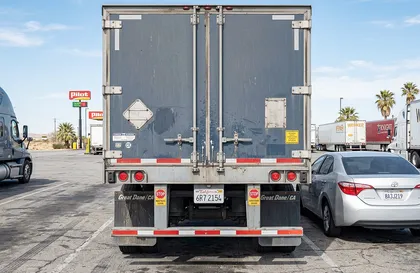
Mansfield bars create a solid contact surface that engages the car’s built-in safety systems during a rear-end collision. Rear underride crashes are very dangerous. The front of a passenger vehicle can slide under the trailer. This happens before the vehicle’s crash structures work as they should.
When that happens, the vehicle’s crumple zones, restraint systems, and other occupant-protection features may not work as effectively as they would in a more conventional frontal collision. A properly positioned rear impact guard is designed to engage the front of the striking vehicle, limit how far it travels underneath the trailer, and reduce the risk of passenger-compartment intrusion.
However, the degree of protection depends on factors such as impact speed, angle, overlap, vehicle design, and the condition of the guard.
Modern automobiles feature sophisticated occupant protection technologies designed by automotive engineers.
- Front Crumple Zones: Engineered sheet metal at the front of a car crushes predictably to absorb crash energy before it reaches the passenger cabin.
- Airbags: Vehicle sensors and control systems may deploy airbags when they detect crash conditions severe enough to warrant deployment. Underride can alter how crash forces reach the vehicle and affect how effectively these restraint systems protect occupants.
- Seatbelt Pretensioners: Pretensioners can tighten seat belts during certain crashes to help position occupants for protection by the vehicle’s restraint systems.
In a severe underride collision, the trailer can push into the passenger space. This event is called a passenger compartment intrusion. This intrusion can lead to severe head and chest injuries for car occupants, even at low speeds.
A well-designed and maintained Mansfield bar has a lower contact point. This helps it engage with the front of the striking vehicle. It also limits how far the vehicle goes under the trailer. By reducing underride and intrusion, the guard can improve the opportunity for the passenger vehicle’s crash structures and restraint systems to protect occupants. However, it cannot guarantee airbag deployment, prevent all intrusion, or eliminate the risk of serious or fatal injury.
The National Highway Traffic Safety Administration (NHTSA) explains that rear guards are intended to prevent excessive underride and passenger-compartment intrusion while helping the passenger vehicle’s safety systems work as designed.
No guard can make every rear-end crash survivable. Crash speed, angle, vehicle size, overlap, guard condition, and other factors affect the result. Federal standards establish minimum safety performance under defined conditions; they are not a guarantee against injury.
Are All Trucks Required To Have Mansfield Bars?
Federal Motor Vehicle Safety Standards (FMVSS No. 224) requires rear impact guards only on trailers and semi-trailers with a gross vehicle weight rating (GVWR) of 10,000 pounds or more, manufactured on or after January 26, 1998.
Separate federal rules also require rear-end protection on many older and other commercial motor vehicles. Under 49 CFR § 393.86(b), many motor vehicles manufactured after December 31, 1952, must have rear impact guards if the rear bottom edge of the body or chassis is more than 30 inches above the ground when the vehicle is empty, subject to specified exceptions. These vehicles are governed by different dimensional requirements than post-1998 trailers covered by FMVSS Nos. 223 and 224.
Even among covered trailers, certain designs are exempt, including pole trailers, pulpwood trailers, low-chassis vehicles with existing rear protection, specific road-construction trailers, special-purpose vehicles, “wheels-back” trailers, and trailers used as temporary living quarters.
Whether an exemption applies depends on the vehicle’s design, weight, manufacture date, and use, not its general category. A vehicle isn’t automatically exempt just because it’s a dump truck or delivery truck, and an exempt design may still be subject to other rear-protection requirements. Exemption status can vary based on specific facts. So, an attorney and an accident reconstruction expert usually review it after a crash.
California And Federal Underride Guard Regulations
Rear underride guard requirements come mainly from federal law. California applies these federal safety rules to many commercial vehicles operating in the state.
Federal Rear Underride Guard Requirements
The NHTSA sets the safety standards that apply when covered rear guards, trailers, and semi-trailers are manufactured. Meanwhile, the Federal Motor Carrier Safety Administration (FMCSA) regulates the condition and use of covered commercial vehicles once they are operating on the road.
Two key NHTSA standards govern rear underride protection.
Rear Impact Guards
Federal Motor Vehicle Safety Standard (FMVSS) No. 223 sets performance requirements for the rear guard itself. It regulates the guard’s strength, energy absorption, attachment, and other performance features, helping limit how far a smaller vehicle travels beneath a trailer during a rear-end crash.
The standard is intended to reduce deaths and serious injuries when passenger vehicles strike the rear of trailers and semi-trailers.
Rear Impact Protection
Federal Motor Vehicle Safety Standard (FMVSS) No. 224 applies to qualifying trailers and semi-trailers. It requires covered vehicles to have rear impact protection that meets the applicable FMVSS No. 223 requirements and addresses how the guard is positioned on the trailer.
FMCSA rules then address these guards on commercial vehicles in service. In general, trailers and semi-trailers manufactured on or after January 26, 1998, with a gross vehicle weight rating (GVWR) of 10,000 pounds or more, must have a rear impact guard that complies with the federal standards in effect when the vehicle was manufactured.
For many covered trailers, the guard must be:
- No more than 22 inches above the ground.
- Within about 4 inches of each side.
- No more than 12 inches forward from the rear.
These placement rules are designed to keep the guard low and wide enough to engage the front of a smaller vehicle before it travels too far beneath the trailer.
Federal standards were strengthened in 2022, with compliance with the upgraded requirements required for newly manufactured covered trailers and rear guards beginning July 15, 2024. The upgraded standards require greater guard strength and energy absorption intended to protect occupants of compact and subcompact passenger cars in 35-mph rear impacts at full overlap and 50% overlap.
These requirements do not mean every truck must have the same rear guard. Federal rules include exemptions for certain vehicle designs, and the specific requirements can depend on the vehicle’s type, weight, manufacture date, and configuration.
A guard that meets every federal requirement does not guarantee that underride or serious injury won’t occur. Federal standards test guard performance under specific, defined conditions. They don’t account for every real-world crash scenario.
Several factors can affect the outcome even when the guard itself is compliant, including:
- Impact speed.
- Partial or offset impact.
- Vehicle geometry.
- Guard strength and design.
- Attachment integrity.
- Corrosion or physical damage.
- Trailer configuration.
How California Applies Rear Underride Guard Rules
California does not create a separate rear underride guard standard for regulated commercial vehicles. Instead, California has adopted federal commercial vehicle equipment rules, including the rear impact guard requirements in 49 CFR § 393.86. The California Highway Patrol (CHP) enforces those requirements on covered vehicles operating in the state.
- Covered trailers and semi-trailers must have rear impact protection that complies with the federal standards applicable to the vehicle.
- CHP can inspect rear guards during commercial-vehicle inspections and at truck terminals.
- A missing guard or damage that makes the guard insecure can violate applicable inspection requirements.
CHP also operates California’s Basic Inspection of Terminals (BIT) Program, which reviews qualifying motor carriers and their vehicle maintenance and inspection practices.
California Vehicle Code § 2813 requires commercial drivers to stop for CHP inspections when signs require them to do so. These inspections may include the vehicle’s equipment, including required rear impact guards.
Which Vehicles May Be Exempt?
Under FMVSS No. 224, the modern manufacturing requirement does not apply to certain designs, including:
- Pole trailers.
- Pulpwood trailers.
- Low-chassis vehicles that already provide qualifying rear protection.
- Certain road-construction horizontal-discharge trailers.
- Special-purpose vehicles.
- “Wheels-back” vehicles, where the rear axle and tires are positioned close to the rear.
- Temporary living quarters covered by the federal definition.
Whether an exemption applies depends on the vehicle’s design, weight, manufacture date, and use. A vehicle should not be considered exempt simply because it is a dump truck, delivery truck, or another specific type.
Why Mansfield Bars Matter In A California Truck Accident Case
Underride guards are meant to help reduce injuries. The Insurance Institute for Highway Safety has reported that properly performing rear guards can significantly lower the risk of a fatal injury in a rear underride crash.
If a Mansfield bar failed in a crash, it can point to one or more of the following issues:
- Violation of Maintenance Standards: The motor carrier failed to inspect, repair, or replace a damaged or rusted underride guard.
- Non-Compliant Trailer Equipment: The trailer was equipped with a guard that did not meet federal height or strength dimensions under 49 CFR Section 393.86.
- Inadequate Lighting or Visibility: The truck operator failed to maintain required rear lights or reflective tape, making the guard invisible at night.
- Improper Roadway Stoppages: The truck driver blocked traffic lanes or parked illegally without setting up emergency warning triangles.
- Manufacturing or Design Defects: The guard manufacturer built a device that failed to meet federal structural standards.
Following an underride crash, an attorney and an accident reconstruction expert typically check if the guard is:
- Not removed, missing, or never installed on an exempt vehicle.
- At the correct height and firmly attached to the frame.
- Free of major rust, cracked welds, or bent metal that would weaken it in a crash.
These findings can help show whether a safety violation, maintenance failure, defective component, or another problem contributed to the underride crash. They can help find out who is legally responsible. This is important to figuring out liability after a truck accident.
Who Can Be Held Liable When An Underride Guard Fails In California?
In an underride crash, liability does not end with the driver. The trucking company that failed to maintain a guard can be held responsible. So can a manufacturer that made a faulty guard. California law allows victims to pursue all responsible parties at once.
Any of the following parties may be held financially responsible:
- Truck Driver: Liability generally requires showing that the driver operated the vehicle negligently and knew or reasonably should have known about the guard’s condition. Whether a driver’s conduct contributed to the crash and whether that conduct caused the resulting injuries are questions that turn on the evidence in each case rather than on the guard’s condition alone.
- Trucking Company: California Civil Code § 1714 requires all persons and companies to exercise ordinary care. It doesn’t impose a duty to maintain underride guards on its own, but it can support a negligence claim where a carrier’s failure to meet its equipment obligations caused injury. This applies to box truck accidents and standard semi-trailer crashes alike.
- Trailer Manufacturer: California’s product liability rule, set in Greenman v. Yuba Power Products, allows claims for a design defect (a flaw in how the guard was engineered) or a manufacturing defect (an error made when a specific unit was built). Federal certification doesn’t automatically resolve a product liability claim. Its effect depends on the specific facts and applicable legal principles.
After a crash, carriers may send response teams to the scene within hours. Key evidence can disappear fast, including:
- Electronic logging device (ELD) data.
- Camera footage, guard debris.
- Repair records.
A preservation letter can help establish that the carrier was placed on notice to preserve relevant evidence. If relevant evidence is later destroyed, a court may impose appropriate evidentiary or discovery sanctions.
Our truck accident lawyers at Arash Law know how to pursue these multi-party claims and move quickly, because legal deadlines are fixed and delays can cost you both evidence and your right to recover.
We have years of experience representing our clients against the at-fault parties for many types of personal injury cases, including truck accidents.
Below are some of the cases we’ve won for our clients:
- $1,150,000 — Our middle-aged woman suffered neck and back injuries after a delivery truck rear-ended her vehicle. We reached a $1,150,000 settlement before the trial.
- $1,000,000 — Our client, parked safely on the side of the I-10 freeway, was struck by a swerving tow truck. He received a settlement of $1,000,000 for serious head injuries.
- $1,000,000 — Our client was rear-ended by a commercial work truck and suffered disc injuries in his back. After years of litigation, we secured a last-minute settlement before trial to secure his future.
Disclaimer: Past case results do not guarantee similar outcomes in future cases. Every case is different and depends on its unique circumstances.
Catastrophic Injuries When A Mansfield Bar Fails
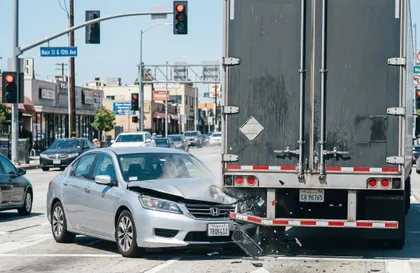
The injuries in an underride crash are usually worse than in a typical rear-end collision because the guard works with the passenger vehicle’s crash structure by giving it something lower to engage.
When the guard is missing, too small, or breaks on impact, the trailer can hit where people sit. This often leads to injuries worse than what the crash speed would indicate.
- Traumatic Brain Injury (TBI): When a guard fails to stop the car low, the trailer bed strikes the windshield or roofline rather than the bumper height. That direct, high-force impact to the head and upper body can cause severe TBI in underride crashes.
- Spinal Cord Injury: Underride can bypass normal frontal crash structures and reduce the effectiveness of occupant-protection systems. Without that protection, the sudden force of the trailer entering the cabin can damage the spine, sometimes resulting in partial or complete paralysis.
- Amputations and Crush Injuries: Deep intrusion into the passenger compartment can trap or crush limbs against the dashboard, seat, or door frame. The guard is designed to limit this outcome by engaging the striking vehicle and reducing underride and intrusion into the passenger compartment.
- Broken Bones: Even when the guard partially engages, an undersized, poorly mounted, or damaged guard can still allow enough intrusion to fracture ribs, arms, legs, or the skull.
Because these injuries often require emergency surgery, rehabilitation, and long-term care, the condition of the guard at the time of the crash is important. Whether it was present, correctly mounted, and well-maintained is frequently one of the first things an attorney and an accident reconstruction expert will investigate.
What Compensation May Be Available?
When another person or company is legally responsible for the crash, an injured person may be able to seek compensation for losses caused by the accident. California Courts identifies medical costs, lost wages, ongoing treatment, emotional harm, and future injury-related losses as examples of damages that may arise in a personal injury case.
Economic damages compensate for measurable financial losses caused by the crash. Depending on the circumstances, they may include:
- Past and future medical expenses.
- Lost wages and other income.
- Loss of future earning capacity.
- Rehabilitation and long-term care expenses.
- Property damage and loss of use of a vehicle.
- Other reasonable accident-related expenses.
Non-economic damages address losses that do not have a fixed dollar value.
In an underride accident case, these damages may include compensation for:
- Physical pain and suffering.
- Emotional distress.
- Physical impairment or disability.
- Disfigurement or scarring.
- Loss of enjoyment of life.
- Loss of consortium in appropriate cases.
Punitive Damages
Punitive damages aim to punish, especially wrongful conduct, and discourage similar conduct, rather than simply compensate the injured person.
Under California Civil Code § 3294, punitive damages may be available when the plaintiff proves by clear and convincing evidence that the defendant acted with malice, oppression, or fraud.
For example, a punitive-damages claim might be considered if the evidence shows conduct far more serious than ordinary carelessness. Punitive damages are only applicable in rare cases, and additional requirements apply when a plaintiff seeks to hold an employer responsible for an employee’s conduct.
Wrongful Death Damages
If an underride collision is fatal, certain surviving family members or other persons authorized by California law may be able to bring a wrongful death claim.
Depending on the circumstances, wrongful death damages may include losses such as:
- Funeral and burial expenses.
- Loss of financial support.
- Loss of household services.
- Loss of gifts or benefits the family could reasonably have expected.
- Loss of love, companionship, comfort, care, assistance, protection, affection, society, and moral support.
The types and amount of compensation available after an underride collision depend on the injuries, evidence, financial losses, applicable insurance, and the parties found legally responsible.
Deadlines To File A California Truck Accident Lawsuit
After a truck accident in California, your time to file a lawsuit is limited. Under California’s statute of limitations, you generally have two years from the crash date to file a lawsuit. Different or shorter deadlines can apply in some cases.
For example, a claim against a California public entity generally must be filed with the agency within six months after the legal claim arises, and separate deadlines apply to any later lawsuit.
- If the public entity gives written notice rejecting the claim in accordance with Government Code § 913, a lawsuit generally must be filed within six months after the notice is personally delivered or mailed.
- If no such written notice is given, Government Code § 945.6 generally allows up to two years from the date the claim arose to file the lawsuit, subject to applicable exceptions.
If you miss the deadline, you may lose the right to file suit. That means no recovery, regardless of how strong your evidence was or how serious your injuries were.
Getting free advice from a truck accident lawyer early in the process can help you understand where you stand before that deadline passes. Victims at this stage often have questions about liability, what evidence still matters, and what to expect if they decide to move forward.
Frequently Asked Questions About Underride Truck Accidents
After a crash, people often have questions about what to do after a truck accident, who pays, what partial fault means, and whether they can afford a lawyer. When you are still healing from serious injuries while medical bills keep arriving, those questions can feel urgent and hard to sort through on your own. The answers below address the questions truck accident victims commonly ask before seeking legal help.
Can I Sue If I Was Partially At Fault For The Accident?
California’s pure comparative fault rule, established by the California Supreme Court in Li v. Yellow Cab Co., reduces your compensation by your percentage of fault but does not bar you from filing a claim. Proposition 51, codified as California Civil Code § 1431.2, limits joint liability for non-economic damages. If you are found 35% at fault, you may still be able to recover up to 65% of your total losses.
Why Do Side Underride Accidents Still Happen?
No federal law currently requires side underride guards on commercial trucks. California has also not enacted such a requirement. A 2024 state bill (SB 961) that would have mandated side guards on trucks with a GVWR over 10,000 pounds was later revised to remove that provision. Federal regulators have studied side underride guards and proposed rulemaking, but no federal mandate is currently in effect. This leaves people in smaller vehicles with less protection when driving beside large trucks.
Are Truck Drivers Responsible For Checking Their Underride Guards?
Yes. Drivers and trucking companies must run pre-trip and routine inspections. Drivers must be satisfied that the commercial vehicle is in a safe operating condition before driving, while motor carriers have broader inspection, repair, and maintenance duties. A damaged or insecure rear impact guard may be relevant to the question of whether those obligations were met.
Speak With Arash Law After A Mansfield Bar Accident
Evidence in truck accidents can disappear quickly, and acting promptly can help build a strong case. Our lawyers will review your case, answer your questions, and explain your options.
Arash Law handles personal injury cases on a contingency fee basis. This means that you don’t pay attorneys’ fees unless we recover compensation for you. Our team handles different types of personal injury cases, including car, truck, motorcycle, bicycle, pedestrian, premises liability, and workplace accidents.
Call (888) 488-1391 today to request your free case review with one of our California truck accident lawyers.