TL;DR: The most common swimming injuries are swimmer’s shoulder, backstroker’s knee, and lower back injuries. Swimmers may also sustain acute or traumatic injuries due to accidents caused by another’s negligence, and coaches or facilities may be liable if the harm results in significant losses.
Highlights:
- Get checked by a medical professional, even if symptoms seem minor.
- Report the incident immediately and request a copy of the incident report.
- Photograph or video hazards like missing depth markers, broken tiles, or faulty ladders.
- Collect witness names and contact details, including staff who responded.
- Preserve swimsuits, gear, and defective equipment without washing or repairs.
- Ask the facility to preserve surveillance, maintenance logs, and staff schedules.
- Track expenses and missed work, and note deadlines – 2 years for most personal injury lawsuits, 6 months for public-entity claims.
Tip: When reporting or speaking with insurers, stick to observable facts, avoid guessing, and delay signing documents until you understand them.
Table of Contents
The most common swimming injuries include tendinitis and shoulder impingement, according to the 2025 study Injury Patterns and Frequency in Swimming: A Systematic Review. Swimmers sustain them so often that, according to StatPearls, they both fall under “swimmer’s shoulder,” a term that covers several types of shoulder pain stemming from various causes.
Other common swimming injuries affect the knee and lower back. In some cases, swimmers may suffer head injuries, breathing emergencies, or injuries caused by collisions and defective equipment.
Many of these injuries develop gradually from repetitive movements, improper technique, or overtraining. However, others may happen due to another’s careless actions, such as when a coach uses unsafe training methods, a swimming program fails to provide reasonable supervision, equipment malfunctions, or another swimmer behaves recklessly.
Not every swimming injury creates a personal injury claim. However, California law may allow an injured swimmer to seek compensation when another person, business, organization, or public entity’s wrongful or negligent conduct caused the harm.
Data Transparency Note: This blog used the 2025 Applied Sciences article, “Injury Patterns and Frequency in Swimming: A Systematic Review,” to identify the most common swimming injuries. The article’s findings are based on a review of 9 studies sourced across WoS, PubMed, Scopus, and SportDiscus. The majority focused on elite-level swimmers, followed by other trained swimmers. Only one study highlighted injury patterns in recreational swimming, which may limit the generalizability of the article’s findings. This blog will be updated when relevant data on general swimming injury patterns becomes available.
Why Swimming Is Associated With Some Injuries More Than Others
Swimmer’s shoulder is by far the most common swimming injury because swimming primarily relies on upper body strength. StatPearls notes that 90% of a swimmer’s power comes from the torque at their shoulder, and most strokes also leverage this part of the body. As a result, the shoulder is most often injured, especially among elite swimmers who swim 80,000 meters a week using roughly 30,000 strokes per arm.
For similar reasons, swimming is associated with these specific injuries more than others:
- Breaststroker’s Knee: The whip-kick motion used in breaststroke places repetitive inward (valgus) stress on the knee.
- Lower Back Pain: Butterfly and breaststroke require repeated arching (hyperextension) of the lumbar spine to keep the body high in the water. Over time, this can lead to muscle strain, disc irritation, or stress fractures of the vertebrae (spondylolysis), especially in young athletes who engage in heavy training.
- Neck Strain: Turning only the head (rather than the torso) to breathe in freestyle, or holding the head too high in breaststroke, can strain the neck muscles and cervical spine.
Many of these injuries result from overuse. However, dangerous conditions can also lead to acute or sudden traumatic harm. In these cases, common injuries associated with swimming can include:
- Severe Hypoxia & Anoxic Brain Damage: Non-fatal drowning incidents can leave survivors with severe, lifelong brain injury due to oxygen deprivation. These emergencies may occur when lifeguards fail to maintain active surveillance, when swim facilities are dangerously understaffed, or when coaches enforce dangerous high-risk breath-holding drills (shallow-water blackout).
- Impact Trauma, Spinal Cord Injuries, & Concussions: Swimmers can suffer catastrophic head, neck, and back injuries from striking hidden submerged hazards (such as unmarked shallow sandbars, rocks, or debris) in natural waters, or colliding with solid objects like starting blocks, wall ledges, and shallow basin floors. These accidents often point to missing or inadequate depth warnings, improper facility maintenance, or poorly organized swim meets.
- Lacerations & Severe Soft Tissue Damage: Dangerous conditions such as broken pool tiles, rusted ladders, sharp dock hardware, or submerged jagged metal in open water can slice through skin and muscle. Property owners and event organizers may be held liable if they fail to inspect, maintain, or repair these dangerous conditions before permitting swimmers into the water.
How To Prevent Swimming Injuries
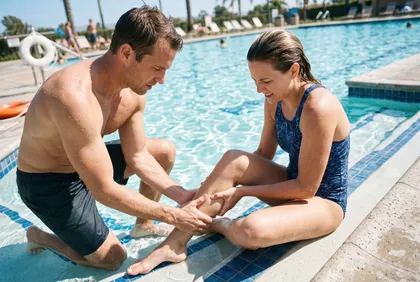
Many swimming injuries can be prevented through proper training, supervision, and awareness of your surroundings. Swimmers, parents, coaches, and facility staff can all take steps to reduce the risk of harm by taking the following precautions:
- Warm Up Before Swimming: Gentle stretching and light swimming can prepare the shoulders, knees, back, and other muscles for repeated movement.
- Use Proper Technique: Poor stroke or kicking technique can place extra stress on the joints and muscles. Coaches and instructors can help swimmers correct movements that may cause overuse injuries.
- Increase Training Gradually: Sudden increases in distance, speed, or workout intensity can lead to strains and inflammation. Swimmers should allow time for rest and recovery.
- Supervise Children Closely: Kids should remain within sight and reach of a responsible adult. Flotation devices do not replace active supervision.
- Follow Posted Safety Rules: Swimmers should obey posted warnings, stay within designated swimming areas, and avoid rough play that could lead to collisions.
- Inspect Safety Equipment: Facility staff and property owners should maintain fences, gates, ladders, lighting, warning signs, and rescue equipment wherever people swim.
- Avoid Swimming Alone: Always swim with someone else or near a trained lifeguard. This way, help is nearby in case of an emergency.
When Does A Swimming Injury Become A Personal Injury Case?
Although swimming naturally involves some risk of injury, not every swimming injury is preventable. A personal injury case may arise when another person or company acts negligently and causes or increases the risk of harm. Generally, this means showing that someone had a duty to act with reasonable care, failed to do so, and caused the swimmer’s injury.
Examples include:
- Unsafe Coaching Methods: A coach or instructor may be responsible for requiring dangerous drills, ignoring a swimmer’s reported symptoms, pushing an athlete beyond safe physical limits, or failing to provide reasonable instruction or supervision.
- Inadequate Supervision: A swim school, camp, team, or facility may face liability if staff members fail to supervise swimmers appropriately or respond reasonably to signs of distress.
- Reckless Conduct by Another Swimmer: Ordinary contact may be an expected part of shared swimming activities. However, a claim may be supported by intentionally striking another swimmer, engaging in dangerous horseplay, or acting far outside normal swimming behavior.
- Improperly Organized Events: Race organizers or swim programs may be responsible when unreasonable course design, overcrowding, inadequate safety planning, or a delayed emergency response contribute to an injury.
California law generally does not require others to eliminate risks inherent to a sport. However, a person or organization may still be responsible for conduct that increases the danger beyond the ordinary risks of swimming.
The key question sports injury lawyers consider is not simply whether an injury occurred while swimming. It is whether someone else’s careless, reckless, or wrongful conduct caused the injury or made the activity more dangerous than it normally would have been.
Who Is Liable For A Swimming Accident In California?
Responsibility for a swimming injury depends on how it happened and whose conduct contributed to it. More than one person, business, organization, or government entity may be involved.
Potentially responsible parties may include:
- Coaches and Instructors: They may be responsible for unsafe training, ignoring known medical limits or signs of distress, or providing poor supervision or instruction.
- Swim Programs and Schools: Swim schools, teams, camps, and schools may be liable for unsafe policies, negligent hiring, inadequate supervision, or poor emergency planning.
- Event Organizers: Organizers may be responsible for unsafe course design, overcrowding, inadequate safety staff, or delayed emergency response.
- Other Swimmers: A swimmer may be responsible for intentional harm, reckless behavior, or dangerous horseplay beyond the normal risks of swimming.
- Property Owners and Operators: They may be liable when unsafe property conditions contribute to an injury.
- Public Entities: Cities, counties, public schools, and other government agencies may be involved in claims arising from public programs or facilities. Shorter deadlines may apply.
Depending on the facts, several parties can share liability under California’s pure comparative negligence rule. That includes the injured victim. This means you can still seek compensation even if you were partly at fault. If you ignored a posted depth warning and were injured as a result, that does not end your claim. However, a court may assign you a share of fault and deduct that percentage from your potential award.
What Compensation Can You Seek For A Swimming Injury?
A swimming injury can leave you with two main types of losses: economic damages and non-economic damages. You can claim both in a California personal injury case. Even if you shared some fault for the accident, you may still recover money.
Economic damages are the real costs tied to your injury. These include medical bills, lost wages, and follow-up care, such as chiropractic or physical therapy sessions. Non-economic damages cover your pain, suffering, and emotional harm.
Keeping clear records of each bill, missed workday, and treatment visit helps show the full value of what you lost. That can be especially important for swimmer’s shoulder and other overuse injuries caused by repetitive motions, as these involve harm that builds over time and can be harder to prove.
How Long Do You Have To File A California Swimming Injury Claim?
California Code of Civil Procedure § 335.1 generally gives an injured person two years to file a personal injury lawsuit based on another party’s wrongful or negligent conduct. This deadline may apply to claims involving a private coach, swim school, event organizer, equipment company, facility operator, or another swimmer.
Under § 911.2 of the state’s Government Code, different requirements may apply when a public entity is involved. An injury connected to a public school swim team, city recreation program, county-operated facility, or another government program may require an administrative claim within 6 months. This claim generally must be submitted before filing a lawsuit against the public entity.
After a public entity rejects the claim, another deadline may apply for filing the lawsuit. In many cases, proper written notice of rejection starts a six-month filing period.
Claims involving minors, defective products, wrongful death, delayed discovery, or multiple responsible parties may follow different rules or involve exceptions. Do not assume that being under 18 automatically extends every deadline, especially when a government entity may be responsible.
If you find yourself thinking, “I need a personal injury lawyer,” do not wait until the deadline is approaching. An attorney can review your situation and help you understand your filing deadlines. Specific situations, like injuries at public pools or claims involving minors, often raise follow-up questions about how these rules apply.
What To Do After A Swimming Injury

After a swimming injury, focus first on your safety and medical needs. Then take steps to document what happened and preserve evidence that may help explain how the injury occurred.
- Get Out of Danger and Call for Help: Get out of the water and call 911 if there are injuries that require emergency medical assistance.
- Seek Medical Care: Get evaluated even if the injury does not initially seem serious. Adrenaline can mask pain for a short time. Symptoms of concussions, internal injuries, or lack of oxygen might not show up right away. Follow the medical provider’s instructions and attend all recommended appointments.
- Report the Incident: Notify the lifeguard, coach, event organizer, or facility staff as soon as possible. Ask them to prepare an incident report and request a copy. Write down the names and job titles of the staff who responded.
- Document the Scene: Take photos or videos of the condition that caused the injury, such as a damaged ladder or dock, missing depth markers, defective fencing, or a lack of warning signs. Conditions may be repaired or changed soon after an accident.
- Collect Witness Information: Get the names, phone numbers, and email addresses of anyone who saw the incident or noticed the hazardous condition beforehand. Witnesses may help confirm what happened if responsibility is later disputed.
- Preserve Clothing and Other Evidence: Keep the swimsuit, footwear, flotation device, or other items involved in the incident. Do not repair, wash, or throw them away if they could help show how the injury happened.
- Keep Records of Your Losses: Save medical bills, receipts, medication costs, transportation expenses, and proof of missed work. Consider keeping notes about your pain, limitations, and how the injury affects your daily activities.
- Avoid Giving Detailed Statements Too Soon: Provide only the necessary facts when reporting the incident, but avoid guessing the cause, accepting blame, or signing documents you do not understand. You should also avoid posting details, photos, or opinions about the accident on social media.
- Ask That Evidence Be Preserved: Surveillance footage, inspection records, staff schedules, maintenance logs, and incident reports are crucial, but they can be lost or overwritten. Reporting the incident quickly and gathering photos, staff names, witness details, and the incident report can help ensure this evidence isn’t lost.
Taking these steps can help you support a potential legal claim. For instance, if your child was hurt at a swimming pool and you’re pursuing compensation on their behalf, a swimming pool accident lawyer can use the photos you took at the scene to demonstrate whose actions caused the injury.
Frequently Asked Questions About Swimming Injuries
A swimming injury can leave you feeling confused, overwhelmed, and unsure of your next steps. These answers aim to address the most common concerns you and victims of similar incidents usually have following an injury.
Can I Pursue Compensation For A Repetitive Overuse Injury Like Swimmer’s Shoulder?
Generally, overuse injuries like swimmer’s shoulder are considered inherent risks of swimming and are difficult to turn into a personal injury claim. However, an overuse injury can become a legal case if it was directly caused by another party’s negligence, such as a coach forcing a swimmer to train through severe pain, imposing unsafe training regimens, or ignoring clear medical restrictions.
Who Is Responsible For An Injury Caused By Defective Swimming Equipment?
A manufacturer, distributor, or seller may be strictly liable if a product defect causes a swimming injury. Under strict liability, you do not have to prove ordinary negligence. Instead, you typically have to show that the defect existed and that it directly caused your injuries and losses. Relevant evidence may include the equipment itself, product instructions, purchase or rental records, prior complaints, photographs, and expert inspection.
When Should I Contact A Lawyer After A Swimming Injury?
Consider contacting a lawyer when the injury is serious, the cause is disputed, or unsafe coaching, defective equipment, inadequate supervision, reckless conduct, or poor event planning may have contributed. Early legal guidance may also be useful when a child, public school, city program, government entity, product manufacturer, permanent injury, high medical expenses, or substantial lost income is involved.
Get Legal Help For Your California Swimming Injury
If you or a loved one suffered a swimming injury because of unsafe coaching, defective equipment, inadequate supervision, reckless conduct, poor event planning, or another person’s negligence, consider acting promptly. Equipment may be discarded, videos may be deleted, and training, communication, or event records may become harder to obtain over time.
Arash Law is ready to help. Our team can review your case, outline your options, and help you through the claims process if you decide to hire us. AK Law takes every personal injury case on a contingency fee basis, meaning you pay no legal fees unless we win.
Below are a few of the case results we’ve obtained for clients in the past. Though they don’t guarantee a successful outcome for your situation, they show how we have helped victims pursue compensation after bodily injuries caused by another’s negligence:
- $18,700,000 – Premises Liability: Our 18-year-old client suffered severe injuries while working on the defendant’s farm. He was using the defendant’s tractor and harvesting equipment when the tractor drove into a hole, causing the machinery to collapse on him and crush his legs. The defendant refused to accept responsibility, so we filed the case in arbitration. We won and secured an $18.7 million award for our client.
- $5,000,000 Personal Injury: Our lawyers helped secure $5 million for a client who suffered a traumatic brain injury after falling through a skylight.
Call AK Law at (888) 488-1391 for a free, no-obligation initial consultation. Our team is ready to fight for every dollar California law allows.