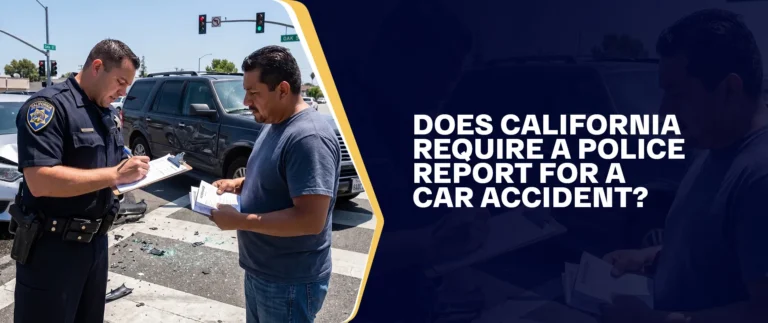
TL;DR: A sideswipe accident occurs when the sides of two vehicles collide. The driver who leaves their lane may be at fault, though both drivers can share fault. California requires an SR-1 within 10 days for injuries, deaths, or property damage over $1,000.
Highlights:
- Photograph both vehicles, damage, skid marks, lane markings, and road conditions immediately after the crash.
- Get witness names and contact information before they leave the scene.
- See a doctor right away, even if injuries don’t feel serious — whiplash and soft tissue damage can appear later.
- File an SR-1 form with the California DMV within 10 days if property damage exceeds $1,000 or if anyone was injured or killed.
- Stick to facts when speaking with your own insurer and avoid recorded statements to the other driver’s insurance company.
- Under California’s comparative negligence rule, you may still recover damages even if partially at fault.
Tip: Focus on gathering evidence and documentation at the scene rather than discussing fault or apologizing, since these details become crucial if liability is later disputed.
Table of Contents
A sideswipe accident involves side-to-side contact between vehicles, not a front- or rear-impact collision. It happens when the sides of two vehicles scrape or collide as they travel side by side. Driver error is usually the cause of that contact.
In California, sideswipe crashes can occur on busy freeways, interchanges, and multilane roads where vehicles merge or travel close together. These crashes generally happen in two ways. On freeways and multi-lane roads, two vehicles going in the same direction make contact when one drifts into the other’s lane. On two-lane roads without a divider, a vehicle can cross the center line and clip oncoming traffic going the other way.
The force does not have to be large to cause serious harm. At freeway speeds, even a brief scrape can be enough to jerk the wheel, push a vehicle sideways, or send it toward a guardrail. What looks like a minor scrape is often just the start. The real danger unfolds in the seconds after, when control is lost.
Common Causes Of Sideswipe Collisions
Driver error is a leading cause of sideswipe crashes. Missing a blind spot check, drifting out of a lane, or misjudging spacing are among the most common reasons. Bad weather and vehicle problems can also cause a car to drift out of its lane.
Driver Error
Driver behavior is a common factor in sideswipe crashes. These collisions often happen when a driver fails to notice another vehicle, loses focus, or makes an unsafe lane change.
- Blind Spot Failures and Inattention: A driver changes lanes without checking their blind spot or noticing a nearby vehicle. Inattention is a common contributing factor in these crashes.
- Distracted or Impaired Driving: Texting or driving under the influence (DUI) causes drivers to drift into other lanes. They may not notice until they have already made contact.
- Aggressive Driving and Failure to Signal: Weaving between lanes without signaling gives other drivers no time to respond.
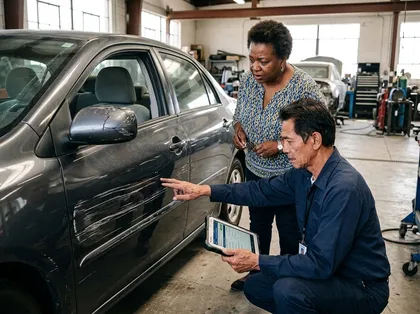
Environmental And Mechanical Causes
Not every California sideswipe crash is caused by poor driving. Weather, road conditions, construction zones, and vehicle problems can also make it harder to stay within a lane.
- Bad Weather: Rain, coastal fog, mountain snow, and strong winds can reduce visibility and traction. High winds may be especially dangerous on bridges, open freeways, and desert highways, where they can push a vehicle toward another lane.
- Faded or Missing Lane Markings: Worn lane lines can make it hard to see where one lane ends and another begins. This may be a problem at night, during rain, or in California roadwork zones with temporary lane shifts.
- Steering or Brake Failure: A damaged tire, steering problem, or brake failure can cause a vehicle to drift or move suddenly into another lane, even when the driver is alert.
Even when the cause is clear, what comes next is not. The initial contact can push either car off course, cause a sharp correction, or send one vehicle into oncoming traffic. How the crash unfolds depends on speed and position, not on what caused it.
Sideswipe accident attorneys often rely on evidence such as accident scene photos, dashcam footage, and eyewitness accounts to determine who may be at fault in these collisions.
The Danger Of The Second Impact And Physical Injuries
A secondary impact can make a sideswipe crash much more dangerous. After the initial contact, a vehicle may spin, leave the road, enter opposing traffic, or strike another object. That second crash is often where the most serious injuries happen.
The car may:
- Spin into another lane.
- Cross into oncoming traffic.
- Hit a guardrail or center divider.
- Run off the road.
- Strike a parked car, pole, tree, or building.
- Roll over after hitting a curb or uneven ground.
- Crash into another vehicle in nearby traffic.
These later impacts can cause far more damage than the first scrape. They may also lead to serious injuries, especially when the vehicle hits a fixed object or collides with another car at high speed.
Determining Fault In A Sideswipe Collision
Determining fault in a sideswipe collision often depends on what each driver was doing just before the crash. California traffic laws require drivers to stay in their lane and make lane changes or turns only when it is safe to do so. While many sideswipe accidents have a clear at-fault driver, others involve shared responsibility.
Common situations that may affect fault include:
- Unsafe Lane Changes: California Vehicle Code sections 21658 and 22107 require drivers to stay in their lane and change lanes only when it is safe to do so. Drivers must also signal before making a lane change that could affect another vehicle. A driver may be at fault if they change lanes without enough space or fail to notice a nearby vehicle.
- Right-Turn Collisions: A sideswipe can occur when two vehicles turn into each other’s path. Fault may depend on each driver’s lane position, use of turn signals, and whether each driver turned safely.
- Lane-Splitting Motorcycle Accidents: California Vehicle Code section 21658.1 permits motorcyclists to legally lane-split in slow or stopped traffic. A driver may be at fault for making an unsafe lane change. A rider may share fault if unsafe speed or careless riding helped cause the sideswipe.
-
Bicyclist and Pedestrian Sideswipes: A driver can sideswipe a bicyclist or pedestrian by passing too closely. This can happen when they turn across their path, enter a bike lane, or let part of their vehicle, such as a side mirror, come into contact with them. California Vehicle Code section 21760 says drivers must leave at least three feet when passing a bicyclist.
When the bicyclist is traveling in the same lane, and another lane in the same direction is available, the driver must change lanes if practicable, safe, and legal. If traffic or road conditions make three feet impossible, the driver must slow to a reasonable and prudent speed and pass only when it will not endanger the bicyclist.
- Parking Lot Sideswipes: Parking lot sideswipes often happen when a driver backs out, turns too closely, or enters another vehicle’s path. Drivers must use reasonable care and yield when needed. The applicable laws may depend on whether the lot is public or private and on how the sideswipe occurred. For example, section 21804 generally requires a driver leaving a parking lot to yield before entering or crossing a road.
In sideswipe collisions, fault may not always be straightforward. If two drivers merge into the same lane at the same time, both may share responsibility. California’s pure comparative negligence rule reduces your compensation by your percentage of fault. For example, if you are 20% responsible, you may still recover 80% of your damages.
Sideswipe collisions can be difficult to investigate because there may be no traffic signals, clear lane markings, or independent witnesses to show exactly how the crash occurred. Drivers also often have conflicting accounts of what happened. Gather evidence at the scene, including photos, dashcam footage, and witness statements, to determine whether excessive speed or unsafe riding contributed to the crash.
What To Do After Being Sideswiped In California
When someone sideswipes your car, there are steps you can take to protect both your health and your claim. Acting quickly, getting medical care, and reporting accurately give you a better shot at a fair outcome.
- Stop and exchange information. California drivers must stop after a collision and provide their driver’s license, vehicle registration, insurance information, and current address to the other people involved. Call 911 if anyone is hurt. If the collision causes an injury or death, report it to the CHP or the appropriate local police department within 24 hours. This law-enforcement report is separate from the SR-1 filed with the DMV.
- Take photos and get witness information. Photograph both vehicles, the damage, skid marks, lane markings, and road conditions. Also, check for nearby traffic or security cameras that may have recorded the crash. If anyone saw what happened, get their name and phone number before they leave.
- See a doctor right away. Injuries like whiplash, soft tissue damage, and mild concussions do not always show up immediately. A quick medical checkup can help link your injuries to the sideswipe collision.
- File an SR-1 form with the California DMV within 10 days. California law requires this report if property damage exceeds $1,000 or if anyone was injured and/or killed. This applies no matter who caused the crash.
- Avoid recorded statements to the other driver’s insurer. Their adjuster may use your words to reduce or deny the compensation you may be entitled to receive. Stick to the facts with your own insurer and say nothing more to the other side without legal advice.
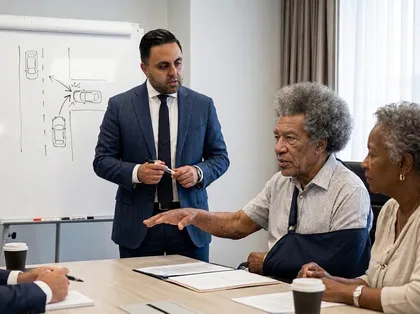
A sideswipe claim involves insurance negotiations, legal deadlines, and filings that are hard to navigate on your own. A lawyer can protect your interests and catch things you might miss.
Frequently Asked Questions About Sideswipe Accidents
Being sideswiped is stressful, and it can leave you with real questions about what comes next. These crashes often involve disputed fault, insurance issues, and decisions that are hard to sort through alone. Understanding a few key issues can help you feel more prepared.
Will My Insurance Rates Go Up If I Am Sideswiped?
California law generally prevents an insurer from treating an accident as a surchargeable at-fault accident unless the driver was principally at fault under the applicable rating rules. If you were not principally at fault, insurers generally should not use the accident as an at-fault surcharge. Your total premium may still change for other approved rating factors or companywide rate changes.
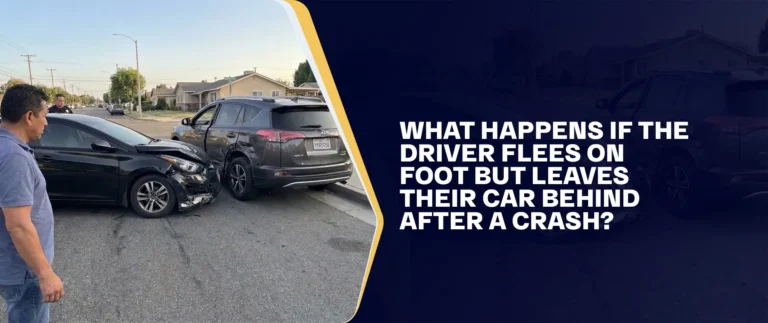
What If The Driver Who Sideswiped Me Didn’t Stop?
If a driver knowingly leaves the scene of a crash without stopping and doing what’s required under California law, they could face hit-and-run charges. Call 911, note what you recall about the vehicle, and report it to your insurer right away.
If you never find the other driver, your uninsured motorist bodily injury coverage can help pay for your injuries — but only if you have that coverage, and only if there was actual physical contact in the sideswipe.
To protect this claim:
- Report the crash to the police within 24 hours.
- Send your insurer a sworn statement within 30 days.
For damage to your car, you’ll usually need to rely on collision coverage instead. That’s because in California, uninsured motorist property damage coverage only kicks in if the other driver is actually identified.
Every sideswipe case is different. A personal injury lawyer can review the facts and help you understand how California’s insurance rules and liability laws apply to your crash.
What Injuries Are Common In Sideswipe Accidents?
Sideswipe accidents can cause a wide range of injuries, from minor sprains and bruises to serious, life-changing conditions. Some of the most common injuries include:
- Whiplash and Soft Tissue Injuries: The sharp sideways force can strain or tear muscles and ligaments in your neck, back, and shoulders.
- Head and Brain Injuries: Your head can hit the side window hard, causing a traumatic brain injury (TBI) that affects memory and physical movement.
- Broken Bones and Crush Injuries: If the vehicle’s side collapses, it can break bones in your arms, legs, or ribs and trap limbs under wreckage.
All of these injuries need prompt medical care. Treatment depends on the type and severity of the injury. After a medical evaluation, some people with musculoskeletal injuries may receive chiropractic care, physical therapy, medication, or other conservative treatment. This care can be costly. To recover those costs, you need to know who was legally responsible for the crash.
Our Lawyers Can Provide Legal Support After A Sideswipe Collision
Many people search for free advice from a sideswipe accident attorney online, but general information can only take you so far. A dedicated consultation gives you answers based on the specific facts of your case, including who was at fault, what your injuries are worth, and what steps to take next.
Our sideswipe accident attorneys at Arash Law (often referred to as AK Law) can handle the legal aspects of your case. We can evaluate your losses and help you determine who may be liable for the accident. Our attorneys handle different kinds of accident cases for victims in California. Some of these cases include:
- $6,000,000: Our client’s wife died in a head-on crash after an intoxicated driver crossed into oncoming traffic. Even though the defense challenged insurance coverage and liability, we obtained a $6 million recovery for our client.
- $5,000,000: We represented an uninsured motorcyclist after a collision with a truck. Although the police report initially blamed our client, the evidence showed that the truck driver failed to follow his training and company safety rules when making a dangerous turn. Through these efforts, we secured a settlement for our client.
- $1,280,000: Our client suffered serious injuries when another driver fell asleep and caused a head-on collision. In just six months, we recovered the full policy limits for our client.
While these are real case results, every case is different. The value of a claim depends on its unique facts and circumstances, so past results do not guarantee a similar outcome. Call (888) 488-1391 today for a free case review to discuss your case and learn how our attorneys can help.