TL;DR: Up to 2 million U.S. accidents may be linked to not using turn signals, based on 2012 SAE data. Drivers who fail to signal can be held liable under California law, and victims may seek compensation for medical bills, lost wages, and pain and suffering. Video and witness evidence can help prove fault if preserved before it disappears.
Highlights:
- Ask witnesses for names, numbers, and what they saw about signaling.
- Save dashcam video immediately and back it up in two places.
- Request nearby business or traffic-camera footage before it overwrites.
- Get the police report and note any CVC 22107 or 22108 citation.
- Seek medical care promptly and keep records linking symptoms to the crash.
- Track out-of-pocket costs and missed work to document your damages.
- Calendar the 2-year lawsuit deadline, or the 6-month government-claim deadline.
Tip: Write a same-day timeline of what happened and stick to verified facts when speaking with insurers.
Table of Contents
There is no official nationwide count of crashes caused specifically by drivers failing to use turn signals. However, one frequently cited 2012 observational study presented by the Society of Automotive Engineers (SAE) estimated that turn signal neglect could contribute to as many as 2 million crashes each year in the United States. The figure is an extrapolation from observed driver behavior, not a count of confirmed crashes. Although no updated national crash total has been published since then, the SAE study remains a widely cited research on the topic.
These findings show that missed signals can affect real road users. When a driver turns or changes lanes without warning, others may have little time to react. The missing warning may contribute to a collision that proper signaling could have helped prevent. These collisions cause serious harm and show why the law treats failing to signal as a traffic safety violation.
California law recognizes that failing to signal before a turn or lane change can cause serious harm. If a driver’s failure to signal led to your crash, you may have the right to pursue a personal injury claim and seek compensation for your losses. Available research and California’s signaling laws support the conclusion that failure to signal can contribute to preventable traffic collisions, although no current national study measures how often this occurs.
The Scope Of The Problem: How Many Crashes Result From Turn Signal Neglect?
There is currently no official nationwide study that measures how many crashes are caused by drivers failing to use turn signals. The most widely cited estimate comes from a 2012 analysis by SAE International.
Research shows how common and dangerous this behavior is:
- A 2012 analysis of SAE data, cited by driver education and traffic safety resources, estimated that turn-signal neglect could be associated with more than 2 million crashes each year in the United States.
- During the same period, distracted driving was linked to about 950,000 crashes each year. The analysis estimated that turn signal neglect contributed to more than twice as many crashes.
Although no official nationwide data isolates crashes caused by missed turn signals, turn signal neglect is often associated with intersection and rear-end collisions. At intersections, a driver who turns without signaling may leave others unsure of their next move. In rear-end crashes, failing to signal before slowing or turning can give the driver behind less time to react. However, fault still depends on the full circumstances of the collision.
Failure to signal is a preventable driving error that can contribute to crashes on California roads. When a driver skips a signal, nearby drivers get no warning before a lane change or turn. Turn signal neglect often leads to several types of crashes:
- Sideswipe Collisions: A driver changes lanes without signaling, leaving nearby drivers no time to adjust their speed or position. The vehicles collide as one vehicle attempts a lane change.
- T-Bone Collisions: A driver may turn without using the required signal. That can cause another driver to enter the turn, leading to a crash. However, fault also depends on who had the right of way, how fast each vehicle was traveling, and whether the driver made the turn safely.
- Rear-End Collisions: A driver slows down or turns without signaling. The driver behind receives no warning and may not have enough time to brake, causing a rear-end crash.
Each of these crashes can result from the same decision: failing to use a turn signal.
Important Reminder: The estimate is based on a single report from more than a decade ago and should not be treated as a verified annual crash total. No current nationwide study has independently confirmed that exactly 2 million crashes occur each year due to turn-signal neglect.
Why Do Drivers Fail To Use Their Turn Signals?
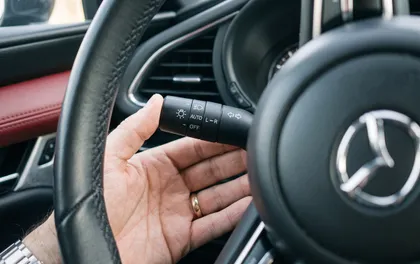
Drivers may fail to signal because of distraction, poor judgment, or a malfunctioning signal. A malfunction does not automatically excuse the driver. If the signal lamps stop working while driving, California law requires the driver to use proper hand and arm signals. When a driver chooses not to signal, they put everyone around them at risk.
Research on driver risk perception helps explain this behavior. Some studies show that human factors contribute to more than 90% of traffic crashes. Drivers may overestimate their skills or underestimate road risks.
This confidence may make a driver think signaling is unnecessary. The driver may believe the turn is easy. They may think the road is empty. They may also expect others to predict the turn. However, crashes usually involve several contributing factors. This research does not mean driver behavior is always the only cause.
Common reasons why drivers fail to use a turn signal:
- Not Enough Time: A driver may notice the turn too late due to distraction, excessive speed, poor planning, or unfamiliarity with the road.
- Laziness: Some drivers simply do not bother to use the signal, even when conditions allow it.
- Distraction: A driver checking a phone or navigation app may catch a turn late and swerve without warning.
- Emergency Swerves: A driver may swerve suddenly to avoid a hazard, leaving little or no time to activate a turn signal.
- Assuming No One Is Around: The driver believed the road was empty and saw no need to use a turn signal.
That last reason is especially dangerous. A road that appears empty may still contain someone hidden by a blind spot, darkness, or another obstruction. Blind spots can hide other vehicles, and cyclists or pedestrians may be close by but outside a driver’s direct view. Choosing not to signal after a glance is a gamble with other people’s safety. Because this careless choice causes real harm, California law sets clear rules for when and how drivers must signal.
California Turn Signal Laws You Need To Know
California law requires a driver to signal before turning or moving right or left when another vehicle may be affected. The driver must also move in a reasonably safe manner. These rules help prevent crashes by giving other drivers, cyclists, and pedestrians time to react.
The table below summarizes California’s turn signal laws:
| California Vehicle Code | What the Law Requires |
|---|---|
| CVC § 22107 | Signal before turning or changing lanes if the movement could affect another vehicle. Make the maneuver only when it is reasonably safe. |
| CVC § 22108 | Keep your turn signal on continuously for the last 100 feet before making a turn. |
| CVC § 22110 | Use the vehicle’s signal lamps when the vehicle is equipped with them. Use hand-and-arm signals if the vehicle is not required to have signal lamps or if the lamps stop working while driving. |
| CVC § 22111 | Extend the left arm straight out for a left turn, upward for a right turn, and downward to stop or slow. A bicyclist may also extend the right arm straight out to signal a right turn. |
Failing to follow these rules can result in more than just a traffic ticket. If the violation contributes to a crash, it may also serve as evidence of the driver’s negligence in a personal injury claim.
Who Is Liable When A Driver Fails To Signal In California?
A driver who fails to signal before turning or changing lanes may become the potentially liable party in an accident if the violation causes a crash. “Liable” means legally responsible, while “damages” refers to the economic and personal losses caused by the crash.
California law includes a legal rule called negligence per se. Under California Evidence Code § 669, negligence may be presumed if:
- The claimant proves that the driver violated a statute.
- The violation was a substantial factor in causing the injury or property damage.
- The harm was of the type the statute aims to prevent.
- The injured person belonged to the group the statute was intended to protect.
The presumption is rebuttable, and liability still depends on causation and the facts of the crash.
CVC §§ 22107 and 22108 are safety laws that help prevent crashes caused by unsafe turns and improper lane changes. A violation of either law may create a rebuttable presumption of negligence if all requirements of Evidence Code § 669 are met. The other driver may still present evidence to rebut that presumption, but you do not have to prove general carelessness from the beginning.
A turn signal violation can also affect both the traffic case and the personal injury claim:
- Traffic Citation: An officer may issue a citation for an alleged signal violation. The citation is not a final finding of fault, and the driver may contest it.
- Personal Injury Claim: Evidence that the driver actually violated the signaling law may support negligence per se if the other requirements of Evidence Code § 669 are met.
California also follows a pure comparative fault system. More than one person may share responsibility for a crash.
- If you were partly at fault, the court will reduce your compensation by your percentage of fault.
- For example, if you were 20% at fault, your compensation would generally be reduced by 20%.
- Sharing fault does not prevent you from recovering compensation.
Shared fault may apply when a driver turns without signaling, and the driver behind rear-ends them. In that situation, both drivers may share responsibility based on how each person’s actions contributed to the crash.
Even with negligence per se, liability is not automatic. For example, if another driver was following too closely or ran a red light, those actions may be the main cause of the crash, even if no signal was used. The missing signal must have actually contributed to the collision. Victims still need evidence that connects the driver’s failure to signal to the crash.
If you were hurt in this type of collision, your options are worth exploring. Many people start by seeking free advice from a traffic accident lawyer before deciding how to move forward.
How To Prove The At-fault Driver Didn’t Use A Turn Signal
Proving that a driver failed to use a turn signal can be difficult, especially when no camera or independent witness captured the maneuver. The signal itself lasts only seconds and may leave no physical trace, so video, witness accounts, and other evidence can become especially important.
These are the key pieces of evidence to preserve:
- Dashcam or Video Footage: Your dashcam or a nearby business camera may have recorded whether a signal was used.
- Eyewitness Testimony: Anyone who saw the crash can say what the other driver did. Get their contact details as soon as you can.
- Police Report and Citation: A police report may include driver and witness statements, the officer’s observations, a diagram, and any suspected traffic violations. If an officer cited the other driver, the officer’s observations and the evidence underlying the citation may help your claim.
Camera retention periods vary widely, and some systems overwrite footage quickly. Requesting and preserving relevant video as soon as possible may prevent it from being lost.
Seeking prompt care from an appropriate licensed healthcare provider and keeping complete records can help document when your symptoms began and how your injuries relate to the crash. Those records matter if your case goes forward.
Calling witnesses, requesting camera footage from businesses, and tracking down dashcam clips all take time. Victims who are still healing rarely have that time to spare. When that pressure builds, many people think they need a personal injury lawyer to handle the process.
Why Legal Representation Matters After A Turn Signal Accident

A crash caused by a driver who failed to signal is not always easy to prove. The other driver may deny what happened, witnesses may leave, and camera footage can also be deleted quickly. A traffic accident lawyer can step in early to protect your case by:
- Collecting dashcam and surveillance footage.
- Finding and interviewing witnesses.
- Reviewing the police report for mistakes or missing details.
- Working with accident experts when liability is disputed.
- Handling the insurance company and settlement talks.
- Filing a lawsuit before the legal deadline, if needed.
An experienced legal team can be very helpful, especially when the facts are unclear. A thorough investigation has helped Arash Law secure favorable results in many challenging accident cases. Although the examples below do not specifically address turn signal neglect, they illustrate the importance of legal representation.
- Motorcycle Accident: Despite the police initially blaming the motorcyclist, we secured a $5 million recovery by proving the truck driver made an unsafe turn.
- Car Accident: The insurance company offered our client far less than the case was worth. We built a strong case and recovered $4.1 million.
- Car Accident: Our investigators identified key witnesses who supported our client’s version of events, helping secure a $1 million settlement.
Note: Past results do not guarantee a similar outcome, and each case depends on its own facts.
Frequently Asked Questions About Turn Signal Accidents
After a turn signal crash, you likely have questions about California traffic laws and who is responsible. Signaling laws, fault, and your rights can be especially challenging to untangle while you are hurt and dealing with insurance companies. The answers below address the most common questions to help you understand your legal rights.
What Happens If A Driver Doesn’t Use A Turn Signal In California?
Failing to use a turn signal when required is a traffic infraction under California Vehicle Code sections 22107 and 22108. A driver may receive a traffic citation. If the driver is convicted of a point-count violation, the court may impose a fine, and the California Department of Motor Vehicles (DMV) may add one point to the driving record.
If the failure to use a turn signal causes a crash, the citation may also affect a personal injury claim. It may show that the driver violated a traffic safety law, which can serve as evidence of negligence. Along with other evidence, it may help prove the driver failed to use reasonable care.
Do I Have To Use A Turn Signal If There Are No Other Cars Around?
California law generally requires a continuous signal during the final 100 feet before a turn. For a lane change or other movement right or left, CVC § 22107 requires a signal when another vehicle may be affected.
If the road looks empty, that duty may not strictly apply. Even so, blind spots hide motorcyclists, cyclists, and pedestrians. Signaling is always the safer choice. Skipping it can create liability, meaning legal responsibility for damages, if someone gets hurt.
Is The Driver Changing Lanes Always At Fault In A Crash?
No. Fault depends on the facts of the collision. When a driver changes lanes, they must first check that the lane is clear and signal. Failing to check the lane or use a required signal may support a finding of fault. Under California’s comparative fault rules, the other driver may also share some blame.
If the other driver was speeding, cutting off, or driving erratically, some fault may shift to them. Your share of fault will reduce any compensation you may recover. Your percentage of fault directly affects how much you can recover. A California personal injury attorney can tell you what compensation may be available.
How Long Do I Have To Sue After A Turn Signal Accident?
In California, you generally have two years from the accident date to file a personal injury lawsuit. A shorter deadline may apply if a government vehicle or public entity was involved. You generally must file a government claim within six months before you can sue. Other exceptions may change the deadline.
Contact Arash Law After A Turn Signal Accident
Arash Law (also referred to as AK Law) represents people injured by drivers who failed to use their turn signals. Our attorneys can investigate the crash, preserve evidence, and identify all liable parties. We handle personal injury cases on a contingency fee basis. You usually pay no upfront attorney’s fees. You also generally owe no legal fees unless we recover compensation on your behalf.
Our team can review your case and explain your legal options. Call us at (888) 488-1391 to schedule a free consultation.