TL;DR: Los Angeles County ranked 37th out of California’s 58 counties for pedestrian victims killed or injured in 2023, with 4,034 total victims. The county ranked 9th worst out of 58 for pedestrians age 65 and older, with 562 senior victims killed or injured. Where your crash occurred can affect the filing location and identify which public entity may be involved. If a claim is subject to the California Government Claims Act, separate claim-presentation deadlines may apply.
In 2023, Los Angeles County ranked 37th out of California’s 58 counties for pedestrians killed or injured, with 4,034 pedestrian victims. For pedestrians age 65 and older, the county ranked 9th out of 58, with 562 victims killed or injured.
Evidence control is also fragmented. Crash reports may be held by the Los Angeles Police Department, the Los Angeles County Sheriff’s Department, the California Highway Patrol, or another local law enforcement agency, depending on the jurisdiction where the crash occurred. Within the City of Los Angeles, traffic-signal timing records and other traffic-system records may be held by the Los Angeles Department of Transportation, which is a city-scoped infrastructure agency rather than a countywide crash-report custodian.
If you or a loved one were struck while walking in Los Angeles County, call Arash Law at (213) 277-5878 for a free case evaluation.
Five Things Every Los Angeles County Pedestrian Victim Should Know
- The California Office of Traffic Safety reported Los Angeles County had 4,034 pedestrian victims killed or injured in 2023 and ranked 37th out of 58 counties.
- The California Office of Traffic Safety reported Los Angeles County ranked 9th out of 58 counties for pedestrians age 65 or older in 2023, with 562 senior victims killed or injured.
- The California Office of Traffic Safety reported the City of Los Angeles had 1,432 pedestrian victims killed or injured in 2023 and ranked 12th out of 15 Group A cities.
- California Code of Civil Procedure § 335.1 generally allows two years from the date an injury claim accrues to file a lawsuit against a private defendant.
- California Government Code § 911.2 generally requires a personal injury claim against a public entity to be presented within 6 months after the claim accrues.
Table of Contents

What The Local Data Actually Shows About Los Angeles County Pedestrian Safety
Pedestrian safety remains a persistent concern in Los Angeles County, as reflected in broader California Accident News & Traffic Safety Trends Report data and local collision patterns. Court assignment varies by crash location, OTS rankings show how the county compares with other California counties, and historical unincorporated-road data highlights where severe outcomes have been concentrated. Taken together, these sources provide a more complete picture than any single ranking alone.
The California Office of Traffic Safety ranks all 58 counties each year to compare traffic safety conditions. These rankings are useful indicators, but they do not capture every factor that may affect pedestrian risk.
Here’s the OTS ranking for pedestrian safety in LA County in 2023:
| Category | Victims Killed or Injured | County Rank (of 58) |
|---|---|---|
| All pedestrians | 4,034 | 37th |
| Pedestrians under age 15 | 267 | 36th |
| Pedestrians age 65 or older | 562 | 9th |
The senior pedestrian ranking stands out most. Los Angeles County ranked 9th for victims age 65 and older, compared with 37th for pedestrian victims overall.
OTS also reports separate city-level data. The City of Los Angeles recorded 1,432 pedestrian victims killed or injured in 2023 and ranked 12th out of 15 Group A cities. That city figure is already included within the county data and should not be added to the county total.
How Unincorporated County Roads Concentrate Severe Outcomes
The OTS county ranking includes crashes and victims on roadways throughout Los Angeles County. A separate historical picture comes from collision data covering unincorporated county roadways from 2013 to 2017. Pedestrians were involved in 9% of all injury collisions on those roads and in 20% of fatal and severe-injury collisions.
Based on LA County collision data from 2013 to 2017, that historical dataset attributed 85% of fatal and severe injury collisions on unincorporated county roadways to six primary factors:
| Primary Collision Factor | Share of Fatal and Severe Injury Collisions |
|---|---|
| Unsafe speed | 19% |
| Improper turning | 18% |
| Driving or bicycling under the influence of alcohol or drugs | 17% |
| A driver failing to yield to another driver | 14% |
| Pedestrian violation | 10% |
| Failure to yield to traffic controls | 7% |
| Total (six factors combined) | 85% |
These factors apply to fatal and severe-injury collisions in general, rather than to pedestrian crashes alone. Unsafe speed and impaired driving together accounted for 36% of those collisions during the study period. The 10% attributed to pedestrian violations also does not automatically eliminate a pedestrian’s claim. Under California’s comparative fault rules, responsibility may be divided among the parties based on their respective share of fault.
Collision Concentration Corridors In Unincorporated Los Angeles County
Historical LA County collision data from 2013 to 2017 identified certain unincorporated corridors with concentrations of fatal and severe-injury collisions. Communities including Florence-Firestone, East Los Angeles, and the Angeles National Forest area appear among the county’s identified collision concentration corridors.
| Community | Roadway | Approximate Limits | Reported Fatal and Severe Injury Collisions |
|---|---|---|---|
| Florence-Firestone | Firestone Blvd | Miramonte Blvd to Grape St | 10 |
| Angeles National Forest | Angeles Forest Hwy | 0.5 mi north of Upper Big Tujunga Canyon Rd to 1 mi north of Upper Big Tujunga Canyon Rd | 13 |
| Florence-Firestone | Alameda St | 83rd St to 94th St | 10 |
| East Rancho Dominguez | Compton Blvd | Butler Ave to Williams Ave | 7 |
| El Camino Village | Crenshaw Blvd | 147th St to Manhattan Beach Blvd | 10 |
| Florence-Firestone | 92nd St | Elm St to Alameda St | 6 |
| East Los Angeles | Whittier Blvd | Indiana St to Record Ave | 6 |
Source: Los Angeles County Vision Zero collision analysis, 2013–2017. These figures cover unincorporated county roadways and are historical background, not current-year statistics.
Three segments in Florence-Firestone (Firestone Blvd, Alameda St, and 92nd St) appear in the county’s historical list of collision concentration corridors, showing that multiple high-severity segments were identified within that community.
If road conditions or infrastructure on a county-maintained roadway contributed to a pedestrian crash, Los Angeles County may potentially be involved in the claim depending on the facts and the applicable public-entity liability rules.
Who Is At Greatest Risk In Los Angeles County Pedestrian Crashes
The 2023 OTS data highlights notable differences among age groups in Los Angeles County. Older pedestrians ranked much higher relative to other California counties than pedestrians overall, while children also accounted for hundreds of reported victims.
- Older Pedestrians: Los Angeles County ranked 9th out of 58 counties for pedestrian victims age 65 and older, with 562 killed or injured in 2023. Older adults may face added challenges such as slower walking speeds and greater difficulty crossing wide roads. They are also more vulnerable to severe injury when struck.
- Children: Los Angeles County ranked 36th for pedestrians under age 15, with 267 killed or injured in 2023. Younger children may have more difficulty judging vehicle speed and distance, while their smaller size can make them less visible to drivers.
Age can affect pedestrian vulnerability, but crash severity also depends on factors such as vehicle speed, roadway design, visibility, and driver behavior.
Data Transparency Note: These figures come from different datasets and time periods. The 2023 OTS rankings cover countywide and city-level traffic data, while the Los Angeles County Vision Zero figures are historical 2013–2017 data limited to unincorporated county roadways. They provide context but should not be treated as directly comparable or as current conditions.
Evidence In Los Angeles County Pedestrian Accident Claims
Multiple agencies and private parties may control evidence in pedestrian accidents in Los Angeles County, and some evidence can be lost or overwritten over time. Here is what each type of evidence may show, who may control it, and why prompt preservation can matter.
| Evidence Type | Why It Matters | Who Controls It | Retention or Action |
|---|---|---|---|
| Traffic collision report: CHP 555 form or local police report | Documents the investigating agency’s account of the crash, identified parties and witnesses, diagrams, and any citations or preliminary observations. These findings may constitute evidence, but they do not, by themselves, determine civil liability. | LAPD, LASD, CHP, or another investigating agency, depending on where the crash occurred. | Request the report promptly through the investigating agency’s applicable report-request process. |
| Surveillance and camera footage | May capture the crash, vehicle movements, traffic signals, or surrounding conditions, depending on the camera system. | Private businesses, nearby property owners, or public agencies operating a system that records and retains footage. | Retention periods vary by camera system and owner. Promptly identify potential footage and send preservation requests where appropriate. |
| Witness statements | May support or challenge accounts of how the crash occurred. | Witnesses and, where statements were collected, the investigating agency. | Contact information and memories can become harder to obtain over time, so witnesses should be identified and contacted promptly. |
| Vehicle event data recorder (EDR) data | Depending on the vehicle and system, it may record information such as vehicle speed, braking, accelerator use, or other pre-crash data. | Typically associated with the involved vehicle, specialized equipment may be needed for extraction. | Preserve the vehicle and relevant electronic data promptly because availability and overwrite rules vary by vehicle and EDR system. |
| Government claim and rejection records | If a claim for money or damages against a public entity is subject to the California Government Claims Act, proof that the required claim was timely presented and how the entity responded can be important to establishing compliance with the claim-presentation requirements. | Los Angeles City Clerk Claims Department for City of Los Angeles claims, with the City Attorney’s Office handling claims after filing; the Executive Officer-Clerk of the Los Angeles County Board of Supervisors for County claims; or the appropriate office of another responsible public entity. | Present the government claim within the applicable deadline and retain proof of presentation and any rejection notice. |
| Emergency medical and hospital records | Document injuries, diagnoses, treatment, and other medical findings recorded after the crash. | Treating hospitals, emergency departments, and other healthcare providers. | Retention rules vary by provider and record type. Records may be requested as needed to document injuries and damages. |
Where Your Case Will Actually Be Filed In Los Angeles County
Personal injury cases in Los Angeles County are no longer handled exclusively through a single centralized courthouse. On September 21, 2022, the Superior Court announced a gradual phase-out of the Personal Injury Hub at the Spring Street Courthouse at 312 N. Spring St., Los Angeles, CA 90012. Beginning October 10, 2022, new non-Central District personal injury cases were assigned to courts in the district where the accident occurred.
This change matters practically. A pedestrian case arising in East Los Angeles may be filed in a different district than one arising in the San Fernando Valley or near the Angeles National Forest, depending on the applicable venue rules. If you are not sure which courthouse handles your case, the Los Angeles County Superior Court’s Filing Court Locator can help identify the appropriate court location.
Filing Deadlines For Los Angeles County Pedestrian Accident Claims
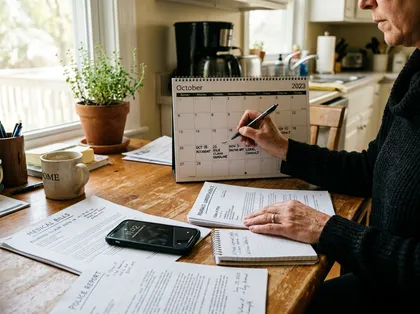
The deadline to file a pedestrian injury claim in Los Angeles County depends on who may be legally responsible.
-
Private Party: You generally have two years from the date the injury claim accrues, often the date of the crash, to file a lawsuit against a private driver or other private defendant under California Code of Civil Procedure § 335.1.
Different Rules May Apply to Minors: California law generally tolls the ordinary injury statute of limitations while a child is under 18. However, Government Claims Act deadlines can still apply.
- Public Entity: A personal injury claim against a public entity generally must first be presented within six months after the claim accrues under California Government Code § 911.2.
- City of Los Angeles: If a city-owned vehicle, defective city sidewalk, failed signal, or other city-controlled condition contributed to the injury, the claim is generally filed with the Los Angeles City Clerk’s Claims Department through the City of Los Angeles Claims page.
- Los Angeles County: If a county-maintained road, county-owned vehicle, or county infrastructure contributed to the injury, the claim is generally presented to the Executive Officer-Clerk of the Board of Supervisors through the County’s Claims for Damages process.
- If a public entity sends a written rejection notice that triggers the shorter lawsuit deadline, you generally have six months from the date the notice is personally delivered or deposited in the mail to file the lawsuit under California Government Code § 945.6(a)(1).
- You generally have two years from the accrual of the cause of action to file suit if the public entity does not provide the written notice required to trigger the 6-month deadline under California Government Code § 945.6(a)(2).
These are filing deadlines, not evidence-retention periods. Camera footage, vehicle data, and other evidence may be lost or overwritten much sooner, so evidence preservation and legal filing deadlines should be treated as separate timelines.
How To File A Government Claim After A Pedestrian Crash In Los Angeles County
If you were in a pedestrian accident that may involve a government entity as a defendant, the government claim process is generally a required step before you can sue for compensation. Examples include a crash at an intersection with a failed traffic signal maintained by the City of Los Angeles or a crash on a county road where a dangerous condition may have contributed.
- Claim Against the City of Los Angeles: File a written, signed claim with the Los Angeles City Clerk’s Claims Department. Claims can be submitted online, mailed, or delivered in person through the City’s Claim for Damage process.
- Claim Against Los Angeles County: File a written, signed claim by mailing or delivering it to the Executive Officer-Clerk of the Board of Supervisors. Instructions and the mailing address are available through the County’s Claims for Damages page.
Filing the claim does not start the lawsuit; it is generally a prerequisite to one when the Government Claims Act applies. After the public entity responds, or if it fails to provide the required written rejection notice, different timelines govern when you must file a lawsuit.
Missing the deadline can jeopardize a claim against the public entity, although California law provides limited procedures for seeking relief from a late claim in some circumstances.
Questions To Ask Before Hiring A Pedestrian Accident Attorney In LA
Pedestrian accident claims in Los Angeles County can involve several legal issues, including private driver liability, potential government entity claims, comparative fault, and evidence held by multiple agencies or businesses. The Los Angeles pedestrian accident lawyer you choose should be able to explain how they would handle those issues in your specific case.
Questions potential clients can ask include:
-
Have you handled pedestrian accident cases in Los Angeles County before?
Ask whether the attorney has experience with cases involving local courts, law enforcement agencies, and public entities.
-
Have you handled claims against the City of Los Angeles or Los Angeles County?
Government claims follow different procedures and shorter presentation deadlines than ordinary personal injury cases.
-
How will you preserve evidence in my case?
Ask how the injury law firm handles surveillance footage, traffic records, witness information, vehicle data, and other evidence that may become unavailable over time.
-
How will you investigate the fault if the driver blames me?
An accident lawyer should explain how comparative fault may affect the claim and what evidence you can use to challenge disputed liability.
-
Who will actually handle my case?
Find out whether you will work directly with an attorney, a case manager, or a larger team, and who will provide updates.
-
How do your contingency fees and case costs work?
Ask for a clear explanation of the percentage charged, how litigation costs are handled, and what happens if there is no recovery.
-
Are you prepared to file a lawsuit or take the case to trial if necessary?
Not every claim settles, so it can be useful to know whether the firm has experience in litigation and trial work.
-
What deadlines apply to my case?
The attorney should be able to identify the likely statute of limitations, any government claims deadlines, and other time-sensitive requirements.
A good attorney should be able to answer these questions in plain language and explain how their experience relates to the facts of your case.
How Arash Law Handles Los Angeles County Pedestrian Accident Claims
If you retain Arash Law for a pedestrian accident claim in Los Angeles County, our attorneys can handle several parts of the case.
- Case Investigation: Our lawyers can:
- Obtain police reports from LAPD, LASD, CHP, or another investigating agency.
- Send preservation requests for surveillance footage and other time-sensitive evidence.
- Collect witness statements.
- Retain specialists when vehicle EDR data may help reconstruct the crash.
- Liability Analysis: Our attorneys can investigate potential responsibility involving the driver, vehicle owner, and, when supported by the facts, a public entity responsible for a dangerous roadway or infrastructure condition.
- Claims and Negotiation: Our Los Angeles injury law firm can handle communications with the applicable insurers and pursue compensation for medical expenses, lost income, rehabilitation costs, and pain and suffering.
- Litigation: If the case does not resolve through settlement, our attorneys can file a lawsuit in the appropriate Los Angeles County Superior Court location under the applicable venue rules.
You typically pay no attorney’s fee upfront. Our fee is based on a percentage of the recovery, and the contingency fee agreement is provided in writing as required by California law.
What Arash Law Has Recovered For Pedestrian Accident Victims
Pedestrian accident claims can involve severe injuries and disputed liability. The results below reflect cases in which Arash Law represented pedestrians and secured substantial recoveries on their behalf.
$10,000,000 — Pedestrian Accident: Our lawyers represented a pedestrian who suffered serious injuries after a speeding vehicle ran over him. In addition to pursuing a $10 million recovery, our team helped coordinate access to medical care and treatment while handling the legal aspects of the claim.
$6,100,000 — Pedestrian Accident: In August 2021, our attorneys secured a $6.1 million settlement for a 6-year-old client injured in a pedestrian accident.
Disclaimer: Results displayed were dependent on the unique facts of each case; different facts may produce different results. Past outcomes do not guarantee a similar result in your matter.
If you or a loved one was injured in a pedestrian accident, Arash Law can review the circumstances of the crash, explain your legal options, and discuss the next steps for pursuing a claim. Our team can help address issues involving insurance, evidence, damages, and potential liability. Call Arash Law at (213) 277-5878, or reach us 24 hours a day at (888) 488-1391 to request a case evaluation.
Frequently Asked Questions About Pedestrian Accidents In Los Angeles County
After a pedestrian accident in Los Angeles County, you may have questions about your rights, filing deadlines, liability, insurance, and what local crash data means for your case. The FAQs below address common concerns and explain the local rules and procedures that may affect your claim.
How Long Do I Have To File A Pedestrian Accident Claim In Los Angeles County?
For a claim against a private driver, California law generally gives you 2 years from the date of injury to file a lawsuit under California Code of Civil Procedure § 335.1. If a public entity, such as the City of Los Angeles or Los Angeles County, may be a defendant, a government claim for personal injury generally must first be presented within 6 months after the claim accrues under California Government Code § 911.2. Missing that deadline can jeopardize the public-entity portion of your case, although limited late-claim procedures and court relief may be available in some circumstances.
What If The Driver Who Hit Me Was Uninsured?
If the driver who struck you had no insurance, several options may still be available. Your own uninsured motorist (UM) coverage, if you carry it, may provide benefits depending on the policy terms and circumstances of the crash. If a dangerous road condition or a government entity contributed to the collision, a separate claim against that public entity may also be possible. An attorney can help identify which sources of coverage and potentially responsible parties apply to your situation.
Does A Pedestrian Always Have The Right Of Way In California?
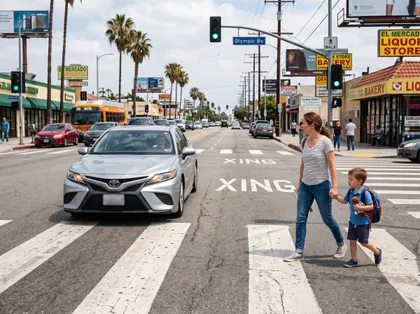
No absolute rule applies in every situation. California law generally requires drivers to yield to pedestrians in crosswalks, marked or unmarked, but pedestrians also have a duty of due care. Under that same duty, a pedestrian must not suddenly leave a curb or place of safety and walk into the path of a vehicle that is so close as to constitute an immediate hazard (Vehicle Code § 21950(b)).
Whether a driver was required to yield depends on where you were crossing, the signal state, and the specific facts. If you were crossing outside a marked or unmarked crosswalk, Vehicle Code § 21954 generally requires you to yield to vehicles that are close enough to constitute an immediate hazard, but that does not automatically eliminate your claim under California’s pure comparative fault rules.
What Is An Unmarked Crosswalk?
An unmarked crosswalk is a legal pedestrian crossing at certain intersections, even when no painted lines are present. California Vehicle Code § 275 generally defines a crosswalk to include the portion of a roadway within the extension or connection of sidewalk boundary lines at intersections where the roadways meet at approximately right angles, subject to the statute’s exceptions.
What If I Was Crossing Outside A Crosswalk When I Was Hit?
Crossing outside a crosswalk does not automatically prevent you from recovering compensation, but it can affect the comparative fault analysis. A pedestrian crossing outside a marked or unmarked crosswalk must yield to vehicles that are close enough to create an immediate hazard. At the same time, drivers still have a duty to exercise due care for pedestrian safety under California Vehicle Code § 21954.
Under California’s pure comparative fault rule established in Li v. Yellow Cab Co., 13 Cal. 3d 804 (1975), any recovery may be reduced according to your percentage of fault rather than automatically eliminated. A driver who was speeding, impaired, or otherwise negligent may still share responsibility for the crash.
What If The Driver Left The Scene?
If the driver leaves the scene, witness statements and nearby camera footage may help identify the vehicle. If the driver is not found, uninsured motorist coverage may apply if California’s statutory requirements and the policy terms are met. For an unknown-driver claim under Insurance Code § 11580.2, the statute generally requires physical contact, a report to the appropriate law enforcement agency within 24 hours, and a sworn statement to the insurer within 30 days thereafter.
What If The Pedestrian Died?
When a pedestrian dies as a result of a collision, certain survivors may have a wrongful death claim. California Code of Civil Procedure § 377.60 identifies who may bring the claim, including a surviving spouse or domestic partner, children, and certain other eligible heirs or dependents, depending on the family circumstances.
Talk To Arash Law About Your Los Angeles County Pedestrian Accident Claim
If you were struck while walking in Los Angeles County, whether on a city street, an unincorporated county road, or a busy corridor like Firestone Blvd or Crenshaw Blvd, the legal path forward depends on the facts of your case. Arash Law can investigate issues such as government entity liability, multiple potentially responsible parties, comparative fault, and evidence that may be lost or overwritten over time.
Our legal team has recovered over $1 billion for injury victims across California. We handle personal injury cases on a contingency fee basis, so you generally owe no attorney’s fee unless we recover for you. Call Arash Law at (213) 277-5878, or reach us 24 hours a day at (888) 488-1391.
Make Them Pay, Call AK.
About This Guide And How It Was Researched
Courthouse and venue information is sourced from the Los Angeles County Superior Court. The government claims information is drawn from the Los Angeles City Attorney and City Clerk for City of Los Angeles claims, and from the Los Angeles County Board of Supervisors for County claims. OTS crash ranking data is sourced from the California Office of Traffic Safety. Case results are drawn from the firm’s published case results. The corridors identified in this guide reflect elevated-severity patterns in historical LA County collision data from 2013 to 2017.
Sources
- California Office of Traffic Safety — Los Angeles County 2023 Rankings: https://www.ots.ca.gov/rankings/los-angeles-county-2023/
- California Office of Traffic Safety — City of Los Angeles 2023 Rankings: https://www.ots.ca.gov/rankings/los-angeles-2023/
- Los Angeles County Superior Court — Filing Court Locator: https://www.lacourt.ca.gov/apps/filing-court-locator/home
- Los Angeles County Vision Zero — Vision Zero Action Plan and 2013–2017 Collision Analysis: https://visionzero.lacounty.gov/wp-content/uploads/sites/23/2025/12/SCAG-LACounty-VZ-Action-Plan-ver-D-hiRes-single-11-25-2019-rev.pdf
- Los Angeles City Clerk — Claim for Damage: https://clerk.lacity.gov/clerk-services/council-and-public-services/claim-damage
- Los Angeles County Board of Supervisors — Claims for Damages: https://bos.lacounty.gov/claims-for-damages
- California Legislature — Code of Civil Procedure § 335.1: https://leginfo.legislature.ca.gov/faces/codes_displaySection.xhtml?lawCode=CCP§ionNum=335.1
- California Legislature — Government Code § 911.2: https://leginfo.legislature.ca.gov/faces/codes_displaySection.xhtml?lawCode=GOV§ionNum=911.2
- California Legislature — Government Code § 945.6: https://leginfo.legislature.ca.gov/faces/codes_displaySection.xhtml?lawCode=GOV§ionNum=945.6
- California Legislature — Vehicle Code § 21950: https://leginfo.legislature.ca.gov/faces/codes_displaySection.xhtml?lawCode=VEH§ionNum=21950
- California Legislature — Vehicle Code § 21954: https://leginfo.legislature.ca.gov/faces/codes_displaySection.xhtml?lawCode=VEH§ionNum=21954
- California Legislature — Insurance Code § 11580.2, Uninsured and Underinsured Motorist Coverage: https://leginfo.legislature.ca.gov/faces/codes_displaySection.xhtml?lawCode=INS§ionNum=11580.2
- Samuelson, Chidike. California Accident News & Traffic Safety Trends Report: 2023–2026. Arash Law, 2026, https://www.arashlaw.com/california-accident-trends-report/.
- California Legislature — Vehicle Code § 275: https://leginfo.legislature.ca.gov/faces/codes_displaySection.xhtml?sectionNum=275.&lawCode=VEH
- California Legislature — Code of Civil Procedure § 352: https://leginfo.legislature.ca.gov/faces/codes_displaySection.xhtml?sectionNum=352.&lawCode=CCP
- California Legislature — Code of Civil Procedure § 377.60: https://leginfo.legislature.ca.gov/faces/codes_displaySection.xhtml?sectionNum=377.60.&lawCode=CCP
- Li v. Yellow Cab Co., 13 Cal. 3d 804 (1975): https://scholarlycommons.pacific.edu/cgi/viewcontent.cgi?article=2458&context=mlr
The information on this page is for general informational purposes only. It does not constitute legal advice and does not create an attorney-client relationship. Every case is different; the law applicable to your situation may vary based on the specific facts. You should consult a licensed California attorney for advice specific to your circumstances.