TL;DR: A work-related company-vehicle crash can involve more than workers’ comp. Your rights may also depend on co-employee immunity, commercial auto coverage, third-party liability, reimbursement liens, and separate filing deadlines. Preserving evidence and identifying every potentially responsible party can affect which benefits and claims remain available.
If you were injured as a passenger in a company vehicle because your coworker caused the crash, workers’ compensation may cover your medical treatment and part of your lost wages. You generally do not have to prove that your coworker was negligent to receive those benefits. You may also have a separate civil claim if another driver, vehicle manufacturer, government entity, or other third party contributed to the crash.
In California, whether you have workers’ compensation benefits, a separate civil claim, or both depends largely on who caused the collision and whether you and your coworker were acting within the course and scope of employment. Those facts can determine which claims are available, what compensation you may pursue, and which filing deadlines apply.
Table of Contents

I Was a Passenger in a Company Vehicle During Work, and My Coworker Caused the Accident. What Claims May Apply?
If you were injured as a passenger in a company vehicle while working and your coworker caused the crash, workers’ compensation may cover your medical treatment and part of your lost wages. You generally cannot sue an on-duty coworker for ordinary negligence. Still, a separate civil claim may be available if another driver, a vehicle manufacturer, a government entity, or another third party contributed to the collision. California law also recognizes narrow exceptions that may allow a claim against the coworker, including when the coworker’s intoxication caused the injury.
Key Facts About Company Vehicle Passenger Injuries in California
- Labor Code § 3601 co-employee immunity generally protects co-worker from personal civil liability for work-related injuries. Exceptions include injuries proximately caused by a coworker’s intoxication or a willful and unprovoked physical act of aggression.
- Labor Code § 3852 preserves your third-party civil claim against any negligent outside party, including another driver, a vehicle manufacturer, or a road authority, even while your workers’ comp case is open.
- The workers’ comp insurer may assert a lien on any civil settlement. See the lien section below for details.
- Government Code § 911.2 imposes a 6-month written-claim deadline if a government vehicle or public entity is involved. Details in the Deadlines section below.
- SB 1107 raised California’s minimum auto liability coverage to $30,000 per person / $60,000 per occurrence / $15,000 property damage as of January 1, 2025. This matters when evaluating any at-fault driver’s policy limits.
What Workers’ Comp Covers and What It Leaves Out
If you were riding in a company vehicle for work when a crash occurred, workers’ compensation may cover your injuries. You generally qualify for benefits regardless of who caused the crash. That is, if the crash arose out of and occurred in the course of employment.
Workers’ comp may pay for necessary medical treatment and temporary disability benefits, which generally replace two-thirds of lost gross wages, subject to statutory limits. It does not pay pain and suffering or other non-economic damages. It may also not fully replace all lost income, so a separate third-party claim may be warranted when another person or entity shares responsibility.
The Exclusive Remedy Rule Under California Labor Code § 3601
If workers’ compensation applies, you generally cannot sue your employer or an on-duty coworker for ordinary negligence arising from the same work-related injury. California Labor Code § 3601 limits most civil claims against co-worker, while § 3602 generally makes workers’ compensation the exclusive remedy against the employer.
There are limited exceptions. Under § 3601, you may have a civil claim against a coworker if their intoxication proximately caused your injury or if they committed a willful and unprovoked physical act of aggression.
In a company-vehicle crash, evidence that the coworker was intoxicated can therefore materially change whether you can bring a separate lawsuit against that coworker.
Filing Your Workers’ Comp Claim Through the DWC
The Division of Workers’ Compensation (DWC) administers disputed workers’ compensation claims through the Workers’ Compensation Appeals Board (WCAB), a statewide adjudicatory body with district offices throughout California.
Here’s what you should do after the work-related crash:
- Report the injury to your employer. California law generally requires notice within 30 days, although statutory exceptions may apply.
- Obtain the DWC-1 claim form. Your employer must generally provide the DWC-1 form within one working day of learning about your work injury.
- Complete and return the DWC-1. Giving the completed form to your employer formally starts the workers’ compensation claim process.
- Continue necessary medical care. Keep records of appointments, work restrictions, prescriptions, and treatment related to the crash.
- Address disputed benefits if necessary. If benefits are denied or disputed, an application for adjudication may be filed with the Workers’ Compensation Appeals Board when appropriate.
When Can You Bring a Third-Party Claim?
You may have a separate civil claim if someone outside your employment relationship caused or contributed to the crash. Workers’ compensation does not prevent an injured employee from pursuing damages against a responsible third party.
Potential third parties may include:
- Another driver who caused or contributed to the collision.
- A vehicle or parts manufacturer if a defective product contributed to the crash.
- A public entity, if a dangerous road condition or other government responsibility played a role.
What Can a Third-Party Claim Recover?
A civil lawsuit against a third party can seek damages that workers’ comp does not pay. These losses can include pain and suffering, additional lost earnings, and other recoverable losses. California comparative-fault rules may reduce recovery if more than one party shares responsibility.
Subrogation: How Workers’ Comp and Civil Claims Interact
When your employer’s workers’ comp insurer pays benefits related to the injury, the employer or insurer may have reimbursement or lien rights against a recovery from a responsible third party. The amount recoverable can depend on attorney fees, costs, employer fault, and other applicable rules. Your employer may also assert its own claim against the at-fault party.
Lien negotiation can affect how much of a civil settlement you ultimately receive. A workplace accident lawyer who handles both workers’ comp and personal injury claims can address these overlapping issues, including which insurer may cover particular losses and whether reimbursement or subrogation affects a later recovery.
How Commercial Auto Insurance May Affect the Claim
The employer’s commercial auto policy may provide coverage after a company-vehicle crash, depending on the policy terms, how the vehicle was being used, and who was legally responsible. Another driver’s liability insurance may also apply if that driver contributed to the collision.
Commercial auto insurance does not replace workers’ compensation for a work-related injury. Instead, workers’ comp, the company’s auto policy, and any third-party insurance may need to be reviewed together to determine which losses each source may cover.
How the Course and Scope of Employment Affect Your Claim
Workers’ compensation may apply if the crash arose out of and occurred in the course of your employment. The purpose of the trip, what you and your coworker were doing, and whether either of you had departed from work duties can affect coverage and potential employer liability.
Detours, Frolics, and Where the Line Falls
A minor personal detour may not take an employee outside the course of employment, while a substantial personal departure may.
- A detour is a limited personal side trip during work. Workers’ comp may still apply, and the employer may remain responsible for the driver’s conduct.
- A frolic is a substantial departure for personal reasons. Depending on the facts, workers’ comp or employer liability may be affected.
Work Travel That Is Generally Within Scope
Being in the course and scope of employment covers a broad range of work-related travel under California law. You may be within scope if you were:
- Traveling to or from a job site as part of your duties
- Being transported by a coworker to make deliveries or complete work assignments
- Riding along on a work errand that directly benefits your employer
The type of vehicle does not control the outcome. If your coworker was driving their personal car on a work errand when the crash happened, your employer may still be legally responsible. Respondeat superior applies to personal vehicles used for the employer’s benefit, just as it does to company-owned ones, depending on the facts.
Treatment, Work Restrictions, and Documentation After a Company Vehicle Crash
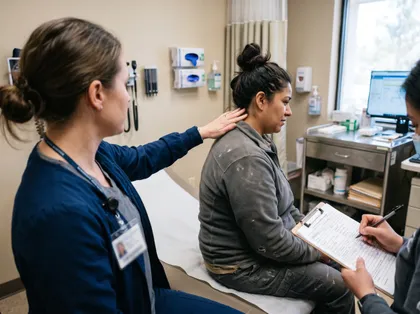
Follow your medical treatment, obey any work restrictions, and keep records showing how the crash affected your health and ability to work. These records can support both your workers’ compensation claim and any separate third-party claim.
If your doctor limits lifting, driving, standing, sitting, or other duties, keep the written restrictions and provide them through the appropriate workplace process. Do not perform tasks that conflict with those restrictions unless your medical provider clears you.
Keep organized records of:
- Medical treatment. Save appointment summaries, prescriptions, referrals, therapy records, and other documents related to your care.
- Work restrictions. Keep written notes showing any temporary or permanent limits imposed by your medical provider.
- Missed work. Track the dates and hours you could not work because of the injury or medical appointments.
- Changes in job duties. Document modified work, reduced hours, or the accommodations your employer provides.
- Work and medical communications. Save relevant emails, messages, forms, and letters involving your treatment, restrictions, or ability to return to work.
What to Do After the Crash: Steps and Deadlines
After the crash, get medical care, report the injury to your employer, start the workers’ compensation process, preserve evidence, and track every applicable deadline. A workers’ comp claim does not automatically preserve a separate civil or government claim.
Follow these recommended steps:
- Get appropriate medical care. Describe your symptoms accurately and follow reasonable treatment and work restrictions.
- Report the injury to your employer. California generally requires you to report a workplace injury within 30 days. Written documentation can help establish when notice was provided.
- Complete the DWC-1 form promptly. Keep a copy of the completed form and any related correspondence.
- Preserve crash evidence. Save photographs, witness information, work schedules, dispatch records, messages, and documents showing the purpose of the trip.
- Identify outside parties. Determine whether another driver, manufacturer, contractor, or government entity may have contributed to the collision.
- Confirm any required SR-1 filing. California generally requires each driver involved in a reportable crash to file an SR-1 with the DMV within 10 days when someone is injured or killed or when qualifying property damage exceeds $1,000. An injured passenger generally does not have a separate SR-1 duty merely because they were riding in the vehicle.
- Track every applicable deadline. Filing a workers’ compensation claim does not automatically preserve a separate civil or government claim.
Deadlines That May Apply
Different deadlines can run at the same time:
| Claim Track | Deadline | Note |
|---|---|---|
| Private-party personal injury | Two years | Under California Code of Civil Procedure § 335.1, a personal injury lawsuit against a private party generally must be filed within two years of the injury. |
| Government injury claim | Six months | Under California Government Code § 911.2, a claim involving personal injury generally must be presented to the appropriate public entity within six months after accrual. |
| Workers’ compensation notice | Generally 30 days | Labor Code § 5400 generally requires notice to the employer within 30 days, subject to statutory exceptions. |
| Workers’ compensation proceedings | Separate one-year rule | Under Labor Code § 5405, proceedings generally must begin within one year of specified triggering events, including the date of injury, the expiration of certain disability payments, or the last furnishing of specified benefits. |
The Government-Entity Track: A Separate Deadline and Process
A separate government-claim process generally applies before you can sue a California public entity. A personal injury claim must generally be filed within 6 months. The entity usually has 45 days to act.
If it sends a compliant written rejection, Gov. Code § 945.6 generally allows six months to file suit. If no compliant written rejection is provided, a two-year period from accrual generally applies.
What Evidence Should You Preserve?
Crash evidence can disappear quickly, so preserve potentially relevant records as soon as possible.
- Dashcam footage. Recordings may be overwritten depending on the system.
- Telematics and GPS data. Fleet systems may contain speed, braking, and location information.
- Collision records. Keep any CHP or local police report you obtain.
- Work records. Preserve schedules, dispatch information, and communications showing the trip’s work purpose.
What Arash Law Has Recovered for Injured Workers
Arash Law’s passenger accident lawyers handle cases in which workplace injuries may involve both workers’ compensation benefits and a separate claim against a third party. The following case results illustrate how those two legal paths can overlap.
$9,855,000: Personal Injury and Workers’ Compensation Crossover
The personal injury and workers’ compensation teams at Arash Law joined forces on a complex dual-track case and resolved five days before trial.
$6,500,000: Workers’ Compensation with Third-Party Settlement
Our client sustained a mild TBI and spinal cord injury after falling from a roof. The employer initially denied liability. Arash Law took the case to trial and secured a $6.5 million in compensation.
Past results do not guarantee or predict the outcome of another case. Every claim depends on its own facts, injuries, available insurance, evidence, and applicable law.
FAQs About Company Vehicle Passenger Injuries in California
Can My Employer Make Me Pay for Damage to the Company Vehicle?
Usually, your employer cannot make you pay for the cost of accidental vehicle damage when the loss resulted from a mistake or ordinary negligence. Different rules may apply if the loss resulted from dishonest or willful conduct or gross negligence.
If you were only a passenger, responsibility would depend on your own conduct, not simply on the fact that you were riding in the vehicle.
Will This Crash Increase My Personal Auto Insurance Rates?
Not necessarily. If you were only a passenger, your personal auto policy may not be involved unless you make a claim under that policy. Any effect on your rates depends on the type of claim, how the insurer classifies the accident, and the applicable California insurance rules.
Can I Recover for a Soft-Tissue Injury Like Whiplash?
Yes. Workers’ compensation may cover whiplash or another soft-tissue injury if the crash occurred in the course of your employment. You may also pursue damages through a third-party claim if someone outside the employment relationship caused or contributed to the crash.
Prompt medical evaluation and consistent treatment records can help document your symptoms and connect the injury to the collision.
What If the Government Was Responsible for the Road Conditions Where the Crash Happened?
You may have a separate claim against the responsible public entity. A valid claim may arise if a dangerous road condition, traffic-control problem, or government vehicle contributed to the crash. California personal injury claims against public entities generally must be filed within 6 months of accrual, usually from the date of the accident.
Does Workers’ Comp Cover Me if My Coworker Was Using Their Personal Car?
Yes, potentially. Workers’ compensation may apply even when your coworker was driving a personal vehicle if the trip arose out of and occurred in the course of employment. Vehicle ownership alone does not determine whether a work-related injury qualifies for workers’ compensation.
Can I Sue My Coworker if They Were Drunk?
Yes, potentially. California Labor Code § 3601 allows an injured employee to pursue a civil damages claim against a coworker when the coworker’s intoxication proximately caused the injury. This is an exception to the general rule that workers’ compensation is the exclusive remedy for ordinary coworker negligence.
You may still have a workers’ compensation claim, so both potential recovery paths may need to be coordinated.
Can You Pursue Both Workers’ Comp and a Civil Claim at the Same Time?
Yes. California Labor Code § 3852 allows an injured employee to pursue workers’ compensation benefits while also bringing a civil claim against a responsible third party. The two claims can proceed at the same time. However, workers’ compensation payments may create reimbursement or lien issues that affect how a later third-party recovery is distributed.
Talk to Arash Law About Your Company Vehicle Claim
If you were hurt as a passenger in a company vehicle, you may have more than one legal path, and the steps you take in the days after the crash will shape what you can recover on both. Evidence fades, dashcam footage overwrites, and deadlines run on parallel tracks.
Arash Law can evaluate whether the trip was work-related, assess potential third-party liability, and coordinate workers’ compensation and personal injury issues when both are involved.
Different rules govern civil contingency arrangements and workers’ compensation attorney fees. The applicable fee terms should be explained before representation begins.
Call Arash Law at (888) 488-1391 for a free case evaluation.
Arash Law — Make Them Pay, Call AK.
Sources
- California Labor Code §§ 3600–3602: Workers’ Compensation Coverage, Exclusive Remedy, and Coemployee Liability. California Legislative Information.
- California Labor Code §§ 3852–3860: Third-Party Actions, Reimbursement, Liens, and Settlement Procedures. California Legislative Information.
- California Labor Code §§ 5400, 5401, and 5405: Workers’ Compensation Notice, Claim Form, and Limitation Periods. California Legislative Information.
- California Division of Workers’ Compensation: Workers’ Compensation Benefits. California Department of Industrial Relations.
- California Division of Workers’ Compensation: How to File a Workers’ Compensation Claim.
- California Division of Workers’ Compensation: Workers’ Compensation Claim Form (DWC-1).
- California Code of Civil Procedure § 335.1: Two-Year Personal Injury Statute of Limitations. California Legislative Information.
- California Government Code §§ 911.2, 912.4, 913, 945.4, and 945.6: Government Claim Presentation, Agency Action, Rejection, and Lawsuit Deadlines. California Legislative Information.
- California Department of Motor Vehicles: Report of Traffic Accident Occurring in California (SR-1).
- California Vehicle Code § 16000: DMV Accident Reporting Requirements. California Legislative Information.
- Arash Law: Case Results.
Disclaimer
This page provides general legal information about California workers’ compensation and personal injury law. It is not legal advice and does not create an attorney-client relationship. Laws change, and the application of any legal rule depends on the specific facts of your situation. Consult a qualified California attorney about your individual case.