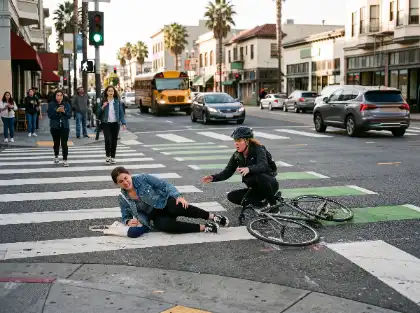
TL;DR: In California, either the cyclist, the pedestrian, or both may be responsible for a cyclist-pedestrian crash. Fault depends on the right-of-way rules and on whether either person failed to exercise reasonable care. California’s pure comparative negligence rule also allows fault to be divided between them.
In California, a cyclist, pedestrian, or both may be at fault in a collision. Fault depends on where the crash occurred, who had the right of way, and whether either party failed to exercise reasonable care.
Bicyclists crash into pedestrians less frequently than cars do, but they still cause thousands of emergency room visits. One study estimated that U.S. emergency rooms treated more than 66,000 pedestrians for bicycle-related injuries over the study period.
However, the fact that the bicycle struck the pedestrian does not automatically make the cyclist liable. Photos, video, witness statements, and collision reports can clarify what happened in the moments before impact.
Key Facts About Fault in Cyclist-Pedestrian Crashes in California
- Cyclists generally have the same traffic duties as drivers. California Vehicle Code (CVC) §21200 requires bicyclists to follow applicable traffic rules, including traffic signals and yielding requirements.
- Pedestrians also have duties on the road. Although they have the right of way in most situations, pedestrians must still use reasonable care. When crossing outside a crosswalk, they must yield to nearby vehicles that could pose a danger (CVC §21954).
- Both parties can share fault. California follows pure comparative negligence. An injured person can still recover compensation when partly at fault. However, the amount decreases in proportion to their share of responsibility.
- Insurance coverage depends on the available policies. Homeowners, renters, or umbrella liability coverage may apply. The policy terms, exclusions, and details of the crash will determine coverage.
- Different filing deadlines may apply. Personal injury lawsuits arising from another person’s wrongful act or neglect generally have a 2-year deadline. Claims against public entities generally require a government claim within six months of the injury.
Table of Contents

How California Law Determines Fault in Cyclist-Pedestrian Accidents
Under California law, everyone has a duty to act with reasonable care and avoid harming others. As such, fault for a cyclist-pedestrian accident falls on the party who acted negligently. Lawyers, insurers, and courts have to assess whether the cyclist, the pedestrian, or both acted carelessly or violated a traffic rule. Fault often turns on who had the right of way, where the collision happened, and what each person did before impact.
A cyclist may be at fault for conduct such as failing to yield, ignoring traffic controls, riding too fast for conditions, or riding while distracted. A pedestrian may share fault for entering traffic when it is unsafe, failing to yield outside a crosswalk, or not watching for approaching cyclists.
In California, if both parties are at fault in a crash, the pure comparative negligence rule reduces the injured party’s damages. This reduction is based on the injured party’s share of fault.
When Can a Cyclist Be at Fault for Hitting a Pedestrian?
A cyclist may be at fault if careless riding causes the collision. Under CVC §21200, bicyclists generally have the same traffic duties as drivers when those duties apply to bicycles. So, cyclists must obey traffic controls and yield to pedestrians when required by law.
A cyclist may bear some or all responsibility for a collision in the following situations:
- Failing to Yield: Riding through a marked or unmarked crosswalk without yielding to a pedestrian who has the right of way.
- Excessive Speed: Riding too fast to stop safely if a pedestrian enters the path.
- Distracted Riding: Using a phone or otherwise failing to watch the road or path ahead.
- Ignoring Traffic Controls: Entering an intersection against a red light or in violation of a traffic sign.
- Unsafe Lane Movement: Moving into another lane or a pedestrian area without first checking that it is safe to do so.
- Unsafe Passing: Passing a pedestrian too closely on a shared path or other area where bicycle riding is permitted.
The cyclist’s conduct does not establish fault by itself. The pedestrian’s actions and the location of the crash also matter.
When Can a Pedestrian Be at Fault?
A pedestrian can be at fault if they enter traffic unsafely, fail to yield when required, or otherwise fail to use reasonable care. Where they crossed and what they did before impact can affect their share of fault.
Generally, pedestrians have the right of way when crossing at an intersection in a marked or unmarked crosswalk. They must still use due care for their safety and must not suddenly enter the path of an approaching vehicle that is too close to stop safely (CVC §21950).
Pedestrians crossing outside a crosswalk must yield to vehicles that pose an immediate hazard (CVC §21954).
Pedestrian conduct that may affect fault includes:
- Darting Into Traffic: Stepping suddenly off a curb without warning and leaving too little time for the cyclist to react.
- Mid-Block Crossing: Crossing outside a crosswalk and failing to yield when required.
- Distraction: Looking at a phone, wearing headphones, or otherwise failing to notice approaching cyclists or traffic.
- Failing to Watch for Traffic: Entering a bicycle lane or roadway without checking for an approaching cyclist.
A pedestrian’s mistake does not automatically absolve the cyclist of responsibility. Both parties may have contributed to the same collision.
What Happens When Both the Cyclist and the Pedestrian Share Fault?
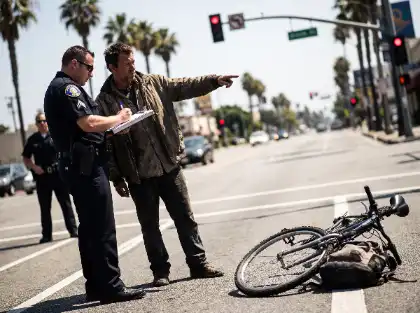 When both parties share fault, California’s pure comparative negligence rule assigns each person a percentage of responsibility. Their share of fault generally reduces any compensation they recover.
For example, suppose a pedestrian suffers $100,000 in damages but bears 30% of the fault. They may recover $70,000.
A person can still recover even when they bear more fault than the other party. California generally reduces the recovery by that person’s share of responsibility. No percentage threshold automatically prevents recovery in an ordinary negligence claim.
To reduce their payout, insurers and defense attorneys may argue that the injured victim contributed to the crash. The victim may need evidence to support a lower share of fault.
Photos, video footage, witness statements, road markings, crash reports, and other evidence may help show what happened and challenge an unsupported or inflated allocation of fault.
Our bicycle accident lawyers can review the evidence, assess how fault may be divided, and explain how comparative negligence may affect a claim.
Where Compensation Comes From After a Bicycle-Pedestrian Crash
Available insurance coverage can vary based on fault and the policies involved. Because a bicycle is not a motor vehicle, standard auto liability coverage may not apply to injuries caused by these crashes. Other personal liability policies may be more relevant.
Homeowners and Renters Insurance
Homeowners and renters policies may include personal liability coverage. Depending on the policy, that coverage may apply when the policyholder injures someone else, including in some incidents away from home. The policy itself controls whether the claim is covered and how much insurance is available.
The available limit may cover losses from a minor injury, but may not fully cover losses from a serious injury or fatality.
Umbrella Insurance
An umbrella policy can provide additional liability coverage once the main policy reaches its limit. A policy review can show which coverage applies, how much is available, and whether another policy may cover part of the loss.
What If the Cyclist Is Uninsured or Unidentified?
An injured pedestrian may still bring a claim directly against an at-fault cyclist who has no applicable liability insurance. However, recovering compensation can become more difficult when no policy is available.
If the cyclist leaves the scene, identifying the rider may be another challenge. A police report can document the crash, record identifying details, and support efforts to locate the cyclist. Witness statements and nearby camera footage may also help establish the rider’s involvement.
Your insurance may provide limited help in some situations. Review your policies for any applicable medical payments coverage, and use health insurance for covered treatment while a liability claim is pending.
For serious injuries where the cyclist cannot be identified or has no available coverage, pedestrian accident lawyers can review the facts, available insurance, and other potential sources of recovery.
If a cyclist injured you and the available insurance is unclear, Arash Law can review the policies and potential sources of recovery. Call (888) 488-1391 for a free initial consultation.
What Evidence Can Help Show Who Was at Fault?
Photos, video, witness statements, reports, and physical evidence can help show who caused a cyclist-pedestrian crash. These records may establish where each person was, who had the right of way, and whether either party could have avoided the collision.
Useful evidence may include:
- Photos of the collision scene.
- Video from nearby homes or businesses.
- Traffic or security camera footage.
- Statements from witnesses.
- Police or collision reports.
- Damage to the bicycle or personal property.
- Road markings and traffic control devices.
- Medical records documenting the resulting injuries.
Evidence can disappear. For instance, businesses and agencies may keep video for only a limited period under their normal retention policies. An attorney can send preservation requests when video, electronic records, or other evidence may be lost.
What Should You Do After a Cyclist-Pedestrian Crash?
Call 911 when someone is injured or needs emergency assistance. Seek medical evaluation promptly if you were hurt or develop symptoms after the collision.
When possible, also take these steps:
- Get the other party’s name and contact information.
- Ask whether the other party has applicable insurance.
- Collect contact information from witnesses.
- Photograph the bicycle, injuries, road, signals, and the surrounding area.
- Note nearby businesses or buildings that may have cameras.
- Keep medical bills, treatment records, and receipts.
- Avoid guessing about who is at fault when speaking with an insurer.
Medical records may help document when injuries appeared and the treatment they required. They can also help establish the extent of your accident-related losses.
What Compensation May Be Available?
Anyone injured by another person’s negligence may seek compensation for financial and non-financial losses caused by the crash. Available damages may include medical expenses, lost income, property damage, pain and suffering, and other proven losses.
Depending on the facts, damages may include:
- Medical Expenses: Emergency care, doctor visits, surgery, medication, rehabilitation, and other treatment.
- Lost Income: Wages or earnings lost while recovering.
- Reduced Earning Capacity: Losses caused by an injury that reduces the person’s ability to earn money in the future.
- Pain and Suffering: Physical pain and other non-economic harm caused by the injuries.
- Property Damage: Damage to phones, clothing, glasses, bikes, riding gear, or other personal property.
The value of a claim can depend on the injuries, evidence, available insurance, and other factors that affect bicycle accident settlements.
Deadlines That May Affect a Bicycle-Pedestrian Accident Claim
Missing a filing deadline can prevent an injured person from pursuing compensation. Delays can also make it harder to prove a claim if medical records are incomplete or if important evidence is lost.
Important deadlines and procedures may include:
-
Personal Injury Lawsuit: In California, an injured person generally has 2 years from the date of injury to file a personal injury lawsuit against a private party under California Code of Civil Procedure (CCP) §335.1.
- Claims Involving Minors: For many private personal injury claims involving a minor, the filing period may be tolled or paused while the injured person is under 18 (CCP §352).
- Property Damage Lawsuit: You generally have three years to sue for damage to personal property, such as a bike or a phone, caused by the accident (CCP §338).
-
Public Entity Claims: If a public entity may be responsible, a separate government-claim process generally applies. A personal injury claim against a public entity generally must be presented within six months after the claim accrues, or arises, which is typically the day of the accident (Government Code §911.2).
- State Agency Claims: Claims against a California state agency generally go through the Department of General Services’ Government Claims Program.
- City or County Claims: Claims against a city or county are generally presented directly to that local entity.
- Late Claim Application: If the six-month deadline is missed, a late-claim application may still be filed within one year of the injury (Government Code §911.4). There is no guarantee that this application will be approved.
If you are unsure whether all required steps have been completed, Arash Law can review the claim, identify applicable deadlines, and determine whether additional filings are required.
Frequently Asked Questions About Cyclist-Pedestrian Accidents in California
Can a Pedestrian Sue a Cyclist for an Accident on a Sidewalk in California?
Yes. A pedestrian may bring a personal injury claim if a cyclist acts carelessly and causes the injury, unless a legal defense bars the claim.
Local rules may control where cyclists can ride on sidewalks or shared paths. Even when these ordinances allow cyclists to do so, riders must still use reasonable care. A cyclist may be responsible for riding too fast, failing to watch for pedestrians, or otherwise riding unsafely.
Does It Matter If the Crash Happened on a Shared Bicycle and Pedestrian Path?
Yes. The location can affect how the fault is evaluated. Signs, lane markings, posted rules, and local regulations may show where cyclists and pedestrians are expected to travel or who should yield to whom.
Even on a shared path, both cyclists and pedestrians must use reasonable care. A cyclist may be responsible for riding too fast or passing unsafely. A pedestrian can be at fault if they suddenly move into the cyclist’s path.
What Happens If a Cyclist Flees the Scene of a Crash?
If the cyclist leaves, call 911 and report the collision. Try to note the rider’s appearance, the bicycle’s description, the direction of travel, and any identifying clothing or delivery markings.
A police report can document the crash and support efforts to identify the cyclist. Witness statements and nearby camera footage may also help. If you cannot identify the cyclist, recovering compensation may be more difficult, and your options may depend on your insurance.
An attorney can help evaluate your options based on your specific coverage and the facts of the crash.
What If an E-Bike Delivery Rider Hits a Pedestrian?
A crash involving a delivery rider can raise additional insurance and liability questions. The injured pedestrian should identify the rider and the delivery platform. The pedestrian should also determine whether the rider was completing a delivery at the time.
California law treats qualifying app-based delivery riders as independent contractors under Proposition 22 when its requirements are met. That means the platform is not automatically liable simply because the rider was using its app.
The platform, the rider’s work status, and the crash details can affect whether insurance applies and what other claims may be available.
Does Health Insurance Cover My Injuries If a Cyclist Hits Me?
Yes. Health insurance can cover emergency care, surgery, rehabilitation, and follow-up treatment. This coverage can help pay for care as you file a separate claim against the cyclist at fault.
Your health insurer may seek reimbursement from a settlement or judgment for costs it paid. This process is known as subrogation. An attorney can review any reimbursement or lien issues that may affect your final recovery.
Who Pays If Both the Cyclist and the Pedestrian Were Injured?
If both the cyclist and the pedestrian were injured, each person may pursue a claim against the other and be responsible for the other’s losses based on how much they contributed to the crash. California’s comparative negligence rule reduces each person’s recovery according to that person’s percentage of fault. Liability insurance may pay covered claims. If no applicable insurance exists, the responsible person may have to pay out of pocket.
Talk to Arash Law About Your California Cyclist-Pedestrian Claim
Arash Law has recovered over $1 billion for injured clients in California. If you were hurt in a cyclist-pedestrian crash, our attorneys can review your options, investigate the collision, gather evidence, identify available insurance, and assess potentially responsible parties.
Call (888) 488-1391 for a free case evaluation. Our team is available 24 hours a day.
We handle these cases on a contingency fee basis. You pay no attorney’s fees unless we recover compensation for you. Fees depend on the written agreement.
Sources
- California Legislature, LegInfo — California Code of Civil Procedure § 335.1. A lawsuit for injury caused by another person’s wrongful act or neglect generally must be filed within two years. https://leginfo.legislature.ca.gov/faces/codes_displaySection.xhtml?sectionNum=335.1.&lawCode=CCP
- California Legislature, LegInfo — California Code of Civil Procedure § 338. A lawsuit for damaged personal property generally must be filed within three years. https://leginfo.legislature.ca.gov/faces/codes_displaySection.xhtml?sectionNum=338.&lawCode=CCP
- California Legislature, LegInfo — Government Code § 911.2. Personal injury claims against a California public entity generally must be presented within six months after the claim accrues. https://leginfo.legislature.ca.gov/faces/codes_displaySection.xhtml?sectionNum=911.2.&lawCode=GOV
- California Legislature, LegInfo — Government Code § 911.4. If a claim is not presented within six months, a written application for leave to present a late claim may be filed within a reasonable time, not to exceed one year after the claim accrues. https://leginfo.legislature.ca.gov/faces/codes_displaySection.xhtml?sectionNum=911.4.&lawCode=GOV
- California Legislature, LegInfo — California Vehicle Code § 21200. Bicyclists generally have the same rights and duties as drivers when those rules can apply to bicycle use. https://leginfo.legislature.ca.gov/faces/codes_displaySection.xhtml?sectionNum=21200.&lawCode=VEH
- California Legislature, LegInfo — California Vehicle Code § 21950. Drivers must yield to pedestrians in marked and unmarked crosswalks at intersections. Pedestrians must also exercise due care and cannot suddenly enter the path of a vehicle that is too close for its driver to stop safely. https://leginfo.legislature.ca.gov/faces/codes_displaySection.xhtml?sectionNum=21950.&lawCode=VEH
- California Legislature, LegInfo — California Vehicle Code § 21954. Pedestrians crossing outside a marked or unmarked crosswalk generally must yield to approaching vehicles that present an immediate hazard. https://leginfo.legislature.ca.gov/faces/codes_displaySection.xhtml?sectionNum=21954.&lawCode=VEH
- CalBike, California Bicycle Coalition — California Bicycle Laws. Summarizes California laws governing bicyclists, including bicyclists’ rights and responsibilities on public roads. https://www.calbike.org/go_for_a_ride/california_bicycle_laws/
- Justia — Li v. Yellow Cab Co., 13 Cal.3d 804 (1975), California Supreme Court. Established California’s pure comparative negligence doctrine, allowing damages to be apportioned according to each party’s share of fault. https://law.justia.com/cases/california/supreme-court/3d/13/804.html
- Journal of Safety Research — Recent Trends and Demographics of Pedestrians Injured in Collisions With Cyclists. An estimated 66,231 U.S. pedestrian emergency department visits from cyclist collisions during 2006–2014 and 2016. https://www.sciencedirect.com/science/article/pii/S0022437520301602
Disclaimer
Past results do not guarantee future outcomes. The information on this page is for general educational purposes and does not constitute legal advice. Reading or relying on this content does not create an attorney-client relationship. If you were injured, consult a licensed California personal injury attorney about your specific situation. Arash Law: (888) 488-1391.