TL;DR: Yes. A commercial truck driver who is covered by workers’ compensation may also pursue a third-party injury claim against an at-fault driver under California Labor Code §3852. Though the two claims can proceed simultaneously, workers’ compensation liens, insurance coverage, employment classification, and filing deadlines can affect the potential recovery.
A commercial truck driver injured by a reckless driver can generally pursue a third-party personal injury claim against that driver while receiving workers’ compensation benefits. California Labor Code (LAB) §3852 preserves an eligible employee’s right to pursue a third party responsible for a work-related injury.
Table of Contents

I Was Driving a Commercial Truck for Work When a Reckless Driver Hit Me. Can I Pursue a Third-Party Injury Claim in Addition to Workers’ Comp?
Yes. If you qualify for workers’ compensation, you can generally seek those benefits and pursue a separate injury claim against the reckless driver who caused the crash. The two claims address the same incident but provide different forms of compensation.
Workers’ compensation can provide medical and disability benefits without requiring you to prove another person was negligent. A third-party claim requires proof that the other driver was legally responsible for your injuries and may provide compensation for additional losses, including pain and suffering.
Your employment status, available insurance, and any workers’ compensation liens can affect how the claims interact and how much you ultimately recover. Promptly preserving evidence can support both claims because video, electronic records, and other evidence may become unavailable before the filing deadlines.
Key Facts for Injured California Truck Drivers
- Workers’ compensation does not necessarily prevent a third-party claim. LAB §3852 permits an eligible injured employee to pursue a responsible third party other than their employer, even while they’re simultaneously seeking workers’ compensation benefits.
- The claims compensate for different losses. A third-party claim may allow recovery of damages that workers’ compensation does not provide, including pain and suffering and additional wage-related losses.
- Workers’ compensation liens can affect the net recovery. An employer or insurer may have reimbursement or lien rights against a third-party recovery under California law.
- Evidence can disappear before a lawsuit is due. Dashcam footage, electronic records, photographs, witness statements, and other evidence should be promptly identified and preserved.
- Personal injury and property damage lawsuits can have different filing deadlines. California generally provides two years for personal injury actions and three years for property damage cases.
- Government involvement can shorten the time to act. A claim involving a public entity may require a government claim to be filed within six months under California Government Code (GOV) §911.2.
How This Scenario Works in Third-Party Claims Under California Law
For example, if a reckless driver hits your commercial truck while you are making a delivery in San Francisco, each claim addresses a different question: whether your injury qualifies for workers’ compensation and whether the other driver bears legal responsibility for your harm.
Here is how the two claims differ:
- Workers’ compensation does not require proof of fault. An eligible employee can receive benefits without proving that another person caused the injury.
- Workers’ compensation covers specific losses. Benefits can cover medical treatment and provide partial wage replacement. However, they do not compensate for pain and suffering or every other loss that may be recoverable through a civil claim.
- A third-party claim targets the outside responsible party. In this scenario, the responsible party could be a reckless driver or another person or entity that failed to use reasonable care.
- A third-party claim requires proof of responsibility. The injured driver must establish that an outside party, such as another motorist, was legally responsible for causing the crash.
- A third-party claim can seek additional damages. Depending on the circumstances, the claim may include pain and suffering, additional lost earnings, and other proven losses permitted under California law.
However, for injured truckers eligible to file both claims, doing so may affect their potential compensation. A workers’ compensation insurer may have lien or reimbursement rights against a third-party recovery. It may also be entitled to a credit against future benefits, up to the employee’s net recovery (LAB §§ 3858, 3861). Arash Law’s big rig truck accident attorneys consider both claims before settlement.
What Workers’ Compensation and a Civil Claim May Cover
Workers’ compensation and third-party civil claims provide different forms of recovery.
Workers’ compensation may provide medical treatment and disability benefits according to California’s statutory system. A civil claim may allow an injured driver to seek additional economic and non-economic damages caused by the third party.
Depending on the evidence and circumstances, recoverable civil damages may include:
- Medical expenses.
- Past and future lost earnings.
- Reduced earning capacity.
- Pain and suffering.
- Emotional distress.
- Other proven economic and non-economic losses that are permitted under California law.
The same loss generally cannot simply be collected twice. California’s workers’ compensation statutes contain rules governing an employer’s or insurer’s rights when an injured worker also obtains money from a third party.
Under LAB §3856, lien and reimbursement issues can affect the distribution of a third-party recovery. The calculation can depend on the procedural posture, attorney fees and costs, employer fault, and other circumstances. That means the net recovery cannot be determined from the gross settlement amount alone.
Can an Independent Owner-Operator Bring a Third-Party Claim?
An independent owner-operator of a commercial truck can bring a personal injury claim if they can prove that the reckless driver who hit them was negligent.
A driver’s employment classification can affect workers’ compensation eligibility. However, it does not necessarily determine whether the driver has a civil claim against an unrelated motorist who caused the collision.
A true independent contractor may not have the same employer-provided workers’ compensation benefits as an employee. A worker who has been classified as an independent contractor may also dispute that classification under applicable California law.
Those classification questions are fact-specific. The legal test can depend on the nature of the work and the applicable statutory framework. That said, a job title or contract label alone may not resolve workers’ compensation eligibility.
Even if workers’ compensation is available, an injured driver may still have a personal injury claim against a third party whose negligence caused the crash.
If you were injured while driving commercially in California, Arash Law can review how workers’ compensation, third-party liability, insurance coverage, and potential liens may interact in your circumstances. Call (888) 488-1391 for a free case evaluation.
Liability in Highway Collisions Across California
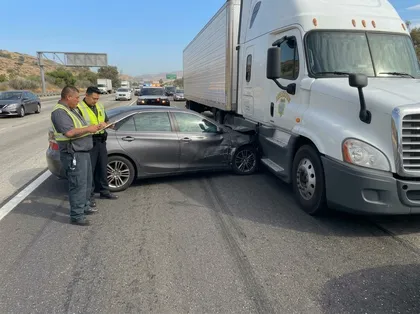
Liability in California traffic crashes typically depends on who was negligent. Proving negligence in a truck accident case typically involves proving that someone failed to act with reasonable care, substantially causing the crash and the victim’s injuries and losses. Under this framework, the reckless driver who caused the collision may be responsible for the harm sustained by an injured commercial truck driver. Depending on the circumstances, other parties may also bear responsibility.
Potentially responsible parties can include:
- Another motorist when they were speeding, distracted, impaired, or otherwise driving without reasonable care.
- Another employer or business, if the at-fault driver who caused the collision was an employee acting within the scope of employment.
- A vehicle owner, when California law permits liability based on ownership or another applicable theory.
- A commercial carrier, when its own conduct contributed to the collision.
- A public entity, when a government vehicle or a qualifying dangerous road condition contributed to the injury.
Identifying every potentially responsible party matters because the claims against each one may involve different evidence, insurance coverage, procedural requirements, and deadlines.
California also follows comparative fault principles. An injured driver’s recovery can be reduced according to that person’s share of responsibility rather than automatically eliminated because the driver was partly at fault.
What If the At-Fault Driver Has Too Little Insurance?
Available insurance can significantly affect a third-party claim. California’s minimum automobile liability limits increased on January 1, 2025. However, serious injuries can still exceed the amount available under an at-fault motorist’s policy.
Uninsured motorist and underinsured motorist (UM/UIM) coverage from the injured victim’s own policy may provide another source of recovery when applicable. The available coverage depends on the relevant policy terms, limits, exclusions, and facts of the collision.
Other policies may also require review when the responsible driver was working at the time of the crash or was operating a commercial vehicle.
Practical Next Steps for Injured California Truck Drivers
After a work-related collision, protecting both the workers’ compensation claim and any third-party claim requires attention to separate procedures:
- Report the work injury promptly. LAB §5400 establishes a 30-day deadline for employees to notify their employer in writing of a work injury, subject to statutory qualifications and exceptions. Prompt reporting can also help document when and how the injury occurred.
- Obtain appropriate medical care. Keep records of diagnoses, treatment, work restrictions, prescriptions, and related expenses.
- Identify all potentially responsible parties. Determine whether the collision involved another motorist, an on-duty employee, a commercial carrier, or a government vehicle or road condition.
- Preserve available evidence. Save photographs, video, witness information, vehicle records, medical documentation, and other relevant materials. When electronic or third-party records may be important, preservation efforts should begin promptly.
- Track each applicable deadline separately. Do not assume that a workers’ compensation proceeding pauses the limitations period for a civil claim.
- Review both claims before settlement. A workers’ compensation lien or reimbursement right can affect the net proceeds from a third-party settlement.
If a government vehicle, employee, or qualifying public road condition may have contributed to the collision, identifying the correct public entity is particularly important. State claims and claims against local government entities can follow different filing procedures.
Evidence That Can Disappear and How to Protect It
Commercial vehicle cases can involve evidence beyond photographs and a police report. Electronic records, company documents, video, and vehicle information may help establish how the collision occurred.
Potential evidence includes:
- Dashcam footage. Video may document vehicle movements, lane changes, traffic signals, and conditions immediately before impact.
- Electronic logging device records. Hours-of-service records can help establish driving and duty history when those issues are relevant. Federal regulations under 49 CFR §395.8 impose a six-month retention requirement for specified records of duty status.
- Vehicle and electronic data. Depending on the vehicles and systems involved, electronic information may provide evidence about speed, braking, location, or other events.
- Collision reports. California Highway Patrol (CHP) or local law enforcement records may document the scene, involved parties, witnesses, and reported circumstances.
- Witness and scene evidence. Photographs, video, witness contact information, vehicle damage, roadway conditions, and physical evidence can become important in disputed liability cases.
- Carrier records. When another commercial vehicle is involved, inspection, maintenance, driver-qualification, and other records may become relevant depending on the liability theory.
Filing Deadlines for California Injury Cases
Different deadlines can apply to different parts of a truck accident case. Missing a statute of limitations or a required government claim deadline can bar the affected claim entirely. Meanwhile, delays in reporting or preserving evidence can create different consequences.
The following deadlines may apply to your case:
- Workers’ Compensation Claims: LAB §5405 generally gives an injured employee one year to commence workers’ compensation proceedings. The filing window may open on the date of injury, the expiration of certain disability payments, or the last furnishing of specified workers’ compensation benefits, depending on the circumstances.
- Personal Injury Lawsuits: California Code of Civil Procedure (CCP) §335.1 generally provides a two-year limitations period.
- Property Damage Lawsuits: CCP §338 generally provides a three-year limitations period.
- Government Claims: GOV §911.2 generally requires that certain injury-related claims be presented to the appropriate public entity within six months.
Exceptions and different rules can apply. Claims involving minors, public entities, medical malpractice, or other specialized circumstances may require separate analysis.
These legal deadlines also should not be confused with evidence-preservation urgency. Video, electronic data, physical evidence, and witness information can become unavailable long before the applicable filing period expires.
What Arash Law Has Recovered in Comparable Cases
The following results from Arash Law’s past truck and injury recoveries illustrate the kind of outcomes that legal representation for dual-track and commercial vehicle claims can produce:
$6,385,000 — Truck v. Auto Collision: A rare medical diagnosis identified by co-counsel shaped the outcome. This case result demonstrates the firm’s capacity to handle complex commercial vehicle collision claims.
$8,800,000 — Auto v. Auto Accident: A speeding company van driver caused our client’s severe injuries. Several key depositions influenced the case’s outcome. This result illustrates commercial vehicle liability and third-party claims against employer-operated vehicles.
Past results do not guarantee future outcomes. Every case is different, and results depend on the specific facts and evidence involved.
Frequently Asked Questions About Third-Party Injury Claims for Commercial Truck Drivers in California
Can I Receive Workers’ Compensation and Sue the Other Driver?
Yes. An employee entitled to California workers’ compensation may also sue a responsible third party. In many cases, a lawsuit becomes necessary when the third party or its insurer disputes liability or does not offer an acceptable settlement.
Can I Bring a Claim If I Was Partly at Fault?
Yes. California’s comparative fault rules generally reduce recoverable damages according to the injured person’s percentage of responsibility rather than automatically eliminating the claim.
What If the Other Driver Was Working When the Crash Happened?
The driver’s employer may also face liability if the driver caused the collision while acting within the scope of employment. Whether an employment relationship and scope-of-employment requirements are satisfied depends on the facts of the case.
What If the At-Fault Driver Has Little or No Insurance?
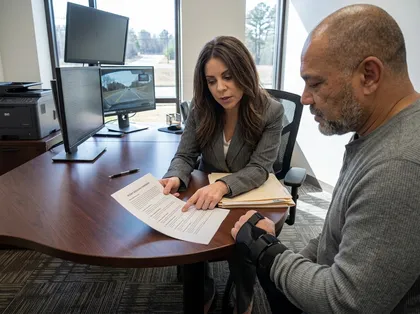
Applicable UM/UIM coverage may provide another source of recovery when an at-fault driver has no insurance or insufficient liability coverage. The available recovery depends on the applicable policies and circumstances.
What Happens to the Workers’ Compensation Lien?
The workers’ compensation lien may reduce your potential recovery. California law can grant an employer or a workers’ compensation insurer the right to recover money from the settlement you receive from a responsible third party. The amount ultimately payable can depend on attorney fees, costs, employer fault, and other case-specific issues.
Can an Independent Contractor File a Third-Party Injury Claim?
Yes, potentially. A driver who is not eligible for employer-provided workers’ compensation may still pursue a negligent third party responsible for the collision.
How Quickly Should Truck Crash Evidence Be Preserved?
As soon as reasonably possible. Video, electronic records, witness information, and other evidence may be lost or overwritten before the statute of limitations expires. Specific retention periods vary by record and system.
Do I Pay the Attorney’s Fees Up Front?
Not if they work on a contingency fee basis. That means the attorney’s fees are tied to a recovery rather than charged up front. If your lawyer cannot win or settle your case, you don’t owe them those fees. The applicable percentage and other terms must be stated in the written fee agreement.
Talk to Arash Law About Your California Claim
If you were injured in a truck crash while on the job, you may be entitled to workers’ comp benefits and a third-party civil recovery, simultaneously, under the same California law. This dual-track strategy is real, and how it is executed determines how much you ultimately keep.
Arash Law has recovered over $1 billion for injured Californians across the state. Our attorneys handle California truck accident claims from the first preservation demand through lien negotiation and civil settlement, so nothing falls through the gap between the two tracks.
Call (888) 488-1391 anytime, 24 hours a day, for a free case evaluation. You pay nothing in legal fees unless we win.
Arash Law. Make them pay, call AK.
Sources
- 49 CFR §395.8(k)(1): Six-month retention of driver records of duty status and supporting documents. Federal Motor Carrier Safety Administration. https://www.fmcsa.dot.gov/hours-service/elds/how-long-must-motor-carriers-retain-records-duty-status-rods-and-supporting
- California Code of Civil Procedure §335.1: Two-year statute of limitations for personal injury. California Legislature. https://leginfo.legislature.ca.gov/faces/codes_displaySection.xhtml?sectionNum=335.1.&lawCode=CCP
- California Code of Civil Procedure §338: Three-year statute of limitations for property damage. California Legislature. https://leginfo.legislature.ca.gov/faces/codes_displaySection.xhtml?sectionNum=338.&lawCode=CCP
- California DMV: Automobile Liability Insurance Requirements. https://www.dmv.ca.gov/portal/vehicle-registration/insurance-requirements/
- California Government Code §911.2: Six-month government tort claim filing deadline. California Legislature. https://leginfo.legislature.ca.gov/faces/codes_displaySection.xhtml?sectionNum=911.2.&lawCode=GOV
- California Labor Code §3852: Concurrent civil action and workers’ compensation rights. California Legislature. https://leginfo.legislature.ca.gov/faces/codes_displaySection.xhtml?sectionNum=3852.&lawCode=LAB
- California Labor Code §3856: Employer/insurer lien apportionment on third-party recovery. California Legislature. https://leginfo.legislature.ca.gov/faces/codes_displaySection.xhtml?sectionNum=3856.&lawCode=LAB
- California Labor Code §3858: Employer credit following employee third-party recovery. California Legislature. https://leginfo.legislature.ca.gov/faces/codes_displaySection.xhtml?sectionNum=3858.&lawCode=LAB
- California Labor Code §3861: Credit against workers’ compensation liability from third-party recovery. California Legislature. https://leginfo.legislature.ca.gov/faces/codes_displaySection.xhtml?sectionNum=3861.&lawCode=LAB
- California Labor Code §5405: One-year limitations period for workers’ compensation proceedings. California Legislature. https://leginfo.legislature.ca.gov/faces/codes_displaySection.xhtml?sectionNum=5405.&lawCode=LAB
- California Labor Code §5400: Thirty-day employer notification requirement for workplace injuries. California Legislature. https://leginfo.legislature.ca.gov/faces/codes_displaySection.xhtml?sectionNum=5400.&lawCode=LAB
Disclaimer
The information on this page is for general educational purposes and does not constitute legal advice. No attorney-client relationship is formed by reading or relying on this content. If you were injured, consult a licensed California personal injury attorney about your specific situation. Arash Law, (888) 488-1391.