TL;DR: Right-of-way laws in California require drivers to yield to pedestrians in crosswalks, to traffic in intersections, and to emergency vehicles using lights or sirens. Violations often cause crashes that injure pedestrians or cyclists, and they add 1 point to a license plus fines over 400 dollars.
Highlights:
- Yield to pedestrians in marked and unmarked crosswalks before turning.
- Stop for school buses with red flashing lights until lights stop.
- Pull over for emergency vehicles with lights and siren; clear intersections first.
- At uncontrolled intersections, yield to cars already entered; right goes first.
- Yield before entering from driveways, alleys, side streets, or parking lots.
- Enter roundabouts only with a safe gap; yield to circulating traffic.
- Slow for schools, alleys, blind crossings, and railroad approaches.
Tip: If a crash happens, photograph the scene, signals, and injuries, get witness contacts, and give your insurer only clear facts you personally observed.
Table of Contents
The regular flow of traffic is necessary for the safety of drivers, passengers, and pedestrians in California. Bicyclists and motorcyclists also benefit from right-of-way rules and other traffic laws. Although it is dangerous to expect all drivers to offer the right-of-way, safe drivers should give the right-of-way to other motorists because it can reduce the number of automobile accidents in California.
Those who drive automobiles need to be aware of the importance of right-of-way laws in California. These laws not only protect pedestrians, bicyclists, and motorcyclists. Illegal turns and dangerous lane changes can be avoided if drivers adhere to these laws. Additionally, driving at excessive speeds and failing to stop at red lights can become less common if drivers prioritize following the right-of-way laws. A large number of automobile accidents in California arise due to right-of-way violations.
Right-of-way violations can leave victims with painful injuries and costly bills. Our car accident lawyers can explain your legal options and guide you through the claims process. Call (888) 488-1391 for a free initial consultation.
How Is The Right-of-Way Defined In California?
The right-of-way is defined as follows:
“When the law requires a driver or pedestrian to ‘yield the right-of-way’ to another driver or pedestrian, this means that the driver or pedestrian must let the other driver or pedestrian go first.”
The following admonition is also applicable:
“Even if someone has the right-of-way, that person must use reasonable care to avoid an accident.” (California Civil Jury Instruction 701).
The California Vehicle Code sections regarding the right-of-way are also important. These code sections are listed below:
- California Vehicle Code § 21950 — Duty to yield to a pedestrian crossing a roadway either “lawfully within a crosswalk or within any unmarked crosswalk at an intersection.”
- California Vehicle Code § 21806 — This vehicle code section requires drivers to yield to emergency automobiles such as ambulances and police cruisers. Drivers must also yield to emergency vehicles with at least one emergency light lit for a distance of 1000 feet from the front of the approaching vehicle, pull over to the curb, and permit these vehicles to pass. California Vehicle Code § 21807 states that this provision does not relieve drivers of emergency vehicles from using reasonable and due caution while driving their automobiles.
- California Vehicle Code § 21805 — This vehicle code section requires that drivers yield for horses at specific equestrian crossings.
- California Vehicle Code § 21804 — “Entry Upon a Highway” (a) provision requires all vehicles prepared to enter a roadway from a side street, parking lot, or alleyway to stop for traffic already on the road and not drive onto the road until it is clear; but also subsection (b) requires vehicles to yield to automobiles that have entered the road and permit them to enter the roadway safely.
- California Vehicle Code § 2180 — Legal duty to yield at a yield sign and not proceed until traffic has passed a safe distance.
- California Vehicle Code § 21802 — Requirement to come to a full stop when approaching a stop sign and yield to all vehicles at an intersection controlled by stop signs until it is safe to proceed.
- California Vehicle Code § 21801 — (a) a driver who intends to either turn left or make a legal U-turn must yield to all traffic traveling in the opposite direction and not initiate or continue the turn until such traffic is a safe enough distance away to negotiate the turn; in the alternative, subsection (b) states that if a driver making a left or U-turn has properly yielded, turned on their signal and started to turn, the approaching traffic must yield the right of way to the turning vehicle.
- California Vehicle Code § 21800 — § 21800 is the principal law that applies to the behavior of drivers in and around “uncontrolled” intersections (i.e., no traffic lights, stop signs, or yield signs) in California. The code section mandates yielding the right-of-way in the following circumstances: (a) vehicles approaching an intersection must yield to vehicles who have already entered the intersection from a different highway; (b) when two vehicles approach the intersection at the same time from different directions, the driver on the left should yield to the driver on the right unless it is a “terminating highway” (the road that dead ends into another), in which case, the driver on the terminating highway must yield to the motor vehicle operator on the continuing highway; (c) if the intersection is controlled by stop signs in all directions or in the case of an intersection with inoperable traffic lights, the car on the left should yield to the driver on the immediate right.
The right-of-way laws in California offer transparent guidelines for drivers. The code sections set forth when drivers are allowed to go upon the roadway and when they should refrain until other automobiles have passed. Right-of-way laws are integral to overall traffic safety in California.
Drivers need to maintain their awareness of their surroundings while traveling on roads and highways in California. What follows are some of the main right-of-way laws in the state.
Driving At Lower Rates Of Speed
Congested Traffic Or Dangerous Weather Conditions
Operators must drive at lower speeds when encountering traffic congestion or hazardous weather conditions. However, drivers who clog up regular traffic movement by slowly driving will be issued a citation. Drivers who prefer to drive at a slow speed should avoid the leftmost lane. If a driver comes close to your vehicle because they want to drive at a faster speed, you can switch lanes and move to the right.
Failing to adjust speed for road or weather conditions often leads to traffic accidents, especially in areas where drivers ignore right-of-way rules or make sudden lane changes. Understanding how speed laws connect to right-of-way helps keep traffic flowing smoothly and reduces risks for everyone on the road.
Those Who Tow Large Trucks, Buses, & Other Vehicles
Drivers who are responsible for towing other automobiles must adhere to specific rules. If the driver is towing a trailer or a vehicle, the driver must use the lane on the far right side of the highway or use a lane intended specifically for vehicles driving at a lower rate of speed.
No lanes on the highway may be marked, and there may be four lanes on the road. Under these circumstances, the driver who is towing a trailer or vehicle must use the two lanes on the right side. Bicyclists, pedestrians, and motorcyclists may feel the impact of strong winds when a truck and trailer pass them. Drivers operating tow trucks should maintain a distance of at least three feet from bicyclists and pass them in a safe manner.
Driving Near Children
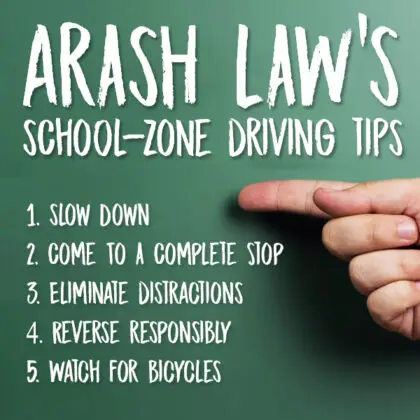 Drivers who are near children need to be extremely cautious. The speed limit is 25 miles per hour if a driver operates a vehicle within 500 to 1,000 feet of a secondary school, middle school, or high school. If a school campus is not fenced in and children play outdoors, the driver should not go faster than 25 miles per hour. Specific school zones in California may have speed limits as low as 15 mph.
If you are driving near a school zone, watch out for pedestrians and bicyclists. Also, school crossing guards and safety officers are often on foot near school campuses. It is important to take directions from school crossing guards and wait for them to get to the side of the road before driving across an intersection.
Oftentimes, a driver will encounter a school bus at a complete stop on the side of the road. Sometimes, children will be crossing the street. School buses have yellow lights to warn drivers that the bus is getting ready to make a complete stop. A school bus may have red flashing lights. If so, come to a full stop and wait until the children have crossed the street and the lights on the bus have stopped flashing.
California Vehicle Code § 22454 mandates that drivers stop as long as the red lights are illuminated on the bus. Violating this law can result in fines up to $695 and one point on your driving record. If a school bus is located on the other side of a divided-lane roadway, you do not need to stop your automobile.
Many failure-to-yield accidents involving children occur when drivers ignore right-of-way rules near schools or buses. These crashes can leave young pedestrians with serious injuries. Families may turn to pedestrian accident lawyers for guidance on their legal options and for pursuing compensation.
Blind Crossings
The speed limit at blind crossings is 15 miles per hour. A crossing is “blind” if no corner contains a stop sign and a driver cannot see for 100 feet in either direction during the final one hundred feet. If you cannot see beyond the intersection, proceed cautiously until you can.
Alleys
Any time you are driving in an alley, you cannot travel faster than 15 miles per hour. Alleys are narrow spaces where cars, bicycles, and especially pedestrians often share the same path. Due to the limited visibility and tight space, speeding in an alley can easily cause serious collisions. Many pedestrian accident lawyers handle cases that start in these overlooked areas, since walkers and children are especially at risk when drivers fail to slow down.
Close To Railroad Tracks
The general rule is that if you are within 100 feet of a railroad crossing, then the speed limit is 15 miles per hour. Many drivers cannot see the railroad tracks for 400 feet in either direction. If the railroad crossing is guarded by a flagman, a warning signal, or a gate, then you can drive over 15 miles per hour.
The following guidelines can help you when you are traveling near train or railroad crossings:
- Do not pass under or around gates that have been lowered. Red flashing lights are a sign to stop. Although you may see the gate come up, do not drive over the railroad tracks until the red lights cease flashing. If the gates are lowered, but you do not see a train, call 911 or the railroad emergency number. Provide a clear description of your exact location.
- It is a clear sign to come to a complete stop when you see red flashing lights. Stop no more than 50 feet from the closest railroad track when the crossing is active or if a person issues a warning that a train is approaching. Come to a complete stop if you ascertain a train approaching or if you hear the sound of a bell, horn, or whistle.
- Also, be on the lookout for automobiles that have to come to a complete stop before they move across railroad tracks. Commercial trucks, school buses, and transit buses typically must stop at all railroad crossings.
- Under no circumstances should you ever come to a complete stop on the railroad tracks. If you stop on the railroad tracks, you may suffer serious bodily injury or death.
- You can anticipate a train crossing at any moment from either direction. If you have to make a stop after crossing the railroad tracks, wait until you have completed the crossing and found a safe place to stop. Make certain that your vehicle is capable of crossing the railroad tracks.
- Review both directions and check if you do not hear any train whistles, bells, or horns. Railroad crossings contain many different tracks, and it is important to be ready to come to a complete stop before crossing the railroad tracks. If you are driving an automobile, then you only cross railroad tracks at specific crossing areas and only when the tracks are clear.
Light Rail Transit Vehicle Crossings
It is crucial to adhere to the rules that apply to light-rail transit vehicle crossings. The same rules that are applicable to railroad crossings apply to light-rail transit vehicle crossings. However, remember that light-rail transit vehicles are much faster than trains, and they can accelerate in an incredibly quiet manner.
Buses, Trolleys, & Streetcars
The speed limit for passing buses, trolleys, and streetcars is 10 miles per hour. The 10 miles per hour speed limit is operative in safety zones and at intersections where buses, trolleys, and streetcars are stopped, and traffic is managed by peace officers or traffic signals. All safety zones are distinguished by heightened buttons or road markings that are set to the side of the road to accommodate pedestrians. Safety zones are common in areas where streetcars and trolleys share the road with other automobiles.
Residential Districts And Near Businesses
The speed limit in business districts and residential districts is 25 miles per hour.
Close To Animals
Road signs that contain images of animals alert drivers that specific animals may cross the roadway. Drivers need to travel cautiously if they suspect they will be traveling through an area where animals cross the roadway. An individual may be in charge of herding the animals. If a stray animal appears near you, come to a complete stop in your vehicle. Do not swerve to miss the animal because doing so may cause a rollover accident or a collision. Animals may bolt into the roadway suddenly if they feel frightened. Be extremely cautious around any animal that is near a roadway.
Speed Limits
 The “basic speed law” in effect in California states that you cannot drive faster than a speed that is safe in the present conditions. The speed at which you drive should depend on the following:
- The amount of dust, wind, snow, fog, and rain in the atmosphere.
- Whether pedestrians or bicyclists are passing you on the road.
- Whether the surface of the road is narrow, wide, dry, wet, graveled, or rough.
- The speed and number of other automobiles on the road.
The speed limit on a two-lane undivided roadway is 55 miles per hour. If the speed limit is different, then it will be posted on a traffic sign.
Ignoring these rules often leads to speeding-related accidents. Drivers who fail to slow down in poor weather, crowded areas, or near vulnerable road users increase the risk of collisions that could have been avoided by simply following the basic speed law.
Right-Of-Way Laws For Emergency Automobiles
Police cruisers, fire trucks, ambulances, and other emergency automobiles have the right-of-way when their lights are flashing and their sirens are turned on. All drivers must pull their vehicles over to the side of the road to allow emergency vehicles to pass. If you happen to be in the middle of an intersection, drive through it and then pull to the side of the road.
Failing to yield can cause intersection accidents, where confusion or hesitation creates sudden hazards. Since intersections are already among the most dangerous spots on California roads, knowing how to respond to emergency vehicles is an important part of following right-of-way laws.
Right-Of-Way For Mountainous Roadways
Extreme caution must be maintained by those traveling on California’s mountain roadways. The right-of-way laws in California state that if two automobiles are moving on a steep roadway where both automobiles cannot pass, then the downhill-facing automobile must yield the right-of-way to the uphill-facing automobile. The downhill-facing automobile may need to reverse to permit the other vehicle to have room.
Right-Of-Way For Roundabouts In California
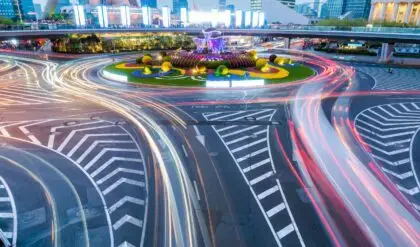 Roundabouts have become more common in California and other states. The individual vehicles travel around an island in the middle in a counter-clockwise direction. Those vehicles that exit or enter the roundabout must yield to all traffic, including bicyclists and pedestrians.
The following steps should be taken when you go near a roundabout:
- Continue around inside the roundabout if you miss your exit.
- Use turning signals when you exit the roundabout or when you switch lanes.
- Do not stop or pass other drivers. Drive in a counterclockwise direction.
- It is important to go into the roundabout when a gap in traffic appears.
- Look out for markings and signs that direct you through the roundabout.
- Yield to bicyclists and pedestrians near the roundabout.
- Decrease your speed as you get near the roundabout.
Single-Lane Roundabouts & Multiple-Lane Roundabouts
Roundabouts that contain multiple lanes can be confusing for some drivers. It is necessary for you to decide on an exit or entry lane based on your destination. Stay in the right-hand lane if you are turning right out of the roundabout. Stay in the same lane if you plan on driving straight through the roundabout. Also, choose the left lane if you are planning on turning left out of the intersection.
The Laws & Regulations Governing The Right-Of-Way For Intersections In California
Intersections are areas where two roads intersect. Freeway entrances, alleys, side streets, and cross streets are all intersections. Any place where automobiles traveling on different roadways join one another is an intersection. It is important to recognize that many automobile accidents occur at intersections in California.
One of the difficult situations a driver can find themselves in is driving through an intersection. Many automobile accidents in California happen at intersections, making them particularly hazardous areas for drivers. Following proper right-of-way procedures at intersections is essential for preventing crashes.
The following regulations can help keep you safe when you are driving through intersections in California:
- Yield to oncoming traffic if you have stopped your automobile on the side of the road or if you are exiting a parking lot.
- If you see “stop” signs at every corner of the intersection, come to a complete stop.
- If you are traveling on a freeway with multiple lanes or on a divided highway, look out for automobiles entering the lanes you cross. You can make a right or left turn only when it is safe to do so.
- If you make a right turn, check for bicyclists and pedestrians who may be near the intersection or close to your automobile.
- If you make a left turn, yield to every automobile that is close to you. It is also vital that you look out for pedestrians, bicyclists, and motorists.
- If you turn left, it is advisable to keep the wheels of your automobile straight until you can make a turn. You may be pushed into traffic if your wheels are not straight.
- At “T” intersections that do not contain “stop” or “yield” signs, yield to traffic and pedestrians.
- Slow down and be prepared to stop at intersections that do not have “stop” or “yield” signs. Give the right-of-way to other automobiles and pedestrians that are already located in the intersection. Give the right-of-way to the vehicle or bicycle that arrives at the intersection first.
Two-Way Roads
If a driver is making a left turn or a U-turn on a two-way road, the driver must give the right-of-way to all automobiles in oncoming traffic.
Three-Way Intersections
These are intersections where a small street dead-ends into a larger road. Automobiles on the larger road have the right-of-way. Automobiles arriving from the smaller road must stop completely and give the right-of-way to oncoming traffic.
Uncontrolled Intersections
If an intersection does not have yield signs or stop signs, the driver must give the right-of-way to automobiles that have already arrived at the intersection. However, if another automobile comes simultaneously, the vehicle in the far right lane has the right-of-way.
Four-Way Stops
The first automobile to reach the four-way stop has the right-of-way. Drivers must give the right-of-way to drivers who came to the intersection before them. If three automobiles reach the four-way stop all at once, the automobile to the right has the right-of-way, and the car in the leftmost spot must give the right-of-way to all the other automobiles.
Left-Hand Turns
Automobiles must yield to pedestrians who are crossing the intersection. Also, automobiles must yield to other drivers who are in the opposing lane. If you are making a right turn, give the right-of-way to pedestrians and automobiles that are coming into the lane you are entering.
Laws Related To The Right-Of-Way In Crosswalks In California
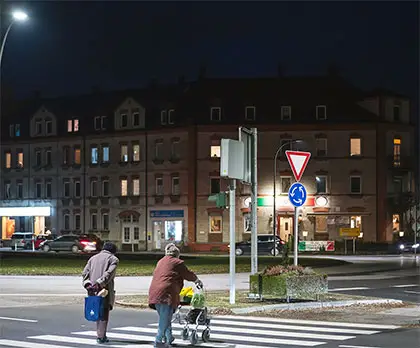 Crosswalks are designed for pedestrians. Almost all intersections have crosswalks for pedestrians, even if lines are not visible on the pavement. Many crosswalks are located at the corners of intersections, but they can also be in the middle of a block. Before you make a right or left turn, it is necessary to watch out for pedestrians crossing the street. All pedestrians have the right-of-way in crosswalks, whether they are unmarked or marked.
Most crosswalks are painted with white lines, while school crossings often use yellow. The majority of crosswalks in residential neighborhoods are unmarked. Some crosswalks also have flashing lights to alert drivers that pedestrians may be crossing. Due to this, drivers should remain alert, especially when traffic signals or road markings are unclear.
One of the dangerous situations occurs during left-turn accidents. Drivers focused on oncoming traffic may fail to notice someone in the crosswalk. These crashes can leave pedestrians with serious injuries, even when they had the legal right-of-way. Following crosswalk laws reduces the risk of these accidents and protects vulnerable road users.
The Right-Of-Way For Pedestrians In California
Data from the California Office of Traffic Safety shows that pedestrian deaths represent a significant portion of all automobile accident fatalities in the state. All drivers should be cautious when they are close to pedestrians. A driver may back up and fail to notice that a pedestrian is behind them. Electric automobiles and hybrid automobiles are quiet, and therefore pedestrians may be especially at risk of suffering serious bodily injury or death if they get near one of these automobiles. Pedestrians can seem to appear out of nowhere while you are driving, so it is recommended to search your surroundings for pedestrians.
The following points should also be kept in mind by all drivers in California:
- Young pedestrians, disabled pedestrians, and elderly pedestrians are particularly vulnerable. These individuals should be permitted enough time to cross intersections and streets.
- Pedestrians commonly make contact with a driver when they are ready to cross a street or intersection. Hence, give the right-of-way to pedestrians.
- Never come to a complete stop in the middle of a crosswalk. Doing so will put the lives of pedestrians at risk.
- Never drive on a sidewalk. If you do drive across a crosswalk, give the right-of-way to pedestrians.
- Never pass an automobile that has come to a complete stop near a crosswalk. You may be unable to see pedestrians attempting to cross. Come to a complete stop and then accelerate when all pedestrians have crossed.
- Give pedestrians the right-of-way to avoid causing a pedestrian serious bodily injury or death. No matter where you see a pedestrian, it is advisable to allow pedestrians to cross intersections, crosswalks, and roadways. Sometimes, pedestrians do not know where they are permitted to cross, so it is recommended to be conscious of the presence of pedestrians.
When drivers ignore these rules, the results can be severe. Many distracted driving accidents happen because drivers fail to notice someone in a crosswalk. In the worst cases, this leads to fatal car accidents that devastate families. Respecting right-of-way laws helps protect pedestrians and save lives.
Confusion Regarding California’s Right-Of-Way Laws
Many individuals in California do not understand the definition of a pedestrian. People who use skateboards, roller skates, and other devices are classified as pedestrians under California law. However, a bicyclist is not a pedestrian. It is advised to consider everyone who uses a mobility device a pedestrian. For example, a disabled person who uses a wheelchair is classified as a pedestrian.
The Consequences For Failing To Yield
All drivers who do not yield the right-of-way will accrue one point on their driving record. The fines a driver will pay depend on where the offense occurred. Also, a specific court may assess a fine in a different amount. Offenders may be required to pay $400 or more for one offense. You can save time and money if you obey the right-of-way regulations in California.
Beyond tickets and fines, failing to yield can also lead to serious collisions. Victims of these crashes may be able to file car accident claims to pursue compensation for medical expenses, lost wages, and other damages.
Contact Arash Law For A Free Initial Consultation Today
Navigating legal issues can be overwhelming, but you don’t have to face them alone. Whether you have questions about a recent accident, insurance claims, or a personal injury matter, our knowledgeable team is here to help.
At Arash Law, founded by Arash Khorsandi, Esq., we understand that every situation is unique, and we’re committed to providing clear answers and practical guidance tailored to your needs. Our team helps injured victims seek financial compensation for their injuries. We have decades of experience representing clients in pedestrian accident cases. We can handle negotiations with insurance companies while advocating for the rights of our clients.
Contact Arash Law at (888) 488-1391 to schedule a free initial consultation. Our personal injury attorneys serve clients across California, including Los Angeles, San Diego, Sacramento, San Francisco, Fresno, Eureka, and Bakersfield.