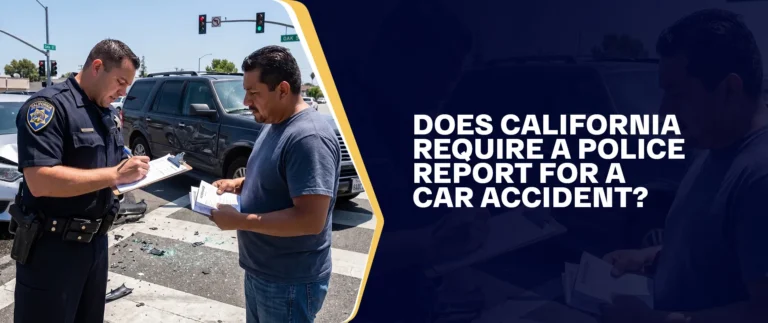
TL;DR: A homeless person can file an injury claim after being struck by a vehicle. California law extends the same rights to every pedestrian, regardless of housing status. Key deadlines still apply: six months for government entities under Government Code § 911.2 and two years for private drivers under CCP § 335.1.
Yes. A person without stable housing can file a pedestrian accident claim. The state’s negligence law allows an injured pedestrian to pursue compensation when another party fails to use reasonable care and causes harm. Housing status does not change that legal standard.
However, homelessness can make an injury claim harder to manage, especially when serious injuries require ongoing treatment and frequent communication. A person may have limited access to a phone, reliable mail, transportation, medical records, or follow-up care.
Table of Contents

A Homeless Person Was Hit By a Vehicle and May Have Difficulty Staying in Contact, Keeping Documents, or Attending Appointments. Does That Affect Their Right to File an Injury Claim?
No. A person experiencing homelessness does not lose their right to pursue a California personal-injury claim simply because they have difficulty staying in contact, keeping documents, or attending appointments. Housing instability can create practical challenges. However, it does not, by itself, eliminate the victim’s right to seek compensation.
Serious injuries can make those challenges even harder. A person recovering from surgery, hospitalization, limited mobility, or other significant injuries may struggle to replace a phone, receive mail, attend follow-up appointments, or keep important records. Using a reliable email address, a trusted contact, a shelter contact, or an attorney can help maintain communication while the claim is pending.
Key Facts About Homeless Pedestrians and Injury Claims in California
- A person experiencing homelessness has the same right to pursue a pedestrian injury claim as someone with stable housing. California Vehicle Code § 21950 requires drivers to yield to pedestrians in both marked and unmarked crosswalks, with no exception based on the pedestrian’s housing status.
- Housing instability can make it harder to pursue a claim. It may be more challenging for the victim to stay reachable, keep records, attend medical appointments, and preserve evidence, but those challenges do not eliminate the claim.
- Homeless victims can build their case using other forms of evidence when documents or phone access are unstable. Police reports, medical records, photographs, witness information, and reliable contact methods can help protect the claim.
- California filing deadlines still apply. Housing status does not change the limited time the law gives injured victims to take legal action, including the two-year deadline for most private-party personal injury lawsuits (under California Code of Civil Procedure (CCP) § 335.1) and the six-month government-claim deadline when a public entity is involved (under Government Code § 911.2).
- Sharing fault does not bar the claim. California’s pure comparative fault rule may still allow recovery even if the pedestrian shares some responsibility for the collision.
Your Legal Rights After Being Struck by a Vehicle
California law focuses on what the at-fault driver did, not where you sleep. If a driver acted carelessly and struck you, that is negligence. That negligence may create liability: the driver’s legal obligation to pay for your injuries. Your housing situation has no bearing on that obligation.
Under California Vehicle Code § 21950, drivers must yield to pedestrians in crosswalks, both marked and unmarked. Beyond crosswalks, every driver owes a general duty of care to all pedestrians on the road.
If a driver breaches that duty, the compensation you can seek from them goes beyond emergency room bills. For pedestrian accident injuries in California, you can file a claim for:
- Costs for ongoing treatment.
- Surgery.
- Rehabilitation.
- Damage to personal property.
- Pain and suffering.
- Lost earning capacity.
Housing status does not remove those categories of damages. Lost earning capacity can still apply even if you were unemployed when the crash happened, because it concerns your ability to earn income in the future.
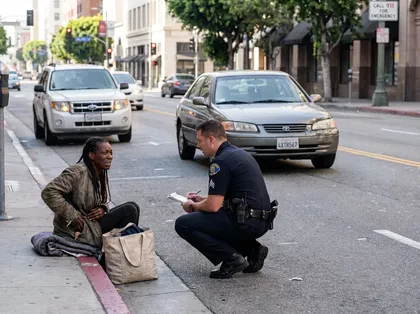
What If You Were Partly to Blame for Your Accident?
California’s pure comparative fault rule directly addresses this. Even if you were outside a marked crosswalk when you were hit, for example, you can still recover compensation. Fault is apportioned based on each party’s share of responsibility.
If a jury or adjuster found you 25% at fault and the driver 75% at fault, you could still recover 75% of your total damages. Your share of fault reduces how much you may receive. It does not automatically eliminate your claim.
Knowing your rights is the first step. A pedestrian accident lawyer can help you turn your rights into real compensation by preserving evidence, contacting the at-fault driver’s insurance, and meeting deadlines.
What Adjusters May Do When a Claimant Is Unhoused
Insurance adjusters may dispute fault, question the extent of injuries, or make early settlement offers in a pedestrian claim. Housing instability can make those disputes harder to manage if the claimant has limited access to records, a phone, mail, or regular medical care.
Here are some ways to protect the claim:
- Low Early Offers: Document every element of damages, including medical records, lost earning capacity, and pain and suffering, before any number is discussed.
- Communication Delays: Keep copies of claim-related documents and provide a reliable contact method and backup contact. An attorney can also send preservation notices when evidence held by another party needs to be retained.
- Fault Disputes: Use the collision report, witness statements, and surveillance footage to establish exactly where the claimant was and what the driver did.
Preserving Evidence When Housing Is Unstable
You can still preserve important evidence when your housing situation is unstable. This can be especially difficult after a serious pedestrian injury that requires hospitalization, surgery, rehabilitation, or repeated medical visits. The following practical steps can help preserve records, maintain communication, and protect evidence while you recover.
Documenting the Accident and Your Injuries
Some forms of evidence can help you document the accident and your injuries, even if you have limited access to a phone, mail, or documents:
- Photos: If you can, photograph the accident scene, your injuries, and any vehicle damage immediately after the crash.
- Videos: For surveillance footage from nearby businesses or city cameras, pedestrian accident lawyers can send preservation letters demanding that footage holders retain recordings. While not a court order, a preservation letter asks the footage holder to retain the recording before it is overwritten or deleted.
- Witness Statements: Witnesses can also provide valuable evidence, so their contact information and accounts should be documented promptly.
- Daily Pain Journal: Write down where you hurt and what you could not do each day. A text message to yourself counts. Consistent, dated entries can support pain-and-suffering and lost-capacity claims.
How to Preserve Police and Medical Reports
At the scene, ask for the report number or other information needed to identify the collision report. Once the report is available, you can request a copy from the law enforcement agency that investigated the crash. If you lose the report, you can generally request another copy from that agency.
Ask medical providers how to obtain copies of your records, including visit summaries, imaging reports, prescriptions, and discharge instructions. If documents are lost, contact the provider’s medical records department to request replacements.
Practical Ways to Preserve Contact Information and Records
Unhoused claimants can safeguard their case records by storing digital photos of documents in secure email accounts or cloud storage portals. Designating a reliable case liaison, such as a trusted family member, clinic caseworker, or legal advocate, prevents missed court deadlines and ensures consistent communication throughout the claims process.
Here’s how you can preserve contact information and important records during the claims process:
- Keep important records in a folder, email account, cloud storage, or patient portal when possible. Save photos or electronic copies of key documents in case paper records are lost.
- Give your attorney a reliable contact method and, if possible, a backup contact such as a trusted person or shelter contact.
- Keep important phone numbers, claim numbers, and appointment details somewhere other than your phone.
- Update your attorney promptly if your phone number, email, or mailing address changes.
Arash Law can guide you through the process of filing a pedestrian accident claim. We can explain your rights and discuss any attempts by the insurance company to deny your claim based on your homelessness. Call (888) 488-1391 now for a free initial consultation. We are available 24/7. No upfront costs.
How to Access Treatment, Maintain Follow-Up Care, and Protect Public Benefits
After a pedestrian collision in California, getting medical attention quickly is critical. Common injuries sustained by pedestrians in accidents involving vehicles, such as fractures, internal bleeding, spinal damage, and traumatic brain injuries, can worsen when treatment is delayed. An insurer can use the gap between the crash and your first medical visit to argue your injuries were not caused by the collision.
Ways to Get Treatment After a Pedestrian Accident if You Are Unhoused
If you were hit by a vehicle and need emergency care, go to an emergency department or call 911. A lack of housing, insurance, or ability to pay does not prevent you from receiving required emergency screening and stabilizing treatment at a covered hospital.
For non-emergency treatment, you may be able to get care through a community health center, county clinic, Medi-Cal provider, or hospital financial-assistance program. Some personal injury medical providers may also agree to treat you on a lien basis, meaning payment may come from a later recovery rather than upfront. However, they are not required to do so. Terms can also vary.
What to Do If Your Injuries Require Follow-Up Care
Serious injuries may require repeated appointments with specialists, physical therapists, surgeons, or other providers. If housing instability makes follow-up difficult, ask the provider how to receive appointment reminders by email or through a patient portal. You can also provide a trusted contact when appropriate and request copies of visit summaries, imaging reports, prescriptions, and discharge instructions before leaving.
How a Settlement May Affect SSI and Medi-Cal Benefits
If you receive Supplemental Security Income (SSI), a personal-injury settlement may affect your eligibility because SSI generally limits countable resources to $2,000 for an individual and $3,000 for a couple. How settlement funds are treated can depend on how and when they are received and used.
Medi-Cal has different rules. Beginning January 1, 2026, asset limits apply to certain Medi-Cal programs, including programs for people who are 65 or older, have a disability, live in a nursing home, or meet certain income-related eligibility requirements. Through June 30, 2027, the asset limit is generally $130,000 for one person, plus $65,000 for each additional household member, subject to program-specific rules and exclusions.
A settlement may also create a Medi-Cal reimbursement or lien obligation for accident-related care paid by Medi-Cal. If you file a claim or action against the responsible party, you generally must notify the California Department of Health Care Services (DHCS) within 30 days.
Because a settlement can affect SSI or Medi-Cal eligibility and may be subject to medical liens or reimbursement claims, consult a qualified benefits professional before accepting or distributing settlement funds.
Deadlines That Can End Your Claim Before It Starts
After a pedestrian accident, waiting too long to act can jeopardize your ability to recover compensation. California imposes different deadlines depending on whether you are seeking compensation for personal injuries, property damage, or a claim involving a government entity:
- Personal Injury: Under CCP § 335.1, most injured pedestrians have two years from the date of the collision to file a lawsuit against a private driver or company. If the injured victim is a minor, that 2-year deadline tolls until they turn 18.
- Property Damage: Under CCP § 338, a lawsuit for damage to personal property generally must be filed within three years of the date the property was damaged.
- Government Claim: If a government vehicle or public property contributed to the accident, you generally must file a written claim with the responsible public entity within six months of the injury under Government Code § 911.2. The entity generally has 45 days to act. If it does not act, the claim is typically deemed rejected. Where the entity gives a written rejection notice under Gov. Code § 913, the deadline to file suit is generally six months from the date the notice is personally delivered or deposited in the mail, not the date you receive it. If no proper written rejection notice is given under Gov. Code § 913, different timing may apply under Gov. Code § 945.6(a)(2).
- Claims involving a state agency or Caltrans road defect are handled by the California Department of General Services, Office of Risk and Insurance Management (DGS/ORIM), which administers the DGS/ORIM Government Claims Program for state-level claims.
- Claims against the State of California generally go through the DGS Government Claims Program.
- Claims against a city, county, or other local public entity typically must be presented to that particular entity under its applicable claims procedure.
Missing the initial six-month filing window does not necessarily end the claim. Under Government Code § 911.4, a claimant may typically apply for leave to present a late claim within a reasonable time, not exceeding one year after the cause of action accrued. Because these deadlines are strict, prompt legal review is important.
Frequently Asked Questions About Pedestrian Accidents and Housing Instability in California
Can I File a Claim if It Was a Hit-and-Run?
Yes, you may still have options if the driver fled. Report the crash to law enforcement and preserve evidence that could identify the driver, including photographs, witness statements, surveillance footage, and the police report. If the driver is identified, you may be able to pursue a claim against their liability insurance. If the driver cannot be identified or is uninsured, you may have a claim under applicable uninsured-motorist coverage, depending on the policy and your status as an insured.
Another option is the California Victim Compensation Board (CalVCB), a separate state program that may provide financial assistance for certain violent-crime-related expenses. Whether a hit-and-run qualifies depends on the circumstances and CalVCB’s eligibility requirements. Time limits and other restrictions apply, and CalVCB generally covers eligible expenses not reimbursed by other sources. An attorney can help determine whether you may qualify and how to apply.
Will an Insurance Company Treat My Claim Differently Because of My Housing Status?
Possibly. Insurance adjusters may offer low settlements to unhoused claimants, calculating that financial pressure will prompt a quick acceptance. Under California law, housing status is not a legally relevant factor in determining damages. Your injuries, your lost earning capacity, and your pain and suffering are measured the same way as any other claimant’s.
What if I Don’t Have Identification When I Go to the Hospital?
You should still receive timely medical care in most cases. A lack of insurance or ability to pay generally does not prevent you from receiving the necessary emergency screening and stabilizing treatment. Federal EMTALA protections apply to Medicare-participating hospitals with emergency departments. California law also protects access to emergency services in qualifying circumstances.
A hospital may still need information to establish your identity and complete its records. However, a lack of identification should not delay medically required emergency evaluation or stabilization.
Can I Claim Lost Wages if I Was Unemployed at the Time of the Crash?
Not exactly. California allows injury victims to seek compensation for lost future earning capacity, which is different from past lost wages. Even if you were not employed when you were hit, your injuries may impact your ability to earn in the future. That loss is a recognized category of damages.
What if I Were Hit by a Government Vehicle or on a Poorly Maintained City Street?
You may be able to file a claim against the entity responsible for the vehicle or street involved. However, Government Code § 911.2 applies. You have six months from the date of injury to file a written administrative claim with the responsible agency. The most important step is to identify the responsible agency and gather all available information about the vehicle or road condition.
What Arash Law Has Recovered for Pedestrian Accident Victims
Arash Law has secured over $1 billion in total recoveries for injured clients across California. However, every pedestrian accident is different, and the compensation available depends on the severity of the injuries, the evidence, and the circumstances of the crash.
The following examples are past case results Arash Law has obtained for pedestrian accident clients:
$10,000,000: Recovery for a client who suffered serious injuries after being run over by a speeding vehicle. Arash Law secured both the financial recovery and access to top medical care.
$6,100,000: Settlement for a 6-year-old client who was injured in a pedestrian accident.
Past results do not guarantee future outcomes. Every case is different, and results depend on the specific facts and evidence involved.
Get Legal Help for Your Pedestrian Accident Claim
You have legal rights under California law, and now you understand what they are. The next step is protecting them.
Our pedestrian accident lawyers at Arash Law can review the facts of your case, explain your options under California law, and help you understand the deadlines that apply to your situation. Housing instability does not disqualify you from filing a claim, and it will not stop us.
We offer a free case evaluation for injured pedestrians throughout California. There are no upfront costs, no hourly charges, and no attorney’s fees unless we win compensation for you.
Call (888) 488-1391 for a free case evaluation, available 24 hours a day, 7 days a week.
Sources
- California Legislature, Code of Civil Procedure § 335.1: Two-year statute of limitations for personal injury actions. https://leginfo.legislature.ca.gov/faces/codes_displaySection.xhtml?sectionNum=335.1.&lawCode=CCP
- California Legislature, Code of Civil Procedure § 338: Three-year statute of limitations for injury to personal property. https://leginfo.legislature.ca.gov/faces/codes_displaySection.xhtml?sectionNum=338.&lawCode=CCP
- California Legislature, Civil Code § 1714: General duty to exercise ordinary care and legal basis for negligence liability. https://leginfo.legislature.ca.gov/faces/codes_displaySection.xhtml?sectionNum=1714.&lawCode=CIV
- California Legislature, Government Code § 911.2: Six-month claim-presentment deadline for personal injury claims against public entities. https://leginfo.legislature.ca.gov/faces/codes_displaySection.xhtml?sectionNum=911.2&lawCode=GOV
- California Legislature, Government Code § 911.4: Procedure and one-year outer limit for applications to present certain late government claims. https://leginfo.legislature.ca.gov/faces/codes_displaySection.xhtml?sectionNum=911.4&lawCode=GOV
- California Legislature, Government Code § 912.4: Public entity’s 45-day period to act on a presented claim and rejection by operation of law. https://leginfo.legislature.ca.gov/faces/codes_displaySection.xhtml?sectionNum=912.4&lawCode=GOV
- California Legislature, Government Code § 913: Written notice requirements following rejection of a government claim. https://leginfo.legislature.ca.gov/faces/codes_displaySection.xhtml?sectionNum=913.&lawCode=GOV
- California Legislature, Government Code § 945.6: Deadlines for filing suit after rejection of a government claim. https://leginfo.legislature.ca.gov/faces/codes_displaySection.xhtml?sectionNum=945.6&lawCode=GOV
- California Legislature, Vehicle Code § 21950: Driver duty to yield to pedestrians in marked and unmarked crosswalks. https://leginfo.legislature.ca.gov/faces/codes_displaySection.xhtml?sectionNum=21950.&lawCode=VEH
- Judicial Council of California, Civil Jury Instructions, CACI No. 405, Comparative Fault of Plaintiff: California comparative-fault rule and proportional reduction of damages. https://courts.ca.gov/partners/california-jury-instructions/civil-jury-instructions-resource-center/civil-jury-instructions
- California Highway Patrol, Request a Crash Report: Procedures for obtaining CHP collision reports. https://www.chp.ca.gov/traffic/request-a-crash-report
- U.S. Social Security Administration, SSI Resources: SSI countable-resource limits, including the $2,000 individual and $3,000 couple limits. https://www.ssa.gov/ssi/text-resources-ussi.htm
- California Department of Health Care Services, Asset Limit Frequently Asked Questions: Medi-Cal asset limits effective in 2026 and the eligibility groups to which they apply. https://www.dhcs.ca.gov/medi-cal/help/asset-limit-frequently-asked-questions/
- California Department of Health Care Services, The Personal Injury Lien Process: Medi-Cal reimbursement obligations and notice requirements involving third-party injury claims. https://www.dhcs.ca.gov/services/the-personal-injury-lien-process/
- U.S. Code, 42 U.S.C. § 1395dd, Emergency Medical Treatment and Labor Act (EMTALA): Required emergency medical screening and stabilizing treatment at covered hospitals. https://www.law.cornell.edu/uscode/text/42/1395dd
- California Victim Compensation Board, Who Is Eligible?: Eligibility information for CalVCB compensation, including qualifying hit-and-run incidents. https://victims.ca.gov/for-victims/who-is-eligible/
- California Department of General Services, Office of Risk and Insurance Management, Government Claims Program: Procedures and information for claims against the State of California. https://www.dgs.ca.gov/ORIM/File-A-Claim
Disclaimer
The information on this page is for general educational purposes and does not constitute legal advice. No attorney-client relationship is formed by reading or relying on this content. If you were injured, consult a licensed California personal injury attorney about your specific situation. Arash Law: (888) 488-1391.