TL;DR: The rear driver is usually at fault when a car hits you from behind in a California school parking lot. However, as the front driver, you may also share fault under state law if you also acted carelessly, such as by braking without cause, reversing without warning, or driving with broken brake lights. Photos, witness details, the collision report, vehicle damage, and school or dashcam video matter most. The personal injury deadline is generally two years, and a claim against a public school district generally requires a written claim within six months.
The rear driver is usually at fault when a car hits a stopped vehicle from behind in a California school parking lot. However, fault can be shared when the front driver also acted carelessly.
Every driver must use reasonable care, which includes maintaining a sufficient distance to stop safely behind the car ahead. Drivers often fail to meet that duty in pickup lines when they look at a phone, a child, or another car instead of the vehicle ahead.
California Vehicle Code § 21703 prohibits following another vehicle more closely than is reasonable and prudent. Meanwhile, Civil Code § 1714 sets the general duty of ordinary care. The state also applies pure comparative negligence. It allows a court to apportion fault between drivers as a percentage (Li v. Yellow Cab Co., 13 Cal. 3d 804 (1975)).
In a school parking lot, those rules and the evidence showing how each vehicle moved can determine how fault is divided.
Table of Contents

I Was Waiting Inside a School Parking Lot When Another Driver Hit Me From Behind. What Rules And Evidence Matter?
The rules that matter are California’s general duty of care, the safe following distance rule, and comparative negligence. The evidence that matters is whatever shows how the vehicles were moving before impact, who was distracted or inattentive, and how badly you were hurt.
These rules are among the most relevant to school parking lot accident cases:
- Duty of Care: Every driver must use reasonable care to avoid injuring others, including in parking lots and pickup lines.
- Following Distance: A driver may not follow another vehicle more closely than is reasonable and prudent (California Vehicle Code § 21703).
- Comparative Negligence: If more than one driver contributed to the crash, fault can be divided between them.
Meanwhile, vital evidence can include:
- Photos.
- Witness information.
- The collision report.
- Vehicle damage.
- School or dashcam footage.
- Medical records.
Key Facts About Rear-End Collisions in School Parking Lots in California
- A stopped vehicle can still share fault in some rear-end crashes. Evidence that the front driver reversed, stopped without a traffic-related reason, or had nonworking brake lights can affect how fault is divided under California’s comparative negligence rule.
- A school parking lot crash can trigger a DMV reporting requirement. Drivers must file an SR-1 within 10 days when someone is injured or killed, or property damage exceeds $1,000. This rule may apply to qualifying crashes on public or private property, such as school parking lots.
- Video may disappear long before a legal deadline expires. If a school has surveillance cameras covering the lot, requesting preservation promptly can help prevent potentially relevant footage from being lost or overwritten.
- An injured child may have a different civil filing deadline than an adult driver. Code of Civil Procedure § 352 generally tolls or “pauses” the limitations period for a minor’s injury lawsuit against a private party while the child is under 18.
- Claims involving a public school district can have a much shorter deadline. A claim for injury against a public entity generally must be presented within six months under Government Code § 911.2.
Why Rear-End Collisions Happen in School Pickup Lines
School pickup lines combine long queues, constant stopping and starting, and drivers who watch for children instead of the car ahead. Lane markings and traffic direction may also be less clear than on a public street.
The risk of a collision increases when drivers reverse into or out of spaces near moving traffic. The Insurance Institute for Highway Safety (IIHS) reports that low-speed backing crashes account for a large portion of insurance claims.
In an IIHS study of late-model General Motors vehicles, vehicles with a rearview camera, parking sensors, and rear automatic braking had 78 percent lower police-reported backing crash rates than vehicles with none of the three. This result suggests many backing crashes are preventable when the driver or the vehicle reacts in time. That is why reversing without checking for moving traffic may support a claim of shared fault.
Crowded pickup conditions can help establish that the rear driver failed to stop in time and raise questions about whether the school managed traffic safely.
How Fault Is Determined in a School Parking Lot Rear-End Collision
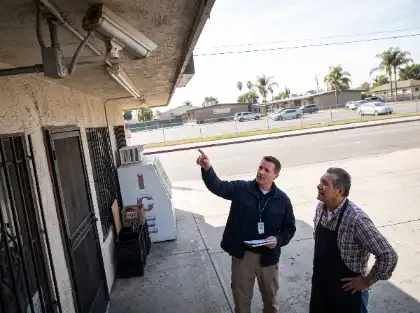
Evidence showing how each vehicle moved before the crash helps determine fault. That evidence includes damage patterns, witness accounts, the collision report, and available video. A police report may assign blame based on incomplete information, so it is a starting point, not a final ruling. An attorney can challenge a finding of fault with evidence that the officer never saw.
Duty of Care and the Safe Following Distance Rule
A driver who hits a stopped vehicle from behind is often in a weak position during the claims process. Ordinary care requires a safe stopping distance, and Vehicle Code § 21703 reflects the same rule. Insurers and courts treat a rear-end impact as strong evidence that the rear driver followed too closely or was inattentive.
Whether a specific Vehicle Code section applies to school or other private property depends on the section and the location, so an attorney should confirm which rules fit your facts. The general duty to use reasonable care applies to both drivers on school property.
How School Pickup Congestion Can Affect Fault
Heavy school pickup traffic can affect how fault is evaluated after a rear-end collision. Under congested traffic conditions, drivers should expect frequent stops, slow-moving queues, children crossing, vehicles entering and leaving spaces, and sudden changes in traffic flow.
Congestion does not excuse a rear driver from maintaining enough distance to stop safely. In fact, stop-and-go conditions may require a driver to leave more space and pay closer attention to the vehicle ahead.
The surrounding traffic can help show what happened before impact. Witness statements, pickup-line procedures, lane markings, vehicle positions, and available video may establish whether the front vehicle stopped with traffic or made an unexpected movement.
If poor traffic control also contributed to the crash, the facts may raise separate questions about the school or property operator. Liability would depend on who controlled the area, what condition or traffic-management problem existed, and whether the legal requirements for a claim against that party are met.
When the Fault Can Shift to the Front Driver
Fault can shift to the front driver when the evidence shows careless conduct that contributed to the crash. Common examples include:
- Sudden, unexplained braking with no traffic reason, mechanical cause, or obstacle ahead.
- Reversing out of a parking space into the path of a moving vehicle without warning.
- Broken or missing brake lights that gave the rear driver no signal to stop.
Stopping because the pickup line stopped is ordinary driving and generally does not count against the front driver. Each claim of shared fault must be supported by physical evidence, such as damage patterns, witness accounts, the collision report, and available video.
How Comparative Negligence Affects Your Recovery
California applies a pure comparative negligence rule, so you can recover compensation even if you are partially responsible for a rear-end collision in a school parking lot. However, your percentage of fault reduces your potential recovery (Li v. Yellow Cab Co., 13 Cal. 3d 804 (1975)).
For example, suppose a court or jury finds you 20% at fault and the rear driver 80% at fault. Your recoverable damages may be reduced to 80%. This is subject to actual proof, available coverage, and other case-specific factors. In a school parking lot, that percentage often turns on how each driver’s conduct contributed to the collision.
What Evidence Matters After a School Parking Lot Rear-End Crash?
Photos, witness information, the collision report, vehicle damage, school or dashcam video, and medical records matter most. Gather the following when it is safe to do so:
- Photos and video of both vehicles, the damage, your position in the queue, and any signs or markings, taken before the vehicles move.
- The other driver’s name, contact details, license plate, and insurance information.
- Names and phone numbers of witnesses, including other parents, school staff, and pickup-line supervisors.
- School security footage, if the campus has cameras covering the lot.
- Dashcam footage from other drivers in the line and video from nearby businesses.
- The collision report, if local police responded to the parking lot accident, or the school’s incident report if they did not.
- Vehicle damage and event data recorder (EDR) data, which can show pre-crash speed and braking.
- Medical records from every emergency room, urgent care, and follow-up visit.
How to Request Surveillance Footage From the School
Ask the school or district in writing to preserve any surveillance footage that may show the crash. Identify the date, approximate time, parking lot location, and areas the cameras may have captured.
Not every school has cameras covering its parking lot, and some systems may overwrite footage quickly. A written request to the school or district to preserve video puts the school on notice. However, a preservation request does not guarantee that the school will retain or release the recording, so send the request as soon as possible.
For a public school district, you may also request existing footage under the California Public Records Act (Government Code § 7920.000 et seq.). The district must respond to the request but may withhold or redact footage when a legal exemption applies. Private schools generally are not subject to the Act.
An attorney can follow up with the school, determine whether footage exists, and take additional steps to preserve relevant video for the claim.
If you were hit from behind in a school parking lot, a school drop-off zone accident lawyer from Arash Law can review what happened, help preserve evidence, and explain which deadlines apply to your claim. Call (888) 488-1391 for a free case evaluation.
Injuries After a Rear-End Collision in a School Parking Lot
Rear-end crashes can cause injuries even at low speeds, and symptoms sometimes appear hours or days later. Even a collision that looks like a minor fender bender can injure the people inside.
- Whiplash and Neck Strain: The sudden jolt can strain the neck’s muscles and ligaments, causing pain and stiffness that may appear days later.
- Back and Soft Tissue Injuries: Impact can strain the spine, shoulders, and surrounding muscles, causing lasting pain.
- Head Injuries and Concussion: The head can strike the headrest, steering wheel, or window. Symptoms such as headaches, dizziness, or confusion require prompt evaluation. Cases involving these injuries can be complex because they may involve disputes over liability, injury severity, and damages claimed.
- Emotional Distress: Anxiety, sleep problems, and fear of driving can follow a crash and should be reported to a provider.
Get evaluated by a medical professional even if you feel fine at first. Prompt treatment protects your health and creates a record linking your injuries to the collision. If there was a child in your vehicle, tell the provider and keep the child’s records too.
What to Do After a Rear-End Crash in a School Parking Lot
After a rear-end crash in a school parking lot, protect your safety first, then document the scene, get medical care, and preserve evidence. Follow these steps in order when you can:
- Check for injuries and call 911 if anyone is hurt.
- Move to a safe spot if you can, without blocking emergency access.
- Report the crash to law enforcement and to the school office.
- Gather evidence at the scene.
- Get medical care and follow your treatment plan.
- Notify your own insurer and stick to the facts you know.
- Decline to give a recorded statement to the other driver’s insurer until you have spoken with an attorney.
- Ask the school or district in writing to preserve video of the lot.
- File an SR-1 with the California DMV within 10 days if anyone was injured or killed, or if property damage exceeds $1,000. This requirement applies regardless of fault, even when the crash occurred on private property, such as a school parking lot. A police report does not replace the SR-1.
Compensation Available After a School Parking Lot Rear-End Crash
A person injured in a school parking lot rear-end crash may seek compensation for the financial and personal losses the collision caused. The types of compensation depend on the injuries, the evidence, and the available insurance coverage:
- Medical expenses, including emergency care, diagnostic tests, therapy, medication, and future treatment the injury is expected to require.
- Lost income when the injury caused missed work, and reduced earning capacity when it limits the ability to work in the future.
- Vehicle repair or replacement costs and the cost of other damaged personal property.
- Pain and suffering, which covers physical pain, emotional distress, and the loss of enjoyment of daily activities.
The amount recoverable in each category depends on medical records, proof of income, and repair estimates. Any percentage of fault assigned to you may reduce the total.
Filing Deadlines After a School Parking Lot Rear-End Crash
Deadlines can affect whether you can pursue compensation after a school parking lot crash. The applicable time limit depends on who may be responsible, what type of loss you suffered, and whether a public entity is involved. Acting promptly gives you more time to preserve evidence and evaluate your options.
Missing the applicable deadline can generally bar your case, no matter how strong it is:
- The deadline for filing a personal injury lawsuit against a private party is generally two years from the date of the crash under Code of Civil Procedure § 335.1.
- The deadline to sue for damage to personal property is generally three years under Code of Civil Procedure § 338.
- A claim against a public entity, such as a school district, must generally go to that entity within six months under Government Code § 911.2. Presenting this claim is a prerequisite to filing a lawsuit.
- If the public entity rejects your claim in a written notice that complies with Government Code § 913, you generally must file the lawsuit within six months after the rejection notice is personally delivered or deposited in the mail under Government Code § 945.6(a)(1).
- If a qualifying written notice is not given, you generally have two years from the date that the claim accrued, or arose, to sue (Government Code § 945.6).
- If you miss the initial six-month government-claim deadline, you may still be able to apply for permission to present a late claim. Under Government Code § 911.4, the application generally must be submitted within a reasonable time not exceeding one year after the claim accrues. Approval is not automatic, so prompt action is important.
The time limits for taking action against a private party may be tolled in cases involving injured minors and adults who cannot manage their own affairs (Code of Civil Procedure § 352). However, tolling is not automatic, and deadlines for government claims follow separate rules. A car accident lawyer can help confirm which deadlines apply to your case.
Frequently Asked Questions About Rear-End Collisions in School Parking Lots in California
Does It Matter That the Crash Happened in a School Parking Lot?
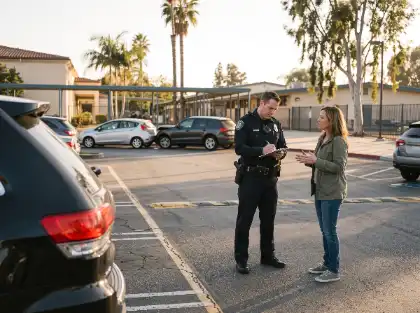
Yes. The location can affect which traffic laws apply, who controls the property, and whether another party may share responsibility. Drivers still owe others a duty to use reasonable care in a school parking lot. If unsafe traffic control or a dangerous property condition contributed to the crash, the school or property operator may also need to be investigated.
Is the Rear Driver Always at Fault in a California Rear-End Collision?
No, the rear driver is often mostly at fault. However, fault can be shared. A front driver who braked without cause, reversed, or had broken brake lights may carry a percentage of fault under California’s comparative negligence rule.
What Happens if the Police Report Blames Me?
A police report is not a final ruling on fault. An attorney can challenge a police report that assigns you fault by gathering physical evidence the officer did not have, such as vehicle damage, EDR data, witness statements, and available footage. Even if some fault is assigned to you, California’s comparative negligence rule means that partial fault does not eliminate the right to recover. It only reduces the amount you may receive.
What if the Driver Who Hit Me Has No Insurance?
Your uninsured motorist bodily injury (UMBI) coverage may compensate you and your passengers for covered injuries caused by an uninsured at-fault driver. Underinsured motorist (UIM) coverage may apply to covered bodily injury losses when the at-fault driver’s liability insurance is insufficient. Damage to your vehicle may instead be covered by uninsured motorist property damage (UMPD) or collision coverage, depending on your policy.
What if My Child Were in the Car During the Crash?
Your child’s injuries are a separate claim, and deadlines for minors can differ. Seek medical care for them, keep every record, and ask an attorney how to protect both claims.
Can Phone Records Prove the Other Driver Was Distracted?
Yes, phone records can show whether the other driver was calling, texting, or using an app when the crash happened. An attorney can request them during a lawsuit, and they work best alongside witness statements and video.
Talk to Arash Law About Your California Rear-End Collision Claim
Rear-end collision claims in school parking lots often depend on proving how each vehicle moved, whether both drivers used reasonable care, and whether the evidence was preserved in time.
Arash Law represents people injured in California car accidents throughout the state. Our attorneys can review the available evidence, identify potentially responsible parties, and explain the deadlines that may apply to your claim.
If you were hit from behind in a school parking lot, call Arash Law at (888) 488-1391 for a free case evaluation.
Sources
- Vehicle Code § 21703: Safe Following Distance. California Legislative Information. https://leginfo.legislature.ca.gov/faces/codes_displaySection.xhtml?lawCode=VEH§ionNum=21703
- California Insurance Code § 11580.2: Uninsured and Underinsured Motorist Coverage. California Legislative Information. https://leginfo.legislature.ca.gov/faces/codes_displaySection.xhtml?lawCode=INS§ionNum=11580.2
- Civil Code § 1714: General Duty of Care. California Legislative Information. https://leginfo.legislature.ca.gov/faces/codes_displaySection.xhtml?lawCode=CIV§ionNum=1714
- Code of Civil Procedure § 335.1: Two-Year Statute of Limitations for Personal Injury Claims. California Legislative Information. https://leginfo.legislature.ca.gov/faces/codes_displaySection.xhtml?lawCode=CCP§ionNum=335.1
- Code of Civil Procedure § 338: Three-Year Statute of Limitations for Property Damage. California Legislative Information. https://leginfo.legislature.ca.gov/faces/codes_displaySection.xhtml?lawCode=CCP§ionNum=338
- Code of Civil Procedure § 352: Tolling for Minority and Incapacity. California Legislative Information. https://leginfo.legislature.ca.gov/faces/codes_displaySection.xhtml?lawCode=CCP§ionNum=352
- Government Code § 911.2: Six-Month Deadline for Government Entity Claims. California Legislative Information. https://leginfo.legislature.ca.gov/faces/codes_displaySection.xhtml?lawCode=GOV§ionNum=911.2
- Government Code § 7920.000 et seq.: California Public Records Act. California Legislative Information. https://leginfo.legislature.ca.gov/faces/codes_displaySection.xhtml?lawCode=GOV§ionNum=7920.000
- Government Code § 911.4: Late Government Claim Application. California Legislative Information. https://leginfo.legislature.ca.gov/faces/codes_displaySection.xhtml?lawCode=GOV§ionNum=911.4
- Government Code § 913: Notice of Rejection of Government Claim. California Legislative Information. https://leginfo.legislature.ca.gov/faces/codes_displaySection.xhtml?lawCode=GOV§ionNum=913
- Government Code § 945.6: Deadline to File Suit After Rejection of a Government Claim. California Legislative Information. https://leginfo.legislature.ca.gov/faces/codes_displaySection.xhtml?lawCode=GOV§ionNum=945.6
- Li v. Yellow Cab Co. (1975) 13 Cal.3d 804: California Pure Comparative Negligence. Supreme Court of California. https://scholarlycommons.pacific.edu/cgi/viewcontent.cgi?article=2458&context=mlr
- Most Small SUVs Perform Well in Rear Autobrake Evaluation (July 18, 2024). Insurance Institute for Highway Safety. https://www.iihs.org/news/detail/most-small-suvs-perform-well-in-rear-autobrake-evaluation
- Park Assist Helps Drivers Avoid Backing Crashes (February 22, 2018). Insurance Institute for Highway Safety. https://www.iihs.org/news/detail/park-assist-helps-drivers-avoid-backing-crashes
- California DMV, Report of Traffic Accident Occurring in California (SR-1): 10-Day Reporting Requirement for Injury, Death, or Property Damage Over $1,000, Including Qualifying Private-Property Collisions. https://www.dmv.ca.gov/portal/dmv-virtual-office/accident-reporting/
Disclaimer
Every case is different. The information on this page is for general educational purposes and does not constitute legal advice. No attorney-client relationship is formed by reading or relying on this content. If you were injured, consult a licensed California personal injury attorney about your specific situation.