TL;DR: Yes. Injured work truck drivers can simultaneously seek workers’ compensation benefits and file a personal injury claim against the drunk driver. Workers’ comp pays medical bills and a portion of lost wages regardless of fault. A civil lawsuit can recover full lost wages, pain and suffering, and more.
Yes, California law expressly permits injured work truck drivers to pursue a workers’ compensation claim and a civil lawsuit against the drunk driver simultaneously. The two claims target different categories of loss and run in parallel. You do not have to choose one, and finishing one is not a condition of pursuing the other.
Workers’ comp pays regardless of who was at fault. The civil claim requires you to prove fault, but it opens the door to categories of damages workers’ comp will never pay, including pain and suffering. This distinction in proof requirements is why both tracks matter.
In 2023, alcohol-impaired crashes in California resulted in 1,355 fatalities statewide, according to the 2025 Traffic Safety Facts series from the UC Berkeley Safe Transportation Research and Education Center (SafeTREC), which draws on Fatality Analysis Reporting System (FARS) data. In California, this means an employee injured while driving a work truck may use workers’ comp for the job-related injury while separately pursuing the at-fault driver.
Understanding what each claim covers, what each one leaves out, and how the two interact is the essential first step before any filing deadline passes.
Data Transparency Note: SafeTREC defines alcohol-impaired fatal crashes using FARS data as crashes involving at least one driver or motorcyclist with an estimated BAC of 0.08 or higher. Its separate SWITRS “alcohol-involved” category includes crashes where law enforcement reported a driver or motorcyclist to have been drinking, without specific BAC information.
Table of Contents

I Was Driving a Work Truck When Another Driver Ran a Red Light and Was Arrested for DUI. Can I Have Workers’ Comp and a Claim Against the Other Driver?
Yes, you can pursue a workers’ compensation claim and a third-party (personal injury) civil lawsuit. Recovery for your losses is possible if a drunk driver not employed by your company injured you while you were driving a truck on the job.
The two claims are not redundant. Workers’ comp generally shields your employer from direct lawsuits for a workplace injury. However, that shield does not protect the drunk driver, who is a separate third party.
Key Facts About Dual Claims for Injured Truck Drivers in California
- California Labor Code § 3852 expressly permits filing a workers’ comp claim and suing a negligent third party, such as a drunk driver, at the same time.
- The workers’ comp deadline is generally one year under California Labor Code § 5405, with the date that the filing window opens depending on the facts of the case.
- The deadline to sue the drunk driver in a civil lawsuit is two years from the date of injury, under California Code of Civil Procedure (CCP) § 335.1.
- If a government employee acting within the scope of employment, a public vehicle, or a road defect contributed to the crash, you must file a claim with the responsible public entity within six months before you can file a lawsuit.
- If your workers’ comp insurer pays benefits, it may seek reimbursement from your civil recovery through a lien. Insurers often negotiate that amount.
Available Benefits from a Workers’ Comp Claim
The California Department of Industrial Relations’ Division of Workers’ Compensation (DWC) administers workers’ comp. Its benefits often cover:
- Medical Bills: All approved care needed to treat your work injury, from the emergency room through follow-up and rehabilitation.
- Partial Lost Wages: Approximately two-thirds of your average weekly pay while you are unable to work.
- Permanent Disability: Ongoing payments if your injury results in lasting functional impairment.
Recoverable Damages in a Third-Party Claim
After a vehicle crash with a drunk driver, you may pursue a third-party personal injury claim. This can cover the losses that workers’ comp will not pay, such as:
- Full Lost Wages: The complete income you lost, not just the two-thirds ceiling workers’ comp applies.
- Pain and Suffering: Compensation for the physical pain and mental distress caused by the crash.
- Emotional Distress: Additional recovery for trauma, anxiety, and psychological harm stemming from the collision.
California Civil Code § 3294 also allows courts to award punitive damages in addition to compensatory damages in rare cases where a defendant acted with conscious disregard for others’ safety. A driver who chose to get behind the wheel while intoxicated may meet that standard.
However, the law never guarantees punitive damages. They depend on the specific facts and require clear and convincing evidence of the defendant’s state of mind. Still, they are an additional category of recovery that the workers’ comp system does not offer.
How Does Workers’ Compensation Work in California?
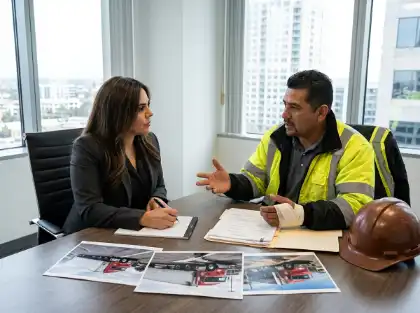
California workers’ compensation starts when an injured truck driver reports a work-related injury and submits a DWC-1 claim form to the employer. The employer then sends the completed form to its workers’ compensation claims administrator for review.
Under California Labor Code §§ 5400 and 5401, workers should generally report injuries within 30 days. Employers must provide a DWC-1 form within one working day after learning about the injury.
After receiving the completed form, the claims administrator investigates the claim and decides whether to accept, delay, or deny it. California law generally requires the employer to authorize appropriate medical treatment, up to $10,000, while the administrator investigates.
The insurer generally sends a claim-status notice within 14 days. If it does not deny the claim within 90 days, California law generally presumes the injury is compensable.
How Third-Party Injury Claims Work in California
A third-party claim lets an injured California truck driver pursue compensation from someone other than the employer, such as the person who caused the crash. Labor Code § 3852 expressly preserves this right alongside workers’ compensation. To succeed on the civil claim, you must prove that the drunk driver caused the crash and your injuries.
The injured driver usually starts by identifying the at-fault party and notifying that party’s liability insurer. The insurer may investigate liability, injuries, medical records, lost income, and other claimed losses.
If the parties agree on compensation, they can resolve the claim through a settlement. If they cannot, the injured driver may file a civil lawsuit against the responsible party. Filing starts the court case, followed by service, discovery, negotiations, and potentially a trial.
In a California truck crash, the responsible third party may include the drunk driver or another person or company whose conduct caused the collision.
| Issue | Workers’ Compensation Claim | Third-Party Personal Injury Claim |
|---|---|---|
| Who the Claim Targets | The employer’s workers’ compensation insurance. | The third-party person or entity that caused or contributed to the crash. |
| Fault Requirement | The worker generally does not need to prove that another person caused the injury. | The injured driver must prove the third party’s legal responsibility for the crash and resulting injuries. |
| Damages / Benefits | Medical care, temporary disability, permanent disability, supplemental job displacement benefits, and qualifying death benefits. | Past and future medical expenses, lost earnings, lost earning capacity, pain and suffering, and other proven economic or non-economic damages. |
| Where Disputes Go | The Division of Workers’ Compensation and the Workers’ Compensation Appeals Board handle disputes. | The at-fault driver’s insurance handles claims, and if the parties can’t reach an agreement, California’s civil courts handle lawsuits against third parties. |
| Effect on the Other Claim | Benefits paid may create reimbursement or lien rights against any third-party recovery. | A settlement or judgment may require resolving workers’ comp reimbursement or lien rights. |
Proving the Liability of a Third-Party Drunk Driver Who Caused the Accident
To prove liability in an ordinary negligence case, the victim must demonstrate that the other party failed to act with reasonable care, resulting in the victim’s injuries and losses. However, California Vehicle Code § 23152 makes it a crime to drive under the influence of alcohol or drugs. That means that, when a driver violates that statute and causes an injury, that violation can support a negligence per se instruction under California Evidence Code § 669 if the facts meet its elements:
- The at-fault driver violated a safety law.
- The violation caused the victim’s injuries and losses.
- The victim is part of the class of people the law was meant to protect.
- The harm that occurred was of the type that the statute aims to prevent.
If your case satisfies those elements, the violation creates a rebuttable presumption that the driver breached the duty of care. You still must prove damages (your losses), and the defendant may challenge the presumption. The crash report and witness accounts can support that causation link, which forms the core of the civil case.
Evidence That May Matter After a Crash With a Drunk Driver in a Third-Party Claim
The evidence you should preserve includes witness information and records of your financial losses, such as medical bills. Preserving evidence early is vital because some records may disappear or become harder to obtain over time:
- Witness Information and Financial Records: Keep witness contact information and documents showing your losses, including medical bills and related expenses.
- Traffic Accident Report: Obtain the report from the agency that investigated the crash, such as a city police department, county sheriff, or CHP. The report may document officer observations, witness information, collision details, and evidence related to a suspected DUI.
- Dashcam and Telematics Data: Preserve footage and vehicle data from the commercial truck as soon as possible. Carrier systems may overwrite stored information according to their retention settings.
- BAC and DUI Records: Blood test results, breath test results, and criminal DUI records may provide important evidence. Access can depend on the criminal case’s status and applicable privacy rules.
After you file a civil lawsuit, your attorney may use subpoenas (court orders that require a person or organization to provide testimony or records) under California Code of Civil Procedure § 1985 et seq. to seek qualifying records. Other records may require coordination with the prosecuting agency. The appropriate method depends on whether prosecutors have filed, resolved, or are still considering the DUI case.
A preservation or spoliation letter can also put the employer on notice that it must retain relevant evidence. Sending one can be helpful in certain scenarios. For instance, federal rules require that Electronic Logging Device (ELD) records from federally regulated commercial vehicles remain available for 6 months under 49 C.F.R. § 395.8(k).
How Do BAC, DUI, and Traffic Accident Reports Differ?
BAC records, DUI reports, and traffic accident reports can each provide different evidence after a crash involving suspected impaired driving. BAC records focus on alcohol concentration. DUI reports address the impairment investigation, while police or CHP traffic reports document the collision itself:
| Record | What It May Include | How It May Support a Claim |
|---|---|---|
| BAC Records | Blood or breath test results showing the driver’s measured alcohol concentration. | They may provide objective evidence of alcohol concentration and help support a third-party negligence claim. |
| DUI Report | Officer observations, field sobriety testing, statements, arrest information, chemical testing details, and other investigative findings. | It may provide broader evidence of impairment and explain the circumstances surrounding the suspected DUI. |
| Police or CHP Traffic Report | Driver information, witness details, collision circumstances, officer observations, and other information gathered during the crash investigation. | It may help document how the crash occurred, identify witnesses, and support both workers’ compensation and third-party investigations. |
For workers’ compensation, these records may help document how the work-related crash occurred. Workers generally need not prove third-party negligence. For a third-party claim, BAC records, DUI reports, and police or CHP traffic reports may help drunk driving accident victim lawyers assess fault and identify supporting evidence.
Can Independent Contractor Truck Drivers File for Workers’ Comp?
Independent contractors cannot file a workers’ comp claim. However, many drivers labeled as independent contractors may actually qualify as employees and therefore be entitled to workers’ compensation benefits.
California generally applies the ABC test under Labor Code § 2775. However, exceptions can apply, including certain qualifying business-to-business relationships under § 2776. The applicable classification test depends on the driver’s actual working arrangement:
- (A) The worker is free from the company’s control and direction in performing the work.
- (B) The worker performs work that falls outside the usual course of the company’s business.
- (C) The worker is customarily engaged in an independently established trade or occupation.
Traditional motor carriers frequently find prong B the most difficult to satisfy. When hauling freight is a company’s core business, arguing that its drivers perform work outside the company’s usual course of business can be a difficult position to sustain. Classification outcomes depend on the carrier’s actual business model and operations and vary by the specific facts.
Drivers whose employers handed them a contractor label and a Form 1099 may have grounds to challenge that classification and establish employee status, which is the threshold requirement for workers’ comp eligibility. The analysis requires a case-by-case review.
A Form 1099 does not determine worker status. California applies the ABC test or, when a statutory exception applies, another governing test such as the Borello standard.
If you establish misclassification, you may become eligible for workers’ comp coverage. Once workers’ comp applies, its benefits run concurrently with any civil recovery available from a third-party lawsuit against the drunk driver.
Arash Law’s work injury lawyers and truck accident attorneys can assess whether you were misclassified as an independent contractor and help you pursue compensation accordingly. Call (888) 488-1391 for a free case evaluation.
Understanding Workers’ Comp Liens and Coordination of Benefits
Under California’s workers’ compensation subrogation statutes, an employer or workers’ compensation insurer may seek reimbursement from a third-party settlement or judgment for compensable benefits it paid, subject to the applicable statutory rules. That lien is a formal legal claim against your settlement or judgment proceeds. Your employer’s workers’ comp insurer may enforce it by asserting the claim against your recovery before you receive your net payout.
In practice, this means your final take-home amount from the civil case may be significantly lower than the gross settlement or verdict figure. For example, if the insurer pays $150,000 in medical benefits and partial wages, it can assert a lien for that amount against your civil recovery. A $500,000 settlement does not mean $500,000 to you.
What injured truck drivers may not know is that lien amounts are frequently negotiable. An attorney who handles both workers’ comp and personal injury cases can contest the lien amount, negotiate it down, or challenge specific items the insurer seeks to recover.
A third-party recovery can also affect future workers’ compensation benefits. Under Labor Code § 3861, the Workers’ Compensation Appeals Board may allow the employer or insurer a credit against future compensation based on the worker’s net third-party recovery, after applicable deductions. California’s settlement rules also preserve the employer’s reimbursement rights, so third-party settlements should be coordinated carefully with the workers’ compensation claim.
How Work Vehicle Insurance Coverage May Apply
A work truck’s commercial auto policy may provide additional coverage after a California crash. Available coverage depends on the policy, its limits, and endorsements. The policy may include liability, collision, medical payments, or other applicable coverage. California insurers also offer uninsured and underinsured motorist (UM/UIM) coverage for accidents involving inadequately insured drivers.
Whether an injured employee qualifies for coverage depends on the policy’s definition of an insured and the circumstances of the crash.
What Arash Law Has Recovered in Workers’ Comp and Third-Party Crossover Cases
Our legal team has recovered over $1 billion for injured Californians, including in cases where workers’ comp and civil claims ran simultaneously. Arash Law’s past case results represent outcomes from cases that combine both tracks:
$6,750,000 — Workers’ Compensation Settlement, Traumatic Brain Injury: We obtained this result for a farm laborer who sustained a traumatic brain injury (TBI) after falling from an ATV.
Past results do not guarantee future outcomes. Every case is different, and results depend on the specific facts and evidence presented.
Frequently Asked Questions About Workers’ Comp and Third-Party Claims for Truck Drivers in California
Below are the practical questions Arash Law’s attorneys hear most from injured commercial drivers, covering uninsured drunk drivers, DUI case timing, and filing deadlines.
What Happens If the Drunk Driver Who Hit My Work Truck Is Uninsured?
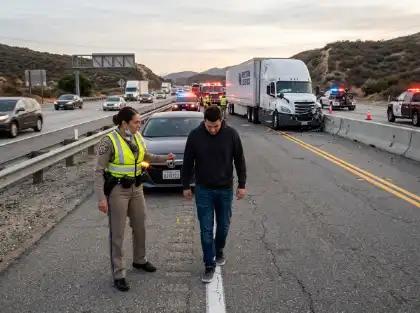
You may be able to recover through uninsured/underinsured motorist (UM/UIM) coverage. That coverage could come from your personal auto policy or from your employer’s commercial fleet policy, depending on the specific terms of each. UM/UIM coverage can compensate for losses, including pain and suffering, that workers’ comp will not cover.
However, California law may allow a UM/UIM insurer to offset workers’ compensation benefits paid or payable for the same injury. This means the two sources of compensation may not be added together in full.
How Does the Drunk Driver’s Criminal DUI Case Affect My Civil Injury Claim?
The criminal DUI prosecution and your civil personal injury claim are legally separate proceedings with independent outcomes. A DUI conviction can serve as strong evidence of fault in your civil case and may bolster a punitive damages argument under Civil Code § 3294.
You do not need a conviction, because civil cases use a preponderance-of-the-evidence standard, which is a lower bar than the beyond-a-reasonable-doubt standard required in criminal cases. A jury can find the drunk driver civilly liable even if prosecutors reduce, dismiss, or do not resolve the criminal case.
How Long Do I Have to File a Third-Party Lawsuit Against the Drunk Driver in California?
The baseline deadline for a personal injury lawsuit is two years from the date of injury. You also have three years from the same date to sue for damage to personal property caused by the accident. Government entity claims and other specialized claims can have different timing rules, so have an attorney review the applicable deadline.
What Is the Deadline to File a Workers’ Comp Claim?
The deadline is generally one year from the date of injury, the expiration of the period covered by certain disability payments, or the last furnishing of qualifying medical benefits, depending on which provision applies. If you miss the deadline, you can permanently lose your workers’ comp benefits, regardless of the civil case’s outcome.
Talk to Arash Law About Your California Truck Accident and Workers’ Comp Claim
If a drunk driver caused a crash that hurt you while you were on the job, you may have rights under both California workers’ comp law and civil personal injury law, and the decisions you make now affect both. The two systems operate under different deadlines and rules. Letting either deadline slip can permanently bar you from recovering, so getting legal advice early to confirm which deadlines apply is essential.
Arash Law’s attorneys handle both tracks together, coordinating the civil claim against the drunk driver and working through the workers’ comp system, including lien negotiation, so you are not managing two sets of attorneys, two billing arrangements, and two competing strategies.
We handle every case on a contingency-fee basis under a written fee agreement, as required by California Business & Professions Code § 6147. That means you pay no attorney’s fees unless we win. Case-related costs may still apply.
Call (888) 488-1391 for a free case evaluation. Arash Law.
Sources
- California Labor Code § 3600, workers’ compensation liability and compensability requirements. California Legislature.
https://leginfo.legislature.ca.gov/faces/codes_displaySection.xhtml?lawCode=LAB§ionNum=3600.- California Labor Code § 3852, definition of the employee’s right to pursue a third-party claim alongside workers’ compensation. California Legislature.
https://leginfo.legislature.ca.gov/faces/codes_displaySection.xhtml?lawCode=LAB§ionNum=3852.- California Labor Code § 3856, reimbursement and lien rights in third-party recoveries. California Legislature.
https://leginfo.legislature.ca.gov/faces/codes_displaySection.xhtml?lawCode=LAB§ionNum=3856.- California Labor Code §§ 3859–3860, third-party settlement and reimbursement procedures. California Legislature.
https://leginfo.legislature.ca.gov/faces/codes_displaySection.xhtml?lawCode=LAB§ionNum=3859.
https://leginfo.legislature.ca.gov/faces/codes_displaySection.xhtml?lawCode=LAB§ionNum=3860.- California Labor Code § 3861, credit against future workers’ compensation benefits after a third-party recovery. California Legislature.
https://leginfo.legislature.ca.gov/faces/codes_displaySection.xhtml?lawCode=LAB§ionNum=3861.- California Labor Code §§ 5400–5401, injury notice and DWC-1 claim form requirements. California Legislature.
https://leginfo.legislature.ca.gov/faces/codes_displaySection.xhtml?lawCode=LAB§ionNum=5400.
https://leginfo.legislature.ca.gov/faces/codes_displaySection.xhtml?lawCode=LAB§ionNum=5401.- California Labor Code § 5405, time limits for commencing workers’ compensation proceedings. California Legislature.
https://leginfo.legislature.ca.gov/faces/codes_displaySection.xhtml?lawCode=LAB§ionNum=5405.- California Labor Code §§ 2775–2776, ABC test and qualifying business-to-business exceptions for worker classification. California Legislature.
https://leginfo.legislature.ca.gov/faces/codes_displaySection.xhtml?lawCode=LAB§ionNum=2775.
https://leginfo.legislature.ca.gov/faces/codes_displaySection.xhtml?lawCode=LAB§ionNum=2776.- California Code of Civil Procedure § 335.1, two-year personal injury statute of limitations. California Legislature.
https://leginfo.legislature.ca.gov/faces/codes_displaySection.xhtml?lawCode=CCP§ionNum=335.1.- California Code of Civil Procedure § 338(c)(1), three-year limitation period for injury to personal property. California Legislature.
https://leginfo.legislature.ca.gov/faces/codes_displaySection.xhtml?lawCode=CCP§ionNum=338.- California Code of Civil Procedure § 1985 et seq., subpoena procedures used to obtain qualifying testimony and records in civil litigation. California Legislature.
https://leginfo.legislature.ca.gov/faces/codes_displaySection.xhtml?lawCode=CCP§ionNum=1985.- California Vehicle Code § 23152, driving under the influence of alcohol or drugs. California Legislature.
https://leginfo.legislature.ca.gov/faces/codes_displaySection.xhtml?lawCode=VEH§ionNum=23152.- California Evidence Code § 669, negligence per se and rebuttable presumption based on statutory violations. California Legislature.
https://leginfo.legislature.ca.gov/faces/codes_displaySection.xhtml?lawCode=EVID§ionNum=669.- California Civil Code § 3294, definition of punitive damages and the clear-and-convincing-evidence standard. California Legislature.
https://leginfo.legislature.ca.gov/faces/codes_displaySection.xhtml?lawCode=CIV§ionNum=3294.- California Government Code § 911.2, six-month government claim presentation deadline for personal injury claims. California Legislature.
https://leginfo.legislature.ca.gov/faces/codes_displaySection.xhtml?lawCode=GOV§ionNum=911.2.- California Insurance Code § 11580.2(h), UM/UIM offsets involving workers’ compensation benefits. California Legislature.
https://leginfo.legislature.ca.gov/faces/codes_displaySection.xhtml?lawCode=INS§ionNum=11580.2.- California Business and Professions Code § 6147, written contingency-fee agreement requirements. California Legislature.
https://leginfo.legislature.ca.gov/faces/codes_displaySection.xhtml?lawCode=BPC§ionNum=6147.- California Department of Industrial Relations, Division of Workers’ Compensation. “How to File a Claim.” DWC-1 procedures, claim-form requirements, claim investigation, and medical-treatment rules.
https://www.dir.ca.gov/dwc/FileAClaim.htm- California Department of Industrial Relations, Division of Workers’ Compensation. “Temporary Disability Benefits.” Explains temporary disability payments, including the general two-thirds wage-replacement rule subject to statutory limits.
https://www.dir.ca.gov/dwc/TemporaryDisability.htm- UC Berkeley Safe Transportation Research and Education Center. “2025 SafeTREC Traffic Safety Facts: Alcohol-Impaired and Alcohol-Involved Driving.” Reports 1,355 alcohol-impaired traffic fatalities in California in 2023 and explains FARS and SWITRS definitions.
https://safetrec.berkeley.edu/2025-safetrec-traffic-safety-facts-alcohol-impaired-and-alcohol-involved-driving- Federal Motor Carrier Safety Administration. ELD FAQ explaining six-month retention of records of duty status and supporting documents under 49 C.F.R. § 395.8(k)(1).
https://eld.fmcsa.dot.gov/FAQ/Topics- Arash Law. “Case Results.” Representative published results, including workers’ compensation and personal injury crossover outcomes.
https://arashlaw.com/case-results/Disclaimer
The information on this page is for general educational purposes and does not constitute legal advice. Reading or relying on this content does not form an attorney-client relationship. If you suffered an injury, consult a licensed California personal injury attorney about your specific situation. Arash Law. (888) 488-1391.