TL;DR: You may sue a California city if a trick-or-treater trips on a dangerous public sidewalk and either a city employee caused the dangerous condition while doing their job, or the city knew or should have known about the hazard but failed to take reasonable steps to address it. Most claims against cities require that a written government claim be filed within six months, but special rules may allow injured children more time to file a late claim.
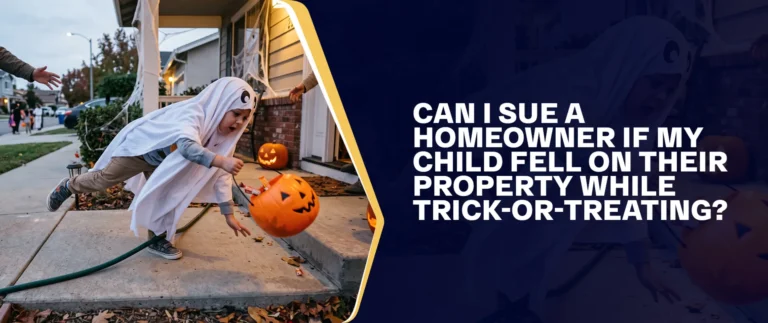
If your child trips on a broken public sidewalk while trick-or-treating, you may be able to sue the city responsible for it. However, the city is not automatically liable just because the accident happened on a public sidewalk. You generally need to show that the sidewalk was dangerous, that the hazard caused your child’s injury, and that the city meets the legal requirements for liability.
Halloween can make sidewalk hazards harder to spot. Poor lighting, crowded walkways, and costumes that block a child’s view can increase the risk of tripping over cracked or uneven pavement.
A successful claim may allow your family to recover compensation for medical expenses, pain and suffering, and other injury-related losses. Understanding the city’s responsibilities and the filing deadlines can help you determine whether you have a valid claim.
Key Facts About Suing a City for a Sidewalk Injury in California
- City Liability: A city may be liable if a public employee created a dangerous sidewalk condition through a negligent or wrongful act or omission while performing their job duties, or if the city knew or should have known about the hazard but failed to take reasonable protective measures. The dangerous condition must also have caused the injury and presented a reasonably foreseeable risk of that type of harm. (Government Code § 835)
- Trivial Defect Defense: A city in California may argue that a sidewalk crack or uneven surface was too minor to be considered legally dangerous. Courts consider the defect’s size and surrounding conditions, including visibility, rather than relying on a single measurement. (Government Code § 830.2)
- Government Claim Deadline: You generally must present a written government claim within six months of when the claim arises, which is often the accident date, under Government Code § 911.2. Special late-claim protections may apply to injured children.
- Other Responsible Parties: An adjacent homeowner, private property owner, or homeowners association (HOA) may also be responsible for a sidewalk injury, depending on who controlled the walkway, local ordinances, and the circumstances of the accident.
- Comparative Negligence: Your family’s compensation may be reduced if the injured child shares responsibility for the accident. However, California considers a child’s age, intelligence, knowledge, and experience when evaluating their conduct. A parent’s negligence is not automatically blamed on the child.
- Recoverable Compensation: Families may seek compensation for medical expenses, pain and suffering, and other injury-related losses supported by the evidence.
Table of Contents

When Can a City Be Liable for a Broken Sidewalk?
A city may be liable if a dangerous condition on a public sidewalk causes a child’s injury and the requirements of Government Code § 835 are met. For a Halloween sidewalk injury claim, these factors can help determine whether the city is responsible.
City Ownership or Control of the Sidewalk
The first step is determining whether the city owned or controlled the sidewalk where the child fell. Many public sidewalks are within city rights-of-way, but responsibility for their upkeep can vary.
Just because a sidewalk is public does not automatically mean the city is responsible for an injury. Depending on the circumstances, a county, another public entity, an adjacent property owner, or an HOA may be responsible for maintaining a specific sidewalk.
City right-of-way maps, public works records, property documents, and maintenance agreements can help identify who was responsible for the sidewalk at the time of the accident.
City’s Creation or Notice of the Dangerous Condition
Under Government Code § 835, a city may be liable if its employees created a dangerous sidewalk condition or if the city knew or should have known about the hazard but failed to take reasonable protective measures.
The law provides two ways to establish this requirement:
- The city employee created the hazard (Government Code § 835(a)). For example, city workers might leave an uneven concrete surface after repairing a sidewalk.
- The city had notice of the hazard (Government Code § 835(b)). The city knew about the dangerous condition or should have discovered it in time to take reasonable protective measures.
A city may have actual notice if residents previously reported the broken sidewalk or city inspectors documented the problem.
Meanwhile, constructive notice generally means the hazard existed long enough and was obvious enough that the city should have discovered it through reasonable care (Government Code § 835.2).
For example, tree roots that gradually lift a concrete panel over several months may support a claim that the city should have noticed the problem. In contrast, a sidewalk defect that appeared shortly before Halloween may be harder to establish under this rule.
Maintenance records, inspection reports, repair requests, and earlier complaints can help determine what the city knew about the sidewalk defect and when.
Dangerous Sidewalk Conditions That Caused the Child’s Injury
A city may be liable if a dangerous sidewalk condition caused your child’s injury. However, you must generally show that the sidewalk posed a substantial risk of harm to someone using it with reasonable care.
Not every crack or uneven surface is legally dangerous. Some conditions that may increase the risk of a trip-and-fall include:
- Raised Concrete Slabs: Uneven sidewalk panels that create a tripping hazard.
- Jagged or Broken Pavement: Damaged concrete with sharp or irregular edges that could catch a child’s foot.
- Significant Height Differences: Sudden changes in sidewalk level that make walking difficult or unsafe.
On Halloween, certain conditions can make sidewalk hazards harder to see. However, these circumstances alone do not establish city liability. You must still show that the sidewalk was legally dangerous, caused your child’s injury, and met the other requirements for city liability.
Sidewalk accident lawyers can review photos, maintenance records, inspection reports, and other evidence to assess whether your family has a valid claim against the city.
Does the Size of the Crack Matter?
Yes. The size of a sidewalk defect matters, but it is not the only factor courts consider. Under Government Code § 830.2, a public entity is generally not liable for a condition that presents such a minor risk that a reasonable person would not consider it substantially dangerous.
This is commonly called the trivial defect defense.
California courts may examine:
- The height and shape of the sidewalk displacement.
- Whether the concrete was jagged, broken, or uneven.
- Lighting and visibility at the time of the accident.
- Whether debris or surrounding objects concealed the defect.
- Other circumstances affecting the risk of injury.
No single measurement automatically resolves every sidewalk case. A serious injury also does not, by itself, prove that a defect was legally dangerous. For a Halloween accident, photographs showing the sidewalk under similar nighttime conditions may help establish how visible the defect was when the trick-or-treater fell.
Can the City Argue That the Sidewalk Hazard Was Open and Obvious?
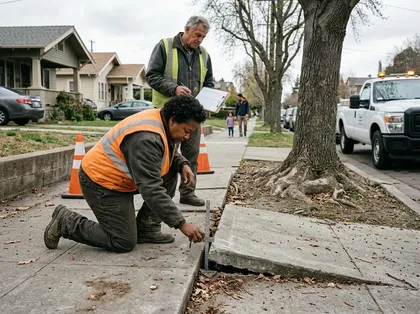
Yes. A city may argue that your child should have seen and avoided the sidewalk hazard. However, an obvious hazard does not automatically prevent your family from seeking compensation.
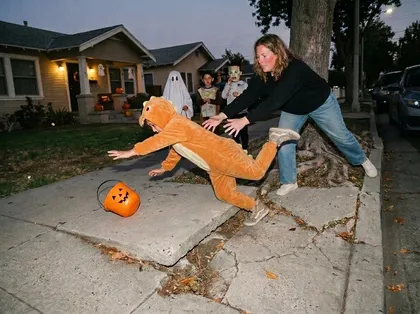
The circumstances of the accident matter. For example, a raised sidewalk panel may be easy to see during the day but harder to spot on Halloween night because of:
- Poor Lighting: Darkness or shadows that hide uneven pavement.
- Crowded Sidewalks: Groups of trick-or-treaters blocking the view.
- Halloween Costumes: Masks or accessories that limit a child’s vision.
Your child’s age and ability to recognize the danger may also affect how the court evaluates their actions.
The 6-Month Government Claim Deadline and What Happens If You Miss It
California’s Government Claims Act generally requires an injured person to present a written claim to the appropriate public entity before filing a lawsuit for money damages. Under Government Code § 911.2, the claim generally must be presented within six months after the cause of action accrues.
For a sidewalk fall, the date of accrual is often the day of the accident. Different deadlines for filing a lawsuit may apply, depending on whether and how a city responds to the claim.
How Does the Government Claim Process Work?
The process typically involves the following steps:
- Submit a Written Government Claim: File the claim with the appropriate public entity. Under Government Code § 910, it must include required information, such as:
- The injured person’s details.
- The date and location of the accident.
- A description of what happened.
A parent or legal guardian may file on behalf of an injured child.
- Wait for the City’s Response: The city generally has 45 days to act on the claim unless the period is properly extended. If it does not act within that time, the law treats the claim as rejected.
-
Explore Your Options: Not every government claim leads to a lawsuit. The city may approve the claim or agree to a settlement. If the injured person is a minor, a settlement may still require court approval.
If the claim is rejected, you may consider filing a lawsuit. However, separate deadlines may apply, so it is important to understand how much time you have to take legal action.
Under Government Code § 945.6, the general lawsuit deadlines are:
| Government claim outcome | General lawsuit deadline |
|---|---|
| You receive a written rejection notice complying with Government Code § 913. | Six months from the date the city personally delivered or mailed the written notice. |
| You do not receive a qualifying written denial. | Two years from accrual of the cause of action. |
These periods are subject to applicable statutory exceptions and tolling provisions.
What If You Miss the Six-Month Government Claim Deadline?
Missing the six-month deadline does not always mean you lose the right to pursue a claim. California law allows late government claims in certain situations, including when the injured person is a child.
Here’s how the process generally works:
- Apply to File a Late Claim: You may request permission from the public entity to submit a late claim. You generally must apply within a reasonable time, no later than one year after the claim arises. The application must explain the delay and include the proposed claim.
- Seek Court Relief If Denied: If the city denies the application, the family may seek relief from the court under Government Code § 946.6. The petition generally must be filed within six months after the application is denied or deemed denied.
Special Protections for Children
The city must grant a qualifying late-claim application if the injured child was a minor throughout the six-month claim period and the application meets the legal requirements. (Government Code § 911.6(b)(2))
In Hernandez v. County of Los Angeles (1986), 42 Cal.3d 1020, the California Supreme Court explained that delays caused by a parent or attorney do not necessarily prevent an injured child from obtaining late-claim relief when the legal requirements are met.
Important: A child’s age does not automatically extend these deadlines. Parents should not assume they can wait until their child turns 18. A premises liability attorney can review the circumstances, explain the applicable deadlines, and determine whether late-claim relief is available.
City vs. Homeowner: Who May Be Liable?
A city may be responsible if a trick-or-treater trips on a dangerous public sidewalk. However, a homeowner, another property owner, or an HOA may also be liable, depending on who controlled the sidewalk and what caused the hazard.
Under Streets and Highways Code § 5610, property owners generally have a duty to maintain sidewalks next to their property. However, this law alone does not make them liable to pedestrians who get hurt.
A property owner may be responsible in situations involving:
- Owner-Created Hazards: The owner caused or worsened a dangerous condition, such as by making improper driveway repairs that damaged the sidewalk.
- Local Sidewalk Ordinances: Some cities have laws that make adjacent property owners responsible for injuries caused by unsafe sidewalks. In Gonzales v. City of San Jose (2004) 125 Cal.App.4th 1127, a California appeals court upheld such an ordinance.
- Shared Responsibility: Both the city and an adjacent property owner may face liability when their respective actions or failures to address a dangerous sidewalk condition contribute to an injury.
If both a city and a private property owner may be liable, different filing requirements and deadlines may apply. Determining who is liable if you slip on a public sidewalk depends on who controlled the walkway, who caused the hazard, and the laws that apply to the property.
What Compensation Can You Recover If You Sue a City for Your Child’s Sidewalk Injury?
If your child trips on a broken public sidewalk while trick-or-treating, you may be able to seek compensation from the city if you can prove it was legally responsible for the injury. The amount you may recover depends on your child’s injuries, their effects, and the available evidence.
Compensation in a sidewalk injury claim against a city may include:
- Medical Expenses: Costs of emergency care, hospital stays, surgery, physical therapy, and other necessary treatment, including future medical care.
- Pain and Suffering: The physical pain and emotional distress caused by the injury.
- Long-Term Injuries: Compensation for lasting disabilities or limitations that affect your child’s development and daily activities.
- Loss of Enjoyment of Life: The impact of the injury on your child’s ability to play, participate in sports, and enjoy other activities.
For example, serious head injuries or fractures affecting a child’s growth may require ongoing treatment. Medical records and expert opinions can help establish these losses.
Are There Limits on Compensation When Suing a City in California?
California generally does not impose a fixed cap on compensatory damages in ordinary sidewalk-injury lawsuits against cities. However, certain legal limits apply:
- Comparative Negligence: California follows pure comparative negligence. If your child shares responsibility for the fall, their compensation may decrease according to their percentage of fault. A city may argue that a trick-or-treater contributed to the fall through actions such as:
- Running in the Dark: Moving too quickly to notice an uneven sidewalk.
- Obstructed Vision: Wearing a costume mask that limits peripheral or downward visibility.
- Oversized Costume Shoes: Wearing footwear that makes walking or maintaining balance difficult.
Courts evaluate children’s conduct based on their age, intelligence, knowledge, and experience.
-
Shared Liability: Under Civil Code § 1431.2, each defendant is generally responsible only for its share of non-economic damages, such as pain and suffering.
For example, if both the city and an adjacent homeowner are found responsible for your child’s fall, their assigned percentages of fault may affect how much each must pay for pain and suffering. Different rules apply to economic damages.
Can Parents Claim Medical Expenses When Suing a City for Their Child’s Injury?
Yes. Parents may have a separate claim for medical expenses incurred as a result of their child’s sidewalk injury. In some circumstances, those expenses may instead be included in the child’s claim. However, parents and children cannot recover compensation twice for the same medical bills.
When pursuing a claim against a city, it is important to understand that:
- Parents May Need Their Own Government Claim: If a parent has a separate right to recover medical expenses, that claim must generally be properly presented to the city within the applicable deadline.
- Different Late-Claim Protections Apply: The special late-claim protections available to injured minors under Government Code § 911.6 do not automatically extend to a parent’s separate claim.
An attorney can help determine which damages belong in the child’s claim, whether a parent has a separate claim, and how to present them properly to the city.
What Arash Law Has Recovered in Government-Entity and Pedestrian Cases
Suing a city after a child trips on a dangerous public sidewalk may involve proving that the city was responsible for the hazard and that the condition caused the injury. Arash Law has handled cases involving dangerous public property, injured pedestrians, and disputed liability.
The firm has recovered over $1 billion for injured clients across California. Relevant case results include:
$1,250,000 — Pedestrian Accident: A vehicle hit our client, a five-year-old child. The insurance company argued that the accident was unavoidable because our client darted into the street. Through accident reconstruction, Arash Law showed that the collision could have been avoided and recovered the full available policy limits.
Although these cases did not involve Halloween sidewalk falls, they show how investigating dangerous public conditions and challenging disputed fault can help support an injury claim.
Past results do not guarantee future outcomes. Every case is different, and results depend on the specific facts, evidence, and applicable law.
What Steps Should You Take Before Suing a City for a Halloween Sidewalk Injury?
If your child trips on a broken public sidewalk while trick-or-treating, taking the right steps can help protect your family’s right to seek compensation from the city. Getting medical care, preserving evidence, and meeting government claim deadlines are important when preparing a potential lawsuit.
Here are some steps to take:
- Get medical care for your child. Seek prompt medical attention, especially if your child has a possible head injury, severe pain, or difficulty walking. Keep medical records, treatment instructions, and receipts. These documents can help show how the fall affected your child.
- Record the exact accident location. Write down the nearest street address, house number, intersection, or landmark. This information can help identify the responsible city and describe the accident location in a government claim.
- Photograph the sidewalk hazard. Take close-up and wide-angle photos of the broken pavement. If safe, document the height of any raised edges. Include nearby lighting, shadows, and other conditions that may have made the defect difficult to see on Halloween night.
- Preserve your child’s shoes and costume. Keep the shoes, costume, mask, and accessories your child wore during the accident. Avoid washing or altering them before documenting their condition. These items may help establish how the fall occurred and whether the costume affected visibility.
- Collect witness information and camera footage. Get the names and contact details of anyone who saw the fall. Ask nearby homeowners or businesses whether doorbell cameras or security systems captured the incident. Request that relevant recordings be preserved before they are deleted or overwritten.
- Request city maintenance and complaint records. Under the California Public Records Act, you may request available sidewalk inspection reports, repair histories, and complaints about the location. These records may help show whether the city knew or should have known about the dangerous condition. Some records may be exempt from disclosure.
- Be careful when speaking with claims representatives. Provide accurate information when making required reports. Consider speaking with an attorney before giving detailed recorded statements or signing documents that could affect your child’s claim.
- Check the government claim deadline. Before suing a city, you generally must present a written government claim within six months of when the claim arises under Government Code § 911.2. Reporting a broken sidewalk to a city department does not necessarily constitute filing a formal government claim.
You do not always have to file a lawsuit to resolve the claim. The city may agree to a settlement after reviewing the government claim. If the claim is denied or remains unresolved, a lawsuit may be an option, subject to the applicable filing deadlines.
Arash Law can help investigate the sidewalk hazard, identify the responsible public entity, preserve important evidence, and guide families through the government claim process. Call us at (888) 488-1391 to schedule a free case review.
Frequently Asked Questions About Halloween Sidewalk Trip-and-Fall Claims in California
How Is Suing a City Different from Suing a Private Property Owner?
Filing deadlines are the biggest difference between suing a city and a private property owner. You typically have 6 months from the accrual date to present a government claim. Additional lawsuit-filing deadlines may apply afterward, depending on how a city responds.
In contrast, though there is no universal legal deadline for filing an insurance claim, the general deadline for a personal injury lawsuit against a private party is two years, subject to exceptions, including tolling of a minor’s own claim until age 18 under Code of Civil Procedure § 352.
Does My Child’s Age Affect the Filing Deadline Against the City?
Yes, but not by automatically extending the initial six-month deadline. Government Code § 911.6 provides special late-claim protections for minors who satisfy the statutory requirements.
When a child was a minor throughout the applicable six-month claim period, a qualifying late-claim application must generally be granted if it is properly presented within the required time.
A late-claim application must generally be submitted within a reasonable time, not exceeding one year after accrual. Families should seek advice promptly rather than assume the child’s age preserves the claim indefinitely.
Who Files the Government Claim, the Child or the Parent?
A parent or legal guardian may present a government claim on behalf of an injured minor. If the parent also has an independent claim, such as a claim for medical expenses, that claim may need to be separately presented or adequately identified in the government claim paperwork. The claim should clearly identify the injured child, the person presenting it, the incident, and the damages being asserted.
What Happens to Any Settlement or Verdict If a Child Is Injured?
A California court generally must approve settlements involving a minor’s disputed personal injury claim. If the child receives compensation through a judgment, the court may also oversee how the family handles those funds.
This process is commonly called a minor’s compromise. The court may require that settlement funds be placed in a blocked account, a structured settlement, or another approved arrangement.
Access to the funds depends on the court’s order and the applicable settlement terms. Some funds may remain restricted until the child turns 18, while court-authorized arrangements may provide otherwise.
What If I’m Not Sure Whether the City or a Homeowner Controlled the Sidewalk?
Gather relevant documents such as property records, city right-of-way maps, maintenance agreements, local ordinances, and public works records. These may help determine who had control over the sidewalk when a trick-or-treater tripped and fell.
Talk to Arash Law About Your California Sidewalk Claim
If your child was injured on a broken public sidewalk while trick-or-treating, Arash Law can help you explore your options for pursuing compensation from the city. Our attorneys can investigate the sidewalk hazard, review maintenance records, identify responsible parties, and help with the government claim process.
Arash Law has recovered over $1 billion for injured clients across California. Call us at (888) 488-1391 for a free case evaluation, available 24/7. You pay no attorney’s fees unless we recover compensation. Attorney’s fees and case costs will be explained in the written agreement.
MAKE THEM PAY, CALL AK.
Sources
- California Government Code § 830 — Definitions of dangerous conditions of public property and related terms. https://leginfo.legislature.ca.gov/faces/codes_displaySection.xhtml?lawCode=GOV§ionNum=830.
- California Government Code § 830.2 — Trivial defects and the standard for determining whether a public property condition presents a substantial risk of injury. https://leginfo.legislature.ca.gov/faces/codes_displaySection.xhtml?lawCode=GOV§ionNum=830.2.
- California Government Code § 835 — Public-entity liability for dangerous conditions of public property, including employee-created hazards and conditions involving actual or constructive notice. https://leginfo.legislature.ca.gov/faces/codes_displaySection.xhtml?lawCode=GOV§ionNum=835.
- California Government Code § 835.2 — Actual and constructive notice of dangerous conditions, including public property inspection considerations. https://leginfo.legislature.ca.gov/faces/codes_displaySection.xhtml?lawCode=GOV§ionNum=835.2.
- California Government Code § 910 — Required contents of a government claim, including the date, location, circumstances, and nature of the claimed damages. https://leginfo.legislature.ca.gov/faces/codes_displaySection.xhtml?lawCode=GOV§ionNum=910.
- California Government Code § 911.2 — General six-month deadline for presenting personal injury claims against public entities. https://leginfo.legislature.ca.gov/faces/codes_displaySection.xhtml?lawCode=GOV§ionNum=911.2.
- California Government Code § 911.4 — Applications for permission to present late government claims, including the general one-year limit. https://leginfo.legislature.ca.gov/faces/codes_displaySection.xhtml?lawCode=GOV§ionNum=911.4.
- California Government Code § 911.6 — Grounds for granting late government claim applications, including special protections for injured minors. https://leginfo.legislature.ca.gov/faces/codes_displaySection.xhtml?lawCode=GOV§ionNum=911.6.
- California Government Code § 912.4 — General 45-day period for public entities to act on presented government claims. https://leginfo.legislature.ca.gov/faces/codes_displaySection.xhtml?lawCode=GOV§ionNum=912.4.
- California Government Code § 913 — Requirements for written notices of government claim rejection. https://leginfo.legislature.ca.gov/faces/codes_displaySection.xhtml?lawCode=GOV§ionNum=913.
- California Government Code § 945.4 — General requirement to present a government claim before bringing a lawsuit against a public entity. https://leginfo.legislature.ca.gov/faces/codes_displaySection.xhtml?lawCode=GOV§ionNum=945.4.
- California Government Code § 945.6 — Deadlines for filing lawsuits after government claims are rejected or deemed rejected. https://leginfo.legislature.ca.gov/faces/codes_displaySection.xhtml?lawCode=GOV§ionNum=945.6.
- California Government Code § 946.6 — Court petitions for relief from government claim-presentation requirements following denial of late-claim applications. https://leginfo.legislature.ca.gov/faces/codes_displaySection.xhtml?lawCode=GOV§ionNum=946.6.
- California Government Code § 7920.000 et seq. — California Public Records Act, governing public access to qualifying government records. https://leginfo.legislature.ca.gov/faces/codes_displaySection.xhtml?lawCode=GOV§ionNum=7920.000.
- California Code of Civil Procedure § 335.1 — General two-year statute of limitations for personal injury lawsuits. https://leginfo.legislature.ca.gov/faces/codes_displaySection.xhtml?lawCode=CCP§ionNum=335.1.
- California Code of Civil Procedure § 352 — Tolling of certain statutes of limitations for minors and other qualifying persons. https://leginfo.legislature.ca.gov/faces/codes_displaySection.xhtml?lawCode=CCP§ionNum=352.
- California Streets and Highways Code § 5610 — Sidewalk maintenance responsibilities of adjoining property owners. https://leginfo.legislature.ca.gov/faces/codes_displaySection.xhtml?lawCode=SHC§ionNum=5610.
- California Civil Code § 1431.2 — Several liability for noneconomic damages based on each defendant’s proportionate share of fault, commonly associated with Proposition 51. https://leginfo.legislature.ca.gov/faces/codes_displaySection.xhtml?lawCode=CIV§ionNum=1431.2.
- California Probate Code § 3500 — Compromise of a minor’s disputed claim by a parent or other authorized person. https://leginfo.legislature.ca.gov/faces/codes_displaySection.xhtml?lawCode=PROB§ionNum=3500.
- California Code of Civil Procedure § 372 — Representation of minors and certain persons with disabilities in legal proceedings. https://leginfo.legislature.ca.gov/faces/codes_displaySection.xhtml?lawCode=CCP§ionNum=372.
- California Rules of Court, Rule 7.950 — Court approval procedures for compromises of minors’ claims and dispositions of settlement or judgment proceeds. https://courts.ca.gov/cms/rules/index/seven/rule7_950
- Judicial Council of California, CACI No. 402 — Standard of Care for Minors (2026 Edition) — Evaluating a child’s conduct according to the care expected of a reasonably careful child of similar age, intelligence, knowledge, and experience. https://courts.ca.gov/system/files/file/judicial_council_of_california_civil_jury_instructions_2026.pdf
- Gonzales v. City of San Jose (2004), 125 Cal.App.4th 1127 — California appellate decision upholding a local ordinance imposing sidewalk-related liability on adjacent property owners. https://www.leagle.com/decision/200420123calrptr3d1781182
- Hernandez v. County of Los Angeles (1986), 42 Cal.3d 1020 — California Supreme Court decision addressing late government claim protections for injured minors and filing delays attributable to parents or attorneys. https://www.leagle.com/decision/1986106242cal3d102011008
- California Department of General Services, Office of Risk and Insurance Management — Government Claims Program — Official procedures for presenting applicable claims against the State of California. https://www.dgs.ca.gov/ORIM/File-A-Claim
Disclaimer
Past results do not guarantee future outcomes. Every case is different. The information on this page is for general educational purposes and does not constitute legal advice. No attorney-client relationship is formed by reading or relying on this content. If you were injured, consult a licensed California personal injury attorney about your specific situation. Arash Law — (888) 488-1391.