TL;DR: You are not legally required to get a lawyer for a pedestrian accident claim, especially if it’s not your fault. However, these types of cases can still face challenges, including claim denials and low settlement offers, and are still subject to California laws and filing deadlines. Missing a filing deadline, signing a broad release, or failing to follow required claim procedures can limit or eliminate your right to seek compensation for medical bills, lost wages, and pain and suffering.
Highlights:
- Get medical care immediately after the accident, even if you feel fine, to create a medical record linking your injuries to the crash.
- File a police report yourself if officers don’t respond, and preserve photos of the scene, vehicle, injuries, and witness contact information.
- Avoid speaking with insurance adjusters or admitting fault until you consult with a lawyer, as your words can be used against you.
- Understand that California’s pure comparative negligence rule allows you to recover damages even if you share some fault for the accident.
- Know your deadlines: file a personal injury lawsuit within two years of the injury, or an administrative claim within six months if a government entity was involved.
- Contact a pedestrian accident attorney before settling to ensure your claim accounts for all damages once your injuries have stabilized.
Tip: Stick to the facts when discussing the accident with anyone, and avoid posting about your injuries on social media, as insurers use these details to dispute claims.
Table of Contents
You may handle a straightforward pedestrian accident claim yourself. However, without legal help, you may commit common mistakes, such as accepting low settlement offers or saying things that can affect your claim. A lawyer can help you deal with the insurers and negotiate on your behalf so that you can focus on recovery.
California law provides a path for injured pedestrians to seek compensation for their injuries and other losses. Depending on the situation, compensation may include medical bills, lost wages, and pain and suffering.
Why Clear Fault Does Not Always Lead To A Fair Settlement
Even when the driver clearly caused the accident, the insurer may still dispute how much it should pay. Common arguments include:
- The crash did not cause all your injuries
- Your medical treatment was excessive or unnecessary
- A preexisting condition contributed to your symptoms
- You can return to work sooner than your doctors recommend
The insurer may also accept liability but still limit what it offers by:
- Offering only the driver’s policy limits, even if your injuries exceed that amount
- Disputing the severity or long-term impact of your injuries
- Challenging the value of your pain and suffering
Proving fault is only one part of a pedestrian accident claim. You must also:
- Show a clear connection between the crash and your injuries
- Document the full extent of your financial and non-financial losses
- Identify and pursue every available source of insurance coverage
Why You May Need A Lawyer For A Pedestrian Accident, Even If It Wasn’t Your Fault
You may be able to handle the claim yourself if the accident was minor, the driver’s insurer accepts responsibility in writing, your injuries are fully healed, your medical bills are small, and the settlement offer clearly covers all losses. With that said, consider getting a pedestrian accident lawyer if any of these apply:
- You had more than minor injuries. Serious injuries can result in long recovery times and high medical costs. Without legal help, you may accept an offer that doesn’t fully cover your actual losses.
- The insurer is blaming you. Even if the driver caused the crash, the insurance company may argue that you crossed outside a crosswalk, were distracted, ignored a signal, or contributed to the accident.
- The settlement offer came quickly. Settling usually means accepting money in exchange for giving up the claim, and you may sign a release absolving the other side from further liability. A lawyer can help assess whether accepting a settlement is realistic, though the decision is ultimately yours.
- Your treatment is ongoing. Settling before you know your full medical condition can leave you paying future costs yourself.
- There are complications. Cases involving a hit-and-run, uninsured driver, commercial vehicle, government liability, disputed police report, missing video evidence, permanent injury, surgery, or wrongful death add more parties, stricter deadlines, or contested evidence. A lawyer can investigate potential sources of recovery, preserve proof before it disappears, and handle the higher-stakes negotiations these cases may involve.
- A deadline may be approaching. California has a two-year deadline for filing a personal injury lawsuit. If your claim involves a government entity, such as a claim based on a poorly maintained public sidewalk or defective traffic signal, you generally must present a written government claim within six months after the cause of action accrues. Missing the filing deadline can bar you from seeking compensation.
In pedestrian accident cases, an attorney can help document liability and damages, respond to low settlement offers, and prepare the case for litigation if settlement negotiations fail.
What Can A Pedestrian Accident Lawyer Do For Your Claim?
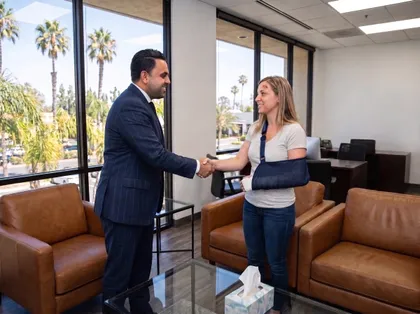
A pedestrian accident lawyer can investigate the crash independently instead of relying only on the police report or the insurer’s version of events. Depending on the case, the lawyer may:
- Obtain surveillance footage, dashcam recordings, vehicle data, phone records, and witness statements.
- Send preservation notices before video or electronic evidence is erased.
- Identify every person, company, or public entity that may be responsible.
- Locate all available liability, uninsured motorist, and underinsured motorist coverage.
- Gather medical evidence showing the cause and long-term effects of your injuries.
- Document lost wages, reduced earning capacity, and future treatment needs.
- Communicate and negotiate with insurers on your behalf.
- Address medical liens and reimbursement claims that may reduce your recovery.
- File a lawsuit and prepare the case for trial when a fair settlement is not offered.
Hiring a lawyer does not automatically mean your case will go to court. Many claims are resolved through insurance negotiations, but a lawsuit may be necessary when fault, damages, coverage, or settlement value remain disputed.
Many people wonder: Do lawyers only get paid if they win? Under a contingency fee arrangement, attorney’s fees are generally paid only if you recover compensation. The written agreement should explain how case costs and expenses will affect your recovery and whether you could be responsible for them.
Before hiring a lawyer, review the contingency fee agreement carefully and ask:
- What percentage will be charged?
- Does the percentage increase if a lawsuit is filed?
- Who pays filing fees, expert fees, deposition costs, and medical-record expenses?
- Are costs deducted before or after the attorney’s fee is calculated?
- Could you owe costs if the case does not result in a recovery?
- Who will primarily handle and communicate with you about the case?
- How will medical liens affect the amount you ultimately receive?
The agreement should be in writing and clearly explain the fee arrangement, case expenses, and any related legal services that are not included.
How Fault Is Determined In California Pedestrian Accidents
In California, most pedestrian accident claims are based on negligence. To recover compensation, you must show that someone else failed to act with reasonable care and that this caused your injuries. California also lets you seek compensation even if you share some of the blame.
To pursue a claim after a pedestrian accident in California, an attorney can help you prove all four elements of negligence:
- Duty of Care: Drivers have a legal duty to act with care on the road. Under California Vehicle Code § 21950, drivers must yield to pedestrians in marked and unmarked crosswalks.
- Breach of Duty: The driver can breach that duty by speeding, running a red light, or failing to yield. Reviewing the Top Causes of Pedestrian Accidents can help clarify how these duties are violated in practice.
- Causation: The driver’s breach was a substantial factor in causing your injuries.
- Damages: You suffered real harm, such as physical injuries or financial losses.
California Vehicle Code § 21954(a) also places duties on pedestrians. If you cross outside a marked or unmarked crosswalk, you must yield to vehicles close enough to be a hazard. If you were crossing mid-block when a car hit you, an insurer may argue you share fault.
Fault is a primary factor in determining the potential value of your claim. The stronger your evidence from the start, the harder it is for an insurer to inflate your share of fault and reduce what you can recover.
Who Besides The Driver May Be Responsible?
The driver may not be the only party responsible for a pedestrian accident. Depending on how the collision occurred, a claim may also involve:
- The owner of the vehicle.
- An employer whose employee was driving for work.
- A delivery, trucking, rideshare, or transportation company.
- A business responsible for vehicle inspection or maintenance.
- A contractor who created an unsafe road or construction zone.
- A public entity responsible for a dangerous roadway, crosswalk, traffic signal, or sidewalk condition.
- Another driver whose actions contributed to the collision.
Identifying additional responsible parties can be especially important when the driver has limited insurance or denies causing the accident. Claims against employers, businesses, and government entities can also involve different evidence requirements and deadlines.
Immediate Steps To Protect Your Pedestrian Accident Claim
What you do in the hours after a pedestrian accident can affect the outcome of your claim. When evidence is lost and records are missing, insurers have an easier time disputing your injuries. Quick, careful action can strengthen your ability to pursue compensation, including:
- Seeking Medical Care Immediately: See a doctor as soon as possible, even if you feel fine, because some injuries do not show symptoms right away. A prompt visit creates a medical record linking your injuries to the accident.
- Filing a Police Report: If officers did not respond to the scene, report the accident yourself as soon as possible. Under California Vehicle Code § 20008, the driver must file a written report within 24 hours of an injury accident, but your own report on file also helps secure the official record.
-
Preserving Evidence: Take photos of the scene, the vehicle, the road, traffic controls, and any visible injuries as soon as you can. Get the names and phone numbers of witnesses before they leave. Also, keep medical bills, treatment records, prescription receipts, pay stubs, employer absence records, transportation expenses, and correspondence with the insurer.
Photos showing how your injuries progress, along with notes on pain, physical limitations, missed activities, and assistance you need, can help document the full impact of the accident.
- Not Admitting Fault: Do not apologize or speculate about what happened, not at the scene and not to an insurance adjuster. Statements about fault, your injuries, or how the accident occurred may be used to dispute or reduce your claim.
- Staying Off Social Media: Avoid posting about the accident or your injuries. Posts and photos can surface during a claim and be used to dispute your injuries.
-
Consulting a Personal Injury Lawyer: Dealing with multiple parties and insurers while recovering from injuries and losses can be difficult. A lawyer can manage the negotiations on your behalf and help you pursue compensation according to the law.
At Arash Law, we have experience advocating for clients throughout California. The following are examples of prior results. Past results do not guarantee future outcomes, and every case depends on its specific facts, evidence, insurance coverage, and applicable law. Below are some of the cases we’ve won for our clients:
- $12,000,000 — This case was resolved just before jury selection was about to begin. Our 74-year-old client was hit while crossing the street and suffered serious injuries that required extensive care.
- $10,000,000 — Our client suffered serious injuries after a speeding vehicle ran him over. We achieved a significant financial recovery and helped him obtain medical care and treatment.
- $5,000,000 — Our client suffered a mild traumatic brain injury when a large truck hit him while in a crosswalk. The truck company tried to blame him, claiming he was on his phone. We rejected that claim and won the case for him.
Past results do not guarantee future outcomes, and every case depends on its specific facts, evidence, insurance coverage, and applicable law.
Damages You Can Recover For Pedestrian Injuries
California law allows pedestrian accident victims to seek compensatory damages, which are generally divided into economic and non-economic damages. California sets no cap on either type in pedestrian accident cases.
- Economic Damages: These cover measurable financial losses. They include medical bills, therapy costs, chiropractic visits, and medication. They also cover lost wages while out of work and future income that victims may not be able to earn due to their injuries.
- Non-Economic Damages: These are harder to measure. They cover pain and suffering, emotional distress, disfigurement, and loss of enjoyment of life.
In rare cases where clear and convincing evidence shows that the driver acted with malice, oppression, or fraud, victims may be able to pursue punitive damages. These are intended to punish the at-fault driver and deter future egregious conduct.
In 2023, California recorded 1,106 pedestrian fatalities from motor vehicle crashes, showing just how deadly these incidents can be. If the accident results in death, eligible family members may be able to file a wrongful death claim. Compensation may include the loss of financial support the deceased would have provided, funeral and burial costs, and the loss of their love, companionship, and support. Eligible family members may also seek compensation for the loss of the deceased person’s companionship and support.
How much you recover depends heavily on what you document and how quickly you act. Every type of damage listed here requires that you file your claim before the legal deadline runs out.
Deadlines For Filing A Pedestrian Accident Claim In California
In California, you have two years from the injury date to file a personal injury lawsuit. This covers most pedestrian cases, whether the at-fault party was a driver who failed to use reasonable care, a property owner, or a private business.
When a government entity is involved, the deadline is much shorter. Under Government Code § 911.2, a claim involving personal injury or death generally must be presented in writing to the appropriate public entity within six months after the cause of action accrues. This step must happen before you can file a lawsuit. It applies when a city bus, a road defect on public land, or another government body caused or played a part in your injuries.
Missing either deadline will generally end your ability to seek compensation, no matter how serious your injuries are. Some narrow exceptions exist under California law. Talking to an attorney can confirm your exact deadline and find out whether any exceptions may apply to your case.
Frequently Asked Questions
After a pedestrian accident, you may be wondering whether jaywalking affects your rights, what happens if the driver flees the scene, or when it makes sense to settle. These questions matter, and below are our answers to each.
What if I Was Jaywalking When I Was Hit?
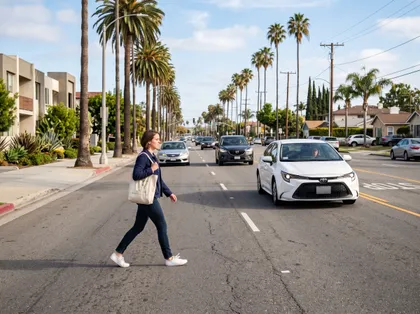
Jaywalking does not end your right to file a claim. California uses a pure comparative negligence system. This means you can still recover compensation even if you were partly at fault for crossing outside a crosswalk. Your total damages are the money you may be entitled to for your injuries and losses.
Under this rule, those damages are reduced by your share of blame. If you are found 30% at fault, you may be able to recover up to 70%, depending on the facts of your case.
Does Uninsured Motorist Coverage Cover Hit-and-Runs in California?
Yes. Under California law, unidentified hit-and-run drivers are treated as uninsured motorists, so your uninsured motorist bodily injury (UMBI) coverage, if you have it, can pay for your injuries even if the driver is never found.
California imposes specific requirements for claims involving an unidentified hit-and-run driver. The bodily injury generally must arise from physical contact between the unidentified vehicle and the insured or a vehicle the insured occupied. The accident must also be reported to the appropriate law enforcement agency within 24 hours, and the insured must file a sworn statement with the insurer within 30 days stating that a claim exists against an unidentified person and describing the supporting facts.
Can I Still Get a Ticket for Jaywalking in California After AB 2147?
California’s Freedom to Walk Act, or AB 2147, took effect on January 1, 2023. It generally prohibits officers from stopping a pedestrian for certain crossing violations unless a reasonably careful person would recognize an immediate danger of a collision. Pedestrians crossing outside a marked crosswalk or an unmarked crosswalk at an intersection must still yield to vehicles close enough to present an immediate hazard.
What if There Are No Witnesses to the Accident?
A lack of witnesses does not stop you from proving fault. Skid marks, vehicle damage, and where debris or personal property came to rest can show how the crash happened. Cameras at nearby businesses, traffic signals, or passing vehicles may have captured what happened. In more complex cases, accident reconstruction experts can examine the scene and explain what happened.
Whose Insurance Pays When a Pedestrian Is Hit?
The at-fault driver’s liability insurance can be the first source of payment. Liability insurance is the coverage that pays for harm a driver causes to others. If the driver who hit you was uninsured or fled without being identified, your own UMBI coverage may step in for your injuries.
Using your health insurance during treatment can help you avoid gaps in care while your claim is resolved. Any liens your health plan later asserts may be negotiated. A lien is a legal claim your health plan can make against your settlement.
Will Hiring A Pedestrian Accident Lawyer Mean Going To Court?
No. Hiring a lawyer does not automatically mean filing a lawsuit or going to trial. A lawyer may begin by investigating the accident, preserving evidence, identifying insurance coverage, preparing a settlement demand, and negotiating with the insurer.
A lawsuit may become necessary if the insurer denies liability, disputes the extent of your injuries, refuses to offer fair compensation, or delays the claim. Even after a lawsuit is filed, the case may still be resolved through negotiation or mediation before trial.
Should I Wait Until I Finish Medical Treatment Before Discussing a Settlement?
Settling too early is a common mistake. If you accept a settlement before your injuries are fully known, you give up the right to seek more money later. It is often prudent to wait until your condition and likely future treatment can be reasonably evaluated before accepting a final settlement. That may occur at maximum medical improvement (MMI), but the appropriate timing depends on the circumstances.
MMI is the point at which your doctor says your condition has stabilized. Before reaching MMI, your full treatment needs are still unclear. A physician determines whether you have reached MMI. An attorney can review that medical opinion and help ensure that a settlement demand accounts for reasonably anticipated future care.
Does A Child Need A Lawyer After A Pedestrian Accident?
A parent or guardian may pursue a claim on behalf of an injured child. These cases may require additional attention to future medical care, scarring, emotional trauma, educational needs, and the effect of the injuries on the child’s development.
A settlement involving a minor may also require court approval. The court may review whether the settlement protects the child’s interests and how the funds will be held or managed. Because different procedures and deadlines may apply, a parent or guardian should confirm the child’s legal rights before accepting a settlement.
Consult A Skilled Injury Lawyer After A Pedestrian Accident
You may not always need a lawyer after a pedestrian accident, but it can be important when legal challenges arise. Evidence fades, witnesses become harder to reach, and the two-year deadline to file in California moves closer. If the driver’s insurer is disputing fault, pushing a low settlement, or going silent, you deserve experienced legal representation on your side.
Arash Law (also known as AK Law) has years of experience advocating for our clients’ rights under California law. Call (888) 488-1391 to schedule your free case evaluation today. Our attorneys will review the facts of your situation and explain your options, all at no cost to you. There is no fee unless we win.