TL;DR: Yes. If you got injured at a New Year’s Eve party because someone failed to act with reasonable care, you may be able to file a personal injury claim in California. Liability depends on where the incident occurred, who controlled the space, and the nature of the injuries you suffered. Deadlines apply, so timely action matters.
Highlights:
- Get medical care fast and request copies of all visit notes.
- Photograph hazards – spills, cords, broken glass, lighting, and stairs.
- Collect witness names, numbers, and brief notes about what they saw.
- Report the incident to the host or venue and request a written report.
- Save receipts and records for bills, prescriptions, and missed work time.
- Identify who controlled the area – host, venue, organizer, vendor, or security.
- Calendar filing limits: 2 years usually, 6 months for government claims.
Tip: When communicating with insurance, stick to facts and avoid guessing – ask to review statements before signing.
Table of Contents
If you are asking, “I got injured at a New Year’s Eve party, can I file a claim?” you may be able to if someone’s negligence caused your injury. In California, you can pursue a personal injury claim when a person, business, or property owner fails to use reasonable care and that failure leads to harm. Many people seek free accident lawyer advice at this stage to understand whether their situation may qualify for a claim.
The key issues are:
- Who created or was aware of the hazard.
- Who controlled the party venue.
- Whether you can establish a connection between the unsafe condition or careless conduct and your injuries.
New Year’s Eve injuries often happen in crowded homes, bars, rented venues, or ticketed events. Here, spills, poor lighting, blocked walkways, fireworks, or inadequate security can create preventable risks.
If you would like to discuss what happened, you can contact the AK Law Firm at (888) 488-1391 to review your situation. Taking the proper steps early can protect your health and preserve evidence before conditions change.
Important points to remember:
- You may have a claim if negligence caused your injury.
- Liability often depends on who controlled the property or event area.
- Your next steps should focus on obtaining medical care and preserving evidence.
- Filing deadlines apply, and delays can weaken proof.
- A lawyer can explain your options without upfront fees in many cases.
What Causes Injuries At New Year’s Eve Parties?
New Year’s Eve parties increase the risk of injury because standard safety controls often fail to function correctly. Holiday-related hazards usually go unnoticed or unaddressed. What might be a minor issue on a regular day can quickly cause serious harm during a packed holiday celebration.
Common causes of injuries at New Year’s Eve parties include:
- Crowded walkways that increase the risk of falls and collisions.
- Alcohol use that impairs judgment and coordination.
- Poor indoor or outdoor lighting after dark.
- Wet or slippery floors due to spills or weather conditions.
- Floors cluttered with decorations and cords.
- Fireworks or candles used without proper safety measures.
- Inadequate security at larger gatherings.
These conditions do not automatically make an injury someone’s fault. When a host, property owner, or event organizer fails to address known risks or take reasonable safety steps, the resulting injury is considered preventable under California law. In other words, those responsible for a New Year’s Eve party may be liable in cases where they fail to anticipate an accident and the harm it causes.
What Types Of Injuries Are Common After New Year’s Eve Parties?
Injuries from New Year’s Eve celebrations range from minor to severe. The type you incur, as well as how serious it is, can directly affect a personal injury claim. For instance, injuries can influence:
- What evidence would be considered relevant.
- The length of your physical recovery.
- How damages will be evaluated under California law.
Below are common injury categories and how they typically factor into a claim.
Slip And Fall Injuries
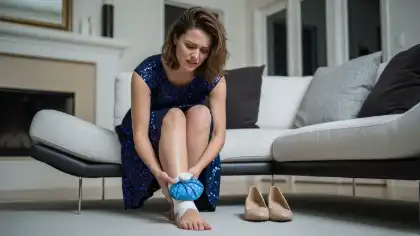
Slip and fall accidents are one of the most frequent New Year’s Eve injuries. They often result from conditions such as:
- Spilled drinks or wet floors.
- Rain-soaked entryways or outdoor surfaces.
- Poor lighting in hallways, stairs, or parking areas.
- Decorations, cords, or clutter blocking walkways.
These hazards can lead to:
- Broken wrists, ankles, hips, or ribs.
- Concussions or other head injuries.
- Neck, back, or spinal injuries.
- Soft tissue injuries such as sprains and strains.
When pursuing related injury claims, slip and fall lawyers often focus on whether the hazard existed long enough to be identified and addressed, or whether the host provided adequate warnings to the guest about it. Medical records showing when symptoms started and how the injury affects daily activities are critical.
Assault-Related Injuries Caused By Intoxicated Guests
Alcohol consumption increases the risk of physical confrontations at crowded celebrations. These incidents may involve:
- Fights between guests.
- Unruly behavior in bars or event spaces.
- Lack of security intervention.
Resulting injuries may include:
- Facial fractures or broken jaws.
- Head injuries or concussions.
- Internal injuries or severe bruising.
- Cuts and lacerations.
Liability often depends on whether the incident was foreseeable and whether negligent security was involved.
Fireworks And Decoration-Related Injuries
Fireworks and open flames are standard on New Year’s Eve. They can cause serious harm when misused or poorly managed. Injury data shows these risks are widespread, even outside large public displays:
- Over 11 fireworks-related deaths were reported in 2024. Many were linked to misuse or device malfunctions.
- About 14,700 people were injured by fireworks in 2024, a significant increase from the year before.
- Fireworks injuries rose by approximately 52%. Meanwhile, deaths increased by about 38% compared to 2023.
- Approximately 1,700 emergency room visits involved sparklers alone, which are often mistakenly considered to be low-risk.
Common causes of fireworks and decoration-related injuries include:
- Misfired or malfunctioning fireworks.
- Candles placed too close to flammable materials.
- Overloaded electrical outlets or faulty holiday decorations.
These hazards may result in injuries such as:
- Burn injuries to the hands, face, or body.
- Eye injuries or permanent vision loss.
- Smoke inhalation and respiratory harm.
- Permanent scarring or disfigurement.
When these injuries occur, claims often focus on safety violations, improper setup, or a failure to follow local fire and building regulations, particularly in crowded or enclosed party settings.
Dog Bites And Animal-Related Injuries At Private Parties

At private house parties, pets may react unpredictably to crowds and noise. Injuries may result from:
- Unrestrained or unsupervised dogs.
- Guests interacting with unfamiliar animals.
Injuries commonly include:
- Deep puncture wounds
- Nerve damage
- Infections
- Scarring or disfigurement
California generally applies strict liability to dog bites, meaning the dog owner may be responsible even without prior warning signs.
Crowd Control And Overcrowding Injuries
Large public or ticketed events present crowd-related risks, such as:
- Overcrowded entry points.
- Sudden surges or pushing.
- Poorly managed exits or emergency access.
Injuries may include:
- Fractures from being knocked down.
- Head injuries.
- Chest or breathing injuries.
- Panic-related physical harm.
Cases that involve crowd control-related injuries often examine event planning, staffing levels, and emergency response protocols.
Injuries From Broken Glass, Sharp Objects, And Environmental Hazards
Busy party environments increase the risk of injuries from:
- Broken bottles or glassware.
- Sharp decorations or damaged fixtures.
- Unsecured furniture or equipment.
Injuries may include:
- Deep cuts and lacerations
- Tendon or nerve damage
- Infections
- Permanent scarring
Evidence showing how the object was left unsecured or improperly maintained is often central to liability.
New Year’s Eve injuries tend to follow clear cause-based patterns. Identifying how the injury occurred helps determine who may be responsible. It could also clarify whether a personal injury claim is viable under California law.
Who May Be Legally Responsible For A New Year’s Eve Party Injury?
Determining who may be legally responsible for a New Year’s Eve party injury depends on where the event occurred, who controlled the space, and what caused the injury. For example, vacation rental liability can arise if you sustain injuries at a party held in an unsafe Airbnb. However, the property owner won’t be automatically responsible under California law.
First, it evaluates responsibility based on whether a person or entity failed to take reasonable steps to prevent a foreseeable risk of harm. When reviewing liability, state law commonly looks at:
- Location of the party (private home, bar, rented venue, public event).
- Control of the premises or event area.
- Whether a dangerous condition existed.
- Whether the responsible party knew or should have known about the hazard.
- Whether the responsible party took reasonable safety steps or provided the necessary warnings.
In some cases, more than one party may share responsibility, especially at larger or ticketed events. Identifying these factors early helps clarify whether a personal injury claim may move forward and who to file it against. The following are some of the likely parties liable for New Year’s Eve party injuries.
Property Owners & Hosts (Premises Liability)
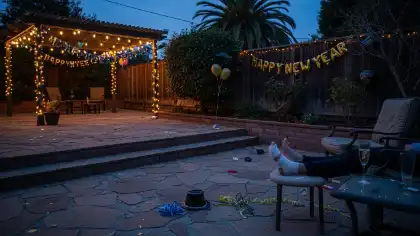
Any owner or occupier of a property, including a private homeowner, a landlord, or a commercial venue, has a legal duty in California to make sure their property is reasonably safe and free from hazards that could injure guests. If they fail to fix or warn about known dangers and someone gets hurt, they may be responsible.
Real-world example:
In Los Angeles, a gunfight at a crowded 2024 New Year’s Eve warehouse party left two people dead and eight others wounded. The fight broke out when shots were fired inside a gathering space. Law enforcement investigators treated it as a violent altercation that forced partygoers into harm’s way.
What this means for injury claims:
- If the owner or host knew or should have known that the venue was unsafe (e.g., due to a lack of security, poor lighting, or overcrowding), they may be held liable for any injuries that occur.
- Premises liability claims often hinge on whether the host took “reasonable steps” to prevent foreseeable harm.
Event Organizers And Vendors (Negligence)
Professional event organizers, promoters, or vendors running a party or providing services (e.g., fireworks operators, security teams, bartenders) owe a duty of care to their guests. A failure to adequately plan, supervise, or secure the event can lead to liability.
Real-world example:
In Esparto, California, a fireworks warehouse exploded in July 2025. The blast killed seven people and injured others. It also destroyed nearby buildings and forced evacuations while authorities investigated the cause. Reports linked the incident to the storage and handling of fireworks and other pyrotechnic materials.
Although this incident did not occur at a New Year’s Eve party, it shows how the improper management of fireworks and explosive materials can lead to severe injuries and loss of life.
Third Parties (Acts Of Others And Indirect Liability)
Sometimes, the person who caused the harm isn’t the property owner or organizer, but rather a third party, such as another guest, a supplier, or a contracted vendor. If someone’s reckless conduct injures you, that person may be directly responsible.
Real-world example:
In 2015, a 21st birthday party at an apartment complex in Berkeley, California, ended in tragedy when a second-story balcony collapsed, killing six people and injuring seven others. The party itself was private and non-violent. The injuries occurred because the balcony failed structurally under regular use.
Investigations later found that construction defects, including dry rot and improper waterproofing, caused the collapse. The hosts or guests did not cause the injuries. Instead, the accident happened due to negligence linked to third-party builders, contractors, and materials suppliers involved in the balcony’s construction and maintenance.
In California, vendors, contractors, and suppliers who provide the following may be liable if their negligent work or materials create an unsafe condition that injures guests, such as:
- Structural elements.
- Staging, platforms, or balconies.
- Lighting, rigging, or temporary installations.
When injuries occur under these circumstances, claims may focus on the third party’s negligence, rather than the host’s actions.
Government Or Public Entities (If At Public Events)
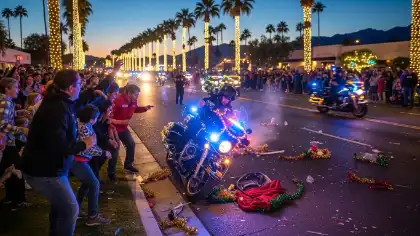
If the injury occurred at a city-sponsored event, such as a fireworks display, festival, or public concert, a government agency or municipality may be held liable. However, injury claims involving these kinds of New Year’s Eve parties can be more complex due to special procedural requirements (e.g., filing a government claim within a short deadline).
Real-world example:
At the annual Festival of Lights Parade in Palm Springs, California, a police motorcycle crashed into a crowd of spectators during the holiday celebration in December 2024. The officer was performing crowd control duties at the time. However, he lost his balance and accelerated into bystanders. He injured about 11 people, including himself.
What this means for claims:
- Seeking compensation from public entities in California usually requires you to file an administrative claim within six months of the injury.
- Documentation, such as official incident reports and witness testimony, is often crucial to the investigation.
Alcohol Servers And Social Hosts (Dram Shop And Social Host Rules)
Commercial venues that serve alcohol have responsibilities under California’s dram shop laws. These can make them liable if they serve alcohol irresponsibly (e.g., to minors or visibly intoxicated guests). Under limited circumstances (such as serving alcohol to minors), private hosts may also face liability.
What this means for claims:
- Evidence such as purchase receipts, photo or video evidence of overserving, or eyewitness testimony can be substantial.
- These claims often intersect with intoxication-related harm, like impaired driving or fights, and may require additional legal strategies.
Real-world example:
In late 2024, a party at the home of U.S. District Judge Mark C. Scarsi in Los Angeles County drew media attention after an underage drinking incident led to a violent altercation and significant injuries. According to reporting, the gathering included “significant” underage drinking. During the event, a fight erupted that left a guest unconscious after hitting his head and body on a curb.
The injured person was hospitalized for more than two weeks. They incurred a serious head injury and facial cuts that required reconstructive procedures. The party, attended by high school-aged guests, took place at the judge’s Pasadena residence. It sparked a civil suit alleging negligent supervision and alcohol being made available to minors.
This incident highlights a key exception under California law. Private hosts are generally not responsible for injuries caused by intoxicated adult guests. However, liability may arise when a host knowingly allows minors to consume alcohol, especially if that intoxication plays a role in subsequent harm to others.
Another example is if an impaired underage driver causes a car accident after drinking at a New Year’s Eve party. In this scenario, the injured party could file a claim against the event host with the assistance of a DUI accident victim lawyer.
Ultimately, responsibility for a New Year’s Eve party injury often depends on who had control over the situation that led to harm. In many cases, more than one party may share legal responsibility.
Common factors that help determine responsibility include:
- Who controlled the property or event, such as a homeowner, venue operator, or event organizer.
- Whether a third party created the hazard, including vendors, security staff, or other guests.
- How the host served alcohol, particularly if minors were involved or safety rules were ignored.
- Where the injury occurred, such as a private residence, rented venue, or public space.
- What evidence exists, including photos, videos, witness statements, and incident reports.
Each situation is different. As such, determining responsibility often requires a closer review of the facts and the roles each party played leading up to the injury.
What Do You Need To Prove To File A Claim After A New Year’s Eve Party Injury?
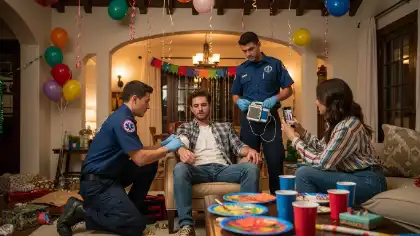
If you were injured at a New Year’s Eve party in California and are thinking, “I need a personal injury lawyer,” it is helpful to understand what the law actually requires. A personal injury claim generally depends on proving four basic elements.
- Duty of Care Existed — A duty of care means the responsible party had a legal obligation to act reasonably to keep others safe.
At a New Year’s Eve party, a duty of care may exist when:
- A homeowner or renter invites guests onto their property.
- A bar, restaurant, or event venue opens its doors to the public.
- An event organizer or vendor sets up equipment, fireworks, or decorations.
- A security provider or alcohol server manages crowd safety or alcohol service.
In simple terms, if someone invited you, hosted you, or controlled the space or activity, they likely owed you a duty to act safely.
- That Duty Was Breached — A breach occurs when someone fails to act with reasonable care under the circumstances.
At a New Year’s Eve party, typical examples of a breach include:
- Failing to clean up spilled drinks or broken glass.
- Allowing overcrowding in confined areas.
- Setting off fireworks indoors or too close to guests.
- Leaving loose cords, unstable decorations, or poor lighting.
- Allowing underage drinking or ignoring apparent intoxication.
- Failing to provide adequate security when risks were foreseeable.
- The question is not whether the injury was intentional. Instead, look at whether the situation could have been prevented with reasonable care.
- The Breach Caused Your Injury — The unsafe condition or careless action directly caused your injury. For instance, a slip and fall lawyer could help prove that an event host failed to check for and immediately clean a spilled drink. As a result, a guest got a concussion. This step connects the negligent act to the injury, rather than blaming bad luck or unrelated factors.
- You Suffered Damages — Damages refer to the actual harm you experienced as a result of the injury.
After a New Year’s Eve party injury, damages may include:
- Medical treatment and follow-up care, such as physical therapy or chiropractic sessions.
- Lost income if you missed work.
- Physical pain or lasting limitations.
- Emotional distress or trauma.
- Scarring or long-term impairment.
Without measurable harm, a personal injury claim generally cannot move forward.
How Comparative Negligence Applies At New Year’s Eve Parties
California follows pure comparative negligence. That means you may still recover damages even if you were partly at fault.
For example:
- You may have been drinking, but the venue still failed to fix a known hazard.
- You may have been distracted, but unsafe conditions still played a role.
- You may share some responsibility, but not all of it.
If fault is shared, the court may reduce your recovery by your percentage of responsibility, rather than denying it altogether.
What Steps Should You Take After Getting Injured At A New Year’s Eve Party?
If you get injured at a New Year’s Eve party, what you do next can affect both your health and your ability to protect your rights. Taking a few straightforward steps early can help preserve significant evidence and avoid complications later.
- Seek Medical Care — Your health comes first. Medical records also connect your injuries to the incident.
- Document the Scene — Take photos or videos of hazards, lighting, spills, or crowd conditions.
- Gather Witness Information — Names and contact details help confirm the details of what happened.
- Report the Incident — Notify the host, venue, or organizer. Request a written report if available.
- Avoid Detailed Insurance Statements — Be cautious. Insurers may look for statements they can use to limit claims.
Frequently Asked Questions About New Year’s Eve Party Injuries
The questions below address common concerns people have after getting injured at a New Year’s Eve party, including whether a claim may be possible, how deadlines work, and what steps can help protect your rights.
I Got Injured At A New Year’s Eve Party. Can I File A Claim?
Yes. You may be able to file a personal injury claim if your injury happened because someone failed to act with reasonable care, such as a host, venue, organizer, or another responsible party. Whether a claim is possible depends on how the injury occurred, who was responsible for the situation, and whether the harm could have been prevented.
How Long After The Event Can I File A Claim?
In most California personal injury cases, you have two years from the date of the injury to file a lawsuit. Missing this deadline can prevent you from recovering damages.
There are important exceptions, including:
- Delayed Discovery — When an injury is not immediately apparent.
- Minors — Their filing deadline usually begins at age 18.
- Claims Involving Government Entities — These often require filing a formal claim within six months of the incident.
- Mental or Physical Incapacity — This may pause the deadline.
- Defendants Who Leave California — This can toll the time limit until they return to the state.
Since deadlines can differ depending on the situation, acting sooner rather than later is essential.
How Much Can You Recover For A New Year’s Eve Party Injury?
There is no fixed amount. The value of a claim depends on factors such as:
- The severity of the injury.
- The medical care required.
- Lost income or time away from work.
- The impact on daily life.
- The available insurance coverage.
More serious or lasting injuries typically result in greater losses. However, every case is unique.
Do Lawyers Only Get Paid If They Win?
In many California personal injury cases, lawyers work on a contingency fee basis. That means you only pay the attorney’s fee if your lawyer recovers compensation through a settlement or court decision.
If there is no recovery, you generally do not owe attorney’s fees. Before proceeding, the lawyer should explain the contingency fee arrangement in further detail so you understand the payment process.
Talk With A Legal Team About Your New Year’s Eve Injury
Injuries that happen during holiday celebrations often involve crowded spaces, alcohol, temporary setups, or multiple responsible parties. These can make claims more complicated. If you got injured at a New Year’s Eve party, you do not have to sort through liability questions, insurance issues, or deadlines on your own.
Speaking with an experienced legal team can help you understand who’s liable for your injuries and the steps you can take to protect your rights.
Although many people associate car accident lawyers with road crashes, personal injury attorneys often handle a wide range of injury cases, including accidents at parties, events, and other gatherings caused by negligence.
You can contact Arash Law to discuss the incident and explore your options. The firm offers free initial consultations. Its attorneys also work on a contingency fee basis. Clients only pay them if they recover compensation.
Call (888) 488-1391 or complete this online contact form to get started.