TL;DR: After an insurer denies fault despite an eyewitness statement, an injury lawyer can review the denial, interview the witness, and gather evidence that helps resolve the dispute. The lawyer can request that recordings be preserved and ask the insurer to reconsider. If the insurer still denies fault, the lawyer can determine whether to file a lawsuit before the filing deadline.
If the insurer denied fault even after receiving an eyewitness statement, an injury lawyer can review the denial to find out why the insurer disagrees about who caused the incident. The lawyer can start by requesting a written explanation and confirming whether the adjuster reviewed the full statement.
If the adjuster overlooked the statement, the lawyer can resend it and request confirmation that it has been reviewed. If the insurer questions what the witness saw, photos taken from the witness’s location or nearby video footage may help clarify what happened. Those findings can help the lawyer decide whether to ask the insurer to reconsider or file a lawsuit.
Key Facts About an Insurance Fault Denial Even After an Eyewitness Statement
- The other party’s insurer must put its dispute of fault in writing. If the adjuster denied liability over the phone, a lawyer may request a written denial under Title 10, California Code of Regulations, § 2695.7(b)(1).
- Insurers must conduct a fair and objective investigation. Under 10 CCR § 2695.7(d), counsel can assess whether the insurer’s investigation addressed the witness account and other available evidence.
- What the witness saw firsthand determines what their account can establish. California Evidence Code § 702 generally requires personal knowledge. A witness may have seen the impact without seeing which driver entered the intersection first.
- A complaint can address how the insurer handled the claim. The California Department of Insurance can review claim handling. A court can decide who was legally responsible for the injury.
- The injury date generally starts the statute of limitations. Most California injury lawsuits against private parties have a two-year filing period under Code of Civil Procedure § 335.1. Claims involving government entities generally require earlier action.
Table of Contents

Step 1. Get the Written Denial and Identify What the Insurer Disputes
A lawyer can ask what facts the adjuster relied on and whether the adjuster reviewed the witness statement before denying fault. Share the denial letter, claim number, and any email or portal receipt showing when you submitted the statement.
The lawyer can also check exactly what the insurer disputes. A fault dispute concerns who caused the incident. An injury dispute may concern whether the incident caused the injury you reported. A coverage dispute may involve whether the insurance policy covers the person or incident.
If your own insurer denied a claim under your policy, it generally must explain the known factual and legal reasons in writing. If it relies on a policy exclusion or another provision, it must identify that provision and explain how it applies.
Step 2. Preserve the Statement and Interview the Witness
A lawyer can ask where the witness stood, when they first looked, and whether anything blocked their view. Someone who looked up after hearing a crash may know where the cars stopped. A person watching beforehand may know which vehicle changed lanes.
Keep the witness’s name and contact details if they shared them. Save the original statement, complete messages, and any attachments. Let the witness describe what happened in their own words. If you write down a conversation from memory, date the note and make clear that it reflects what you remember.
Step 3. Gather Evidence That Addresses the Insurer’s Reasons for Denial
A lawyer can compare the witness’s account with video, photographs, damage to the vehicles, other physical evidence, reports, and other firsthand accounts. Share the incident’s exact time and location so counsel can ask camera owners to preserve recordings before they are overwritten.
The investigation can also identify other parties who may be responsible. After a collision, car accident lawyers may look at who owned the vehicle or whether the driver was working at the time.
How Can a Lawyer Challenge the Insurer’s Reasons for Denying Fault?
A lawyer can review why the insurer denied fault and look for evidence that challenges its decision. The table below shows common reasons for denial and how a lawyer may respond.
| What the Insurer Says | Evidence That May Help | What a Lawyer Can Do |
|---|---|---|
| We never received the witness statement. | Statement and proof of submission. | Resend it and confirm receipt. |
| The witness couldn’t see the traffic light. | Camera footage and photos of the witness’s view. | Check what the witness could see. |
| The drivers disagree about lane changes. | Dashcam footage and damage photos. | Compare both drivers’ accounts. |
| Store staff didn’t know about the spill. | Security footage and inspection records. | Check when the spill appeared. |
| The landlord didn’t know about the broken stairs. | Repair requests and maintenance records. | Check when the landlord knew or should have known. |
| The product was changed before the injury. | Product photos and the original item. | Check whether a defect caused the injury. |
| The injury was a normal risk of the activity. | Safety records, videos, and waivers. | Check whether the operator increased the risk. |
| Our insured didn’t own the dog. | Animal control and ownership records. | Identify the dog’s owner. |
| The incident didn’t cause the injury. | Medical records and symptom history. | Review medical evidence of the cause. |
An eyewitness may not know every detail of what happened. For example, someone who saw a fall may not know how long a spill had been on the floor. A lawyer can use other records to fill in those gaps.
If you have a denial letter and a witness statement, bring both to a free initial consultation with Arash Law. Call (888) 488-1391 to discuss what the insurer disputed and what evidence may still be available.
Step 4. Ask the Insurer to Reconsider in Writing
A lawyer can send a written request that identifies the claim number and denial date and then addresses each reason the insurer gave. The lawyer can attach copies of the relevant evidence and explain what each item shows about the disputed facts.
For example, if the adjuster questioned whether the eyewitness could see the traffic signal, a photo taken from the witness’s location can help show what they could see. Footage showing the signal at the time the vehicles entered the intersection can help establish which driver had the green light.
The lawyer can ask the adjuster or a claims supervisor to confirm receipt and, in writing, explain whether the new information changes the decision. If the insurer continues to deny fault, its response can help the lawyer identify what remains in dispute and decide whether to gather more evidence or file a lawsuit.
Step 5. Consider Filing an Insurance Complaint or Lawsuit
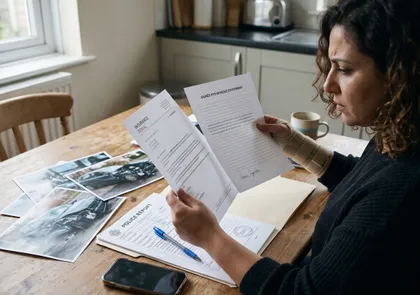
A lawyer can assess whether to file a complaint about how the insurer handled your claim. For example, the California Department of Insurance can review whether the insurer provided the required written notice. However, a complaint to the department does not replace a lawsuit to establish who caused your injury.
If the other party’s insurer continues to deny fault, your lawyer can assess whether to sue the person or business that may have caused your injury. The lawyer can review what the evidence supports, what losses you can document, and what insurance coverage may apply. After filing, your lawyer can use the legal process known as discovery to request documents, obtain records, and question witnesses under oath.
If your own insurer continues to deny your claim, your lawyer can review whether it failed to honor the insurance policy or unreasonably refused to pay benefits it owed. If you made an uninsured or underinsured motorist claim, your lawyer can assess whether to request arbitration, a process in which a neutral decision-maker resolves disputes over fault or the amount of damages. Your lawyer can also check what steps and deadlines apply to protect your right to pursue compensation.
Step 6. Check the Filing Deadline While the Insurer Reviews Your Claim
California has different filing deadlines depending on the type of claim:
- Personal injury claims: Generally, two years from the date of injury under Code of Civil Procedure § 335.1.
- Property damage claims: Generally, three years from the date of damage under Code of Civil Procedure § 338.
- Government claims: Generally, six months to submit an injury claim to the responsible government entity under Government Code § 911.2. If the agency rejects the claim in a legally sufficient written notice, you generally have six months from the date the notice is mailed or personally delivered to file a lawsuit. Different rules may apply if no such notice is provided.
The deadline to sue generally continues to run while the insurer reviews its decision or the California Department of Insurance reviews a complaint. Missing a filing deadline may prevent you from pursuing compensation. Important evidence, such as security footage, may also be lost over time.
Your lawyer can check which deadlines apply to your case and whether a lawsuit should be filed while the insurer’s review is still pending.
What if the Insurance Company Says I’m Partly at Fault?
If the insurance company says you’re partly at fault, ask the adjuster what they believe you did and what evidence supports that claim. An injury lawyer can review whether the evidence shows that your actions contributed to your injury and challenge the insurer’s assessment.
For example, if the adjuster says you changed lanes before a crash, your lawyer can compare the eyewitness’s account with dashcam footage, lane markings, and vehicle damage. That evidence may help show where each vehicle was and which one moved before impact.
Under California’s comparative fault rule, you may still recover damages if another party also bears responsibility. However, your compensation generally decreases according to your share of fault. For example, if you prove $100,000 in damages and are found 20% at fault, your recoverable damages would generally be reduced to $80,000.
If the case goes to court, the defendant generally must prove that you acted negligently and that your conduct was a substantial factor in causing your harm. The judge or jury decides whether you share fault and, if so, assigns a percentage.
Frequently Asked Questions About Insurance Fault Denials in California
Can One Eyewitness Be Enough to Prove Fault?
Yes. One credible witness can provide enough evidence to prove a disputed fact through firsthand testimony. Whether that establishes fault depends on what the witness saw and what needs to be proven in your case.
Can a Signed Eyewitness Statement Replace Testimony in Court?
Usually, a signed statement alone cannot replace testimony. Under California’s hearsay rule, a statement made outside court generally cannot be used to prove what happened unless a legal exception applies. Keep the original so your lawyer can evaluate how to use it.
Can a Lawyer Challenge the Denial if the Witness Stops Responding?
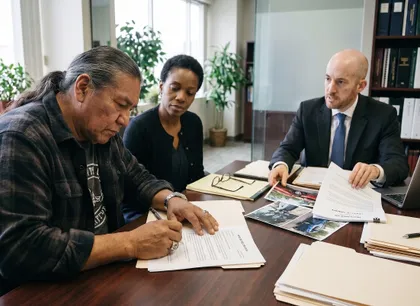
Yes. Give your lawyer the original statement, the witness’s last known contact details, and the date you last spoke. Your lawyer can look for footage, records, or other witnesses that help establish the same facts.
Can a Passenger’s Statement Help Challenge an Insurance Fault Denial?
Yes. A passenger can describe what they saw or heard firsthand, such as when a vehicle began to change lanes. If the adjuster questions the passenger’s account because they know one of the drivers, a lawyer can compare it with footage, photos, or other witness accounts.
Learn What Arash Law Can Do About Your Insurance Denial
If the insurer denied fault despite an eyewitness statement, Arash Law can review what the adjuster disputed and whether the witness’s statement supports your claim. We can also look for missing evidence, such as footage, photos, or other records that may help establish what happened.
Bring the denial letter, the eyewitness statement and contact details, and any emails or receipts showing what you sent the insurer. If the adjuster gave you the decision by phone, bring the claim number and any notes you made about the call.
Call (888) 488-1391 for a free initial consultation. We work on a contingency fee basis. This means you pay attorneys’ fees only if we recover compensation for you. We’ll explain the fee and how case costs are handled before you sign an agreement.
Sources
- California Code of Regulations, Title 10, § 2695.7. Standards for Prompt, Fair, and Equitable Settlements
https://govt.westlaw.com/calregs/Document/IE642F9A05C2F11EC9C68000D3A7C4BC3- California Department of Insurance. Consumer Services Division
https://www.insurance.ca.gov/0500-about-us/02-department/030-csmcb/consumer-services.cfm- California Department of Insurance. Getting Help and Filing a Complaint
https://www.insurance.ca.gov/consumerhelp- California Department of Insurance. So You’ve Had an Accident, What’s Next?
https://www.insurance.ca.gov/01-consumers/105-type/95-guides/upload/So-You-ve-Had-An-Accident.pdf- California Evidence Code § 411. Sufficiency of One Witness’s Testimony
https://leginfo.legislature.ca.gov/faces/codes_displaySection.xhtml?lawCode=EVID§ionNum=411.- California Evidence Code § 702. Personal Knowledge
https://leginfo.legislature.ca.gov/faces/codes_displaySection.xhtml?lawCode=EVID§ionNum=702.- California Evidence Code § 1200. Hearsay Rule
https://leginfo.legislature.ca.gov/faces/codes_displaySection.xhtml?lawCode=EVID§ionNum=1200.- California Courts Self-Help Guide. Personal Injury Cases
https://selfhelp.courts.ca.gov/civil-lawsuit/personal-injury- California Courts Self-Help Guide. Discovery in Civil Cases
https://www.selfhelp.courts.ca.gov/discovery-civil- California Courts Self-Help Guide. Subpoenashttps://selfhelp.courts.ca.gov/subpoena
- California Insurance Code § 11580.2(f). Uninsured and Underinsured Motorist Arbitration
https://leginfo.legislature.ca.gov/faces/codes_displaySection.xhtml?lawCode=INS§ionNum=11580.2.- Judicial Council of California. CACI No. 405, Comparative Fault of Plaintiff
https://courts.ca.gov/system/files/file/judicial_council_of_california_civil_jury_instructions_2026.pdf- California Code of Civil Procedure § 335.1. Personal Injury Filing Deadline
https://leginfo.legislature.ca.gov/faces/codes_displaySection.xhtml?lawCode=CCP§ionNum=335.1.- California Government Code § 911.2. Government Claim Presentation Deadlines
https://leginfo.legislature.ca.gov/faces/codes_displaySection.xhtml?lawCode=GOV§ionNum=911.2.- California Government Code § 945.6. Lawsuit Deadlines for Claims Against Government Entities
https://leginfo.legislature.ca.gov/faces/codes_displaySection.xhtml?lawCode=GOV§ionNum=945.6.Disclaimer
This article provides general information for educational purposes. Reading it does not create an attorney-client relationship. Consult a licensed California attorney about your circumstances. Past results do not guarantee a similar outcome. Arash Law · (888) 488-1391.