TL;DR: Yes. An injury lawyer may help if the insurer’s offer does not cover your car repairs, especially if they also handle your injury claim. However, not every injury lawyer handles vehicle-damage claims. You can challenge a repair offer even if you were not injured. Compare both estimates, document missing repairs, and check whether the insurer followed California’s claim-handling rules.
Some injury lawyers help clients with vehicle damage as part of their injury cases, while others handle only bodily injury claims. If your insurer’s offer is too low, you can ask whether your lawyer can review the repair costs and help you seek additional payment.
You do not need to be injured to dispute a property-damage offer. Start by comparing the insurer’s written estimate with your repair shop’s estimate. Differences in labor rates, replacement parts, or missing repairs, including hidden damage, may explain why the amounts do not match.
If you also have an injury claim, check whether your lawyer’s agreement covers vehicle damage. Before accepting a settlement, review which claims it resolves. A broadly written release could affect your injury claim, even if the payment is intended for vehicle damage.
Key Facts About Low Car Repair Offers
- A low repair offer does not automatically settle your claim. You can ask the insurer to review the amount and provide evidence supporting additional repair costs before agreeing to a settlement.
- You can challenge missing repair costs. Under 10 CCR § 2695.8(f), insurers must follow specific procedures when you submit a higher written estimate for necessary repairs.
- You can choose your repair shop. California Insurance Code § 758.5 generally prohibits insurers from requiring repairs at a specific shop.
- Other vehicle losses may qualify for payment. California Civil Jury Instructions 3903J and 3903M address qualifying diminished-value and loss-of-use claims.
- Property-damage representation is not automatic. California Rule of Professional Conduct 1.2(b) allows reasonable limits on legal representation with the client’s informed consent.
Table of Contents

How an Injury Lawyer Can Help With a Low Repair Offer
An injury lawyer can identify why the insurer’s offer falls short and explain which charges you have evidence to dispute. If their representation includes property damage, car accident lawyers can also negotiate the vehicle claim.
If your lawyer also handles property-damage claims, they may help you with the following:
- Identify the repair costs the insurer left out. Compare estimates line by line to identify missing repairs, different parts, or reduced labor hours. For example, manufacturer instructions may help explain why your shop included a camera calibration after replacing a windshield.
- Use repair records to support a higher payment. Submit photos, repair records, and supplemental estimates documenting hidden damage.
- Check whether your insurance can cover repairs. Review your collision coverage, deductible, and possible reimbursement through another insurer. The lawyer can also check whether your insurer plans to seek reimbursement from the responsible party and include your deductible in that effort.
- Review how the insurer calculated your car’s value. Compare a total-loss valuation report with your vehicle’s trim, mileage, equipment, and pre-crash condition. Check applicable taxes, fees, and deductions.
- Document losses the repair estimate does not cover. Review appraisals or market evidence supporting diminished value. Rental records and repair dates may also support a loss-of-use claim against the responsible party.
Compare the Repair Estimates and Identify Missing Costs
Compare the insurer’s estimate with your shop’s estimate to identify missing repairs, different parts, labor charges, or omitted safety-system work. If you disagree with an insurance company’s damage estimate after an accident, keep photos or repair instructions that support the disputed charges. Check whether the insurer reduced payment for prior damage or depreciation.
Supplemental Estimates Can Address Hidden Damage
If the shop discovers damage during repairs, ask for a supplemental estimate. It should identify the added parts, labor, and reasons for the work, with supporting photos.
Send the supplement to the insurer and keep proof of submission. Ask whether the insurer needs to inspect the damage again before repairs continue.
California Requires Specific Responses to Higher Repair Estimates
Under 10 CCR § 2695.8(f), if the insurer bases its repair offer on a written estimate and you submit a higher written estimate for necessary repairs, the insurer must take one of three actions:
- Pay the difference between its written estimate and the higher estimate.
- At your request, identify a qualifying repair shop that will complete the repairs for the insurer’s estimated amount. The insurer must arrange to restore the vehicle to its pre-loss condition without additional charges, except those permitted by the policy or law.
- Make reasonable, itemized adjustments to your shop’s estimate and give the adjusted estimate to you and the shop.
These rules do not guarantee payment for every requested charge. However, they establish procedures the insurer must follow when addressing the higher estimate.
Confirm Repair Charges Before Approving Additional Work
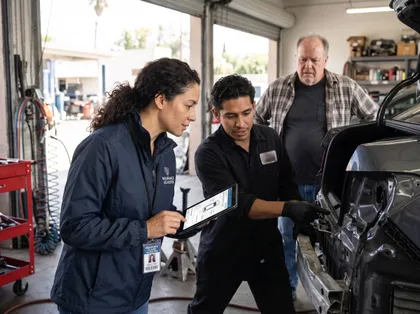
Before authorizing repairs, check what the insurer has agreed to cover and whether the shop expects additional charges. Keep photos, repair estimates, and written approvals. Ask about storage fees and whether the insurer needs another inspection.
California’s Bureau of Automotive Repair requires shops to obtain authorization before performing repairs or additional work. Its repair authorization guidance explains these requirements.
You generally have the right to choose your repair shop under California Insurance Code § 758.5. The insurer cannot require you to use its preferred facility.
Check Which Insurance Coverage Applies to the Repair Offer
The coverage available depends on whether you filed the vehicle claim with your own insurer or another driver’s insurer.
Claims Under Your Own Collision Coverage
Collision coverage generally pays for damage to your covered vehicle regardless of fault, subject to your policy terms and deductible.
If another driver caused the crash, your insurer may seek repayment from the responsible party or their insurer. Ask whether your insurer plans to do so. If it does, it generally must include your deductible in its recovery efforts unless you have already recovered it.
Claims Against Another Driver’s Insurance
Another driver’s property-damage liability insurance may cover your vehicle losses when that driver is legally responsible.
How much you can recover depends on who was at fault, your documented losses, and the available insurance limits. Several damaged vehicles may also share the same property-damage limit.
If the insurer disputes fault, preserve crash photos, witness information, and the police or collision report. California’s comparative negligence rules may reduce recovery when responsibility is shared.
If the responsible driver has no insurance or insufficient coverage, check whether your collision policy can help. If you do not have collision coverage, uninsured motorist property-damage coverage may help when an identified, uninsured driver caused the crash. For those with collision coverage, check whether the policy includes a collision deductible waiver.
California’s automobile insurance guide explains collision and property-damage liability coverage.
How a Total-Loss Decision Affects Your Payment
An insurer may declare your car a total loss when the cost of repairs exceeds the vehicle’s value. Under 10 CCR § 2695.8(b), cash total-loss settlements generally rely on comparable vehicles and include applicable taxes and fees.
Ask for the valuation report. Check your vehicle’s trim, mileage, equipment, pre-crash condition, and any deductions. If you want to keep the damaged car, ask how its salvage value affects payment.
If you financed or leased your car, check whether the lender or leasing company is entitled to part of the settlement. When your car is totaled, collision insurance may cover its pre-crash value, minus the deductible, rather than your remaining loan balance. Applicable gap coverage may help with a qualifying shortfall.
Other Property-Damage Expenses May Qualify for Payment
Depending on the claim, you may seek compensation for losses beyond the initial repair estimate. These may include:
- Diminished value after repairs. Your car may lose market value even after repairs. Under California Civil Jury Instruction 3903J, a claim against the responsible party may include this loss, subject to applicable limits. Appraisals and comparable vehicle prices can support the claim. Your own collision policy may not cover diminished value in addition to repairs.
- Rental expenses and loss of use. California Civil Jury Instruction 3903M allows qualifying claims based on the reasonable rental value of a similar vehicle. If your policy includes rental reimbursement coverage, insurance may pay for a rental car after an accident, subject to daily and time limits. Keep rental receipts, comparable rates, and repair dates. You may also have a third-party loss-of-use claim even if you did not rent a car.
- Towing and storage expenses. After a covered loss under collision or other applicable vehicle physical-damage coverage, the insurer must pay reasonable towing and storage charges when they are necessary to protect the vehicle from further loss (10 CCR § 2695.8(k)). Keep receipts and ask the insurer when it will stop covering storage fees.
What Happens If the Repair Shop Asks You to Pay the Difference
If your lawyer handles the vehicle claim, they can compare what you authorized, what the insurer agreed to pay, and what the shop says you owe. Give the lawyer the signed estimate, any approvals for added work, and the latest invoice. Ask the shop for an itemized breakdown of the balance.
For example, the shop may have completed an additional repair after you approved it, while the insurer still disputed the charge. Your lawyer can review whether the repair records support additional insurance payment. You may still owe the shop under your repair agreement as long as the dispute remains unresolved. If the issue involves unauthorized charges or repair quality, you can file a complaint with the California Bureau of Automotive Repair.
Comparing Your Repair Costs With the Insurer’s Offer
Use this worksheet to see which repair costs the insurer has not agreed to cover. Compare the insurer’s offer with your repair shop’s estimate and record any differences.
Enter the amount the insurer offered and the amount your shop requested for each item. If the insurer left out a charge, enter $0. Skip items that do not apply, and avoid counting the same expense twice.
For example, if your shop estimates $1,600 for a repair but the insurer offers $1,200, the difference is $400.
(Download a PDF version of this worksheet here.)
What to Do With Your Completed Worksheet
After filling out the worksheet, gather the estimates, receipts, and photos that support the amounts you listed. You can send these documents to the insurer and ask it to explain or reconsider the disputed charges. Keep a copy of everything you submit.
If you are still unsure why the insurer’s offer is lower, you can share the worksheet with a lawyer who handles property-damage claims. The lawyer can review the differences, check the available evidence, and explain your options for seeking additional payment.
Ask a lawyer to review the repair shortfall. If the insurer disputes part of your repair bill, call Arash Law at (888) 488-1391 for a free initial consultation. Have both estimates available so you can identify the disputed charges.
What Can Your Lawyer Do If the Insurer Stands by Its Offer?
If your lawyer handles the property-damage claim, they can assess whether additional evidence or a formal dispute process could help. A written estimate from another repair shop may help support your request when the insurer questions a repair charge. For disputes with your own insurer over the amount of loss, your lawyer can check whether the policy offers appraisal and explain the potential costs.
Depending on the dispute, your lawyer may also consider these options:
- Insurance claim complaints. If the insurer may have violated claim-handling rules, your lawyer can help document the issue for a complaint to the California Department of Insurance. The department can review complaints but cannot guarantee a higher payment.
- Insurance mediation. Your lawyer can check whether your dispute qualifies for the California Automobile Claims Mediation Program. The program generally requires a claim exceeding $7,500 and a disputed amount exceeding $2,000. It applies to eligible claims under your own auto physical-damage coverage, not third-party liability claims or commercial auto coverage.
For smaller property-damage disputes, your lawyer can also explain whether small claims court is an option. In California, individuals can generally sue for up to $12,500 in small claims court. A lawyer can advise you before the hearing but generally cannot represent you in court. Keep dated estimates, supplements, and insurer responses to help your lawyer review the evidence, available procedures, and costs.
Review the Vehicle Settlement Before You Accept It
Before signing a release or accepting payment, check which claims the settlement would close. A vehicle settlement may cover repairs, total-loss payments, towing, or loss of use. However, a broad release could also affect separate bodily injury claims.
If you were also injured, California injury attorneys can review your medical expenses and other injury-related losses. Car accident lawyers can also explain whether their representation includes vehicle damage.
Frequently Asked Questions About Getting Help With a Low Repair Offer
Can a Lawyer Tell If an Insurance Limit Caused the Shortfall?
Yes. A lawyer can check whether the insurer reduced the payment because of disputed repairs or insufficient coverage. If the other driver’s property-damage limit is too low, the lawyer can review whether other insurance or recovery options may help cover the remaining loss.
Can a Lawyer Help If the Adjuster Gives No Written Reason?
Yes. A lawyer can request the insurer’s written position and use it to identify what additional evidence may support your claim. Under 10 CCR § 2695.7(b)(1), your own insurer must explain a full or partial claim denial in writing. The other driver’s insurer must also provide written notice if it denies or rejects your claim, in whole or in part, or disputes liability or damages.
Can I Dispute a Repair Offer If My Car Has Already Been Repaired?
Yes. You can still ask the insurer to review unpaid repair costs. Keep the final invoice, repair photos, supplements, and proof of payment. However, completing repairs before the insurer inspects the damage may make some charges harder to verify. A lawyer who handles property-damage claims can review whether the records support additional payment.
Can a Lawyer Check How Long I Have to Dispute the Offer?
Yes. A lawyer can review your policy’s claim requirements, any applicable deadlines for disputing the insurer’s estimate, and the time limits for filing a lawsuit. California generally gives you three years to sue a private party for vehicle damage under Code of Civil Procedure § 338(c)(1). The general deadline for bodily injury lawsuits is two years under § 335.1.
For claims involving public entities, Government Code § 911.2 generally requires you to present a claim for vehicle damage or personal injury within six months. A legally sufficient written rejection generally starts a separate six-month deadline to sue under § 945.6. Different deadlines or exceptions may apply, so do not assume insurance negotiations extend your time to act.
Discuss Your Low Car Repair Offer With Arash Law
If the insurer’s offer does not cover your car repairs, a lawyer may help identify disputed charges, review supporting evidence, and assess your options for seeking additional payment.
Arash Law offers a free initial consultation at (888) 488-1391. Bring your repair estimates, supplements, and the insurer’s written response. Ask whether the firm can assist with your property-damage claim and what fees or costs may apply.
Sources
- California Code of Regulations, 10 CCR § 2695.8. Sets requirements for repair estimates, supplemental repairs, total-loss valuations, replacement parts, and towing or storage payments. https://www.insurance.ca.gov/01-consumers/130-laws-regs-hearings/05-CCR/fair-claims-regs.cfm
- California Code of Regulations, 10 CCR § 2695.7. Explains claim-handling requirements, written denial notices, and deductible recovery through subrogation. https://www.insurance.ca.gov/01-consumers/130-laws-regs-hearings/05-CCR/fair-claims-regs.cfm
- California Insurance Code § 758.5. Protects a claimant’s right to choose a vehicle repair shop and restricts insurers from requiring repairs at a particular facility. https://leginfo.legislature.ca.gov/faces/codes_displaySection.xhtml?lawCode=INS§ionNum=758.5.
- California Bureau of Automotive Repair — Write It Right. Explains repair estimates, teardown procedures, customer authorization, and additional repair work. https://www.bar.ca.gov/wir
- California Department of Insurance — Auto Body Repair Consumer Bill of Rights. Explains repair-shop choice and consumer protections during vehicle repairs. https://www.insurance.ca.gov/01-consumers/105-type/95-guides/01-auto/upload/AutoRepairConsumerBillofRights_Final-3.pdf
- California Department of Insurance — Automobile Insurance Guide. Explains collision coverage, property-damage liability, deductibles, uninsured motorist coverage, and related insurance protections. https://www.insurance.ca.gov/01-consumers/105-type/95-guides/01-auto/auto101.cfm
- California Department of Insurance — Automobile Claims Mediation Program. Describes mediation eligibility, disputed-amount thresholds, and exclusions for certain automobile insurance claims. https://www.insurance.ca.gov/01-consumers/105-type/95-guides/01-auto/AutoMediation.cfm
- California Department of Insurance — So You’ve Had an Accident, What’s Next? Provides guidance on repair estimates, insurance claims, repair-shop choice, and steps after a vehicle accident. https://www.insurance.ca.gov/01-consumers/105-type/95-guides/01-auto/hadaccident.cfm
- California Bureau of Automotive Repair — Maintenance and Repairs. Explains customer rights and responsibilities when approving vehicle repairs, additional work, and repair charges. https://www.bar.ca.gov/auto-repairs
- Judicial Council of California — CACI Nos. 3903J and 3903M. Explains property-damage valuation, qualifying diminished value, and loss-of-use damages. https://courts.ca.gov/system/files/file/judicial_council_of_california_civil_jury_instructions_2026.pdf
- California Courts — Small Claims in California. Explains small claims court procedures, monetary limits, and restrictions on attorney representation at hearings. https://selfhelp.courts.ca.gov/small-claims-california
- California Courts — Deadlines to Sue Someone. Explains general lawsuit deadlines for personal injury and property-damage claims. https://selfhelp.courts.ca.gov/civil-lawsuit/statute-limitations
- California Courts — Government Claims. Explains claim-presentation requirements and lawsuit deadlines involving California public entities. https://selfhelp.courts.ca.gov/civil-lawsuit/government-claim
- California Government Code § 911.2. Establishes the general six-month claim-presentation deadline for personal injury and personal property damage claims against public entities. https://leginfo.legislature.ca.gov/faces/codes_displaySection.xhtml?lawCode=GOV§ionNum=911.2.
- California Government Code § 945.6. Establishes deadlines for filing lawsuits against public entities following claim rejection, including the six months after a qualifying written rejection notice. https://leginfo.legislature.ca.gov/faces/codes_displaySection.xhtml?lawCode=GOV§ionNum=945.6.
- California Government Code § 913. Establishes requirements for written notices of government-claim rejection, including warnings about applicable lawsuit deadlines. https://leginfo.legislature.ca.gov/faces/codes_displaySection.xhtml?lawCode=GOV§ionNum=913.
- State Bar of California — Rule of Professional Conduct 1.2. Explains the permissible scope of legal representation and reasonable limitations made with the client’s informed consent. https://www.calbar.ca.gov/legal-professionals/rules/rules-professional-conduct/current-rules-professional-conduct/chapter-1-lawyer-client-relationship
Disclaimer
This article provides general information for educational purposes. Reading it does not create an attorney-client relationship. Past results do not guarantee future outcomes. Consult a licensed California attorney about your situation. Arash Law — (888) 488-1391.