TL;DR: It likely isn’t too late to report a hit-and-run in California. However, delays in reporting can create serious insurance issues. To file a UM claim after a hit-and-run involving an unidentified driver, California law generally requires a law enforcement report within 24 hours and a sworn statement to the insurer within 30 days. Missing those requirements can lead to a coverage dispute, though California’s notice prejudice rules may still apply in some late-reporting cases.
No, it’s generally not too late to report a hit-and-run. Missing a reporting deadline does not necessarily mean you can no longer report the hit-and-run or pursue a claim. The more important question is what rights may have been affected by the delay.
For example, you may still be able to make a late law enforcement report, submit an overdue SR-1 form to the California Department of Motor Vehicles (DMV), and pursue a delayed insurance claim. However, waiting longer can make evidence harder to recover and can create additional insurance or legal issues. That means any claims you file to seek compensation for your losses after a hit-and-run may require a closer review of California law and the insurance policy involved.
Key Facts About Hit-And-Run Reporting In California
- 24 Hours: A driver involved in a crash causing injury or death generally must make or cause to be made a written report within 24 hours under California Vehicle Code (CVC) § 20008. Separately, California’s statutory definition of an unidentified hit-and-run vehicle for uninsured motorist (UM) coverage requires the accident to be reported to the appropriate law enforcement agency within 24 hours.
- 10 Days: Drivers involved in a hit-and-run must submit an SR-1 form to the DMV within 10 days of the accident if it caused injury, death, or more than $1,000 in property damage.
- 30 Days: For an unidentified-driver UM claim, Insurance Code (INS) § 11580.2 requires a sworn statement to the insurer within 30 days after the accident.
- 2 Years: Injured victims typically have 2 years from the date their claim arises (usually the day of the hit-and-run) to file a personal injury lawsuit under California Code of Civil Procedure (CCP) § 335.1, subject to applicable exceptions or tolling rules. INS § 11580.2 also generally requires an insured to take specified action within 2 years of the accident to preserve a UM claim, which may be available when a hit-and-run driver cannot be identified.
- 6 Months: A government claim involving personal injury or property damage generally must be presented under Government Code (GOV) § 911.2 when a public entity may also bear responsibility.
Table of Contents

How Late Is Too Late To Report A Hit-And-Run?
There is no single point at which every option disappears. What you can still do depends on which deadline passed, why the report was delayed, what type of claim you have, and whether evidence remains available:
| Time Since The Hit-and-Run | What May Still Be Possible |
|---|---|
| Within 24 hours | Report the crash to law enforcement promptly and notify your insurer. If the crash caused injury or death, a separate 24-hour written reporting requirement may also apply under California law. |
| More than 24 hours | Contact the appropriate law enforcement agency and make or attempt to make the report as soon as possible. A late report does not erase the delay, but having a report may still be important for the investigation and any insurance claim. |
| More than 10 days | If an SR-1 is required and has not been filed, address the overdue DMV filing promptly. |
| More than 30 days | A UM claim for a hit-and-run involving an unidentified driver requires closer review because California law includes a 30-day sworn-statement requirement. In some cases, an insurer relying on a late notice may also need to show that the delay caused prejudice. |
| Weeks or months later | A report may still be worth making. However, lost video, faded witness memories, repaired vehicle damage, and other missing evidence could make it harder for you to support your case. |
| Approaching two years | The personal injury filing deadline may become critical even if police or insurance issues remain unresolved. Do not assume that an ongoing investigation or insurance claim extends the lawsuit deadline. |
The key distinction is this: being late does not necessarily mean you are prohibited from reporting a hit-and-run. However, submitting a report despite delays does not automatically restore all rights affected by a missed deadline.
California’s Separate Reporting Requirements After A Hit-And-Run
A hit-and-run can involve several different types of reporting. Some requirements arise under the CVC, others relate to DMV financial responsibility reporting, and others affect insurance coverage. They should not be treated as one interchangeable deadline.
Ensure A Police Report Is Filed Within 24 Hours
CVC § 20008 generally requires the driver of a vehicle involved in a collision resulting in injury or death to make or cause to be made a written report within 24 hours to the California Highway Patrol (CHP) or, if the accident occurred within a city, to either the CHP or that city’s police department.
This CVC duty is different from simply reporting a hit-and-run crime. It also should not be confused with the separate 24-hour law enforcement reporting condition that applies to certain unidentified-driver UM claims under INS § 11580.2.
If officers have already investigated the collision and prepared a written report, the circumstances should be reviewed before assuming an additional report is required under California law. If you are unsure whether the required report was made, confirm with the investigating agency rather than assuming that an officer’s presence alone satisfied all reporting obligations.
What If The Hit-And-Run Caused Only Property Damage?
The 24-hour written-report requirement in CVC § 20008 concerns accidents involving injury or death. Crashes that only caused property damage follow different rules under CVC § 20002:
- The drivers involved must stop at the scene and swap identifying information.
- If the damaged property is unattended, the driver must leave the required notice and notify law enforcement without unnecessary delay.
A victim who finds hit-and-run damage should still report it promptly and preserve any available evidence.
Submit A DMV SR-1 Form Within 10 Days
The SR-1 form is a separate obligation administered by the California DMV. A driver involved in a reportable California collision generally must submit an SR-1 within 10 days when:
- Someone was injured and/or killed.
- Damage to any one person’s property exceeds $1,000.
The duty applies regardless of who was at fault. A police collision report does not replace an SR-1. The DMV specifically treats the SR-1 as a separate reporting requirement.
If the 10-day period has already passed, do not assume there is no reason to file. Determine whether an SR-1 was required and promptly address the overdue filing.
Late Insurance Notice And UM Claims
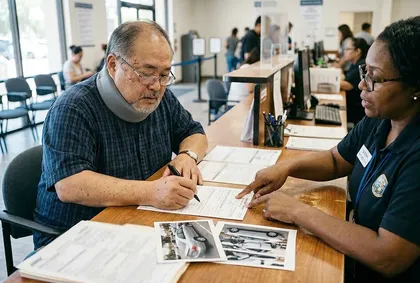
Late notice to your insurer and the reporting rules for an unidentified-driver UM claim are two different issues. A standard auto policy may require you to report a crash promptly. The exact timing depends on the terms of your contract. If notice is late, the insurer may argue that the delay affected its ability to investigate the claim. Under California’s notice-prejudice rule, the insurer may need to show actual, substantial prejudice from the delay before relying on late notice to deny coverage.
Meanwhile, an unidentified-driver UM claim has separate statutory requirements under INS § 11580.2. These may apply even if you already notified your insurer about the crash.
For these UM claims, the statute generally requires:
- A report to the proper law-enforcement agency within 24 hours.
- A sworn statement to the insurer within 30 days after the crash.
- Qualifying physical contact between the unidentified vehicle and the insured or the vehicle the insured occupied.
The 30-day sworn statement is not the same as a routine notice of the crash. Simply calling the insurer may not satisfy that requirement.
Missing one of the UM-specific deadlines can create a separate coverage issue. California case law also recognizes that prejudice may matter when an insurer relies on delayed compliance with notice requirements.
If reporting was late, the first step is to identify exactly what was missed: ordinary policy notice, the 24-hour police report, the 30-day sworn statement, or another UM condition. Each can affect the claim differently.
Does Late Notice Automatically End A UM Claim?
Not always. California follows a notice-prejudice rule in many insurance cases. In general, an insurer relying on late notice must show that the delay caused actual, substantial prejudice to its ability to investigate or handle the claim.
There are cases that establish that a delay by itself does not always prove prejudice. One of them is Pitzer College v. Indian Harbor Insurance Co. Here, the California Supreme Court explained that the insurer generally bears the burden of showing substantial prejudice from late notice.
That does not mean deadlines can be ignored. Lost video, missing witnesses, repaired damage, or other lost evidence may support an insurer’s claim that the delay caused prejudice.
How Late Reporting Can Affect An Uninsured Motorist Claim
Late reporting can affect an uninsured motorist claim even when coverage may still be available. The main concern is whether the delay made it harder for the insurer to investigate what happened. The longer the delay, the greater the chance that important evidence may be lost or become less reliable.
Late reporting can lead to:
- More scrutiny from the insurer. The insurer may ask for a detailed explanation of why the crash was not reported sooner.
- A coverage dispute. The insurer may argue that the delay affected the claim or violated policy requirements.
- Lost evidence. Surveillance footage may be erased, vehicle damage repaired, and physical evidence may disappear.
- Weaker witness evidence. Witnesses may be harder to locate or may remember fewer details over time.
- More difficulty proving the hit-and-run. Delays can make it harder to confirm how the crash happened and whether an unidentified driver caused the injuries.
- A notice-prejudice dispute. The insurer may argue that the late notice substantially impaired its ability to investigate the claim.
- Challenges with preserving UM claims. Under INS § 11580.2, the insured generally must, within two years after the accident, file a bodily-injury lawsuit against the uninsured motorist, reach an agreement with the insurer on the amount due, or formally institute arbitration as required by the statute. Late reporting can take away from the time you have to take these actions.
California’s notice-prejudice rule may require an insurer relying on a late notice to show that the delay caused substantial prejudice. For that reason, a late report should not automatically be treated as the end of the UM claim.
The effect of the delay depends on its length, the reason for it, the evidence that remained available, and whether the insurer still had a meaningful chance to investigate. Hit-and-run accident attorneys can review these factors and identify the evidence that may help address a late-reporting dispute.
What If You Were A Passenger, Pedestrian, Or Bicyclist?
Not every hit-and-run occurs between two vehicles. That distinction matters because some CVC reporting provisions expressly impose duties on a driver involved in the collision.
A passenger, pedestrian, or bicyclist should still report the hit-and-run to law enforcement promptly and preserve information about the fleeing vehicle. Insurance rights may also exist even though the injured person was not driving. Depending on the circumstances and the policies involved, an attorney may need to determine which UM coverage, if any, applies to the injured person.
Do not assume that a driver’s statutory reporting obligation and an injured passenger’s or pedestrian’s insurance obligations are identical.
What To Do If You Have Already Missed A Reporting Deadline
While it’s important to know what to do after a hit-and-run accident, it’s also crucial to know what you can do if you miss certain deadlines. Acting promptly after discovering a missed deadline may help limit further delay and preserve available evidence. Here is what you can do right now.
- Make the law enforcement report promptly. Contact the local police department, sheriff, or CHP, as appropriate, for the location of the crash, and make or attempt to make the report. Explain when the collision happened, when you discovered that the other driver had fled or could not be identified, and why the report was delayed.
- Address any overdue SR-1 requirement. If the collision required an SR-1 and it has not been filed, submit the required information to the DMV as soon as practicable.
- Notify your insurer in writing. Report the collision, explain the delay accurately, and keep a record of when notice was provided. If you may be making an unidentified-driver UM claim, determine whether the separate sworn-statement requirement under INS § 11580.2 has been satisfied.
- Seek appropriate medical care if you were injured. Do not delay necessary treatment because the reporting deadline has passed. Medical records can also document when injuries were evaluated and treated.
- Preserve any remaining evidence. Useful evidence may include:
- Dashcam footage from your vehicle or another vehicle.
- Security or doorbell camera footage.
- Photos of vehicle damage, debris, tire marks, or paint transfer.
- Damaged vehicle parts before repair.
- Witness names, contact information, and written statements.
- Repair estimates, towing records, and repair shop photos.
- Medical records related to the collision.
- Details about the fleeing vehicle, such as a partial plate number, color, make, model, stickers, damage, or direction of travel.
- Write down why reporting was delayed. Record when you learned of the crash or the driver’s disappearance, when symptoms or injuries became apparent, and the steps you took afterward. This information may become important if an insurer later argues that the delay harmed its ability to investigate.
An attorney reviewing a hit-and-run that was reported late can determine which deadlines actually apply, review the policy’s notice provisions, evaluate whether the insurer can establish prejudice, and identify any separate civil-filing deadlines that remain open.
The Deadlines For Filing A Lawsuit After A Hit-And-Run
Hit-and-run cases can involve several legal deadlines, depending on the type of claim and the parties involved. These civil filing deadlines are separate from police, DMV, and insurance reporting requirements, so each should be tracked independently.
- Personal Injury Lawsuit Deadline: In California, an injured person generally has two years to file a lawsuit for injuries caused by someone else’s wrongful act or neglect. The deadline does not automatically stop just because the fleeing driver has not been identified. An unknown driver can make the case harder, but that alone does not create an exception to the two-year rule (CCP § 335.1).
- Doe Defendants (When You Cannot Identify the At-Fault Driver): If you do not know the driver’s identity when you file the lawsuit, California law may allow you to name a fictitious “Doe” defendant. If the lawsuit was filed on time and the legal requirements are met, you may later replace the Doe defendant with the driver’s real name. This does not toll, or pause, the statute of limitations, so the lawsuit generally must still be filed before the deadline (CCP § 474).
- Possible Tolling When a Defendant Is Outside California: California law has a tolling rule that may apply during some periods when a defendant is outside the state. However, the deadline is not automatically extended just because the driver fled, is still unidentified, or cannot be found. Courts have also limited this rule in some situations, including when applying it would violate the federal Commerce Clause (CCP § 351).
- Property Damage Lawsuit Deadline: You generally have three years to sue for damage to personal property, such as your car or belongings (CCP § 338(c)(1)).
- Government-Claim Deadline: If a public entity may also be responsible, such as when a dangerous road condition contributed to the crash or injuries, a claim generally must be presented to the proper public entity within six months after the claim accrues. This deadline is separate from a claim against the fleeing driver and from UM coverage (GOV § 911.2).
A pending hit-and-run investigation does not automatically extend these deadlines. Each possible claim should be reviewed separately so that no deadline is missed while another part of the case is still under investigation.
How A Lawyer Can Help If You Report A Hit-And-Run Late
When reporting has already been delayed, the legal issue is usually not simply whether a form can still be submitted. The larger question is which rights remain and what evidence can still be preserved.
California hit-and-run accident attorneys may:
- Determine which police, DMV, insurance, and civil deadlines applied to the particular accident.
- Confirm whether a law enforcement officer who responded to the scene has already filed a report for the hit-and-run.
- Review the policy’s UM coverage and notice requirements.
- Evaluate whether an insurer claiming late notice can establish actual and substantial prejudice.
- Document circumstances that explain the delay.
- Request preservation of available surveillance or other video evidence.
- Investigate witnesses, vehicle damage, partial plate numbers, and other leads that may identify the fleeing driver.
- Identify additional potentially liable parties or insurance policies.
- Evaluate whether a timely Doe complaint is appropriate when the driver’s identity remains unknown.
- Track lawsuit, UM, and government-claim deadlines separately from the insurance process.
A late report can complicate a claim, but the consequences depend on what was missed and what remains available.
What Arash Law Has Recovered For California Accident Victims
Arash Law has recovered over $1 billion for injured clients across California, including significant hit-and-run accident case results. These outcomes reflect the different challenges such claims can involve, from disputed fault to uninsured or underinsured motorist coverage:
$1 Million (Hit-and-Run): In this hit-and-run case, we represented a rideshare driver seeking benefits under an underinsured motorist policy. After years of litigation, the matter was resolved for the maximum policy limits shortly before arbitration.
Past results do not guarantee future outcomes. Every case is different, and results depend on the specific facts and evidence involved.
Ask Arash Law How A Late Hit-And-Run Report May Affect Your Rights
Hit-and-run cases share these core challenges: the victim must build a claim without the benefit of a cooperative at-fault party. That claim may run against an unidentified driver, a government entity, or the victim’s own insurer, and often all three at once. Delays in reporting a hit-and-run can complicate the process. That is precisely where experienced legal representation can make a difference in what you may recover.
If you were injured in a hit-and-run, Arash Law can review your case and explain the legal options available to you, even if you’ve already missed a few deadlines. Call (888) 488-1391 or contact us online to request a free case evaluation.
Frequently Asked Questions About Hit-And-Run Reporting In California
A hit-and-run can often leave you with more questions than answers. The answers below follow the same structure as the deadlines above: direct answer first, California law second.
Can I File A Police Report Days After The Hit-And-Run?
Yes. You may still be able to file a police report days after the hit-and-run. Contact the appropriate law enforcement agency as soon as possible, explain the delay, and ask what information or documents they require.
Is It Worth Reporting A Minor Hit-And-Run In California?
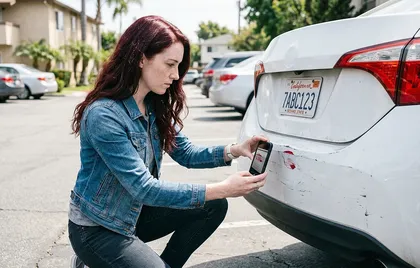
Yes, it’s wise to report a minor crash. Even if you think the hit-and-run wasn’t serious, you may have sustained other forms of harm that are not easy to spot at first. For example, injuries like whiplash might not show up right away. If you don’t file a report soon, you may lose an important record of the crash. Other evidence, such as photos, medical records, repair invoices, videos, and witness information, can still help. For reasons such as these, delaying your report can lead to coverage disputes, especially if it hurts the insurer’s chance to investigate the claim.
Will My Insurance Rates Increase After A Hit-And-Run In California?
A hit-and-run claim does not automatically increase your California auto premium. California rating rules focus in part on whether you were principally at fault for the accident. The California Department of Insurance states that if the accident was not your fault, your insurer will not charge you more because of that accident.
What If I Do Not Have The Hit-And-Run Driver’s License Plate?
You can still report the crash even if you do not have the fleeing driver’s license plate. You may also be able to pursue an unidentified-driver UM claim if you have applicable coverage and meet the legal requirements. Preserve any video, photos, witness information, or physical evidence that could help identify the vehicle.
What Qualifies As Physical Contact For A UM Claim?
Physical contact generally means the unidentified vehicle directly hits you or your vehicle. In some cases, indirect contact can also qualify, such as when the fleeing vehicle hits another car and pushes it into yours. A pure near-miss without direct or qualifying indirect contact generally does not qualify. It’s advisable to discuss the specific details of your case with your hit-and-run accident lawyer.
Can I Be Compensated If The Fleeing Driver Is Never Found?
Yes. Your own UM coverage may pay for your bodily injury claim even if the hit-and-run driver is never identified, provided you meet the conditions of INS § 11580.2. To qualify under the rule, you must typically meet the conditions described in the UM Coverage section above. An attorney familiar with hit-and-run accident claims can help you satisfy each requirement and present your UM claim effectively.
Talk To Arash Law About Your California Hit-And-Run Claim
Deadlines can begin running soon after a hit-and-run, and different rules may apply to police reports, insurance claims, and lawsuits. Arash Law represents hit-and-run victims across California. If we take your case, our attorneys can help gather evidence, communicate with the insurance company, review available coverage, and pursue compensation under California law.
Arash Law handles personal injury cases on a contingency fee basis. Attorney’s fees generally depend on whether there is a recovery, while litigation costs and expenses may be handled separately under the fee agreement.
Call (888) 488-1391 or contact us online to schedule a free case evaluation. Arash Law is available 24 hours a day. Make ‘Em Pay, Call AK.
Sources
California Legislative Information, California Vehicle Code § 20008: 24-hour written accident-report requirement for injury-or-death crashes. https://leginfo.legislature.ca.gov/faces/codes_displaySection.xhtml?sectionNum=20008.&lawCode=VEH
California Legislative Information, California Vehicle Code § 20002: Duties after property-damage-only collisions. https://leginfo.legislature.ca.gov/faces/codes_displaySection.xhtml?sectionNum=20002.&lawCode=VEH
California Legislative Information, California Vehicle Code § 16000: 10-day DMV accident-reporting requirement. https://leginfo.legislature.ca.gov/faces/codes_displaySection.xhtml?sectionNum=16000.&lawCode=VEH
California Department of Motor Vehicles: Report of Traffic Accident Occurring in California (SR-1). https://www.dmv.ca.gov/portal/dmv-virtual-office/accident-reporting/
California Legislative Information, California Insurance Code § 11580.2: Uninsured and underinsured motorist coverage requirements, including unidentified-driver hit-and-run conditions. https://leginfo.legislature.ca.gov/faces/codes_displaySection.xhtml?sectionNum=11580.2.&lawCode=INS
California Legislative Information, California Code of Civil Procedure § 335.1: Two-year limitations period for personal injury and wrongful death actions. https://leginfo.legislature.ca.gov/faces/codes_displaySection.xhtml?sectionNum=335.1.&lawCode=CCP
California Legislative Information, California Code of Civil Procedure § 338(c)(1): Three-year limitations period for injury to personal property. https://leginfo.legislature.ca.gov/faces/codes_displaySection.xhtml?sectionNum=338.&lawCode=CCP
California Legislative Information, California Code of Civil Procedure § 474: Fictitious “Doe” defendants. https://leginfo.legislature.ca.gov/faces/codes_displaySection.xhtml?sectionNum=474.&lawCode=CCP
California Legislative Information, California Code of Civil Procedure § 351: Tolling involving defendants outside California. https://leginfo.legislature.ca.gov/faces/codes_displaySection.xhtml?sectionNum=351.&lawCode=CCP
California Legislative Information, California Government Code § 911.2: Claim-presentation deadlines involving public entities. https://leginfo.legislature.ca.gov/faces/codes_displaySection.xhtml?sectionNum=911.2.&lawCode=GOV
Pitzer College v. Indian Harbor Insurance Co., California Supreme Court, 2019: California notice-prejudice rule. https://www.courts.ca.gov/opinions/archive/S239510.PDF
California Department of Insurance: Automobile Insurance guide, including California guidance on principally-at-fault accidents and premium surcharges. https://www.insurance.ca.gov/01-consumers/105-type/95-guides/01-auto/auto101.cfm
Arash Law: Case Results. https://arashlaw.com/case-results/
Disclaimer
The information on this page is for general educational purposes and does not constitute legal advice. No attorney-client relationship is formed by reading or relying on this content. If you were injured, consult a licensed California personal injury attorney about your specific situation. Arash Law — (888) 488-1391.