TL;DR: When police classify a black ice crash as a single-vehicle accident but a witness reports another impact, families can request further investigation. Comparing the crash report, witness accounts, vehicle damage, road conditions, and available footage may help clarify the sequence and determine whether another vehicle was involved.
Suppose a car reportedly loses traction on black ice and strikes a roadside barrier. A witness later describes a possible impact involving another vehicle. The initial report may accurately describe the first event without resolving whether another impact occurred afterward.
Ask the investigating agency to check whether the crash report accounts for the possible second impact. Give the agency the report number, the relevant page or entry, and the witness’s contact information. A car accident lawyer can also compare the witness’s account with vehicle damage, photographs, and any available footage.
Key Facts About Black Ice Crashes in California
- Black Ice: California Highway Patrol (CHP) officers must document the environmental conditions that support an “Other Than Driver” finding when they determine that black ice caused a crash beyond the control of a driver operating safely for the visible conditions.
- Multiple Impacts: Under CHP reporting guidelines, a later impact that causes injury or damage may require separate documentation if the initial event had stabilized and a discernible period separated the two events.
- Disputed Findings: Involved parties can submit written statements identifying specific findings they dispute in a CHP crash report. Local law enforcement agencies may have their own review procedures.
- Additional Evidence: CHP procedures require a supplemental report to respond to additional statements or information submitted by involved parties, passengers, or witnesses. However, the original findings may remain unchanged.
- Recorded Crash Data: A vehicle’s event data recorder may not capture every impact. Certain events may go unrecorded when no unused storage space is available.
Table of Contents

How a Family Can Ask for Investigation of a Conflict Between Initial Crash Classification and a Reported Later Impact
Families can request an investigation that examines the initial loss of control and the reported later impact separately. The request should identify what the report establishes about the first event and what additional evidence raises questions about the second.
When a crash results in injuries or death, families may have questions about whether the initial crash, a possible later impact, or both contributed to the outcome. They can focus their request on evidence that the initial investigation may not have addressed. Review the report’s findings, identify gaps in the crash sequence, and organize records that could help investigators examine each possible impact.
Ask the investigating agency to examine three specific questions:
- Does the single-vehicle classification describe only the initial loss of control or the entire reported crash sequence?
- Does the available evidence establish whether another vehicle made contact afterward?
- If later contact occurred, was it part of the initial crash sequence or a separate event?
Whether the CHP, a local police department, or a sheriff’s department investigated the crash, families can ask the investigating agency to review additional evidence. Reporting and review procedures may differ by agency.
Separate the Initial Loss of Control From a Possible Later Impact
Consider the hypothetical barrier crash described earlier. The officer’s report identifies a single vehicle, but a roadside witness tells the family they heard a bang, turned toward the road, and saw another car passing.
These circumstances raise two separate questions:
- Initial Event: What caused the car to lose traction, and what did it strike?
- Possible Later Impact: Where was the car when the witness heard the bang, and did another vehicle make contact?
The passing car gives investigators a reason to examine the second event, but its presence alone does not establish that another collision occurred.
Both accounts could be accurate within the limits of what each source describes. The report may document the barrier strike, while the witness may describe something that occurred afterward. Alternatively, the sound the witness heard may have come from the barrier strike itself.
Car accident lawyers can help families examine the evidence from each event and assess whether another vehicle may have contributed to the crash.
Read the Report for What It Actually Says
Start with the written crash report and any available supplements. A description given at the scene may be preliminary, while a summary from a relative or insurance adjuster may leave out important details.
Keep the following sources distinct when documenting the reported classification:
- Written Crash Report: Record the exact wording, page number, and relevant entries.
- Preliminary Description: Identify who provided the initial description and whether the investigation was complete at the time.
- Secondhand Summary: Record who summarized the findings and whether they had access to the complete report.
Someone telling a family that police classified the accident as a solo crash is not the same as reviewing the classification and supporting findings in the report itself.
Which Report Entries Should You Check?
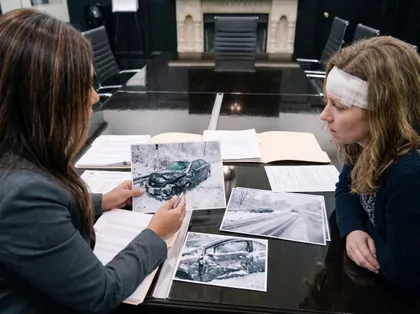
When reading the police report, check the following:
- Crash Narrative: Does the officer describe only the initial crash or also address what happened afterward?
- Crash Diagram: Does it show one or more points of impact?
- Vehicle Entries: How many vehicles does the report identify?
- Roadway Conditions: Does the report identify black ice, wet pavement, or another road condition?
- Officer’s Findings: What information supports the single-vehicle classification?
- Supplemental Reports: Has the agency documented any additional findings since the original report?
Note where the terms “single vehicle” or “black ice” appear. Distinguish the officer’s firsthand observations from information provided by others and conclusions drawn from the investigation.
What Does a Black Ice Finding Establish?
The CHP manual allows an “Other Than Driver” classification when black ice causes a crash beyond the control of a driver operating safely for visible conditions. Officers must document the environmental conditions supporting that finding and ensure the roadway entries are consistent with it. Black ice alone does not establish this classification.
A finding about the cause of the initial loss of control does not establish whether another vehicle subsequently struck the car. Those are separate factual questions.
Who Can Request the Crash Report and Supplements?
California law requires the CHP and other reporting law enforcement agencies to make crash reports and supplemental reports available to people with a proper interest in the crash (Vehicle Code § 20012). Request procedures may vary by agency.
Eligible parties can request a CHP report online or submit Form CHP 190 in person or by mail. These parties include involved passengers, qualifying legal representatives, and surviving spouses after fatal crashes. If you are unsure whether you qualify, contact a CHP area office.
CHP policy also recognizes proper interest for certain parties involved in related subsequent collisions. If the latter impact may have been documented separately, ask the agency whether another report exists and whether you qualify to obtain it.
For reports prepared by a local police department or sheriff’s department, contact its records unit to confirm eligibility, request procedures, and the availability of supplemental reports.
Identify What Each Witness Could Observe
Record each witness’s account separately. Focus on the following details:
- Location: Where the witness was when the crash occurred.
- Viewpoint: Which direction they were facing and what limited their view, such as darkness, a curve, or a barrier.
- Timing: When they first noticed the car and how they estimated the time between events.
- Certainty: Which details they personally saw or heard and which they assumed based on those observations.
A passenger can also be a witness and may remember what the car did after striking the barrier. Hearing a bang and seeing a passing car is different from directly seeing two vehicles collide. Keep the witness’s original wording and note when they first shared their account.
Do not combine separate witness accounts into one continuous narrative. A witness who saw the initial slide may not have seen what happened afterward. Similarly, someone who saw the possible later contact may know nothing about the initial loss of traction.
Record whether each witness can establish if the first car was still moving, had stopped, or was struck again. If they cannot establish the sequence, leave that question unresolved.
Compare Damage, Scene, and Timing Evidence by Event Stage
Comparing evidence at each stage of the crash may help distinguish the initial barrier strike from a possible later impact.
For example, a scrape on the car’s front corner and a corresponding mark on the barrier may support the reported first contact. A dent on the opposite side may warrant further examination, but its location alone cannot establish when it occurred.
| Stage | Evidence to Compare | Question It May Help Answer |
|---|---|---|
| Before the slide | Roadway photos, dashcam footage, and observations from the same stretch of road. | What was visible, and what might have affected traction? |
| Slide and barrier strike | Barrier marks, vehicle damage, debris, and the report diagram. | Does the physical evidence fit the reported path and point of contact? |
| Interval between events | Continuous footage, witness accounts, and records showing the car’s position. | Had the initial crash stabilized before the reported later impact? |
| Possible later contact | Original footage, witness accounts, and photos taken before towing. | Was the first car still moving when the other car passed? Is any contact visible? |
| After the reported events | Dispatch times, responder notes, and tow records. | When did help arrive, and when was the car first documented or moved? |
Save the original video, including the footage before and after each reported impact. Distinguish the time the crash was reported from the time an impact may have occurred. The notification time in the police report narrative indicates when the call came in, whereas a video timestamp reflects the device’s clock.
Different recording devices may display different times. A reviewer may need to compare identifiable events across recordings rather than assume their clocks were synchronized.
What Can Crash Reconstruction Establish?
A crash reconstruction specialist may compare physical evidence from each stage to assess whether the reported vehicle movements and impacts are consistent with the damage. Areas of contact inside the vehicle may also warrant examination.
The National Highway Traffic Safety Administration (NHTSA) uses vehicle inspections, damage measurements, scene evidence, and occupant information in its crash research. Similar categories of evidence may help a reconstruction specialist evaluate competing accounts of a multiple-impact crash.
Determining whether a second impact occurred is different from determining whether that impact caused or aggravated an injury. Neither conclusion should rest solely on the location of vehicle damage or the reported order of events.
If your family has a crash report and a witness account that are hard to reconcile, call Arash Law at (888) 488-1391 to discuss the available evidence and legal options. We offer a free initial consultation.
Ask About an Independent Review or a Report Supplement
If the crash report does not address a possible later impact, ask the investigating agency to review additional evidence or consider an independent legal review.
Consider the following steps:
- Identify the missing information. Point out the specific page or passage that leaves the crash sequence unclear.
- Provide supporting evidence. Share the witness’s contact information and describe any available photos or footage.
- Submit a written statement. Include the report number, your name, and the specific findings you want the agency to examine. If you are submitting information on behalf of an injured or deceased family member, confirm the agency’s requirements for doing so.
- Confirm the submission and response process. Ask where to submit the statement, how to document its receipt, and how the agency will communicate its response.
For example, you could ask:
“Page 3 describes the barrier strike. A witness heard a bang and saw a car passing when they turned. Can you check whether the report addresses what happened after the barrier strike?”
How Does the CHP Handle Supplemental Statements?
The CHP’s published procedures allow an involved party to dispute specific findings in a report through a written supplemental statement. The statement may be submitted by mail or delivered to any CHP office. The agency states that it will respond by mail and recommends using this documented process rather than calling the investigating officer directly.
The CHP requires a supplemental report in response to additional statements or information from involved parties, passengers, or witnesses. Officers use Form CHP 556 to update crash information previously submitted to the Statewide Integrated Traffic Records System (SWITRS). However, a supplemental report does not guarantee that the officer will change the original findings.
If a local police department or sheriff’s department investigated the crash, ask whether it can review the possible second impact and prepare a supplemental report.
Can an Independent Review Proceed Without a Report Correction?
A lawyer can independently review the crash evidence even if the agency leaves its findings unchanged. This review may involve interviewing witnesses, obtaining original footage, and consulting a crash reconstruction specialist.
Understanding how police determine who is at fault in an accident can also help families identify which findings may need further examination.
An independent review can examine whether another driver contributed to a later impact without assuming that the initial loss of control resulted from someone else’s negligence. Questions about shared fault in a California car accident become relevant if the evidence supports another party’s involvement.
Use a Discrepancy Checklist for a Focused Legal Review
A discrepancy register helps families compare the initial crash classification with evidence of a possible later impact without treating conflicting accounts as established facts. Create a separate entry for each witness account or document.
Document road conditions separately from evidence of a possible second impact. Distinguish between wet pavement, observed ice, and unconfirmed reports of black ice. Black ice is difficult-to-see ice on the pavement. Rainwater or melted snow can freeze, but earlier rainfall alone does not establish that black ice was present at the crash site.
Other traction conditions, such as standing water, frost, or snow, should also be recorded based on the available evidence. Even confirmed ice does not, by itself, establish that a public entity knew about a hazardous condition or was legally responsible for the crash.
Initial Loss of Control Versus Later Contact: Discrepancy Register
The following illustrative register uses the hypothetical barrier crash described earlier. It distinguishes what each source establishes from questions that require further investigation.
| Information to Record | Initial Loss of Control | Possible Later Contact |
|---|---|---|
| Account or document source | Officer’s written crash report. | Roadside witness’s original statement. |
| Event stage described | Reported slide and barrier strike. | Reported banging sound and passing vehicle. |
| Observation versus inference | The report identifies a barrier strike. Confirm the basis for its findings. | The witness heard a sound and saw another vehicle. Contact is unconfirmed. |
| Vehicle damage or scene support | Compare barrier markings with vehicle damage. | Examine photographs of other damaged areas, if available. |
| Witness timing and viewpoint | Determine which sources support the reported sequence. | The witness turned after hearing the sound and did not see its source. |
| Unresolved conflict and next record to seek | Was the car still moving after the barrier strike? Seek continuous footage. | Did another vehicle strike the car? Seek original video and vehicle inspection records. |
Download the fillable PDF version of the Crash Discrepancy Register to record your findings and organize supporting evidence.
Use “unknown,” “not observed,” or “not yet obtained” when information is missing. Update the register as new records become available, while preserving the original accounts and documents.
Bring your completed discrepancy register and any supporting records when you speak with a lawyer. You do not need to resolve conflicting accounts or determine which impact caused an injury or death before seeking legal help.
Frequently Asked Questions About Possible Second Impacts in California Crashes
Could the Agency Have Filed a Separate Report for the Later Impact?
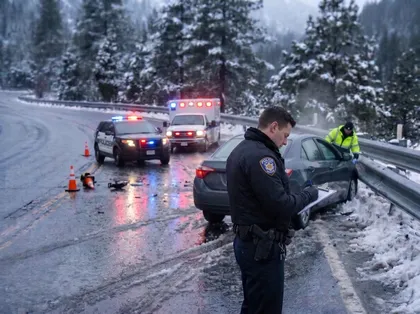
Yes. The CHP manual calls for separate documentation when the first event has stabilized and a discernible period passes before another event causes injury or damage. If the car was still sliding when another vehicle made contact, both impacts may be part of one sequence.
If a thorough investigation cannot determine whether the impacts constituted a single continuous crash or separate crashes, CHP policy calls for documenting them as a single crash. This reporting classification does not, by itself, rule out multiple impacts.
If a local police department or sheriff’s department investigated the crash, ask which reporting guidelines it follows. Regardless of the investigating agency, ask whether another crash report exists for the same location around the time of the crash.
Can One Saved Crash Event Rule Out Another Impact?
No. A vehicle’s event data recorder can miss an impact. Federal rules allow certain events to go unrecorded when no unused storage slot is available. A reviewer can compare the saved data with footage, physical damage, and witness accounts.
Can a Witness’s Original Message Help if They Remember Less Now?
Yes. The original message shows what the witness reported at the time. Keep its timestamp and any attached files. If the witness later remembers a detail differently or is less certain, save that account with its own date so a reviewer can compare the two.
Can Medical Records Show Which Impact Caused an Injury?
Medical records can document when someone first reported symptoms, what responders observed, and what clinicians diagnosed. If both reported impacts happened before responders arrived, those records may leave the cause of a particular injury unresolved.
NHTSA crash investigations combine medical records, vehicle inspections, and interviews with crash victims to better understand the circumstances of the crash. In a disputed multiple-impact crash, a car accident lawyer may seek medical and reconstruction expertise to assess whether the available evidence links an injury to the first impact, a possible later impact, or both. The cause may remain uncertain.
Discuss Conflicting Crash Findings With Arash Law
If a witness describes an impact that the report leaves unexplained, bring the report, the witness’s original account, and any photos or video you have. Arash Law’s California car accident lawyers can review what those records show and which questions need further investigation. Call us at (888) 488-1391 for a free initial consultation.
Sources
- California Highway Patrol. Request a Crash Report. https://www.chp.ca.gov/traffic/request-a-crash-report/
- California Highway Patrol. General Order 110.2. Release of Collision Information. https://www.chp.ca.gov/siteassets/policy/go/go-110.2-release-of-collission-information.pdf
- California Highway Patrol. Frequently Asked Questions, Collision section, Question 9: How do I contest the findings of a traffic collision report? https://www.chp.ca.gov/faq/
- California Highway Patrol. Collision Investigation Manual, Chapter 2. Definitions and classifications of crashes. https://www.chp.ca.gov/siteassets/policy/hpm/hpm-110.5/hpm-110.5-ch-2.pdf
- California Legislative Information. California Vehicle Code § 20012. Disclosure of crash reports and supplemental reports to persons with a proper interest. https://leginfo.legislature.ca.gov/faces/codes_displaySection.xhtml?lawCode=VEH§ionNum=20012.
- California Highway Patrol. Collision Investigation Manual, Chapter 4. Crash causes and roadway-condition entries. https://www.chp.ca.gov/siteassets/policy/hpm/hpm-110.5/hpm-110.5-ch-4.pdf
- California Highway Patrol. Collision Investigation Manual, Chapter 7. Narrative and supplemental reports. https://www.chp.ca.gov/siteassets/policy/hpm/hpm-110.5/hpm-110.5-ch-7.pdf
- National Weather Service. Ice Storms. Black ice and conditions that can lead to its formation. https://www.weather.gov/safety/winter-ice-frost
- Electronic Code of Federal Regulations. 49 C.F.R. § 563.9. Event data recorder capture and storage rules. https://www.ecfr.gov/current/title-49/subtitle-B/chapter-V/part-563/section-563.9
- National Highway Traffic Safety Administration. Crash Investigation Sampling System (CISS). https://www.nhtsa.gov/crash-data-systems/crash-investigation-sampling-system
Disclaimer
This article is for educational purposes. Reading it or contacting the firm does not create an attorney-client relationship. Past results do not guarantee future outcomes. Consult a licensed California attorney about your specific circumstances.
Arash Law — (888) 488-1391