TL;DR: Many drunk driving accidents occur on urban non-interstate roads at night, where intersections, pedestrians, and nightlife increase crash risk. In California, victims injured by an impaired driver can seek damages for ER bills and lost wages, but missing the 2-year filing deadline can bar recovery.
Highlights:
- Call 911, move to safety, and let the police handle the suspected impaired driver.
- Get medical care promptly and request copies of records, bills, and discharge notes.
- Photograph vehicle damage, injuries, skid marks, debris, signals, and road conditions.
- Collect driver, owner, and insurance details plus witness names and contact information.
- Ask nearby businesses or transit agencies to preserve any surveillance or dashcam video.
- Notify your insurer quickly, and avoid recorded statements with the other insurer.
- Calendar deadlines: SR-1 within 10 days, lawsuit in 2 years, government claim 6 months.
Tip: As soon as you can, write a brief timeline of what you observed and stick to facts instead of guessing.
Table of Contents
There is no complete national dataset showing where most drunk driving accidents occur across all crash severities. Available statistics mainly track fatal or injury crashes. These numbers suggest that serious alcohol-related crashes occur more often in urban areas and on non-interstate roads. Here, drivers face intersections, turning vehicles, pedestrians, and bicyclists. Darkness, fast speeds, and poor visibility can raise the risk. Additionally, being near bars or nightlife can also be a relevant factor.
The National Highway Traffic Safety Administration (NHTSA) considers a driver alcohol-impaired when the driver has a blood alcohol concentration (BAC) of 0.08 grams per deciliter or higher. A fatal crash involving at least one such driver is classified as an alcohol-impaired-driving crash.
NHTSA’s 2024 data show that alcohol-impaired drivers involved in fatal crashes were more often on urban and non-interstate roads:
- 60% were involved in crashes in urban areas, compared with 40% in rural areas.
- 87% were involved in crashes on non-interstate roads, compared with 13% on interstates.
The non-interstate road categories included:
- 32% on principal arterials.
- 22% on minor arterials.
- 21% on collector roads.
- 12% on local roads.
These figures show that alcohol-impaired drivers in fatal crashes were more commonly involved in collisions in urban areas and on non-interstate roads.
Moreover, approximately 69% occur during the night. Late weekend nights are another important part of the location pattern. Alcohol-impaired crashes often increase during the hours surrounding bar closing times. Holiday weekends and major celebrations may also bring more impaired drivers onto urban arterials, entertainment corridors, and roads leading away from bars, restaurants, and event venues.
The same NHTSA report identified California as one of the states with the highest number of alcohol-impaired traffic fatalities. According to the 2025 SafeTREC Traffic Safety Facts from UC Berkeley, 74% of deadly alcohol-impaired crashes in the Golden State happened in urban areas in 2023. The report shows that principal arterials had the highest number of fatal crashes, making up 27% of incidents. Minor arterials followed at 23%, while interstates accounted for 15%.
Most available data focus on fatal drunk driving crashes and may not fully represent non-fatal collisions. Even so, these figures help show the road types and settings where serious drunk driving accidents most often occur. In California, if an impaired driver causes a crash, they may be liable for the victim’s injuries and losses.
Why Urban Roads See The Most Drunk Driving Crashes
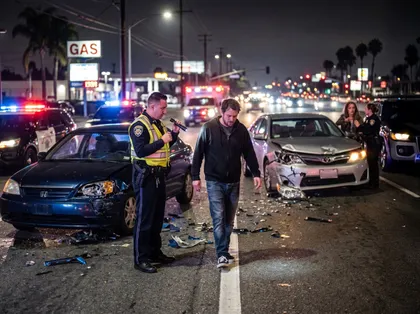
Most fatal alcohol-impaired crashes occur in urban areas and on non-interstate roads. Cities have more drivers, businesses, and nightlife in a smaller space. This raises the chances of impaired drivers causing crashes.
Alcohol-impaired crashes commonly occur on:
- Principal Arterials: Major roads connecting neighborhoods, commercial areas, and entertainment districts.
- Minor Arterials and Collector Roads: These routes connect local streets to larger highways.
- Busy Intersections: Here, impaired drivers might misjudge signals, turns, gaps, or crossing distances.
- Commercial and Nightlife Corridors: Roads near bars, restaurants, clubs, and entertainment venues, especially after dark.
- Crosswalks and Transit Areas: Places where impaired drivers may encounter pedestrians and bicyclists.
In California, Los Angeles, Riverside, San Bernardino, and San Diego counties recorded some of the highest numbers of alcohol-involved crashes resulting in death or serious injury, according to UC Berkeley SafeTREC data. These totals may partly reflect the counties’ larger populations and heavier traffic volumes.
What Is The Difference Between Urban And Rural Drunk Driving Accidents?
Urban areas tend to see more alcohol-impaired crashes. This is mainly because they have more drivers, intersections, and nightlife venues. In contrast, rural drunk driving crashes occur less often. However, they can lead to more severe injuries due to higher speeds, limited lighting, and longer emergency response times.
These are the differences between accidents in urban and rural areas:
| Factor | Urban Drunk Driving Accidents | Rural Drunk Driving Accidents |
|---|---|---|
| Crash Frequency | More common due to higher traffic, intersections, and nightlife. | Less common overall because rural roads generally carry fewer vehicles. |
| Road Design | Arterials, intersections, freeway access, and commercial areas. | Narrow, curved, unlit roads with limited shoulders. |
| Driving Speeds | Lower speeds due to congestion and limits. | Higher speeds, increasing crash severity. |
| Visibility | Obstructions from buildings, traffic, and lights. | Poor lighting, curves, terrain, and weather reduce visibility. |
| Common Crash Types | Intersections, rear-end, pedestrian, bicyclist, and multi-vehicle crashes. | Road departures, rollovers, head-on, fixed-object crashes. |
| Alternative Transportation | Widely available (rideshare, taxis, transit). | Limited options, increasing likelihood of driving after drinking. |
| Emergency Response | Faster access to emergency services and hospitals. | Slower response and longer transport times. |
No matter where the crash happened, knowing what to do after a drunk driver hits you can protect your health and your legal rights. These can include documenting the location, road conditions, nearby businesses, witnesses, and available camera footage.
Why The Crash Location Matters To A California Drunk Driving Claim
The exact location of a drunk driving accident can affect the proper county for filing a lawsuit, the agencies involved, and the evidence available. In California, a personal injury case may generally be filed in a county where the accident occurred or where a defendant lives or does business.
The crash location may affect:
- Court and Venue: The proper county may depend on the accident site, a defendant’s residence, or a business defendant’s location. Each California superior court may also have local filing and procedural rules.
- Public Records: A city, county, Caltrans, or another public agency may possess signal timing records, roadway plans, collision reports, or maintenance records.
- Available Video: Urban intersections and commercial districts may have footage from stores, bars, parking areas, transit systems, or nearby buildings. Because recordings may be overwritten, prompt requests to preserve them may be important.
- Crash Investigation: Rural collisions may often rely on physical evidence. These include:
- Skid marks
- Tire tracks
- Debris patterns
- Vehicle damage
- Roadway measurements
- Photographs
- Event data recorder information
This is because there may be less surveillance footage in rural areas than in urban areas.
- Additional Liability: Parties beyond the impaired driver may share responsibility. Depending on the facts, a claim may also involve:
- Vehicle owner
- Driver’s employer
- Property owner
- A public entity (responsible for a dangerous road condition)
California generally limits claims against alcohol providers. Business and Professions Code § 25602.1 holds licensed providers liable in some cases. This applies when licensed providers sell or give alcohol to an obviously intoxicated minor. If that minor’s intoxication leads to injury or death, the provider can be liable.
Finding the exact location and the right agencies early can help keep evidence safe. This is important before the video gets overwritten, road conditions shift, or physical evidence fades away. Certain evidence may also reveal that the claim involves parties beyond the impaired driver. Drunk driving accident victim lawyers consider these factors when evaluating such cases.
What Should I Do After A Drunk Driving Accident In California?
After a drunk driving accident, prioritize your safety and medical needs. Even if the other driver gets arrested for DUI, you still need to document the crash. Record your injuries and any financial losses to back up your personal injury claim.
This is what you can do after a drunk driving accident:
- Move to safety and call 911. Get out of traffic if possible, but remain at the scene and avoid confronting an intoxicated or aggressive driver. Report the crash to the police and describe any signs of impairment you observed.
- Seek medical care. Get examined promptly, even if your injuries are not immediately noticeable. Some injuries, like whiplash, may not produce immediate symptoms because of shock or adrenaline.
- Do not confront the suspected drunk driver. Let law enforcement handle it. They will check the driver’s condition. They might conduct tests such as field sobriety tests, breath tests, or blood tests.
- Exchange information. If it is safe to do so, collect the impaired driver’s:
- Contact information
- License
- Registration
- Vehicle identification
- Registered owner
- Insurance information
California Vehicle Code § 16025 generally requires drivers involved in a crash to exchange these details unless they are unable to do so. Also, record the vehicle’s license plate number, but do not confront a driver who appears intoxicated or aggressive.
- Gather evidence. You can record the other driver’s behavior only when it is safe to do so. Also, ensure you preserve potential evidence, such as:
- Photographs or videos of the vehicles, damage, skid marks, debris, road conditions, traffic signals, visible injuries, and the surrounding area.
- Dashcam and traffic camera footage.
- Contact details and testimony from anyone who saw the crash or the driver’s behavior.
- Medical records, bills, and receipts for the expenses you incurred as a result of the accident.
- Notify your insurance company. Report the collision quickly. Don’t give opinions or agree to a recorded statement from the other driver’s insurer until you know your rights.
- Request the police report. The report may contain witness information, the officer’s observations, citations, arrest details, BAC test results, and field sobriety scores.
- File the required Department of Motor Vehicles (DMV) report. In California, you must submit an SR-1 to the DMV within 10 days. This applies if there’s an injury, death, or property damage over $1,000. This requirement applies regardless of who caused the collision, and the police do not file the SR-1 on your behalf.
- Consult a drunk driving accident lawyer. An attorney can help you in many ways. The attorney preserves important evidence and gets test results. Attorneys also collect surveillance footage and talk to insurers. Plus, they identify who is responsible and document all your damages.
California law prohibits driving with a BAC of 0.08% or higher for most non-commercial drivers. However, evidence of intoxication does not automatically prove every part of a personal injury claim. You must still connect the driver’s conduct to the crash and document your resulting losses.
Frequently Asked Questions
Drunk driving accident claims have unique legal issues that regular car accidents don’t. This often leaves victims with many questions. The answers below can help you understand your situation under California law.
Can I Sue A Bar Or Restaurant That Overserved The Drunk Driver?
It depends. California usually restricts civil claims against bars and restaurants. This applies to injuries caused by adult customers who consumed alcohol. However, Business and Professions Code § 25602.1 allows a claim in certain cases. This may occur when a licensed business sells, furnishes, gives, or causes alcohol to be provided to an obviously intoxicated minor. A claim may be available if the alcohol proximately causes an injury or death.
How Long Do I Have To File A Drunk Driving Accident Lawsuit In California?
Under California Code of Civil Procedure § 335.1, you generally have two years from the accident date to file a personal injury lawsuit against a private party. However, if a public or government entity is involved, you must file a formal administrative claim within six months of the accident.
Can I Recover Punitive Damages In A Drunk Driving Case?
Punitive damages might be an option if there’s clear and convincing proof that the driver ignored the safety of others. Driving while intoxicated can help prove a case, but punitive damages aren’t guaranteed. Eligibility depends on the driver’s awareness, actions, and the situation. These damages are different from compensatory damages.
What If The Drunk Driver Doesn’t Have Insurance?
If you have uninsured or underinsured motorist coverage, it can help you. This coverage pays when the at-fault driver has no insurance. It may also provide coverage if their limits are lower than yours. The at-fault driver’s available liability coverage generally must be exhausted first. Recovery remains subject to the policy’s terms, limits, exclusions, and claim requirements.
Will The Drunk Driver’s Criminal Case Affect My Civil Lawsuit?
The criminal case and your civil lawsuit are separate legal cases. You do not need a conviction to file a civil claim. Waiting for one could put you past the two-year filing deadline.
What If I Was Partially At Fault For The Accident?
California uses a pure comparative negligence rule. Your share of fault may reduce any compensation you recover. If the court finds you 20% at fault, you may still be eligible to recover up to 80% of your total damages. An attorney can look at the whole situation. They help you see what your claim might be worth.
Get Legal Guidance After A Drunk Driving Accident In California
After being a victim of a drunk driving crash in California, you need to protect your rights. Our drunk driving accident lawyers at Arash Law can evaluate your case. We can handle negotiations with insurers and work to pursue fair compensation for you.
AK Law has handled several traffic accident cases in California. By navigating the legal process, we have secured compensation for our clients. Here are some examples:
- $6,000,000: A drunk driver crossed double yellow lines and caused a fatal head-on collision. Our injury law firm overcame disputed liability and coverage issues and obtained the maximum available policy limits.
- $5,000,000: Although the police report blamed the injured motorcyclist, our legal team showed that a truck driver made a dangerous turn in violation of training and company procedures, contributing to the crash.
- $2,500,000: After a speeding driver struck our client’s parked vehicle, the claim initially settled for the available policy limits. When the insurer failed to pay the settlement properly and on time, our team pursued the insurer and recovered additional compensation for our client.
Disclaimer: Past results do not guarantee or predict a similar outcome in any future case. Every case is different, and results depend on its specific facts and circumstances.
Our team handles injury cases on a contingency fee basis. You don’t have to pay attorney’s fees unless your case results in a settlement or award. Call (888) 488-1391 to schedule a free initial consultation.