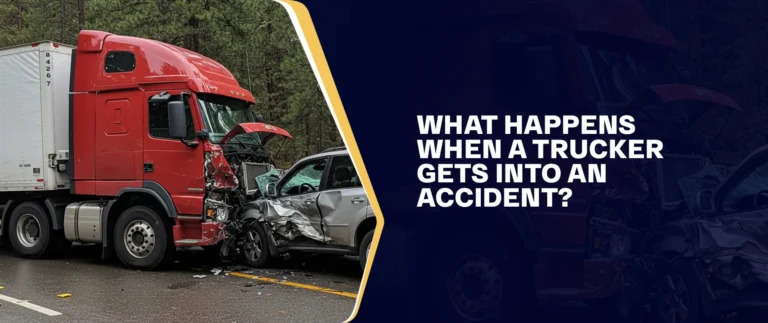
TL;DR: The most common causes of truck accidents are driver errors like fatigue, speeding, and distraction, which account for about 87% of crashes. Passenger vehicle occupants face the highest risk of severe injury or death because trucks weigh up to 80,000 pounds, and proving fault often depends on driver logs, maintenance records, and crash data.
Highlights:
- Leave extra following distance behind trucks to reduce rear-end crash risk.
- Avoid lingering beside trucks – expect lane drifts and blind spots.
- Slow down for rain, ice, fog, and wind – trucks stop slower.
- Give speeding or aggressively passing trucks space to maneuver safely.
- Complete pre-trip inspections and file maintenance reports every shift.
- Verify cargo is balanced, labeled, and secured before transport.
- Look for brake issues, fatigue, and distraction when identifying crash causes.
Tip: If a truck crash happens, photograph vehicle positions, cargo spills, skid marks, and weather conditions, and stick to facts when reporting.
Table of Contents
A truck vs. car accident is considered more dangerous than a car crash due to the truck’s size and weight. On average, a passenger vehicle weighs about 4,000 pounds, while a truck (especially an 18-wheeler) weighs up to 80,000 pounds. This is why large commercial truck accidents are likely to result in serious bodily injury or death.
At Arash Law, founded by Arash Khorsandi, Esq., our truck accident lawyers are committed to helping clients seek compensation for their losses and injuries. We’ve represented individuals who suffered serious injuries such as traumatic brain injuries, fractured bones, internal hemorrhaging, and nerve damage during truck accidents, as well as the families of those who died at the scene.
Trucking accidents are extremely dangerous and can result in grave consequences. Understanding the typical reasons for these types of accidents can save lives and help individuals become responsible and alert truck drivers.
National Crash Estimates
The National Highway Traffic Safety Administration estimated that there were about 120,000 fatal and injury crashes nationwide involving at least one large truck during a 2-year and 9-month study period. There were 141,000 large trucks involved in those crashes. During the study period, each of the 963 Large Truck Crash Causation Study (LTCCS) study cases was assigned a sampling weight, which makes up the national estimates of total fatal and injury truck crashes.
The study results presented here are national estimates for the 141,000 large trucks that NHTSA estimated to have been involved in fatal and injury crashes during the study period. Estimates may differ from actual values because they are based on a probability sample of crashes and not a census of all crashes. Additionally, the size of the difference may vary, depending on which LTCCS sample is the focus of a particular analysis.
15 Typical Causes Of Truck Accidents
Numerous factors can cause a truck accident. The team of Arash Khorsandi, Esq. at Arash Law, has handled different types of truck accident cases in their decades of service. Here are the 15 most common causes of truck accidents:
1. Fatigue
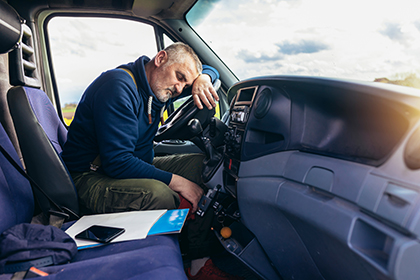
The fatigue experienced by overworked drivers commonly causes road mishaps. The average truck driver drives long distances for long hours with little rest. Since many truck drivers are required to make timely deliveries of goods in short periods of time, they might have little time to rest and recharge.
Truck drivers are under considerable stress and pressure to meet deadlines and deliver on time. As a result of accumulated stress and fatigue, they lose coordination and concentration. Some even fall asleep at the wheel while driving.
2. Drug And Alcohol Use
Driving under the influence of drugs or alcohol among truck drivers can lead to deadly consequences. Some truck drivers take medication or drink alcohol during stops, while others carry them on the road. Drinking or using drugs can impair driving ability and may contribute to truck accidents.
3. Driver Error
Despite having increased responsibility for driving safely, many truck drivers commit mistakes just like other vehicle drivers. Some truck drivers may drive tired or drunk. Others may be under the influence of drugs or drive while being reckless and distracted.
This highlights the significant need to improve defensive driving strategies and techniques, like keeping the safest distance from other vehicles and being patient with reckless and slower drivers who utilize turn signals.
4. Overtaking And Overspeeding
Owners of trucking companies expect their truck drivers to reach a particular destination within a set time frame. This is not always achievable because of many factors, including traffic on certain roads and poor weather conditions.
Nevertheless, drivers usually exceed the speed limit because they are under pressure to meet deadlines and face the possibility of losing their jobs.
Speeding trucks can create dangerous situations that may force other drivers to make sudden maneuvers, potentially leading to accidents. Additionally, overspeeding has the effect of reducing reaction times.
When driving at higher speeds, drivers may need to brake suddenly or immediately veer to another part of the road. At much higher speeds, this isn’t always possible and may lead to a deadly crash.
5. Texting Or Talking On The Phone While Driving
Texting while behind the wheel is prohibited by law and is banned nationwide for commercial trucks for a reason. But this law doesn’t deter all drivers from engaging in this risky behavior. This kind of neglectful behavior behind the wheel can lead to a detrimental outcome.
Commercial truck accident lawyers often handle cases involving distracted driving. They help victims understand their rights and pursue appropriate legal action when truck drivers or companies violate safety regulations.
6. Poor Maintenance Of Vehicles

Truckers drive a thousand miles each day. These vehicles should be regularly maintained to keep up with the extensive wear and tear. Equipment failures, like worn, damaged brake pads and a cracked windshield, can result in major accidents.
It is the responsibility of drivers to check their rig at the start of each shift and then submit a report regarding vehicle maintenance. Failure to do so can be risky.
7. Equipment Failure
Poor vehicle performance is not the only thing that causes truck equipment to fail at such a dangerous time. Equipment manufacturers might be guilty of negligence in the course of the production of parts, resulting in dangerous and defective components.
The parties that might be liable for the damaged and defective parts in the trucking accidents include the parts manufacturer, the trucking company that sold the truck, the truck manufacturer, and the mechanic who created the part repairs.
8. Bad Weather
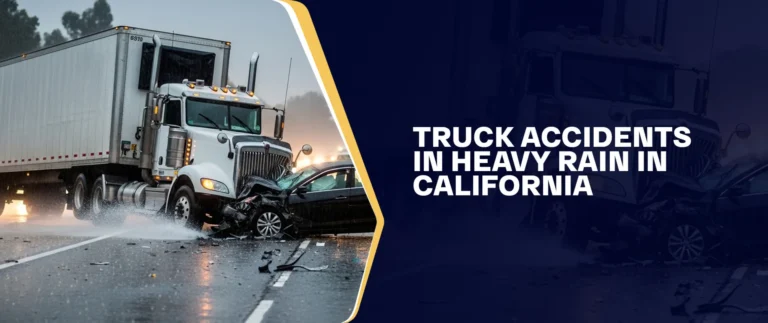
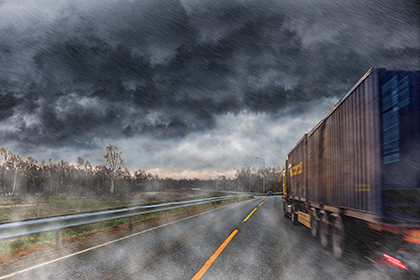
Ice, snow, and rain can be tricky for truckers to drive in because of the slow stopping speed of their vehicle and its heavy weight. If a truck driver is not highly trained and well prepared for driving in severe weather conditions, he or she will likely have truck accidents.
Truckers must travel quickly for all scenarios and learn the right braking techniques to prevent skidding, jackknifing, and hydroplaning.
9. Improper Loading Of Cargo
Cargo issues can cause accidents involving trucks. There are various ways in which cargo can cause a crash.
The cargo can be mislabeled or dangerous, resulting in dangerous explosions and spills. Cargo may be loaded incorrectly, resulting in incorrect distribution or weight. This is a factor that can cause a rollover accident.
Cargo loading teams and truckers need to follow specific industry regulations regarding loading cargo. Negligence or mistakes during the process of loading and securing the cargo can cause loads to fall off the road, resulting in catastrophic accidents. Truck accident lawyers can investigate whether improper loading or handling played a role in the crash and identify the parties who may be responsible.
10. Overloading
There are particular height, length, width, and weight limits to truckloads and special methods of securing cargo for transportation. These guidelines help decide how much weight a business truck can carry since overloading can result in errors and unwanted accidents like jackknife accidents, tire blowouts, etc.
A truck accident lawyer can help you investigate whether overloading and not following truck regulations caused the crash that injured you.
11. Truck Design Defects
A truck needs to be designed better, and good parts must be installed because truck accidents can be caused by poor quality or failing tires and subpar brakes, which remain significant mechanical failure factors. The manufacturers and the designers might also be liable for the resulting damages.
12. Improper Or Inadequate Training

A truck driver needs to have sound and proper training, especially in handling and driving trucks, security components, and defensive driving, or else the truck driver can pose serious hazards on the road.
13. Inexperienced Driving And Unfamiliarity With The Road
Any individual traveling an unfamiliar route can face driving difficulties. Try to imagine if that individual was driving an 80,000-pound vehicle for the first time and didn’t understand how rough and curvy that street was. These circumstances can be risky.
14. Road Construction
Road construction and road development undertakings can cause delays in terms of traffic. These literal barricades regularly limit truck drivers to one path of traffic.
A few drivers may attempt to move around these constructions by driving in the middle of the shoulder. However, doing so will just cause truck accidents.
15. Other Road Issues That Can Cause Truck Accidents
Many other factors, such as road obstacles, can contribute to or cause truck accidents.
Whether a truck driver is driving carelessly or not, if there are various obstacles on the road, more severe or dangerous accidents involving trucks can occur. In other instances, road accidents due to poor maintenance and design can result in catastrophic crashes. The moment this happens, the particular entity responsible for the road’s upkeep, which is usually a government entity, might become the target of a truck accident lawsuit.
Other causes of accidents involving trucks are unsafe driving practices, following another vehicle very closely, failure to properly check on the blind spots, changing lanes more often, road rage, and failure to utilize turn signals.
Coding Crash Causation Variables
Many variables were coded from the hundreds of data elements collected on each crash. The NHTSA provided three key variables that were coded for assessing crash risk:
- Critical Event — The action or event that put the vehicle or vehicles on a course that made the collision unavoidable. The critical event is assigned to the vehicle that took the action that made the crash inevitable.
- Critical Reason — The immediate reason for the critical event (i.e., the failure leading to the critical event). The critical reason is assigned to the vehicle coded with the critical event in the crash. It can be coded as a driver error, vehicle failure, or environmental condition (roadway or weather).
- Associated Factors — The person, vehicle, and environmental conditions present during the crash. No judgment is made on whether any factor is related to the reason for a particular crash, just whether the factor was present. The list of many factors that can be coded provides enough information to describe the circumstances of the crash.
Critical Events
Three major types of critical events were assigned to large trucks:
- Running out of the travel lane, either into another lane or off the road (32 percent of the large trucks in the LTCCS sample were assigned this critical event).
- Vehicle loss of control due to traveling too fast for conditions, cargo shift, vehicle systems failure, poor road conditions, or other reasons (29 percent).
- Colliding with the rear end of another vehicle in the truck’s travel lane (22 percent).
Critical Reasons
The percentage of large trucks coded with a critical reason depends on the type of crash:
- Of the large trucks involved in all LTCCS crashes (single-vehicle and multi-vehicle), 55 percent were assigned the critical reason in crashes.
- Of the large trucks involved in two-vehicle LTCCS crashes between one truck and one passenger vehicle (a car, van, pickup truck, or sport utility vehicle), 44 percent were assigned the critical reason.
The major categories that critical reasons are assigned are as follows:
- Approximately 87% (68,000) of truck accidents are attributed to driver errors.
- Thirty-eight percent of these errors were due to poor driver decisions (the driver drove fast, misjudged the speed of other vehicles, or followed other vehicles too closely).
- Twenty-eight percent were due to a lack of driver recognition (the driver was inattentive, distracted by something inside or outside the vehicle, or failed to observe the situation adequately for some other reason).
- Twelve percent were due to non-performance (the driver fell asleep, was disabled by a heart attack or seizure, or was physically impaired for another reason).
- Nine percent were due to performance (the driver panicked, overcompensated, or exercised poor directional control).
- About 10% (8,000) of truck accidents fall under vehicle failure.
- About 3% (2,000) of truck accidents fall under environmental conditions.
In total, 78,000 large trucks are coded with critical reasons, while 63,000 large trucks are not coded. These results shown are national estimates for the 141,000 large trucks that are estimated to have been involved in fatal and injury crashes during the study period.
Associated Factors
Hundreds of associated factors were collected for each vehicle in each crash. In descending order, the top 10 factors coded for large trucks and their drivers were:
- Brake problems.
- Traffic flow interruption (congestion, previous crash).
- Prescription drug use.
- Traveling too fast for conditions.
- Unfamiliarity with the roadway.
- Roadway problems.
- Required to stop before the crash (traffic control device, crosswalk).
- Over-the-counter drug use.
- Inadequate surveillance.
- Fatigue.
Effects Of Truck Accidents
Truck accidents can be a traumatic experience for the victims. A wide range of factors can cause them physical pain and emotional suffering. Some of the most common effects of semi-trailer accidents include:
- Scarring.
- Chronic pain.
- Paralysis.
- Loss of a limb or bodily function.
- Property loss.
- Mental anguish.
- Anxiety.
- Depression.
- Death.
You may be able to seek compensation for the pain and suffering caused by an accident. Contact Arash Law for a free initial consultation with one of our car accident lawyers handling truck cases.
FAQs
Can Weather Conditions Have An Impact On Truck Safety?
Severe weather conditions, such as heavy rain, snow, fog, ice, or high winds, can significantly impact the safety of commercial trucks. These conditions can reduce visibility, make the road surfaces slippery, and affect the truck’s stability, making it more challenging for the driver to control the vehicle. Trucks require more distance to stop. Slippery roads can increase stopping distances dramatically. In conditions of high winds, trucks are at risk of being blown over.
Are Fatalities Common In Commercial Truck Accidents?
Yes, unfortunately, fatalities are common in commercial truck accidents. Commercial trucks, due to their significant size and weight, can cause extensive damage in collisions. Occupants of smaller vehicles often suffer severe injuries. The likelihood of fatalities is much higher than in accidents involving only passenger vehicles. It’s not uncommon for such accidents to result in multi-car pileups. This further increases the risk of fatal outcomes.
Experience And Knowledge When You Need It Most
A truck accident lawyer can provide legal guidance as you pursue a truck accident case. Arash Law, founded by Arash Khorsandi, Esq., offers free initial consultations to injured victims and their families.
We work on a contingency fee basis, meaning we aren’t paid unless we achieve a positive outcome for your case. If we don’t secure compensation on your behalf, you won’t have to pay the attorney’s fees. This arrangement allows you to get legal representation without upfront costs.
Our firm has supported many clients in handling injury claims throughout California. During your consultation with one of our commercial truck accident attorneys, we can walk you through your rights and options.
If you want more information on the common causes of truck accidents or to discuss your case with our truck accident lawyers, please call our law firm for a free case review. We can assess your claim and inform you if it is valid. Contact us at (888) 488-1391 to schedule a free initial consultation.