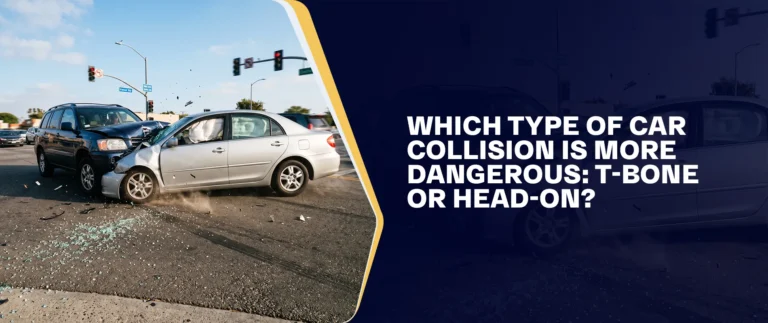
TL;DR: If you catch an accident you weren’t involved in, secure the video immediately and report it to the police because loop recording can overwrite proof of fault. Unedited footage can identify hit-and-run drivers and show liability, but losing it could leave injured drivers facing false blame or denied insurance claims.
Highlights:
- Use the dashcam’s Emergency/Lock button to protect the crash clip.
- Remove the MicroSD card once safe, and keep the original file untouched.
- Back up the raw video to a computer and a cloud drive.
- Write down time, location, plates, vehicle details, and road and weather conditions.
- Ask the responding officer how to submit the file formally for the report.
- Obtain consent before intentionally recording confidential in-cabin conversations, or turn off the audio.
- Avoid deleting, cropping, captioning, or posting the footage before investigators review it.
Tip: Label and store the original card in a safe place, and share copies so the original remains available to help authenticate the recording.
Table of Contents
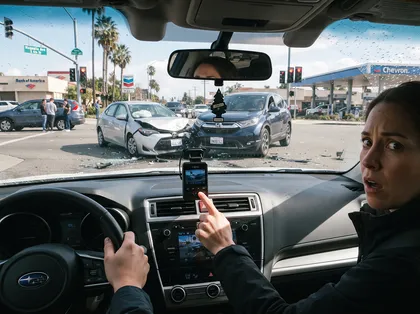
If your dashcam records someone else’s accident, pull over safely, save the video, and tell the police you have footage. Dashcam footage can disappear quickly because most cameras use loop recording, which overwrites older files.
Your video is more than a record of what happened. It can show what the camera recorded at the time. It could protect victims from being wrongly blamed for a crash they did not cause. How you handle the footage at the scene determines whether it stays usable when it matters most.
However, a dashcam might not include every important detail or prove blame on its own. Depending on its position and angle, the footage may not show a traffic signal, lane marking, nearby vehicle, pedestrian, or obstruction that contributed to the crash. It may also begin too late to capture the events leading up to the impact.
Investigators should therefore evaluate the video alongside witness statements, vehicle damage, photographs, police findings, and other available evidence before determining fault.
Immediate Steps To Take When You Capture A Crash
If your dashcam captures another vehicle accident, the recording may help police, insurers, attorneys, and the people involved understand what happened. After making sure it is safe to stop, secure the video, preserve the original file, document what you saw, and notify the investigating agency.
Here are the steps you can take to handle the situation safely and effectively:
Prioritize Safety
Do not stop in a traffic lane or make a dangerous maneuver. Pull over only where it is safe. Call 911 if:
- Anyone may be injured.
- The crash is blocking traffic.
- A driver is actively fleeing.
- Another immediate danger exists.
For a delayed or nonemergency report, contact California Highway Patrol (CHP) or the appropriate local law enforcement agency.
Secure And Protect The Footage
Memory cards overwrite old footage fast, so you must download and store your dashcam video right away. Most dashcams use loop recording, which means new footage automatically replaces old footage. If the crash happened an hour ago, that video could already be gone.
Below are some steps you can take to prevent losing the video:
- Press The “Emergency/Lock” Button: Most dashcams have a button that marks the current video segment as read-only, preventing it from being overwritten.
- Remove The Card: Lock the recording through the camera or its app. Before removing the MicroSD card, power off the dashcam and wait until it has stopped recording.
- Save The Clip To Your Smartphone: Via your camera’s Wi-Fi app, or swap out the MicroSD card once you reach a safe location.
- Make Backup Copies: Save the footage to a computer and a cloud drive. Keep the original files on the memory card untouched.
- Preserve The Original Video: Keep the original MicroSD card in a safe place whenever possible; it’s easier to verify that the footage is complete and unaltered. Use duplicates when sharing the video with police, insurers, drivers, or attorneys.
Do not crop, compress, rename, caption, filter, or otherwise modify the original file. Preserve any available metadata, including the recording date and time, GPS information, file creation details, and camera settings. If the dashcam’s clock was inaccurate, write down the correct time and the estimated difference without changing the original time-stamped.
Write Down Important Details
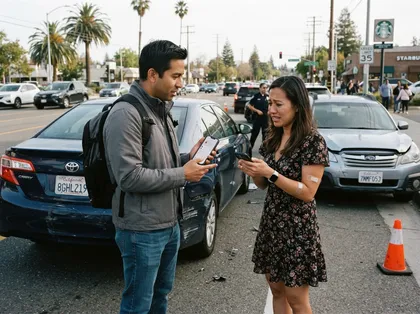
Note the location, approximate time, vehicle descriptions, license plates, road and weather conditions, and what you personally observed. California’s collision guidance recommends documenting the following:
- Traffic conditions
- Traffic Signals
- Road conditions
- Weather
- Events leading to the crash.
Also record the dashcam’s make and model and note who handled, copied, or received the footage.
Contact The Investigating Agency
If police arrive at the scene, let them know you captured the collision on video. Provide your name, contact details, and offer to email or transfer the clip directly to them for the accident report.
If it is safe to interact with the involved drivers, inform them that you have dashcam footage of the incident and provide your contact details so their insurance company or legal counsel can request a copy.
When asked about the accident, describe only what you saw and what the camera captured. Avoid guessing about speed, impairment, or fault. California guidance cautions against assigning or accepting blame at the scene.
Even if you have already left the scene, you can still contact the responding agency and offer the recording, particularly when the crash involved injuries or a hit-and-run.
How To Share Your Footage With Police And Victims
Showing the video on your phone is not the same as officially submitting it. Some police departments accept a digital copy of the file. Ask the responding officer what submission options are available in your area. This creates a formal record that the footage exists and is tied to the case.
Here are some ways you can share the video footage with the police and involved parties:
- If the file size is small, send it via email or a secure messaging app directly to the officer or driver.
- Upload the raw video file to Google Drive, Dropbox, or OneDrive and share a viewable link.
- If police need the video immediately at the scene, a portable MicroSD-to-USB or Lightning adapter allows you to save the file directly to a phone or tablet.
- If officers request the original card as evidence, ask for a receipt or property record showing who received it and how it will be stored.
Sharing your footage does more than support the investigation.
- It can help show what happened and may protect innocent drivers from being falsely blamed.
- The footage may help stop someone from filing a false insurance claim.
- Be ready to provide a formal statement if the case proceeds.
Before you leave, give your contact information to the drivers involved. If the crash leads to a legal claim, traffic accident lawyers may contact you to request a copy of the footage as part of their investigation. That footage becomes even more critical if one of the drivers left the scene before police arrived.
What If The Dashcam Owner Will Not Share The Footage?
Let’s say you’re on the other side, and you were the one involved in the accident. If the owner of the dashcam refuses to share the recording, stops responding, or claims the footage was deleted, there are a few things you can do.
Act quickly because the loop recording feature may overwrite the file. You should:
- Save the witness’s name and contact information.
- Document any statement confirming that footage exists.
- Ask the investigating officer to mention the video in the collision report.
- Check whether the witness has already given a copy to the police.
- Send a written request asking the owner to preserve the original file and memory card.
A preservation request does not automatically force the witness to release the footage. However, it puts the owner on notice that the recording may be relevant evidence.
If a lawsuit is filed, an attorney may be able to obtain the footage through a subpoena or another formal discovery request. If police have the recording, the injured person may also request access, although the agency may restrict disclosure during an active investigation.
Why Your Video Is Crucial For Hit-And-Run Crashes
In a hit-and-run, dashcam footage may provide important evidence to identify the fleeing vehicle or show how the crash occurred. When a driver flees, there are no exchanged cards and no cooperation from the person who caused the harm. That makes your recording the closest thing to a witness.
Under California Vehicle Code 20001 (VC 20001), a driver in an injury crash must stop at the scene. Leaving without stopping is a crime. Your footage can capture the license plate, vehicle make and model, color, and a description of the driver. Even a partial plate number gives police a strong lead, far beyond what witness memory alone can provide.
Under California Insurance Code § 11580.2(b), an uninsured motorist bodily injury claim involving an unidentified driver generally requires:
- Actual physical contact.
- A report to the appropriate law enforcement agency within 24 hours.
- A sworn statement to the insurer within 30 days.
Dash-cam footage may help prove that contact occurred, but it does not replace these requirements or guarantee coverage.
Your footage can provide investigators and insurers with clear evidence that the crash occurred. It may help document that the collision occurred and show the nature or severity of the impact. That evidence may give a personal injury claim a stronger foundation from the moment it is filed.
Important California Dashcam Rules To Remember
California law regulates dashcam placement and the recording of confidential conversations. Certain violations may affect the admissibility of part of a recording, but they do not automatically render all dashcam footage inadmissible.
These rules can affect whether a court accepts your footage:
- California requires the consent of all parties before someone intentionally records a confidential conversation under Penal Code § 632. If a dashcam secretly records a private conversation inside the vehicle, the audio may violate the statute and generally would be inadmissible in court. Drivers can reduce this risk by turning off the cabin audio or obtaining their passengers’ consent before recording. A problem with the cabin audio does not automatically invalidate the external roadway video, although the video must still be authenticated and satisfy other evidentiary requirements.
- Preserve the original, unedited recording. Edited or shortened copies are not automatically inadmissible, but alterations may raise questions about authenticity, completeness, or reliability.
- Do not post the footage online. It can expose private details and compromise the integrity of your evidence. Dashcam footage may show severe injuries, fatalities, children, or private conversations.
Even with these rules in mind, your situation may raise more questions. A car accident lawyer can help you work through what to save, what to avoid, and how to protect your footage.
Where Is It Legal To Mount A Dashcam In California?
Under California Vehicle Code § 26708(b)(13), a qualifying video event recorder may be mounted within:
- A seven-inch square in the lower corner of the windshield, farthest from the driver.
- A five-inch square in the lower corner nearest the driver and outside the airbag deployment zone.
- A five-inch square in the uppermost center portion of the windshield.
A vehicle equipped with a qualifying video event recorder must also display a notice in a visible location stating that a passenger’s conversation may be recorded.
The statute’s definition of a “video event recorder” is narrow. It describes a device that records in a digital loop. It captures audio, video, and G-force data. The device saves video only when it detects unusual motion, a crash, or the driver’s action. It may store no more than 30 seconds before and after a triggering event.
Some modern dashcams only keep regular footage or miss key features. They may not qualify for this windshield-mounting exception. Proper placement under the exception aids compliance with windshield obstruction requirements. However, it doesn’t guarantee that the footage is admissible or that it proves fault. The recording must be relevant, authenticated, and admissible under California evidence law.
Frequently Asked Questions
If you witnessed a car accident, you may have questions about your legal duties and your dashcam footage. Many witnesses are unsure whether to stay at the scene. Others wonder whether deleting footage could get them in trouble, or how much a short clip can actually help. Knowing your obligations as a witness can protect you and help the people involved in the crash.
Do I Legally Have To Stay If I Witness A Car Accident?
Generally, California law does not require uninvolved witnesses to stay at the scene. However, staying is strongly encouraged if it is safe to do so. Your statement and any footage can help police figure out who was at fault. If no witnesses step forward, the person who was not at fault may struggle to prove it.
How Can I Find Out Whether A Witness Had A Dashcam?
Ask witnesses and nearby drivers whether they recorded the crash. You can also ask the investigating officer whether anyone reported having footage. Nearby businesses, homes, buses, rideshare vehicles, and delivery vehicles may have cameras that captured the collision.
Is It Illegal To Delete Dashcam Footage Of A Crash?
Not automatically. California Penal Code § 135 may apply when someone knowingly and willfully destroys or conceals certain evidence, including a video recording owned by another, to prevent its production in an authorized trial, inquiry, or investigation. Separately, deleting relevant footage after litigation is reasonably anticipated or after receiving a subpoena or court order may result in evidentiary sanctions, contempt, or other consequences, depending on the circumstances.
Do not delete footage after receiving a subpoena, court order, law enforcement request, or notice that a legal claim is reasonably anticipated.
Can A Dashcam Owner Charge Money For The Footage?
A dashcam owner may voluntarily provide the footage or discuss reasonable costs associated with copying or delivering it. California law does not set a general price for voluntarily sharing private dashcam footage. If the recording is relevant to a filed lawsuit, an attorney may instead seek it through a subpoena or another formal discovery procedure.
Do Victims Need Dashcam Footage To Hire An Attorney?
No. Victims do not need dashcam footage to work with a personal injury attorney. Dashcam footage adds visual proof that can strengthen a claim. Even without it, attorneys can build strong cases using police reports, medical records, and witness statements.
Involved In An Accident? Call Arash Law To Know Your Next Steps
Personal injury claims can be confusing. Having an attorney review your situation early can help you understand your options and avoid costly mistakes.
At Arash Law, our attorneys will review your situation, explain your options honestly, and help you figure out your next step. We work to help our clients pursue compensation under California law after an accident, such as the case results below:
- $6,000,000 — A drunk driver crossed the double yellow lines, resulting in a tragic head-on collision. We secured the maximum policy limits for our client, whose wife tragically lost her life.
- $5,250,000 — Our client became a paraplegic after being struck by an inattentive driver. We achieved the full policy limits and additional workers’ compensation benefits for him.
- $5,000,000 — A work truck ran a red light and T-boned a couple’s car, causing serious injuries. After two years of litigation, we obtained a significant settlement for them.
Disclaimer: The case results provided are for informational purposes only and do not guarantee similar outcomes. Each case is unique and depends on its specific circumstances, facts, and applicable laws.
Call Arash Law at (888) 488-1391 for a free consultation. There are no upfront fees. Our attorneys at AK Law only get paid if we recover money for you.
Many people searching for free advice from an accident lawyer are unsure where to begin or what their case is worth. Getting informed early, regardless of how you start, puts you in a stronger position than waiting. Arash Law serves clients across California and is ready to help.