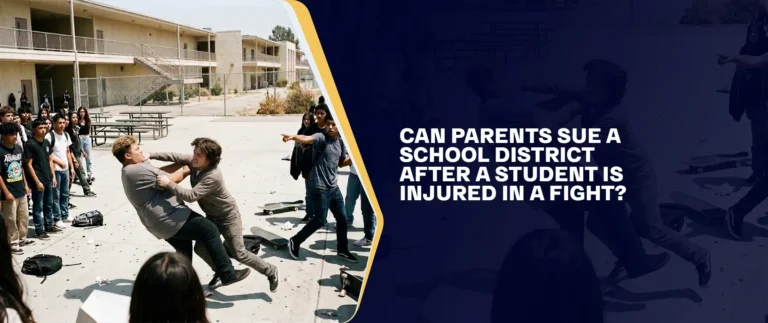
TL;DR: A California school may be held responsible when negligence contributes to a student’s injury or death. This can happen because of inadequate supervision, unsafe school property, ignored threats of violence, employee misconduct, or school transportation accidents. Depending on the circumstances, families may have grounds to pursue a personal injury or wrongful death claim.
California schools could face legal liability if their negligence plays a role in a student’s severe injury or death. Liability may arise when staff fail to provide adequate supervision, overlook a foreseeable risk of bullying or violence, or leave hazardous conditions on campus unresolved.
Schools have a duty to exercise reasonable care to protect students from foreseeable harm. However, an injury or death on school grounds does not automatically establish liability. Families generally must show that a legally actionable failure contributed to the harm.
Understanding school responsibilities, anti-bullying protections, and filing deadlines can help families determine their options after a serious incident.
Table of Contents

When Can a California School or School District Be Legally Responsible After a Student Is Seriously Injured or Dies at School?
A California school or school district may be legally responsible when it fails to exercise reasonable care, and that failure substantially contributes to a student’s injury or death. Potential claims involve negligent supervision, ignored bullying complaints, foreseeable student violence, dangerous campus conditions, or employee misconduct.
To hold a school accountable, families generally must demonstrate that:
- Duty of Care: The school had a legal responsibility to protect the student from foreseeable harm.
- Breach of Duty: School personnel failed to take reasonable precautions under the circumstances.
- Causation: The negligent act or omission was a substantial factor in causing the injury or death.
- Damages: The student or eligible surviving family members suffered legally compensable losses.
Under California Government Code § 815, liability of public school districts generally requires statutory authorization. Government Code § 815.2 allows districts to be held responsible for qualifying employee negligence within the scope of employment, subject to applicable immunities.
In Dailey v. Los Angeles Unified School District (1970), the California Supreme Court recognized the district’s potential liability for negligent supervision of students.
Key Facts: School Liability in California
- Negligent Supervision: California Education Code § 44807 addresses school personnel’s responsibility to supervise student conduct. Public school district liability for employee negligence generally arises under Government Code § 815.2.
- Dangerous Campus Conditions: Government Code §§ 835 and 835.2 govern claims involving unsafe public school property.
- Bullying and Student Violence: Schools may face liability for failing to address foreseeable violence. Prior complaints, threats, or assaults may establish notice of danger. The California Education Code §§ 234, 234.1, and 48900.4 address anti-bullying requirements and certain disciplinary grounds.
- Staff Misconduct: Schools may be liable for negligent hiring, retention, or supervision of employees whose misconduct harms students.
- Wrongful Death: Eligible surviving family members may pursue claims when legally actionable school conduct causes a student’s death (CCP § 377.60).
- Claims Against Public Schools: Most public school personal injury claims require a government claim within six months under Government Code § 911.2. Childhood sexual assault claims have special exceptions, and qualifying minors may obtain late-claim relief.
When Can a School Be Liable for a Student’s Injury?
When a child gets hurt at school, parents may wonder whether the school could have prevented the injury. Several situations may give families grounds to pursue a school injury claim under California law.
Inadequate Supervision and Dangerous Property Conditions
Schools must exercise reasonable care when supervising students during recess, classroom activities, physical education, and other activities under their control.
Examples of potentially negligent supervision include:
- Leaving young children unsupervised during activities that require adult monitoring.
- Failing to intervene in a foreseeable physical confrontation.
- Allowing students to use dangerous equipment without reasonable supervision.
- Ignoring conduct that creates a foreseeable risk of serious injury.
School personnel may also face liability for failing to respond reasonably to a student’s medical emergency. For example, an unreasonable delay in obtaining emergency assistance for a serious head injury, severe allergic reaction, or breathing emergency may support a claim if the applicable duty, breach, and causation requirements are established.
Separate rules apply when unsafe school property causes an injury. Under Government Code § 835, a public school district may be liable for a dangerous property condition if the family establishes that:
- The school property had a dangerous condition when the student sustained the injury.
- The condition caused the student’s injury.
- The condition created a reasonably foreseeable risk of that type of injury.
- Either a district employee’s negligent or wrongful conduct created the condition within the scope of employment, or the district had actual or constructive notice of the condition with sufficient time to take protective measures.
Government Code § 835.2 addresses actual and constructive notice when the claim relies on the district’s knowledge of the hazard. Examples include defective playground equipment, damaged stairs, unsafe walkways, and other dangerous physical conditions.
Maintenance records, prior complaints, inspection reports, and photographs may help establish the cause of the accident and whether the district had an opportunity to prevent it. California school injury attorneys can review this evidence to assess whether inadequate supervision, unsafe property conditions, or both contributed to the student’s injuries.
School Liability for Bullying and Student Violence
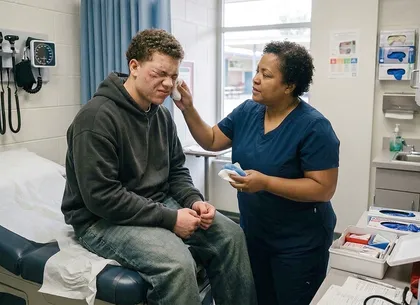
When a child experiences bullying or violence at school, parents expect school officials to take their concerns seriously. A school may face liability if staff knew or reasonably should have known about a danger but failed to take reasonable steps to protect the student.
A sudden, unexpected fight does not automatically make the school liable. However, repeated threats, earlier assaults, or ignored complaints may show that the danger was foreseeable.
California schools must follow applicable anti-bullying policies and complaint procedures. Evidence that may help establish whether the school responded appropriately includes:
- Previous written bullying complaints.
- Emails or messages sent to teachers and administrators.
- Records of earlier incidents involving the same students.
- Witness statements and available security footage.
- Documentation of the school’s response to reported misconduct.
In E.I. v. El Segundo Unified School District (2025), a California appellate court upheld a judgment against a school district for its negligent failure to protect a student from bullying.
If bullying or student violence leads to a child’s death, families may have grounds to pursue wrongful death claims after a fatal school incident if the school’s negligence contributed to the death. These cases depend on whether the school knew or should have known about a serious risk, failed to take reasonable protective measures, and whether that failure legally contributed to the student’s death.
School Liability for Staff Misconduct and Abuse
Schools may also face liability when teachers, coaches, administrators, or other employees physically or sexually abuse students. Such experiences can cause lasting physical and psychological injuries, including emotional distress, anxiety, and trauma. Families may have grounds to pursue a personal injury claim when school negligence contributes to this harm.
A student’s injuries may give rise to claims involving:
- Negligent hiring of an employee despite relevant warning signs.
- Failure to investigate credible allegations of employee misconduct.
- Retaining an employee after learning about behavior that threatens student safety.
- Inadequate supervision of employees whose conduct presents foreseeable dangers.
In C.A. v. William S. Hart Union High School District (2012) 53 Cal.4th 861, the California Supreme Court recognized that negligent hiring, retention, or supervision may support school district liability when such negligence contributes to a student’s sexual abuse.
An employee’s intentional assault does not automatically make the district vicariously liable. Courts may distinguish between the employee’s personal misconduct and negligence by school personnel responsible for hiring, supervising, or retaining that employee.
Affected students may seek compensation for qualifying medical expenses, psychological treatment, and emotional harm, depending on the circumstances. Childhood sexual assault claims also have specialized filing rules under CCP §§ 340.1 and 340.11.
School Liability for Bus and Transportation Accidents
A school bus accident can leave families worried about their child’s injuries and unsure who is responsible. Depending on what happened, the school district, bus driver, transportation company, or another party may be liable.
School transportation accidents may involve:
- Driver Negligence: A bus driver causes a crash by speeding, driving distracted, or breaking traffic rules.
- Poor Supervision: Staff fail to supervise students while students board or exit the bus.
- Unsafe Equipment: Faulty brakes, damaged seat belts, or other equipment problems contribute to an injury.
- Transportation Provider Negligence: A school employee or transportation contractor fails to carry out their responsibilities safely.
Education Code § 44808 addresses when public school districts may be responsible for injuries involving school transportation. The circumstances of the accident, who operated the vehicle, and whether any legal protections apply can affect a family’s claim.
Can Schools Be Liable for Off-Campus Injuries?
Parents may wonder whether a school is still responsible when their child gets hurt away from campus. The answer depends on the activity and the school’s involvement.
Public school districts generally are not responsible for ordinary accidents during a student’s commute. However, under Education Code § 44808, responsibility may arise when a district:
- Provides student transportation.
- Organizes an off-campus school activity.
- Takes responsibility for a student’s safety.
- Fails to exercise reasonable care in circumstances covered by the law.
For example, when a school bus is involved in an accident, families may have grounds for a claim if the driver’s or the district’s negligence caused their child’s injuries. The school’s level of supervision and involvement also matters.
Field trips have different rules. Under Education Code § 35330(d), school districts and charter schools may be protected from liability for injuries or deaths connected to qualifying field trips or excursions.
Not every off-campus school activity counts as a field trip under this law. Families can seek legal guidance to understand how these rules apply to their child’s accident.
School Sports Injuries and the Assumption of Risk
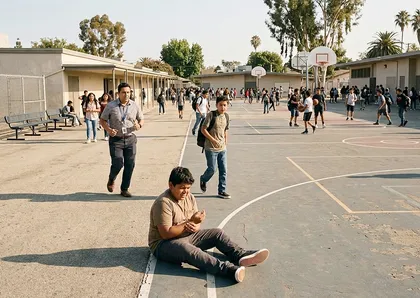
Students who participate in school sports face certain risks inherent to athletic activity. California’s primary assumption of risk doctrine may limit claims arising from ordinary dangers associated with the sport.
For example, a collision during soccer or a lawful tackle in football does not automatically establish school negligence. However, coaches may face liability if they intentionally harm a student or act recklessly in ways that fall outside normal coaching activities. Other parties may be responsible under different legal standards.
Examples may include:
- Directing students to perform unnecessarily dangerous drills.
- Using equipment known to be defective.
- Ignoring serious injury symptoms.
- Requiring an injured athlete to continue participating under circumstances that unreasonably increase the danger.
A signed sports waiver also does not necessarily prevent every claim.
Under City of Santa Barbara v. Superior Court (2007) 41 Cal.4th 747, a liability release generally cannot shield a defendant from liability for gross negligence. Whether a particular waiver is enforceable depends on the facts, its language, and the applicable law.
An attorney experienced in school injury and premises liability cases can review the circumstances of a sports injury and evaluate available legal remedies.
When Can a School Be Liable for a Student’s Wrongful Death?
Losing a child is devastating, especially when families have questions about whether the tragedy could have been prevented. A school may face a wrongful death claim when its negligence or another legally actionable failure contributes to a student’s death.
Potential circumstances include fatal injuries involving:
- Dangerous campus conditions.
- Negligent supervision of foreseeable student violence.
- Unsafe school transportation.
- Unreasonable responses to medical emergencies.
- Negligent employee hiring, retention, or supervision.
While no legal action can undo such a loss, families may have the right to seek accountability and compensation. Whether a school is legally responsible depends on the circumstances, the evidence connecting its actions or failures to the student’s death, and any applicable legal protections.
Who Can File a Lawsuit After a Student Dies?
California Code of Civil Procedure § 377.60 identifies the individuals who may bring a wrongful death action. When the deceased student is a minor without surviving descendants, the child’s parents will commonly qualify as heirs entitled to bring the claim.
California also allows a separate survival action to pursue claims that belonged to the deceased student. The following table distinguishes these two legal actions:
| Aspect | Wrongful Death Claim | Survival Action |
|---|---|---|
| Purpose | Compensates eligible family members for their own losses following the child’s death. | Pursues legal claims that belonged to the child before death. |
| Who Can File | Eligible surviving family members, including qualifying parents or other heirs. | The child’s personal representative or, if none, a qualifying successor in interest. |
| Legal Basis | CCP § 377.60 | CCP §§ 377.30 and 377.34 |
Both claims may arise from the same tragedy, but they address different losses. Understanding these options can help families determine which legal remedies may be available.
What Compensation Can Families Recover From a School?
When a child suffers a serious injury or dies because of suspected school negligence, families may face unexpected expenses, emotional hardship, and uncertainty about what comes next. Compensation may help address some of these losses, depending on the circumstances, available evidence, and applicable California law.
Compensation for Non-Fatal Student Injuries
A personal injury claim may include:
- Medical Expenses: Past and reasonably anticipated future medical treatment, hospitalization, medication, and rehabilitation.
- Therapy and Support Services: Psychological counseling, physical therapy, and other medically necessary care.
- Long-Term Care Needs: Assistive equipment, accessibility modifications, and qualifying injury-related educational support expenses.
- Pain and Suffering: Physical pain, emotional distress, and reduced enjoyment of life.
- Permanent Impairment: Disfigurement, disability, and other lasting consequences of the injury.
Parents may also need to take time off work or provide additional care for their injured child. However, lost wages and caregiving expenses are not automatically recoverable as part of the child’s claim. Whether families can pursue these losses depends on the legal basis of the claim and the supporting evidence.
Compensation for a Student’s Wrongful Death
No amount of compensation can replace a child. However, a wrongful death claim may help families address the financial and personal losses associated with their loved one’s passing.
Eligible surviving family members may seek compensation for qualifying losses, including:
- Funeral and burial expenses.
- Loss of the child’s love, companionship, affection, comfort, and society.
- Loss of reasonably expected financial support or services, where applicable.
- Other losses that are recognized under California wrongful death law.
Although grief and emotional suffering are deeply personal consequences of losing a child, California wrongful death law generally does not recognize grief, sorrow, or mental anguish as separate categories of damages.
Families seeking answers about their legal options can consult California wrongful death lawyers to understand the compensation that may be available. The amount recoverable depends on the evidence and applicable legal limitations. No particular settlement or verdict is guaranteed.
Filing Deadlines for Suing a California School
The legal process depends on whether the claim involves a public school district, private school, or charter school. Different procedures may also apply to childhood sexual assault claims and other claims subject to specialized statutory rules.
Public School Claims
Under Government Code § 911.2, most personal injury and wrongful death claims against public school districts require families to submit a written government claim within six months of the injury or death. The deadline generally begins when the claim arises, although exceptions may apply.
Families can submit the claim directly to the appropriate school district through an authorized recipient, such as the district’s clerk, secretary, auditor, or governing body, pursuant to Government Code § 915. Local school district claims generally should not be submitted through the state’s general claims portal.
Once the district receives the claim, families may face different lawsuit deadlines depending on its response:
- Written Rejection: If the district properly sends a written rejection notice under Government Code § 913, families generally have six months from the date the notice is personally delivered or mailed to file a lawsuit (Gov. Code § 945.6(a)(1)).
- No Written Rejection Notice: If the district does not act within the statutory period, ordinarily 45 days, the claim is generally considered rejected. Without a qualifying written rejection notice, families generally have two years from when the claim arose to file a lawsuit (Gov. Code § 945.6(a)(2)).
- Missed Government-Claim Deadline: Families who miss the initial six-month deadline may still have options. Under Government Code § 911.4, they may apply to present a late claim within a reasonable time, generally no later than one year after the claim arose. Special protections apply to injured minors:
- Student Was Under 18 Throughout the Filing Period: Under § 911.6(b)(2), public entities generally must grant a timely late-claim application.
- Student Turned 18 During the Filing Period: Under § 911.6(b)(3), relief generally applies if the application is submitted within six months after the student turns 18 or within one year after accrual, whichever comes first.
- If the Late-Claim Application Is Denied: Families may petition the court for relief under § 946.6, generally within six months after the application is denied or deemed denied.
These protections do not automatically apply to parents filing their own wrongful death claims. Families should also understand that submitting a government claim on time does not replace the separate deadline for filing a lawsuit.
Private School Claims
Families pursuing personal injury or wrongful death claims against private schools generally have two years to file a lawsuit under CCP § 335.1. Unlike ordinary claims against public school districts, these cases typically do not require a government claim first.
However, California law provides additional time for many personal injury claims involving minors. Under CCP § 352, the statute of limitations is generally paused, or tolled, until the injured child turns 18. This means the child may have until their 20th birthday to file a personal injury lawsuit, subject to applicable exceptions.
This protection does not automatically extend to parents’ wrongful death claims. These claims generally have a separate two-year deadline that begins on the date of the child’s death, unless a legal exception applies.
What About Charter School Claims?
Families may find charter school filing rules confusing because charter schools operate under different organizational structures. Although charter schools are public schools for educational purposes, their legal status can affect how claims are filed.
For example, an independently incorporated charter school may not be subject to the same government claims requirements as a traditional public school district. The school’s legal status and the parties involved determine which procedures apply.
Because these differences can affect a family’s filing deadline, it is important to identify the responsible entity early. Families can consider the public-entity filing requirements that may apply until the appropriate procedures are confirmed.
Specific Filing Deadlines for Childhood Sexual Assault Claims
For survivors of childhood sexual assault and their families, deciding whether to pursue legal action can be deeply personal and difficult. California provides specific filing rules for qualifying childhood sexual assault claims against public schools, private schools, and other responsible parties.
The applicable deadlines depend on when the alleged assault occurred:
- On or After January 1, 2024: Code of Civil Procedure § 340.1 generally removes the filing deadline for qualifying childhood sexual assault claims.
- Before January 1, 2024: Code of Civil Procedure § 340.11 establishes separate filing periods and conditions, including restrictions that may apply to claims against institutions.
For claims against public entities, qualifying childhood sexual assault claims are generally exempt from the usual government-claim presentation requirements under Government Code § 905(m) and applicable provisions of the Code of Civil Procedure.
These filing exceptions do not automatically extend to unrelated negligence, assault, or wrongful death claims. Survivors and families who have questions about their rights can consult sexual assault lawyers to understand which filing requirements apply to their circumstances.
Steps Parents Should Take After a School Injury
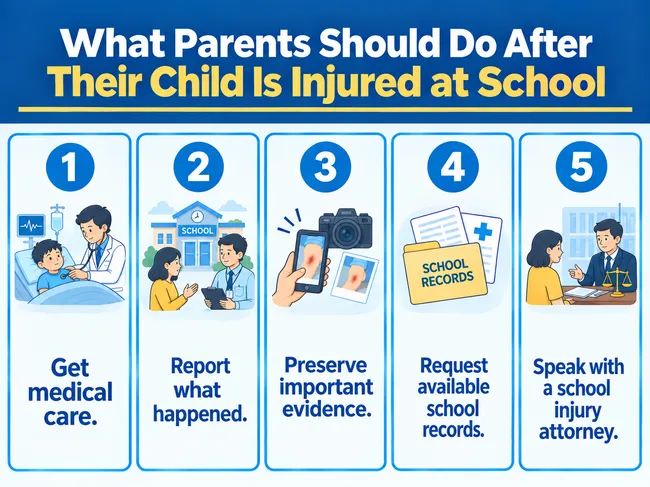
If your child was injured at school, understanding what to do after a school injury can help protect important evidence.
- Seek medical attention. Have your child evaluated by an appropriate medical professional, particularly after a head injury, suspected fracture, or other potentially serious incident. Timely medical records can document the nature of the injury and the treatment provided.
- Report the incident in writing. Notify the school administration and request that the incident be documented. If bullying or harassment contributed to the injury, describe the reported conduct, any previous incidents, and the individuals involved. Ask about the school’s anti-bullying complaint procedures and any immediate protective measures available. Preserve emails, written complaints, school responses, and other communications concerning the incident.
- Document the incident and preserve evidence. Photograph visible injuries and relevant conditions when safe and appropriate. Save messages, photographs, witness information, and other records connected to the incident. Promptly request the preservation of relevant security footage, as routine recording systems may overwrite files.
- Request available school records. Parents may request certain public school district records under the California Public Records Act, Government Code § 7920.000 et seq. Potentially relevant records include maintenance logs, applicable policies, and available incident documentation. Access to student education records may also involve rights and restrictions under the Family Educational Rights and Privacy Act (FERPA) and California education privacy laws. Records concerning other students may be withheld or redacted.
- Consult a school injury attorney. A lawyer who handles these cases in California can assess potential liability, review the applicable filing requirements, and help preserve evidence.
How Lawyers Investigate School Injury and Wrongful Death Claims In California
California school injury lawyers investigate the circumstances of a student’s injury or death to determine whether negligence occurred, identify responsible parties, and gather evidence to support a potential claim.
Depending on the case, an investigation may involve:
- Preserving evidence. They can request preservation of surveillance footage, electronic communications, incident reports, and other relevant materials.
- Reviewing school records. Attorneys examine supervision schedules, maintenance records, relevant complaints, and employee records through appropriate legal procedures. In bullying-related cases, attorneys may also review the school’s anti-bullying policies, investigation findings, prior disciplinary responses, and documentation of actions taken after reported incidents.
- Identifying responsible parties. Lawyers can determine whether the school district, individual employees, contractors, or other parties may bear legal responsibility.
- Evaluating filing requirements. They review applicable government-claim procedures, lawsuit deadlines, and statutory exceptions.
- Assessing damages. Injury attorneys examine medical records, treatment costs, financial losses, and other evidence supporting a personal injury or wrongful death claim.
Confidential student or employee records may require authorization, formal discovery, or court procedures rather than an ordinary public records request. School injury attorneys tailor their investigations to the circumstances of each incident and the legal requirements of the claim.
Frequently Asked Questions About School Liability in California
Do Lawyers Only Get Paid if They Win?
Yes, lawyers who handle school injury and wrongful death cases on a contingency fee basis generally receive attorney fees only if they secure compensation through a settlement or verdict. Arash Law follows this arrangement for qualifying cases, subject to a written agreement under California Business and Professions Code § 6147. Clients should review whether they may be responsible for litigation costs and expenses regardless of the outcome.
Can Parents Sue a School for Emotional Harm Caused by Bullying?
Potentially. A claim may arise when school personnel fail to address a foreseeable threat, and that failure causes compensable harm. Documented psychological injuries, therapy expenses, and related losses may support a claim when the applicable legal requirements are satisfied.
Does Signing a Sports Waiver Completely Prevent a Lawsuit?
No. Even a clearly written waiver may protect a school only from ordinary negligence under California law. If gross negligence is established, a waiver may not bar your claim. However, this analysis is highly fact-specific, and a waiver signed on behalf of a minor may face additional enforceability challenges. The Sports Injuries section above explains where that line falls and what it means for your claim.
Is the Teacher Personally Liable, or Does the District Pay?
A teacher or coach may be personally liable when their negligence causes a student’s injury. Under California Government Code § 815.2, a public school district may also be responsible when an employee acts within the scope of employment, subject to applicable immunities. If a staff member acts outside the scope of their duties or intentionally harms a student, personal liability may arise without automatically making the district responsible.
Is Poor Maintenance Treated Differently from Poor Supervision?
Yes. Poor maintenance involves unsafe physical conditions, such as broken playground equipment, damaged stairs, or hazardous walkways. Liability generally depends on whether the school created the hazard, knew about it, or reasonably should have known about it, and had sufficient time to address it.
Poor supervision involves a failure to reasonably monitor students or intervene when foreseeable risks arise, such as during fights or potentially dangerous activities. A school injury claim may involve both issues when inadequate supervision and unsafe property conditions contribute to the same incident.
What if My Child Was Partly at Fault, like Running in the Halls?
California generally follows pure comparative negligence under Li v. Yellow Cab Co. (1975) 13 Cal.3d 804. A child’s share of fault may reduce the compensation recoverable without necessarily eliminating the claim. The child’s age, maturity, and ability to appreciate the danger are relevant when evaluating reasonable conduct.
What Evidence Should I Request from the School District?
Request the incident report, supervision schedules, or staff duty rosters, maintenance records, prior complaints involving the same hazard, and available security footage. Parents can request their child’s education records under applicable student privacy laws and seek disclosable district records through the California Public Records Act.
Some records involving other students or employees may be confidential and require formal legal procedures to obtain. Submit requests promptly and ask the district to preserve relevant evidence, as retention periods vary and certain records may be deleted or overwritten.
Arash Law Can Handle School Injury Cases
When a child is seriously injured or dies because of suspected school negligence, families may face difficult questions about what happened and what they can do next. You don’t have to navigate these concerns alone. Arash Law can help families understand their legal options while they focus on their child’s recovery or cope with the loss of a loved one.
Our school injury attorneys can investigate the incident, identify potentially responsible parties, and help preserve important evidence. We offer free case evaluations and handle qualifying cases on a contingency fee basis, meaning no attorney’s fees unless compensation is recovered. Call Arash Law at (888) 488-1391 to discuss your legal options and potential next steps.
Sources
- California Education Code § 44807 — Establishes the responsibilities of certificated school personnel concerning student conduct and supervision.
https://leginfo.legislature.ca.gov/faces/codes_displaySection.xhtml?sectionNum=44807.&lawCode=EDC- California Education Code § 44808 — Defines limitations and exceptions concerning public school district liability for certain off-campus student injuries, including transportation-related circumstances.
https://leginfo.legislature.ca.gov/faces/codes_displaySection.xhtml?sectionNum=44808.&lawCode=EDC- California Education Code § 35330 — Addresses school field trips and excursions, including statutory immunity for qualifying activities.
https://leginfo.legislature.ca.gov/faces/codes_displaySection.xhtml?sectionNum=35330.&lawCode=EDC- California Education Code § 234 — Establishes requirements concerning discrimination, harassment, intimidation, and bullying in educational institutions.
https://leginfo.legislature.ca.gov/faces/codes_displaySection.xhtml?sectionNum=234.&lawCode=EDC- California Education Code § 234.1 — Requires specified school policies and procedures addressing discrimination, harassment, intimidation, and bullying.
https://leginfo.legislature.ca.gov/faces/codes_displaySection.xhtml?sectionNum=234.1&lawCode=EDC- California Education Code § 48900 — Establishes grounds for student discipline, including specified bullying and electronic acts.
https://leginfo.legislature.ca.gov/faces/codes_displaySection.xhtml?sectionNum=48900.&lawCode=EDC- California Education Code § 48900.4 — Addresses specified harassment, threats, and intimidation as grounds for student discipline.
https://leginfo.legislature.ca.gov/faces/codes_displaySection.xhtml?sectionNum=48900.4&lawCode=EDC- California Government Code § 815 — Establishes the general requirement for statutory authorization of public-entity liability.
https://leginfo.legislature.ca.gov/faces/codes_displaySection.xhtml?sectionNum=815.&lawCode=GOV- California Government Code § 815.2 — Addresses public-entity liability for qualifying employee conduct within the scope of employment.
https://leginfo.legislature.ca.gov/faces/codes_displaySection.xhtml?sectionNum=815.2&lawCode=GOV- California Government Code § 835 — Establishes requirements for public-entity liability arising from dangerous conditions of public property.
https://leginfo.legislature.ca.gov/faces/codes_displaySection.xhtml?sectionNum=835.&lawCode=GOV- California Government Code § 835.2 — Defines actual and constructive notice of dangerous public property conditions.
https://leginfo.legislature.ca.gov/faces/codes_displaySection.xhtml?sectionNum=835.2&lawCode=GOV- California Government Code § 905 — Identifies exceptions to government-claim presentation requirements, including qualifying childhood sexual assault claims.
https://leginfo.legislature.ca.gov/faces/codes_displaySection.xhtml?sectionNum=905.&lawCode=GOV- California Government Code § 911.2 — Establishes deadlines for presenting claims against public entities, including the general six-month period for injury and death claims.
https://leginfo.legislature.ca.gov/faces/codes_displaySection.xhtml?sectionNum=911.2&lawCode=GOV- California Government Code § 911.4 — Establishes the procedure and time limits for applying to present a late government claim.
https://leginfo.legislature.ca.gov/faces/codes_displaySection.xhtml?sectionNum=911.4&lawCode=GOV- California Government Code § 911.6 — Identifies circumstances in which public entities must grant late-claim applications, including qualifying claims involving minors.
https://leginfo.legislature.ca.gov/faces/codes_displaySection.xhtml?sectionNum=911.6&lawCode=GOV- California Government Code § 912.4 — Establishes the time for public entities to act on government claims and the rules for deemed rejection.
https://leginfo.legislature.ca.gov/faces/codes_displaySection.xhtml?sectionNum=912.4&lawCode=GOV- California Government Code § 913 — Establishes requirements for notices concerning government-claim decisions.
https://leginfo.legislature.ca.gov/faces/codes_displaySection.xhtml?sectionNum=913.&lawCode=GOV- California Government Code § 945.6 — Establishes deadlines for filing lawsuits following government-claim proceedings.
https://leginfo.legislature.ca.gov/faces/codes_displaySection.xhtml?sectionNum=945.6&lawCode=GOV- California Government Code § 946.6 — Governs petitions for judicial relief from government-claim presentation requirements.
https://leginfo.legislature.ca.gov/faces/codes_displaySection.xhtml?sectionNum=946.6&lawCode=GOV- California Government Code § 7920.000 et seq. — California Public Records Act provisions governing access to disclosable public agency records.
https://leginfo.legislature.ca.gov/faces/codes_displaySection.xhtml?sectionNum=7920.000&lawCode=GOV- California Code of Civil Procedure § 335.1 — Establishes the general two-year statute of limitations for personal injury and wrongful death lawsuits.
https://leginfo.legislature.ca.gov/faces/codes_displaySection.xhtml?sectionNum=335.1&lawCode=CCP- California Code of Civil Procedure § 340.1 — Establishes filing rules for qualifying childhood sexual assault claims arising from conduct occurring on or after January 1, 2024.
https://leginfo.legislature.ca.gov/faces/codes_displaySection.xhtml?sectionNum=340.1&lawCode=CCP- California Code of Civil Procedure § 340.11 — Establishes filing periods and other requirements for qualifying childhood sexual assault claims involving conduct occurring before January 1, 2024.
https://leginfo.legislature.ca.gov/faces/codes_displaySection.xhtml?sectionNum=340.11&lawCode=CCP- California Code of Civil Procedure § 352 — Addresses tolling of certain statutes of limitations during minority and other qualifying legal disabilities.
https://leginfo.legislature.ca.gov/faces/codes_displaySection.xhtml?sectionNum=352.&lawCode=CCP- California Code of Civil Procedure § 377.30 — Identifies who may bring a survival action on behalf of a deceased person.
https://leginfo.legislature.ca.gov/faces/codes_displaySection.xhtml?sectionNum=377.30&lawCode=CCP- California Code of Civil Procedure § 377.34 — Establishes recoverable damages in survival actions, including filing-date restrictions on certain non-economic damages.
https://leginfo.legislature.ca.gov/faces/codes_displaySection.xhtml?sectionNum=377.34&lawCode=CCP- California Code of Civil Procedure § 377.60 — Identifies eligible claimants who may bring a wrongful death action in California.
https://leginfo.legislature.ca.gov/faces/codes_displaySection.xhtml?sectionNum=377.60&lawCode=CCP- California Business and Professions Code § 6147 — Establishes written contingency-fee agreement requirements for California attorneys.
https://leginfo.legislature.ca.gov/faces/codes_displaySection.xhtml?sectionNum=6147.&lawCode=BPC- Family Educational Rights and Privacy Act (FERPA) — Explains parents’ rights to access qualifying student education records and the privacy protections governing disclosure. U.S. Department of Education.
https://studentprivacy.ed.gov/ferpa- Dailey v. Los Angeles Unified School District (1970), 2 Cal.3d 741 — Addresses school district liability for negligent supervision of students.
https://law.justia.com/cases/california/supreme-court/3d/2/741.html- C.A. v. William S. Hart Union High School District (2012), 53 Cal.4th 861 — Recognizes potential school district liability for negligent hiring, retention, or supervision contributing to student sexual abuse.
https://law.justia.com/cases/california/supreme-court/2012/s188982.html- E.I. v. El Segundo Unified School District (2025), 111 Cal.App.5th 1267 — Addresses school district negligence involving failure to protect a student from bullying. California Court of Appeal.
https://courts.ca.gov/opinion/published-extended-post/2025-06-13/b325733- City of Santa Barbara v. Superior Court (2007), 41 Cal.4th 747 — Addresses the enforceability of liability releases involving gross negligence.
https://law.justia.com/cases/california/supreme-court/2007/s141643.html- Li v. Yellow Cab Co. (1975), 13 Cal.3d 804 — Establishes California’s comparative negligence doctrine.
https://scholarlycommons.pacific.edu/cgi/viewcontent.cgi?article=2458&context=mlrDisclaimer
Past results do not guarantee future outcomes. Every case is different. The information on this page is for general educational purposes and does not constitute legal advice. No attorney-client relationship is formed by reading or relying on this content. If you were injured, consult a licensed California personal injury attorney about your specific situation.