TL;DR: School incident reports, medical records, photos, surveillance footage, and bullying complaints are important evidence after a serious school injury in California. Parents should also preserve communications showing when school staff learned about threats or unsafe conditions. Many claims against public school districts require a formal government claim to be filed within six months, although exceptions and late-claim procedures may apply.
The most important evidence after a serious school injury includes incident reports, photos, security camera footage, witness statements, and medical records. If bullying or a student fight injured your child, keep documentation of past complaints, threatening messages, and emails with the school. These records can help show what happened, whether the school knew about the danger, and how they responded.
Table of Contents

What Evidence Should Parents Preserve After a Serious School Injury, Bullying Incident, Student Fight, Campus Fall, or Fatal School Incident in California?
Parents should preserve school incident reports, medical records, photos, videos, witness information, and written communications with school staff. For bullying incidents or student fights, they should also keep records of past threats, complaints, and the school’s response. For campus falls, photos of unsafe conditions and maintenance records may be important.
After a fatal school incident, families should also preserve police reports, medical examiner records, and investigation findings. These records can help establish what happened, whether the school was negligent, and how the incident harmed the student and their family.
Key Facts About Preserving Evidence After a School Injury
- School records may help establish negligence. Past complaints, incident reports, and emails may show whether school staff knew about a danger and failed to take reasonable steps to protect your child (California Government Code § 815.2; Education Code § 44807).
- Bullying reports may help establish school notice. Previous complaints and documented incidents may help show whether school staff received reports of bullying and how they responded (California Education Code § 234.1).
- Medical records may support compensation claims. Hospital reports, counseling records, and medical bills may help establish your child’s medical expenses, physical pain, and emotional suffering (CACI Nos. 3903A and 3905A).
- Parents have rights to access their child’s school records. Parents can request their child’s pupil records, subject to legal restrictions, and public school districts generally must provide access within five business days (California Education Code § 49069.7).
- Parents may have the right to review school security footage. Parents may inspect videos that qualify as their child’s education records, although privacy laws may limit access to information about other students (34 C.F.R. §§ 99.3, 99.10, and 99.12).
- Public school injury claims have filing deadlines. Many injury and wrongful death claims against public school districts require a government claim to be filed within six months after the claim arises, subject to applicable exceptions and late-claim procedures (California Government Code §§ 911.2, 911.4, and 911.6).
Types of Evidence Parents Should Collect After a School Injury
Parents can collect evidence showing how the incident occurred, who witnessed it, what school employees knew, and how the injury affected their child. Whether the incident involves bullying, student fights, physical assaults, campus falls, or fatal injuries, knowing what to do if your kid gets hurt at school can help families identify the steps to take and the records worth preserving.
Photos, Videos, and Physical Evidence
Visual and physical evidence can help establish how an incident occurred and what conditions existed at the time. Some details may change or disappear before the school completes its investigation.
Relevant evidence may include:
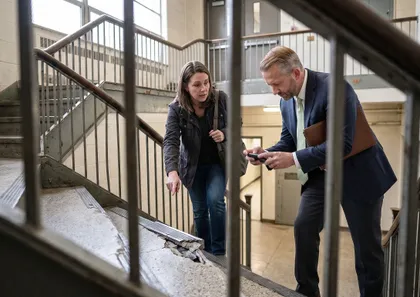
- Pictures of broken stairs, wet floors, damaged playground equipment, or other unsafe conditions.
- Images of bruises, cuts, swelling, and other visible injuries.
- Security camera recordings showing a student fight, physical assault, fall, or events leading up to the injury.
- Torn clothing, broken glasses, shoes, backpacks, or equipment involved in the incident.
Parents can keep original photos and videos with their timestamps whenever possible. They can also ask the school to preserve relevant security footage before it is deleted or overwritten.
Medical Records
Medical records can help establish the nature of a child’s injuries, the treatment received, and the effects on their health and daily life. Parents must keep the following documents:
- Hospital Records: Emergency room reports, diagnoses, imaging results, and discharge instructions.
- Treatment Records: Doctor visits, prescriptions, physical therapy, and rehabilitation reports.
- Mental Health Records: Available counseling or therapy records documenting emotional distress related to bullying, harassment, or physical violence.
- Medical Bills: Expenses for hospital care, medication, therapy, and other treatment.
- Recovery Notes: Records of ongoing symptoms, missed classes, physical limitations, and changes in daily activities.
Some injuries, including concussions and psychological trauma, may not have obvious physical signs. Medical evaluations and follow-up records can help document their effects.
Witness Contact Information
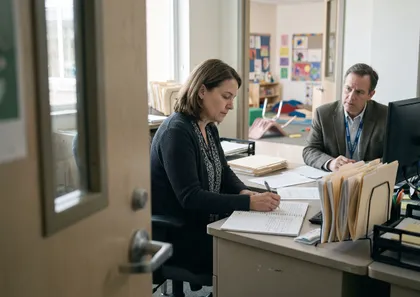
People who saw or heard the incident may provide details that the injured student could not observe or remember. Their accounts may also help clarify conflicting descriptions of a school fight, assault, or fall.
Parents can collect the following:
- Witness Details: Names and available contact information.
- Location: Where each witness was when the incident occurred.
- Firsthand Accounts: What the witness personally saw or heard.
- Earlier Incidents: Whether the witness observed previous bullying, threats, unsafe conditions, or similar events.
- Staff Response: Whether school employees were present and how they responded.
Potential witnesses include classmates, teachers, coaches, school employees, and parents. When documenting a child’s account, avoid pressuring them or suggesting what they should say.
School Incident Reports
School records can help establish what employees documented about an incident and how the school responded. These records may be relevant to injuries involving inadequate supervision, bullying, student fights, unsafe property, or other school-related incidents.
Parents can request available records, including:
- Incident Reports: Written accounts prepared by teachers, administrators, or security personnel.
- School Nurse Records: Notes describing the child’s symptoms, injuries, complaints, and care received at school.
- Disciplinary Records: Available information about disciplinary actions, subject to student privacy restrictions.
- Supervision Records: Staff schedules, duty assignments, and records identifying personnel responsible for supervising the area.
- Investigation Records: Available findings, meeting summaries, and reports prepared after the incident.
These documents may help identify differences between the school’s account and information provided by the injured student or witnesses.
Previous Bullying Complaints and School Communications
Earlier complaints and school communications may help establish whether staff knew about a potential danger before an injury happened. This evidence can be particularly important when an incident involves repeated bullying, escalating threats, unsafe facilities, or concerns about student supervision.
Relevant records include:
- Bullying Complaints: Previous reports of harassment, intimidation, threats, or physical aggression.
- Digital Messages: Text messages, emails, social media posts, and screenshots documenting threats or cyberbullying.
- Parent-School Communications: Emails, letters, and meeting notes discussing safety concerns.
- Previous Safety Reports: Written warnings about unsafe equipment, damaged facilities, or repeated accidents.
- School Responses: Investigation findings, safety plans, supervision changes, and follow-up communications.
- Incident Timelines: Dates, locations, and descriptions of earlier events and reports to school staff.
For example, if a student was assaulted after repeated bullying complaints, earlier emails may help establish whether the school received warnings. Similarly, previous reports about a broken staircase may be relevant if a student later falls in the same location.
For California public schools, applicable policies and complaint procedures address discrimination, harassment, intimidation, and bullying (California Education Code § 234.1).
Previous complaints do not automatically establish negligence. Their significance depends on what school personnel knew, how they responded, and whether their actions or failure to act contributed to the injury.
Maintenance, Inspection, and School Safety Records
For injuries involving unsafe school property, facility records may help establish whether a dangerous condition existed before the accident. These documents can be particularly useful after slip-and-fall accidents, playground injuries, or incidents involving damaged equipment.
Parents can request the following:
- Maintenance Reports: Records of repairs, reported defects, and maintenance work.
- Inspection Records: Documentation of safety inspections involving the area or equipment.
- Cleaning Records: Available cleaning schedules and reports concerning spills or slippery surfaces.
- Previous Hazard Complaints: Reports identifying the same unsafe condition before the incident.
- Safety Procedures: Applicable inspection, maintenance, and hazard-reporting policies.
For public school property claims, these records may help determine whether a dangerous condition existed and whether the school district had sufficient notice to take protective measures, when notice must be established (California Government Code § 835).
Police, Emergency Response, and Death Investigation Records
Serious assaults, major accidents, and fatal school incidents may involve investigations by law enforcement, emergency responders, or other public agencies. Their findings may provide information beyond the school’s own reports.
Depending on the nature of the incident, relevant documents may include:
- Police Reports: Records of law enforcement responses, observations, and investigations.
- Emergency Response Records: Ambulance reports and documentation of emergency medical assistance.
- Investigation Findings: Available reports prepared by law enforcement or other investigating agencies.
- Death Certificates: Official records identifying the student’s death.
- Medical Examiner or Coroner Reports: Available findings concerning the cause and circumstances of death.
- Funeral and Related Expense Records: Documents showing expenses incurred after a fatal incident.
Families can use these records to understand the circumstances of the incident and evaluate whether a personal injury, wrongful death, or other legal claim may be available.
How Can Parents Request School Records and Preserve Evidence?
Parents can request their child’s records in writing by contacting the principal, the district records office, or the designated records custodian. They should separately request preservation of incident footage, staff communications, complaints, and other relevant evidence.
California Education Code § 49069.7 generally requires public school districts to provide access to a child’s pupil records within five business days, subject to legal restrictions.
The following steps can help parents request and preserve relevant evidence:
- Submit a Written Records Request: Include your child’s name, the date and location of the incident, and the records you want to review. Keep a copy of the request.
- Request Evidence Preservation: Ask the school to retain security footage, incident reports, staff communications, and other relevant materials before they are deleted or overwritten.
- Keep Copies of Communications: Save emails, letters, complaint forms, and messages exchanged with teachers or administrators, especially those involving bullying, threats, or earlier safety concerns.
- Document the School’s Response: Record when you submitted the request, who responded, and whether the school provided or withheld the requested information.
- Follow-Up on Missing Records: Request a written explanation if the school does not provide the requested documents. A school injury attorney can help determine whether additional records may be obtained through legal procedures.
A records request or preservation letter does not replace a formal government claim when one is required.
What If the School Refuses to Provide Records?
Parents may have the right to inspect education records directly related to their child, but access to some materials is restricted.
Under the Family Educational Rights and Privacy Act (FERPA), certain surveillance videos qualify as education records. When footage directly relates to multiple students, parents may have inspection rights, subject to applicable privacy protections.
Schools generally do not have to provide video copies merely because parents have a right to inspect the footage. Other legal procedures may be necessary to obtain additional evidence.
Speak With Arash Law About Preserving School Injury Evidence
A serious school injury may leave parents with questions about what happened and whether school personnel acted reasonably under the circumstances. Arash Law can review the available evidence and help families understand their legal options.
Our school injury attorneys can evaluate incident reports, school communications, surveillance footage, prior bullying complaints, and medical records to assess whether any party may be legally responsible.
Call Arash Law at (888) 488-1391 for a free case evaluation. Our team is available 24/7 to speak with California families.
How Can Evidence Help Establish School Negligence?
Evidence can help establish the legal elements of negligence: duty of care, breach of duty, causation, and damages.
The required proof depends on the circumstances, the defendant, and the legal basis of the claim.
| Legal Element | How Evidence May Help |
|---|---|
| Duty of Care | School policies, supervision responsibilities, and applicable legal duties may establish the level of care required. |
| Breach of Duty | Prior complaints, incident reports, and witness accounts may show that employees failed to exercise reasonable care. |
| Causation | Medical records, video footage, and witness testimony may help connect the alleged negligence to the student’s injury. |
| Damages | Treatment records, bills, and other documentation may establish the resulting physical, emotional, and financial harm. |
California Government Code § 815.2 may provide a basis for public school district liability for injuries caused by employees acting within the scope of their employment, subject to statutory requirements and immunities.
Evidence of prior bullying or unsafe conditions may be particularly important when parents allege that school employees failed to respond to a foreseeable danger.
How Evidence Supports Compensation in a School Injury Claim
Evidence can help establish the financial, physical, and emotional harm a child suffered after a school injury. Medical records, bills, and other documents may support compensation when a family can establish liability and meet the requirements of a California personal injury claim.
Different records may help support the following types of damages:
- Medical Expenses: Hospital bills, treatment records, and doctors’ reports may establish the cost of necessary medical care, including reasonably certain future treatment needs (CACI No. 3903A).
- Pain and Suffering: Medical evaluations, photographs, and recovery notes may help show the child’s physical pain, emotional distress, and changes in daily life (CACI No. 3905A).
- Counseling and Mental Health Treatment: Therapy records and related bills may support the cost of necessary mental health care following bullying, harassment, or assault (CACI No. 3903A).
- Long-Term Effects: Specialist reports, rehabilitation records, and medical opinions may help establish future care needs or a lasting effect on the child’s ability to earn income (CACI Nos. 3903A and 3903D).
- Wrongful Death Damages: Funeral bills and records of family relationships may help eligible relatives establish funeral expenses and the loss of a child’s companionship, comfort, and care (CACI No. 3922).
The amount of compensation depends on the available evidence, the harm suffered, and the legal requirements of the claim. Preserving evidence does not guarantee compensation, but it can help establish the losses a family may be entitled to recover.
Time Limits for Filing a School Injury Case in California
Deadlines for a school injury case in California depend on whether the case involves a public school district, a private school, or a charter school. Many claims against public school districts require that a written government claim be filed within 6 months, while personal injury lawsuits against private schools generally have a 2-year filing deadline.
Claims Against Public School Districts
Families generally have six months from the date of their child’s injury to submit a written government claim to a California public school district. This requirement may apply to injuries involving bullying, student fights, inadequate supervision, or unsafe campus conditions (California Government Code § 911.2).
Parents can submit the claim to the appropriate school district through an authorized method. This generally includes delivering it to the district’s clerk, secretary, or auditor, or mailing it to an authorized recipient, including the governing board at its principal office (Gov. Code § 915).
The school district generally has 45 days to respond to the claim, unless the response period is properly extended (Gov. Code § 912.4).
The deadline to file a lawsuit depends on how the district provides notice:
- Written Rejection Notice: Families generally have six months from the date the district personally delivers or mails a legally compliant rejection notice to file a lawsuit (Gov. Code § 945.6(a)(1)).
- No Legally Compliant Rejection Notice: Families generally have two years from the date of the injury to file a lawsuit, subject to applicable exceptions (Gov. Code § 945.6(a)(2)).
Lawsuits Against Private Schools
Personal injury lawsuits against private schools generally have a two-year filing deadline. This period typically applies to negligence claims involving unsafe facilities, inadequate supervision, physical assaults, or other injuries caused by wrongful conduct (California Code of Civil Procedure § 335.1). The filing period may change when the injured student is a minor or when a different statute governs the claim.
Cases Involving Charter Schools
The deadline for a charter school injury case depends on the school’s legal status, who may be responsible, and the type of claim.
- Government Claims: If the Government Claims Act applies, families generally have six months from the date of the injury to submit a written government claim, subject to applicable exceptions.
- Personal Injury Lawsuits: If the defendant is an independently operated charter school corporation not subject to the Government Claims Act, families generally have 2 years from the date of the injury to file a personal injury lawsuit, subject to applicable exceptions.
California courts have held that an independently incorporated charter school may fall outside the Government Claims Act’s claim-presentation requirements (Knapp v. Palisades Charter High School (2007), 146 Cal. App. 4th 708).
A separate claim against a public school district or another public entity may still require a government claim to be filed within six months. The injured child’s age may also affect certain lawsuit deadlines (CCP § 352).
Cases Involving Injured Minors
Parents or legal guardians can generally file a government claim on behalf of their injured child. However, the child’s age does not automatically extend the six-month deadline for claims against public school districts (California Government Code § 911.2).
If the deadline passes, families may apply for permission to present a late claim, generally within one year of the injury. Public entities must grant qualifying applications when the injured child was under 18 throughout the original six-month filing period (California Government Code §§ 911.4 and 911.6(b)(2)).
For many personal injury lawsuits against private parties, California generally pauses the filing deadline until the injured child turns 18 (California Code of Civil Procedure § 352).
Different rules may apply to childhood sexual assault, wrongful death, and other specialized claims.
Frequently Asked Questions About School Injury Evidence in California
Can Parents Pursue a School Injury Claim if Their Child Was Partly at Fault?
Yes. California’s comparative fault rules may allow an injured student to recover compensation even if they were partly responsible for the incident. However, the amount may be reduced based on the student’s share of fault (Li v. Yellow Cab Co. (1975), 13 Cal.3d 804). The child’s age, conduct, and circumstances of the incident may affect the determination of responsibility.
How Much Does It Cost to Hire a Lawyer for a School Injury Claim?
It generally costs nothing upfront to hire a school injury lawyer who works on a contingency fee basis. This means you only pay attorney’s fees if your case results in a settlement or award. The written fee agreement explains the lawyer’s percentage, case expenses, and other applicable costs (California Business and Professions Code § 6147).
Can Parents Obtain Another Student’s Disciplinary Records?
Parents generally cannot access another student’s confidential disciplinary records without legal authorization. Federal and California student privacy laws restrict the disclosure of education records. However, relevant information may sometimes be obtained through lawful court procedures, subject to applicable privacy protections (20 U.S.C. § 1232g; California Education Code § 49076).
Can Parents Pursue a School Injury Claim Without an Incident Report?
Yes. A school incident report is not always required to pursue an injury claim. Other evidence, such as medical records, photographs, witness statements, and communications with school staff, may help establish what happened. Families must still establish the required elements of negligence (CACI No. 400).
Get Legal Help Reviewing Evidence for Your Child’s School Injury Claim
A serious school injury can leave families with questions about what happened, whether the school was responsible, and what legal options are available. Arash Law’s school injury attorneys can help parents review the evidence and determine whether they may have grounds for a personal injury claim.
Our lawyers can investigate incidents involving bullying, student fights, inadequate supervision, unsafe school conditions, and other potential causes of injury. We can also help preserve important records, identify potentially liable parties, and evaluate the compensation available under California law.
We represent injured children and their families throughout California. Call (888) 488-1391 or contact Arash Law online for a free case evaluation. We are available 24/7. No attorney’s fees unless we win or settle your case.
Sources
- California Legislature, Government Code § 815.2, addressing public entity liability for injuries caused by employees acting within the scope of their employment. https://leginfo.legislature.ca.gov/faces/codes_displaySection.xhtml?sectionNum=815.2.&lawCode=GOV
- California Legislature, Education Code § 44807, addressing the authority and responsibilities of school employees concerning student conduct and supervision. https://leginfo.legislature.ca.gov/faces/codes_displaySection.xhtml?sectionNum=44807.&lawCode=EDC
- California Legislature, Education Code § 234.1, establishing public school district policies and procedures concerning discrimination, harassment, intimidation, and bullying. https://leginfo.legislature.ca.gov/faces/codes_displaySection.xhtml?sectionNum=234.1.&lawCode=EDC
- California Judicial Council, Civil Jury Instructions (CACI Nos. 400, 3903A, 3903D, 3905A, and 3922), addressing negligence, medical expenses, lost earning capacity, pain and suffering, and wrongful death damages involving a minor child. https://courts.ca.gov/system/files/file/judicial_council_of_california_civil_jury_instructions_2026.pdf
- California Legislature, Education Code § 49069.7, establishing parental rights to access pupil records and requirements for responding to records requests. https://leginfo.legislature.ca.gov/faces/codes_displaySection.xhtml?sectionNum=49069.7.&lawCode=EDC
- U.S. Department of Education, 34 C.F.R. §§ 99.3, 99.10, and 99.12, defining education records and establishing parental inspection rights and privacy restrictions under FERPA. https://studentprivacy.ed.gov/ferpa
- California Legislature, Government Code § 835, establishing the requirements for public entity liability involving dangerous conditions of public property. https://leginfo.legislature.ca.gov/faces/codes_displaySection.xhtml?sectionNum=835.&lawCode=GOV
- California Legislature, Government Code § 911.2, establishing the general six-month deadline for presenting personal injury and wrongful death claims against public entities. https://leginfo.legislature.ca.gov/faces/codes_displaySection.xhtml?sectionNum=911.2.&lawCode=GOV
- California Legislature, Government Code §§ 911.4 and 911.6, addressing late government-claim applications and circumstances requiring or permitting relief, including provisions involving injured minors. https://leginfo.legislature.ca.gov/faces/codes_displaySection.xhtml?sectionNum=911.4.&lawCode=GOV
https://leginfo.legislature.ca.gov/faces/codes_displaySection.xhtml?sectionNum=911.6.&lawCode=GOV- California Legislature, Government Code § 915, establishing authorized methods for presenting claims to public entities. https://leginfo.legislature.ca.gov/faces/codes_displaySection.xhtml?sectionNum=915.&lawCode=GOV
- California Legislature, Government Code § 912.4, addressing the period within which a public entity must act on a government claim. https://leginfo.legislature.ca.gov/faces/codes_displaySection.xhtml?sectionNum=912.4.&lawCode=GOV
- California Legislature, Government Code § 945.6, establishing lawsuit filing deadlines following the rejection of a government claim or the absence of a legally compliant rejection notice. https://leginfo.legislature.ca.gov/faces/codes_displaySection.xhtml?sectionNum=945.6.&lawCode=GOV
- California Legislature, Code of Civil Procedure § 335.1, establishing the general two-year statute of limitations for personal injury and wrongful death lawsuits. https://leginfo.legislature.ca.gov/faces/codes_displaySection.xhtml?sectionNum=335.1.&lawCode=CCP
- California Legislature, Code of Civil Procedure § 352, addressing the suspension of certain lawsuit filing deadlines while an injured person is a minor. https://leginfo.legislature.ca.gov/faces/codes_displaySection.xhtml?sectionNum=352.&lawCode=CCP
- California Court of Appeal, Knapp v. Palisades Charter High School (2007), 146 Cal.App.4th 708, discussing the Government Claims Act’s application to an incorporated charter school. https://law.justia.com/cases/california/court-of-appeal/2007/b185996a.html
- California Supreme Court, Li v. Yellow Cab Co. (1975), 13 Cal.3d 804, establishing California’s pure comparative negligence system and its effect on recoverable damages. https://law.justia.com/cases/california/supreme-court/3d/13/804.html
- California Legislature, Business and Professions Code § 6147, establishing requirements for written contingency fee agreements between attorneys and clients. https://leginfo.legislature.ca.gov/faces/codes_displaySection.xhtml?sectionNum=6147.&lawCode=BPC
- U.S. Congress, 20 U.S.C. § 1232g, establishing the Family Educational Rights and Privacy Act and protecting the privacy of student education records. https://uscode.house.gov/view.xhtml?req=granuleid:USC-prelim-title20-section1232g&num=0&edition=prelim
- California Legislature, Education Code § 49076, establishing restrictions and exceptions concerning access to and disclosure of pupil records. https://leginfo.legislature.ca.gov/faces/codes_displaySection.xhtml?sectionNum=49076.&lawCode=EDC
Disclaimer
This article is for educational purposes only and provides general information about preserving evidence and pursuing school injury claims in California. It is not legal advice and does not create an attorney-client relationship. Families with questions about school injuries, bullying, unsafe campus conditions, or filing deadlines can consult a licensed California lawyer for advice about their situation. Arash Law — (888) 488-1391.