TL;DR: When an uninsured driver in California injures several family members, each person’s UM claim is evaluated separately, but shared policy limits may restrict total compensation. Families should confirm who qualifies for coverage, review per-person and per-accident limits, document each person’s losses, and check for additional coverage before accepting settlements.
When an uninsured driver injures several family members, the California uninsured motorist (UM) coverage available to the injured parties depends on who qualifies under the policy and how much coverage the policy provides. Each person’s injuries and losses are assessed individually, but the policy’s per-person and per-accident limits may restrict how much each family member can recover.
California law does not require insurers to divide shared UM coverage equally among injured family members. Compensation depends on each person’s eligibility, documented losses, and applicable policy limits. Families should confirm who qualifies for coverage, review available insurance policies, and understand how one person’s settlement may affect the funds remaining for others.
Table of Contents

Several People in Our Family Were Hurt, and the Other Driver May Be Uninsured. What Should We Check About Who Is Covered and Any Shared Policy Limits?
Your family should confirm whether the other driver is uninsured, identify which injured family members qualify for UM coverage, and check the policy’s per-person and per-accident limits. The per-person limit caps coverage for one injured person, while the per-accident limit caps the total available for all covered bodily injury claims from the same collision.
Each injured family member should keep separate medical bills, treatment records, and proof of financial losses. Your family should also review other potentially applicable insurance policies and assess whether competing claims require separate legal representation. Shared UM limits are not automatically divided equally, and no family member is guaranteed a specific share.
Key Facts About Multi-Claimant UM Claims in California
- Each injured person needs an individual claim review. Family members may share coverage, but their injuries, losses, and eligibility must be evaluated separately.
- Two policy limits may apply. The per-person limit restricts payment for one person’s bodily injury, while the per-accident limit restricts payment for all covered bodily injury claims from the same accident.
- California’s minimum auto liability limits increased in 2025. Senate Bill (SB) 1107 raised the standard minimums to $30,000 per person, $60,000 per accident, and $15,000 for property damage, effective January 1, 2025. Actual UM limits depend on the policy and applicable law.
- Additional policies do not guarantee additional benefits. California generally restricts stacking, or combining, UM limits from multiple vehicles or policies.
- Different deadlines may apply. UM claims have specific arbitration requirements, while hit-and-run claims may involve additional reporting deadlines.
- Competing claims may require legal review. Settlements involving one family member can affect the funds available to others when a shared per-accident limit applies.
Who Qualifies for Coverage Under a Shared Uninsured Motorist Policy?
UM coverage may protect the named insured, qualifying family members, and certain occupants of an insured vehicle. Eligibility depends on the policy’s definitions, the person’s relationship to the policyholder, and the circumstances of the accident (CIC § 11580.2(b)).
Potentially covered people include:
- Named Insured: The person listed as an insured on the policy’s declarations page.
- Spouse and Resident Relatives: Certain spouses and relatives living in the same household may qualify while riding in a vehicle or under other covered circumstances.
- Other Occupants: Unrelated passengers may qualify while occupying an insured vehicle, subject to policy provisions and applicable law.
Uninsured motorist coverage can also cover pedestrian accidents involving eligible insured family members. For example, a resident relative struck while crossing the street may qualify for UM benefits if the driver is uninsured and the policy provides coverage. Eligibility depends on the policy terms and circumstances of the accident.
Living in the same household does not automatically resolve every coverage question. A relative’s residence, vehicle ownership, and other insurance arrangements may affect eligibility. Uninsured motorist accident attorneys can compare each person’s circumstances with the relevant policy provisions.
How Can Your Family Confirm Its Actual UM Coverage?
Your family can check its uninsured motorist (UM) coverage by reviewing the auto insurance declarations page, policy endorsements, and any signed coverage agreements. These documents help identify the available coverage, its limits, and any restrictions that may apply to your claim.
Start by checking:
- Coverage Type: Confirm whether your policy includes UM or underinsured motorist (UIM) coverage.
- Coverage Limits: Look for the bodily injury limits listed per person and per accident.
- Coverage Agreements: Review any written rejection of UM coverage or agreement selecting lower limits.
- Covered People and Vehicles: Check the policy definitions and endorsements to determine which family members and vehicles may qualify.
- Other Driver’s Insurance: Ask your insurer to investigate whether the responsible driver has applicable liability coverage.
Your declarations page may not answer every coverage question. An attorney can review the complete policy and determine how its terms apply to each injured family member (California Insurance Code (CIC) § 11580.2).
How Can Your Family Organize Each Person’s Coverage?
A claimant-and-policy matrix can help your family identify who may qualify for coverage and which insurance policies need review. Each injured person should have a separate entry, even if everyone was involved in the same accident.
| Injured Person | Possible Coverage | Records to Keep | Coverage Questions |
|---|---|---|---|
| Parent driving | Named insured or other qualifying insured. | Medical bills, treatment, lost wages. | Does the policy cover the driver? |
| Spouse riding | Spouse or qualifying insured. | Treatment expenses, income losses. | Which policy and limits apply? |
| Child riding | Resident relative or covered occupant. | Medical records, ongoing care costs. | Is court approval needed for the settlement? |
| Other relative | Resident-relative or occupant coverage. | Medical bills, treatment, expenses. | Does the person qualify under the policy? |
This matrix does not determine how much compensation each person will receive. Actual coverage depends on the policy terms and each person’s circumstances. When several people share one per-accident limit, an attorney can review how their claims may affect the available funds.
How Do Shared UM Policy Limits Affect Multiple Injured Family Members?
Shared UM policy limits can restrict the total compensation available when several people are injured in one accident. Each person’s bodily injury claim is subject to the applicable per-person limit, while all covered claims together remain subject to the per-accident limit.
The importance of uninsured motorist coverage becomes especially clear when several family members are injured in the same crash. Although this coverage may help pay for medical expenses, lost income, and other damages, the amount available to each person depends on the policy limits and their individual losses.
How Per-Person and Per-Accident Limits Affect Family Claims
A hypothetical UM policy with $30,000 per person and $60,000 per accident has two separate limits:
- $30,000 Per Person: The maximum bodily injury coverage available for one person’s claim, subject to applicable policy terms and law.
- $60,000 Per Accident: The maximum combined bodily injury coverage available for all covered claims arising from one accident.
Three injured family members cannot necessarily collect $30,000 each under this hypothetical policy. Although each person has a $30,000 individual ceiling, the insurer generally cannot pay more than $60,000 total under the applicable per-accident limit.
For example, one claimant may have $50,000 in documented damages, while two relatives have additional injury claims. The first person’s damages do not increase the $30,000 per-person ceiling. The combined claims also remain subject to the $60,000 accident limit.
These figures illustrate how a policy might operate. They do not establish the coverage limits for any particular family. The California Department of Insurance’s Automobile Insurance Guide explains how auto insurance coverage and policy limits work, including uninsured motorist protection.
How Is the Shared Limit Divided Among Injured Family Members?
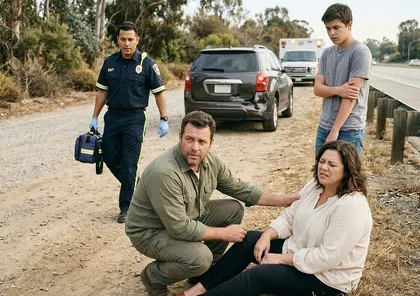
California law does not establish a universal rule requiring equal or proportional payments to every claimant. The handling of competing claims depends on their legal merits, damages, available coverage, settlement agreements, and applicable law.
An insurer may face competing demands when documented losses exceed the available per-accident limit. Resolving one claim may reduce the insurance funds remaining for others.
In some disputes, an insurer may seek court assistance through interpleader. This legal procedure allows a court to address competing claims involving a limited fund.
An interpleader is not required in every multi-claimant accident. Families should not assume the insurer will automatically divide the coverage or that each person is guaranteed a particular percentage.
Before accepting an individual settlement, the family should review how it may affect other unresolved claims.
The Importance of Keeping Separate Treatment and Loss Records
Each injured family member should maintain separate records of medical treatment, financial losses, and accident-related expenses. Even when several people sustain injuries in the same collision, one person’s injuries do not establish another person’s damages.
Each claimant should organize the following documents:
- Medical Bills: Hospital charges, emergency treatment, specialist visits, rehabilitation expenses, and other treatment costs.
- Treatment Records: Diagnoses, physician notes, discharge instructions, therapy records, and follow-up recommendations.
- Lost Income Records: Pay stubs, employer statements, time-off records, and relevant documents showing self-employment losses.
- Out-of-Pocket Expenses: Medication receipts, transportation to appointments, home care, and other accident-related costs.
- Ongoing Symptoms: Notes describing pain, physical limitations, missed activities, and changes in daily routines.
Separate files make it easier to show how the collision affected each claimant. They also help the insurer and accident attorney identify which documents belong to which person.
For example, a parent may miss several weeks of work because of an injury. A child injured in the same crash may need ongoing treatment, but doesn’t have lost wages. Their claims require different supporting evidence.
Families should also retain copies of documents submitted to the insurer. Recording submission dates and follow-up requests can help prevent missing information or confusion.
Finding Additional Insurance Policies to Cover the Family
Other insurance policies may provide coverage options when the primary uninsured motorist (UM) policy has limited benefits. However, California law restricts how UM coverage can be combined, so additional policies do not automatically increase the family’s available compensation.
An attorney may review the following potential coverage sources:
- Other Household Auto Policies: A spouse or relative may have a separate auto insurance policy with UM/UIM coverage. That policy may be relevant to an injured family member’s eligibility, but coverage depends on the policy terms and applicable exclusions. California generally prohibits combining UM limits from multiple policies, which may restrict coverage when the injured person occupies another vehicle that has its own UM insurance (CIC § 11580.2(c)(2), (d), (q)).
- Personal Umbrella Policies: An umbrella policy may provide additional liability protection, but California does not require excess or umbrella policies to include UM coverage. Whether an umbrella policy provides UM benefits depends on its specific terms (CIC § 11580.2(a)(1)).
- Commercial or Employer Insurance: If the responsible driver was working at the time of the collision, the employer or business may share legal responsibility. Its commercial liability insurance could provide compensation, depending on the circumstances and policy terms. However, applicable commercial liability coverage may affect whether the accident qualifies for UM or UIM benefits.
- Before Settling Other Claims: If another driver, employer, or business may be legally responsible for the crash, family members should review potential settlements with their UM insurer before signing a release. Under California Insurance Code § 11580.2(c)(3), settling with another potentially liable party without the UM insurer’s written consent may affect UM coverage.
California generally prohibits stacking UM limits from multiple vehicles or insurance policies. Stacking means combining limits to increase the coverage available for one accident. However, when more than one policy may apply, the policies and California’s rules governing applicable coverage must be reviewed. Insuring three household vehicles does not automatically provide three separate UM per-accident limits for a single collision (CIC § 11580.2(c)(2), (d), (q)).
Why Multiple Injured Family Members May Need Individual Legal Representation
When several family members are hurt, each person’s eligibility and losses need separate attention, even when they share the same uninsured motorist (UM) policy. Separate legal representation may be necessary if their claims create competing financial or legal interests. Understanding what to check in a multiple-family-member uninsured motorist claim can help families identify potential conflicts before accepting settlements.
Separate attorneys may be needed for the following reasons:
- Competing Claims for Limited Coverage: When family members’ combined losses exceed the policy’s per-accident limit, settling one person’s claim may reduce the funds available to others. Separate attorneys may be necessary if family members disagree about settlement amounts or if one attorney cannot fairly represent their interests.
- Possible Fault of a Family Member: If a parent was driving when a child was injured, the parent’s actions may need to be investigated. If the parent may have contributed to the crash, the child’s claim could conflict with the parent’s interests. Separate representation may be necessary to protect each person’s legal rights.
- Protecting an Injured Child’s Settlement: California generally requires court approval of settlements involving a minor’s disputed injury claim. The court also determines how the child’s settlement funds must be protected, which may include a blocked account, trust, or another approved arrangement. A separate attorney may be needed if the child’s interests conflict with those of a parent or another injured family member (California Probate Code (CPC) §§ 3500, 3600–3613). California Insurance Code § 11580.3 also provides specific rules for UM arbitration awards involving minors, treating those awards as compromises subject to applicable Probate Code procedures.
Not every family member needs a separate attorney. California allows joint representation in certain situations, but lawyers must review potential conflicts and obtain informed written consent when required. Some conflicts cannot be resolved through consent and may require separate counsel (California Rules of Professional Conduct, Rule 1.7).
Before signing a settlement release, which generally ends the right to seek further compensation for the claims being released, each family member should understand how the agreement affects their own claim and the remaining shared coverage.
Arash Law can help your family understand whether separate legal representation is necessary and how shared UM policy limits may affect each person’s claim. Our attorneys can review potential conflicts, evaluate individual losses, and explain your legal options before anyone accepts a settlement. Call (888) 488-1391 for a free case evaluation. We’re available 24/7.
What Is the Deadline to File a California Uninsured Motorist Claim?
You should report an uninsured motorist (UM) claim to your insurer as soon as possible. California generally requires you to take specific legal action within two years of the accident to preserve your right to UM benefits. Simply reporting an insurance claim or negotiating with an adjuster may not satisfy this requirement (CIC § 11580.2(i)).
To preserve your right to UM benefits, California law generally requires one of the following actions within two years:
- File a bodily injury lawsuit against the uninsured driver in a court with jurisdiction.
- Conclude an agreement with your insurer about the amount owed under the UM policy.
- Formally begin arbitration by sending a written notice to your insurer through certified mail, return receipt requested.
These are separate legal steps from the initial reporting of an insurance claim (CIC § 11580.2(i)).
UM arbitration allows you and your insurer to resolve disputes about liability or damages outside a traditional court trial. California generally requires arbitration to be completed within five years after it begins, subject to statutory exceptions and extensions, including rules involving workers’ compensation claims (CIC § 11580.2(f), (i)).
Other requirements may also affect your claim:
- Insurance Policy Notice: Your policy may require prompt notice of the accident or claim.
- Claims Involving Minors: A child’s age does not generally extend the two-year deadline for preserving UM benefits under CIC § 11580.2(i). Parents or guardians should ensure that each injured child’s UM claim is preserved within the applicable period. Other statutory exceptions may apply.
- Government Entity Claims: If a government entity may also be responsible for the accident, a separate written government claim generally must be presented within six months, subject to applicable exceptions (California Government Code (CGC) § 911.2).
Each injured family member should have their insurance claim requirements and legal deadlines reviewed separately. Reporting one family member’s claim does not automatically preserve everyone else’s rights.
Frequently Asked Questions About Uninsured Motorist Claims in California When Multiple Family Members Are Injured
Does Uninsured Motorist Coverage Cover a Hit-and-Run in California?
Yes. UM coverage may apply when an unidentified driver causes an accident and leaves the scene. California generally requires physical contact with the insured person or occupied vehicle, a report to the appropriate law enforcement agency within 24 hours, and a sworn statement to the insurer within 30 days after that report. The statement must include supporting facts about the claim against the unidentified driver (CIC § 11580.2(b)(1)–(2)).
Do I Have to Give My Own Insurance Company a Recorded Statement?
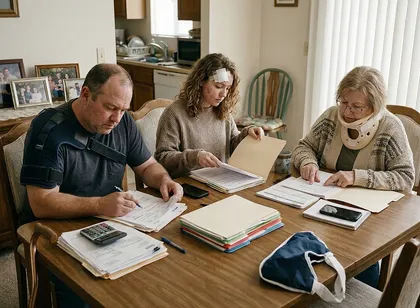
Not always. Your insurance policy may require you to cooperate with the investigation, but whether you must give a recorded statement depends on your policy and applicable law. You can ask your insurer to explain the request and have an attorney review your obligations before responding.
Can My Insurer Deny My UM Claim Because I Am Partially at Fault?
Being partly at fault does not automatically prevent you from recovering UM benefits. California generally reduces your recoverable damages based on your percentage of fault. For example, if you are 30% responsible for a crash, your damages are generally reduced by 30%, subject to applicable coverage limits.
Will My Rates Go Up If I File an Uninsured Motorist Claim?
Filing a UM claim does not automatically increase your insurance rates in California. California law restricts accident-based premium increases when the insured was not at fault. Insurers must follow applicable rules when determining whether a driver was principally responsible for a crash. Other lawful rating factors may still affect premiums (CIC § 491; 10 CCR § 2632.13).
Is Uninsured Motorist Coverage Required in California?
No. California doesn’t require you to carry UM coverage. Still, every auto liability policy must include it unless a named insured deletes it or agrees to lower limits in a signed written agreement using the statutory form. Check your declarations page and any signed coverage agreements to confirm your protection (CIC § 11580.2(a)).
What Happens If a Family Member Dies as a Result of the Crash?
Your family may be able to pursue wrongful death compensation if an uninsured driver causes your loved one’s death. California allows surviving spouses, children, and certain other qualifying family members to bring wrongful death claims (CCP § 377.60). Available damages depend on the circumstances (CCP § 377.61). However, multiple surviving relatives do not automatically receive separate UM limits for the same death. Coverage depends on the applicable policy and California’s UM insurance rules (CIC § 11580.2).
Talk to Arash Law About Your Family’s Uninsured Motorist Claim
Arash Law can help your family determine who may qualify for uninsured motorist coverage and how shared policy limits may affect each person’s claim. Our attorneys can review the applicable insurance policies, investigate the collision, and evaluate each injured family member’s losses.
Our team can also identify potential additional coverage, review proposed settlements, and assess whether separate representation is appropriate when family members have competing interests.
Arash Law handles personal injury cases on a contingency-fee basis, meaning you pay no attorney’s fees unless we recover compensation for you. Our firm has recovered over $1 billion for injured Californians. Past results do not guarantee or predict the outcome of any future case. Each case depends on its own facts and circumstances.
Call us at (888) 488-1391 for a free case evaluation. Our team is available 24/7.
Sources
- California Insurance Code § 11580.2. Uninsured and underinsured motorist coverage, exclusions, limits, and claim procedures. https://leginfo.legislature.ca.gov/faces/codes_displaySection.xhtml?sectionNum=11580.2.&lawCode=INS
- Senate Bill 1107 (2022). Increased minimum automobile liability insurance limits. https://leginfo.legislature.ca.gov/faces/billNavClient.xhtml?bill_id=202120220SB1107
- California Probate Code § 3500. Compromise of a minor’s disputed claim. https://leginfo.legislature.ca.gov/faces/codes_displaySection.xhtml?sectionNum=3500.&lawCode=PROB
- California Probate Code §§ 3600–3613. Court approval and disposition of minors’ settlement proceeds. https://leginfo.legislature.ca.gov/faces/codes_displayText.xhtml?lawCode=PROB&division=4.&title=&part=8.&chapter=4.&article=
- California Rules of Professional Conduct, Rule 1.7. Conflicts of interest involving current clients. https://www.calbar.ca.gov/legal-professionals/rules/rules-professional-conduct/current-rules-professional-conduct/chapter-1-lawyer-client-relationship
- California Government Code § 911.2. Deadlines for presenting government claims. https://leginfo.legislature.ca.gov/faces/codes_displaySection.xhtml?sectionNum=911.2.&lawCode=GOV
- California Code of Civil Procedure § 377.60. Persons eligible to bring wrongful death actions. https://leginfo.legislature.ca.gov/faces/codes_displaySection.xhtml?sectionNum=377.60.&lawCode=CCP
- California Code of Civil Procedure § 377.61. Damages in wrongful death actions. https://leginfo.legislature.ca.gov/faces/codes_displaySection.xhtml?sectionNum=377.61.&lawCode=CCP
- Title 10, California Code of Regulations § 2632.13. Determination of principally at-fault accidents. https://www.law.cornell.edu/regulations/california/10-CCR-2632.13
Disclaimer
The information on this page is for general educational purposes only and does not constitute legal advice. Reading this content does not create an attorney-client relationship. If you or your family members were injured in an accident, consult a licensed California attorney about your legal rights and options. Arash Law: (888) 488-1391.