TL;DR: Prepare your account of the incident, photos, receipts, witness statements, medical records, and any communications with store employees or security personnel. A lawyer can review your available evidence, identify missing information, and investigate whether the store or another party may be legally responsible. You can consult a personal injury lawyer even if you’re unsure what caused your injury or what the store recorded.
Bring your account of what happened, any photographs, proof of your store visit, witness information, medical records, and communications to your first meeting with a lawyer after a store injury. You can still seek a consultation if you do not know what the store documented or whether security footage exists.
A conversation with store security does not necessarily mean an incident report was created. It also does not establish whether cameras recorded the event or whether anyone refused access to footage. Your lawyer can help identify which records may exist and what steps might be appropriate to investigate them.
California premises liability law generally requires more than proof that someone was injured inside a business. The circumstances of the incident, who controlled the area, whether someone acted negligently, and how that conduct contributed to the injury may all matter.
Key Points About Preparing for a Store Injury Consultation
- You do not need every document. Bring the records you already have and identify information that may be missing.
- Your account is a starting point. A written timeline can help clarify what you remember, including details you are uncertain about.
- Security conversations are not incident reports. Speaking with security does not confirm that the store prepared or retained a report.
- Store recordings are not guaranteed. A lawyer may investigate whether relevant footage exists, who controls it, and whether it can be preserved.
- Fault requires evidence. California premises liability claims generally involve property control, negligence, injury, and causation.
- Early evidence preservation matters. Records and recordings may become unavailable, potentially affecting the strength of a claim.
Table of Contents

I Was Injured Inside a Store and Want Legal Help. What Should I Bring to the First Meeting, Especially if I Do Not Know What the Store Recorded?
To prepare for your consultation, focus on organizing the information you already have rather than gathering every possible record. You can meet with a personal injury lawyer even if you have limited evidence or are unsure what the store documented.
The first consultation is an opportunity to discuss what happened, identify gaps in the available information, and understand what may need further investigation. You do not have to piece everything together before seeking legal help.
Focus on sharing what you know, being clear about what you cannot confirm, and letting your lawyer assess what additional evidence may be relevant. The following steps can help you explain what happened, document what you remember, and identify details your lawyer may need to investigate.
Write Down What You Remember Before Details Fade
A short timeline can give your lawyer a clearer picture of events. Include details about the following periods:
- Before the Incident: Explain why you visited the store, where you went, and what you remember immediately before your injury.
- During the Incident: Describe what happened to your body, what you saw or heard, and anything you noticed about the surrounding area.
- Immediately Afterward: Record your symptoms, conversations with employees or security, and any assistance you received.
- After Leaving: Note when you sought medical care, whom you contacted, and whether your symptoms changed.
You may not remember every detail. Use phrases such as “approximately,” “I do not remember,” or “I am unsure” when appropriate.
Do not assume you slipped, tripped, or encountered a particular hazard if you cannot establish that fact. Describing what you remember is more useful than choosing an explanation simply because it sounds legally relevant.
Bring Photographs and Proof of Your Visit if Available
Photographs and records of your visit may help establish where you were, when the incident happened, and what the surrounding area looked like. Bring any of the following, if available:
- Photographs of the Location: Images showing the area where you were injured, nearby fixtures, or surrounding conditions.
- Photographs of Your Injuries: Pictures showing visible injuries or changes in their appearance.
- Receipts and Payment Records: Store receipts, credit or debit card transactions, or other proof of purchases.
- Order Confirmations and Loyalty Records: Emails, digital receipts, or account activity that may help establish when you visited.
- Messages About Your Visit: Text messages or other communications that mention your time at the store.
Keep original photographs whenever possible, including their dates and available metadata.
These records do not automatically prove the store was negligent or establish what caused your injury. They can, however, help your lawyer verify your account details and identify what may require further investigation.
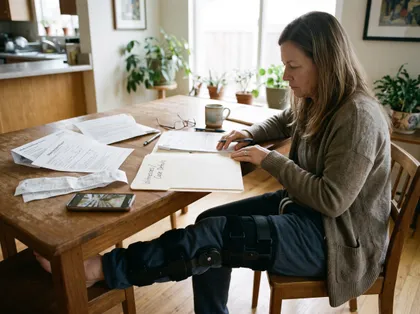
Include Witness Details and Medical Records
Witness information and medical records can help your lawyer understand what happened, document your injuries, and identify evidence that may support your claim. Bring any available information, including:
- Witness Names and Contact Information: Names, phone numbers, or other contact details of anyone who saw the incident or what happened immediately afterward.
- Witness Observations: Notes about what you believe each person witnessed, without assuming what they saw or attributing statements they never made.
- Medical Records: Available examination notes, diagnoses, test results, and other documents related to your injuries.
- Discharge Instructions and Prescriptions: Instructions from healthcare providers and medications prescribed after the incident.
- Medical Bills: Records of treatment expenses and related charges.
- Appointment Information: Dates of completed or upcoming visits, including follow-up care.
If you are still receiving treatment, let your lawyer know which records you have not yet obtained.
Medical records can help document your injuries, treatment, and recovery. However, they do not automatically establish that the store was legally responsible for what happened.
What Can a California Store Injury Lawyer Investigate?
A lawyer can review the circumstances of your injury to determine whether you may have a premises liability claim and what additional evidence could help support it.
Arash Law’s premises liability attorneys can assess the available information and identify issues that may need further investigation.
Under California Civil Jury Instructions (CACI) No. 1000, a premises liability claim generally requires proof that the defendant owned, leased, occupied, or controlled the property, was negligent in its use or maintenance, and that this negligence was a substantial factor in causing the injury.
The investigation may focus on three key questions.
-
Who Controlled the Area Where the Injury Happened?
The store operator may not be the only party responsible for the area where you were injured. Depending on the circumstances, a property owner or another business may have been responsible for maintaining that part of the premises.
A lawyer may look into:
- Property Control: Who owned, leased, occupied, or controlled the area where the incident happened?
- Maintenance Responsibility: Who was responsible for inspecting the area, keeping it safe, or addressing potential hazards?
- Other Responsible Parties: Did another party’s actions or responsibilities play a role in the incident?
Identifying who controlled the area helps determine who may have owed you a duty of care. The store’s name on the building does not necessarily tell the whole story.
-
What Did the Store Know or Have Reason to Know?
In premises liability cases, notice refers to whether a party knew or reasonably should have known about a dangerous condition. Whether notice matters depends on how the injury happened and what the alleged negligence involved.
CACI No. 1001 addresses a property owner’s duty to use reasonable care in maintaining the premises. CACI No. 1011 explains that the duration a dangerous condition existed may help determine whether a business should have discovered it.
If notice is relevant to your case, a lawyer may examine:
- Inspection Practices: Whether employees regularly checked the area where you were injured.
- Maintenance Records: Whether records document prior maintenance work or raise concerns about the area’s condition.
- Employee Observations: Whether employees noticed a potential hazard or received reports about it before the incident.
- Incident Details: What happened, where the injury occurred, and whether the evidence helps establish how long a dangerous condition may have existed.
Before examining notice, your lawyer will need to understand what caused the injury. There should be no assumption that a wet floor, store display, fixture, or other hazard was involved unless the evidence supports it.
-
How Did the Incident Cause the Injury?
Proving that you were injured inside a store is not the same as proving the store was responsible. A premises liability claim also requires a connection between the alleged negligence and the harm you suffered.
Your medical records may document your injuries and treatment, but they may not explain how the store contributed to what happened.
To examine that connection, a lawyer may compare:
- Your Account: Your description of the incident, including what you remember before, during, and afterward.
- Medical Records: Documentation of your injuries, symptoms, and treatment.
- Witness Statements: Information from anyone who saw the incident or its immediate aftermath.
- Photographs: Available images of the location, surrounding conditions, or injuries.
- Store-Held Records: Any relevant incident documentation, security footage, or other records that may exist.
Reviewing these materials can help your lawyer separate what the evidence establishes from what still needs to be investigated.
Consultation Folder Checklist: What You Have and What May Be Missing
Organize your consultation materials into three categories: records in your possession, information someone else may hold, and questions for your lawyer.
The checklist below is a preparation tool, not a statement that every listed record exists or must be available.
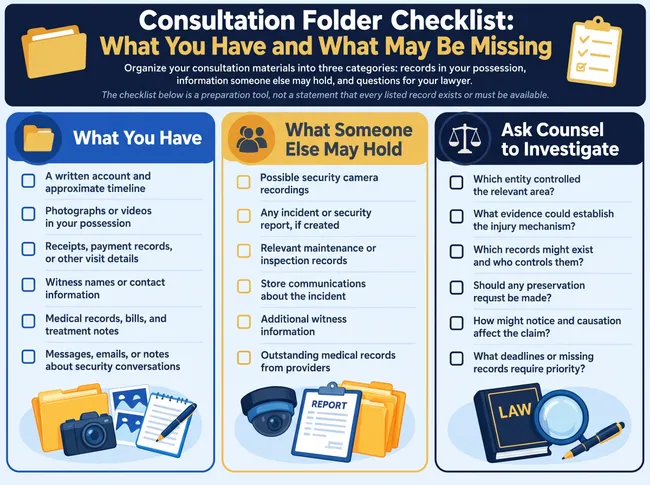
What You Have
What Someone Else May Hold
Ask Counsel to Investigate
Consultation Folder Checklist Infographic (PDF)
How to Handle Missing Documents
Do not recreate documents or describe unverified records as though you have seen them. Instead, create a separate list identifying what you believe may exist, why you think so, and who might hold it.
For example, if you spoke with someone from security but received no paperwork, note that you spoke with security and did not receive a copy of any report. Whether a report was actually prepared remains unknown.
If you noticed a camera, record its apparent location and what you observed. Do not assume it was operating, pointed toward the incident, or recording at that time.
This distinction helps your lawyer decide what to investigate without relying on inaccurate assumptions.
What If the Store Has Security Footage but You Do Not?
You can consult a lawyer without first obtaining the security footage. Whether relevant footage exists, is still retained, or can be obtained depends on facts that must be investigated.
A camera’s presence does not establish that it captured the injury. Likewise, speaking with security does not mean footage was reviewed, preserved, released, or withheld.
Questions to Ask About Possible Recordings
Ask your lawyer whether it would be appropriate to:
- Identify the exact location and approximate time of the incident.
- Determine which cameras may have covered that area.
- Identify who may control relevant recordings.
- Consider sending a preservation request.
- Evaluate lawful methods of requesting or obtaining relevant records.
A preservation request is not a guarantee that footage exists or will be produced. The appropriate legal steps depend on the circumstances, including whether litigation is reasonably anticipated.
Do not delay a consultation solely because the store has not provided documents or video. Early discussion may help identify evidence-preservation concerns before records become unavailable.
What Happens During the First Store Injury Consultation?
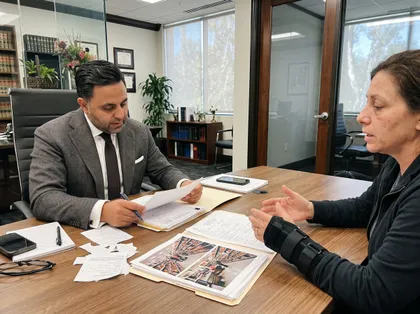
The initial consultation gives the injured person an opportunity to describe what happened and learn which legal questions require further investigation.
The lawyer may review the known facts, clarify missing details, discuss medical treatment, and assess whether a potentially responsible party can be identified.
A useful consultation process includes these steps:
- Explain the incident in your own words. Describe what you remember without guessing about missing details.
- Share available records. Present your timeline, photographs, visit documentation, medical information, and communications.
- Identify unanswered questions. Separate facts you know from records that the store or another party may hold.
- Discuss possible legal responsibility. Ask what additional facts would help evaluate control, negligence, notice, and causation.
- Agree on potential next steps. Clarify whether further records, medical information, or investigation would be appropriate.
You can also ask how the lawyer would communicate with you, what information you should preserve, and whether any fees or case costs may apply.
When a case is handled under a contingency fee agreement, California Business and Professions Code § 6147 establishes requirements for written agreements, including disclosure of the applicable contingency fee rate.
Request a Review of Your Store Injury and Available Evidence
If you hurt yourself in a store, you do not have to identify every missing record before asking for legal help. Arash Law can discuss the information you currently have, questions about the incident, and potential next steps.
Call (888) 488-1391 for a free initial consultation. The review can help determine what may warrant investigation without promising that particular footage can be obtained or that negligence can be proven.
How Long Do You Have to Take Legal Action After a Store Injury Claim in California?
California generally provides two years to file a personal injury lawsuit, but the applicable deadline can depend on the nature of the claim and other circumstances.
The usual starting points are:
| Claim or Issue | General California Time Limit |
|---|---|
| Personal injury lawsuit | Two years |
| Property damage lawsuit | Three years |
| Certain injury claims against public entities | Six months to present a government claim |
Legal basis: California Code of Civil Procedure § 335.1, § 338, and Government Code § 911.2.
These deadlines apply to different types of claims and legal proceedings.
The six-month government claim rule does not automatically apply to an ordinary injury claim against a privately operated store. It becomes relevant if the facts involve a public entity. A government claim usually involves a separate administrative procedure that must be addressed before a lawsuit, and additional deadlines may follow.
Missing the applicable filing deadline can bar a claim entirely.
Reporting an incident to a store is also different from filing a lawsuit or presenting a government claim. A delay in reporting may create documentation problems, while a delay in preserving evidence can weaken the available proof. Neither should be confused with the legal filing deadlines.
Frequently Asked Questions About Store Injury Consultations in California
Can I Talk to a Lawyer if I Do Not Know How the Store Caused My Injury?
Yes. You can consult a lawyer even when the precise cause of the incident or the store’s potential fault remains unclear.
Explain what you experienced and identify the details you cannot confirm. Your lawyer can assess whether additional investigation may help establish the circumstances and possible negligence.
Does Talking to Store Security Mean an Incident Report Exists?
No. A conversation with store security does not establish that an incident report was created.
Tell your lawyer whom you spoke with, what was said, and whether you received any documentation. The lawyer may then consider whether to inquire about possible records.
Can a Lawyer Get Store Surveillance Footage?
A lawyer may investigate whether relevant surveillance footage exists and what lawful steps are available to seek it.
The ability to obtain footage depends on factors such as whether it was recorded, whether it remains available, who controls it, and the applicable procedures for the claim. Access cannot be guaranteed.
Do I Need a Receipt to Show That I Was Inside the Store?
No. A receipt is not the only possible evidence of a store visit.
Payment records, order confirmations, photographs, witness accounts, or other reliable information may help establish where and when you were present.
What if I Have No Photographs of the Incident?
You can still seek a consultation without photographs. Photos can be useful evidence, but they are not required to speak with a lawyer.
Other evidence may help establish the circumstances, including witness statements, medical records, and any other relevant records identified through investigation.
Does Being Injured Inside a Store Automatically Mean the Store Is Liable?
No. An injury inside a store does not automatically establish premises liability.
California law generally requires proof of negligence and a substantial causal connection between that negligence and the injury. The specific facts determine whether the store or another party may be responsible.
Should I Wait Until I Have All My Medical Records Before Calling a Lawyer?
No. You can speak with a lawyer while treatment is ongoing or while some medical records remain unavailable.
Bring whatever records you have, explain any ongoing symptoms, and identify your treating providers. Counsel can discuss what additional documentation may be relevant.
What Should I Ask the Lawyer Before the Consultation Ends?
Ask which facts are established, which remain uncertain, and what evidence may help clarify responsibility.
You can also ask who may hold missing records, whether preservation steps are appropriate, what deadlines apply, and what information you should provide next.
Discuss Your Store Injury With Arash Law
An injury inside a store may leave you with medical concerns and questions about what the business documented. You do not need to turn those unanswered questions into assumptions before seeking legal guidance.
Arash Law offers free initial consultations to discuss potential personal injury claims. Call (888) 488-1391 to request a review of your incident and available evidence. The discussion can help identify relevant facts, potential sources of information, and legal options based on the circumstances.
Sources
- Judicial Council of California. Civil Jury Instructions, CACI No. 1000: Premises Liability, Essential Factual Elements. https://courts.ca.gov/system/files/file/judicial_council_of_california_civil_jury_instructions_2026.pdf
- Judicial Council of California. Civil Jury Instructions, CACI No. 1001: Basic Duty of Care, and No. 1011: Constructive Notice Regarding Dangerous Conditions on Property. https://courts.ca.gov/system/files/file/judicial_council_of_california_civil_jury_instructions_2026.pdf
- California Legislature. Code of Civil Procedure § 335.1, Personal Injury Limitations Period. https://leginfo.legislature.ca.gov/faces/codes_displaySection.xhtml?sectionNum=335.1.&lawCode=CCP
- California Legislature. Code of Civil Procedure § 338, Property Damage Limitations Period. https://leginfo.legislature.ca.gov/faces/codes_displaySection.xhtml?sectionNum=338.&lawCode=CCP
- California Legislature. Government Code § 911.2, Presentation of Claims Against Public Entities. https://leginfo.legislature.ca.gov/faces/codes_displaySection.xhtml?sectionNum=911.2.&lawCode=GOV
- California Legislature. Business and Professions Code § 6147, Contingency Fee Contracts. https://leginfo.legislature.ca.gov/faces/codes_displaySection.xhtml?sectionNum=6147.&lawCode=BPC
Disclaimer
This content is for general educational purposes only and is not legal advice. Reading it or contacting Arash Law does not establish an attorney-client relationship. The legal outcome of any matter depends on its particular facts and applicable law. Past case results do not guarantee future outcomes. Consult a licensed California attorney about your circumstances, applicable deadlines, and potential legal options.
Arash Law — (888) 488-1391.