TL;DR: Look for a lawyer who can investigate driver conduct and possible construction-related hazards. Verify their experience, ask about evidence preservation, review their fees, and confirm whether they handle cases that go to trial.
To choose a construction zone car accident lawyer, compare attorneys’ experience, investigation methods, insurance knowledge, fees, and trial readiness. Look for someone who handles traffic injury claims and knows how to investigate possible roadwork hazards.
Start by finding two or three California personal injury lawyers. Check their licenses, schedule consultations, and ask how they would investigate your crash. Compare their answers before signing a fee agreement.
Begin this process promptly. Construction conditions can change, evidence may become unavailable, and some claims have shorter filing deadlines.
Key Facts About Choosing a Construction Zone Accident Lawyer
- A construction zone location alone never proves another party’s negligence. Civil Code § 1714 establishes a general duty of ordinary care. A negligence claim also requires proof that the defendant’s conduct caused the injury.
- Compare lawyers with experience investigating both drivers and roadway conditions. The State Bar of California recommends asking attorneys about similar cases before hiring them.
- Ask which records each attorney would seek and preserve promptly. Caltrans construction guidance identifies traffic control plans, inspections, and lane closure records as part of project oversight.
- Deadlines for government claims depend on whether public entities face claims. Government Code § 911.2 generally requires injury claims against public entities to be filed within six months. This requirement does not apply to every construction-zone accident.
- Written contingency agreements explain attorney fees and potential case expenses. Business and Professions Code § 6147 generally requires written fee terms explaining the attorney’s percentage and how costs affect recovery.
- Ask who would represent you if negotiations fail. The State Bar recommends asking about an attorney’s experience and who will handle your case. Ask separately about their experience with lawsuits and trials.
Table of Contents

I Was Injured in a Crash near Road Construction. What Should a Lawyer Investigate Before Determining Who Might Be Liable?
Before determining who might be liable, a lawyer should investigate the crash location, traffic controls, vehicle movements, project stakeholders, and available evidence. The investigation should establish whether driver conduct, roadway conditions, or both contributed to the collision.
- Accident location. Where did the vehicles collide? Was the crash inside a marked work zone, near a lane closure, or beyond the construction area?
- Traffic controls. Were warning signs, cones, barriers, temporary signals, or flaggers present? Did any traffic controls affect how vehicles moved?
- Vehicle movements. Were drivers changing lanes, merging, braking, or following other vehicles? Did construction equipment enter or cross an active traffic lane?
- Project responsibility. Which companies performed the roadwork? Who controlled the relevant traffic equipment, and did a public agency have any responsibility?
- Available evidence. Are there photographs, witness accounts, video recordings, or police reports? What additional records could help establish the accident’s cause?
The lawyer should consider each of these questions without assuming that nearby construction caused the collision.
Parties-and-Evidence Question Map for Construction Zone Crashes
Use this map to evaluate how a lawyer would identify and investigate possible responsible parties.
The map does not establish facts about any particular accident. It separates observations to confirm, records to seek, and possible explanations to prove.
| Party or issue | Observations to document, if available | Records to seek | Questions requiring proof |
|---|---|---|---|
| Crash location | Exact location, lane positions, and visible roadwork. | Collision reports, maps, and project boundaries. | Did construction affect the collision location? |
| Other drivers | Braking, merging, lane changes, and vehicle movements. | Witness accounts, dashcam footage, and vehicle data. | Did a driver cause or contribute to the collision? |
| Traffic controls | Warning signs, barriers, temporary signals, and lane markings. | Traffic control plans, inspection logs, and closure records. | Did a traffic control problem contribute to the crash? |
| Contractors | Work activity, construction vehicles, and equipment placement. | Contracts, permits, and daily work records. | Did a contractor’s conduct contribute to the accident? |
| Public agencies | Road location and any agency involvement. | Road inspection records, project agreements, and maintenance reports. | Did a dangerous condition of public property contribute to the injury? |
| Injuries and losses | Reported injuries, vehicle damage, and missed work. | Medical records, repair estimates, and wage records. | Which injuries and losses resulted from the accident? |
When comparing lawyers, ask how they would use these questions to identify relevant evidence and potentially responsible parties. Their answers can help you assess their experience investigating construction-zone collisions.
How Should a Lawyer Distinguish Driver Negligence From Roadway Problems?
A lawyer should compare evidence of driver conduct with evidence of possible roadway or traffic control problems.
- Possible Driver Negligence: The attorney may examine speeding, following distance, unsafe lane changes, or failure to yield. Police reports, witness accounts, dashcam footage, and vehicle data may help establish what happened.
- Possible Roadway or Traffic Control Problems: The attorney may examine temporary lane shifts, warning signs, barriers, and the movements of construction vehicles. Traffic control plans, inspection records, and project documents may help determine whether an unsafe condition contributed to the crash.
These investigations may identify different responsible parties. Driver negligence may support a claim against another motorist. A proven construction-related problem may require a review of a contractor’s or public agency’s legal duties.
How Does an Investigation Determine Which Issues Need Further Review?
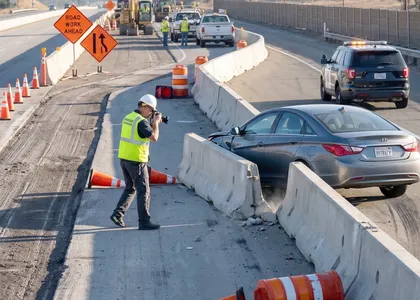
The evidence gathered during an initial investigation helps a lawyer decide which aspects of a construction-zone collision need further examination. When comparing attorneys, ask how they would use preliminary findings to guide their next steps.
For example, witness accounts suggesting unsafe merging may prompt further investigation into driver conduct. Evidence of missing warning signs may instead warrant a review of traffic control plans and contractor responsibilities.
A lawyer should explain how they would prioritize these inquiries, identify missing evidence, and determine whether additional investigation is warranted. Compare their answers to assess how carefully they would approach your case.
How to Choose the Right Construction Zone Accident Lawyer
Start with a shortlist of California car accident lawyers. Then compare their qualifications, investigation plans, and fees before making your decision.
The following steps can help you choose an attorney who can handle the circumstances of your collision.
Step 1: Find Lawyers Who Handle Similar Car Accident Claims
Look for California personal injury attorneys who regularly handle traffic collisions. Give preference to lawyers with experience investigating crashes near construction sites, temporary lane closures, or roadway hazards.
Start with two or three candidates. You can use referrals, online attorney profiles, or a State Bar-certified lawyer referral service.
Before scheduling a consultation, check each attorney’s license through the State Bar of California. Confirm that the attorney holds an active license. Review any public disciplinary history before deciding whether to contact the firm.
Contact your shortlisted lawyers promptly, especially if construction work is still underway near the accident location.
Step 2: Ask About Their Construction Zone Accident and Litigation Experience
Ask each attorney about cases involving roadway construction, temporary traffic controls, or disputed driver fault.
An attorney who regularly handles car accident claims may already be familiar with collision investigations and insurance disputes. However, some crashes require additional knowledge of construction operations and road safety rules.
During the consultation, ask:
- Have you handled car accidents involving road construction?
- Have you investigated crashes involving temporary lane closures or traffic controls?
- Have you handled claims involving contractors or government agencies?
- Have you handled cases involving disputed roadway design, construction plans, or public-entity defenses?
- Can you describe how you investigated a similar accident?
Also, ask about the lawyer’s experience taking disputed injury claims to court.
Some cases settle through insurance negotiations. Others require a lawsuit when parties disagree about fault, damages, or insurance coverage.
Ask whether the attorney has handled lawsuits involving multiple defendants. Find out who would represent you if your case went to trial.
A car accident lawyer should explain their litigation experience without promising a particular outcome. Past settlements and verdicts do not guarantee similar results.
Step 3: Compare How Each Lawyer Would Investigate Your Accident
Ask each lawyer to explain the first steps they would take after accepting your case. The response should address the available collision evidence and any possible construction-related issues.
For example, a lawyer may begin by reviewing the police report, photographs, and witness accounts. If those records suggest a traffic control problem, further investigation may be appropriate. The attorney might then request temporary traffic control plans, lane closure records, or construction inspection reports.
Ask how the lawyer would identify the agency or contractor responsible for the roadwork. Depending on the location and project, relevant construction records may be held by Caltrans, a city, a county, or a private contractor.
California’s Manual on Uniform Traffic Control Devices (CA MUTCD) provides standards for temporary traffic controls. The applicable rules and project requirements depend on when and where the accident occurred.
Ask whether the lawyer would consult a traffic engineer or accident reconstruction professional if the evidence required technical review.
Compare how clearly each attorney explains the proposed investigation, including the records they would request, the experts they might consult, and the steps they would take to evaluate the available evidence.
Step 4: Check How the Lawyer Would Preserve Important Evidence
Ask what the attorney would do to preserve evidence from the accident scene. Construction conditions can change as work progresses. Crews may move barriers, remove warning signs, or reopen lanes. Some recordings and electronic records may also become unavailable.
A lawyer may need to request relevant materials from drivers, contractors, nearby businesses, or public agencies. Ask who will handle these requests and whether the firm can arrange a site inspection when necessary. You can also ask how quickly the attorney would contact parties who may hold relevant evidence.
An attorney cannot guarantee that every record remains available. However, their response should explain how they would identify and seek useful evidence.
Step 5: Evaluate the Lawyer’s Approach to Liability, Insurance, and Deadlines
Ask how the attorney would determine who may be legally responsible for your injuries and which insurance policies may apply.
In some cases, another driver may be the only responsible party. Other accidents may require reviewing the actions of a contractor, traffic control provider, or public agency. The lawyer should identify possible defendants based on evidence rather than assumptions.
Ask How the Lawyer Would Handle Insurance Issues
A construction-zone accident may involve more than one insurance policy if several parties share responsibility.
Ask whether the attorney would identify the other driver’s liability coverage. If the evidence supports claims against additional parties, ask how the lawyer would investigate their insurance.
You should also ask about your own uninsured or underinsured motorist coverage.
California’s Department of Insurance explains that these coverages can apply when an at-fault driver has no insurance or insufficient coverage. The available benefits depend on the policy terms and circumstances.
During your consultation, ask:
- How would you identify all potentially applicable insurance policies?
- Have you handled claims involving several insurance companies?
- What would you do if an insurer disputed who caused the collision?
- Would you review my uninsured or underinsured motorist coverage?
- How would you evaluate a settlement offer involving multiple responsible parties?
The lawyer should explain how they would investigate coverage before estimating the compensation available.
Confirm Which Filing Deadlines Could Apply
Ask each attorney to identify the filing deadlines for your potential claim. California Code of Civil Procedure § 335.1 generally allows two years to file a personal injury lawsuit against a private party.
If the facts support a claim against a government entity, Government Code § 911.2 generally requires that a claim be presented within six months.
Different deadlines apply after a government claim is rejected. A legally sufficient written rejection generally starts a six-month lawsuit period under Government Code § 945.6. Without the required written rejection notice, the statute generally provides two years from when the injury claim arose. Exceptions and other procedures can affect these deadlines.
Ask the lawyer to identify any shorter filing requirements and explain how they would meet them. Do not assume that every construction-zone accident involves a public agency or follows the same deadline.
Step 6: Review the Lawyer’s Fees and Communication Practices
Many California personal injury attorneys work on a contingency fee basis, meaning their attorney fees generally depend on obtaining a recovery.
Business and Professions Code § 6147 generally requires contingency fee agreements to be in writing. For ordinary personal injury claims, attorney fees are negotiable rather than set by law. Review the proposed percentage, case expenses, and payment terms, and ask how these affect your recovery.
You should also ask:
- Who will manage my case?
- How often will I receive updates?
- Will the firm advance investigation and litigation expenses?
- What expenses might I owe if there is no recovery?
- Who will decide whether to accept a settlement offer?
- Does the attorney carry professional liability insurance, and are there any disclosures I should review before signing?
Compare the answers from each firm. Choose an attorney whose terms you understand and whose communication practices meet your needs.
How to Decide Between Two Construction Zone Accident Lawyers
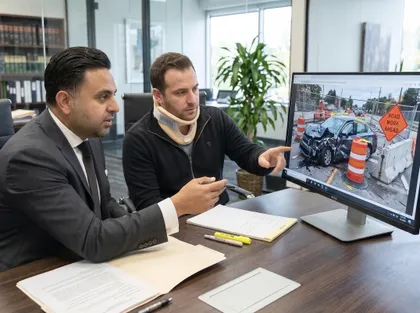
Choose the lawyer who offers a clear investigation plan, relevant experience, and understandable fees. If two attorneys have similar qualifications, compare how they answered your questions about the accident.
Consider whether each lawyer:
- Explained how they would investigate the crash.
- Identified which facts still need verification.
- Discussed possible driver and construction-related liability without assuming fault.
- Described how the firm would request and preserve evidence.
- Explained applicable insurance coverage and filing deadlines.
- Demonstrated experience handling disputed claims and litigation.
- Provided clear information about fees and case management.
Be cautious if an attorney promises a specific settlement before reviewing the evidence.
The State Bar of California advises people to question lawyers who guarantee results. A useful consultation should address the strengths and weaknesses of the possible claim. You should feel comfortable asking questions and discussing concerns with the attorney handling your case.
If you were injured in a California construction-zone collision, Arash Law offers a free initial consultation. Our attorneys can review the available facts and discuss whether further investigation is appropriate. The review may address driver conduct, traffic control conditions, possible responsible parties, and available insurance coverage.
Call (888) 488-1391 to discuss the circumstances of your collision.
How to Prepare for Your First Meeting With a Construction Zone Accident Lawyer
Prepare a short description of the collision and gather the information you already have. You do not need to know who caused the accident before speaking with an attorney. However, basic records can help the lawyer decide what to investigate.
Bring the following information when available:
- Accident details. Record the location, date, time, and direction of travel.
- Scene photographs. Include vehicle damage, roadway conditions, signs, and nearby construction activity.
- Police information. Bring the collision report or report number.
- Witness contacts. Provide names and contact information for anyone who observed the crash.
- Medical records. Gather available treatment details, bills, and injury reports.
- Insurance information. Include your policy details and any correspondence about the claim.
Explain which details you personally observed. Avoid guessing about vehicle speeds, construction activity, or the cause of the crash.
If you lack records, ask whether the lawyer can obtain them. The consultation can also help you decide whether it’s worth getting an attorney for a car accident based on your injuries, disputed fault, and the work your claim may require.
Frequently Asked Questions About Choosing a Construction Zone Accident Lawyer
How Soon Should I Choose a Lawyer After a Construction Zone Accident?
Begin comparing lawyers as soon as reasonably possible after addressing your immediate medical needs. Construction conditions may change before an attorney can inspect the location. Video recordings and other evidence may also become unavailable.
Some legal claims have short filing deadlines. If a public agency might be responsible, an attorney should promptly evaluate the government claim requirements. You can compare lawyers without waiting for every accident record to become available.
How Many Lawyers Should I Consult Before Choosing One?
Consider speaking with at least two lawyers before making your decision. The State Bar of California recommends comparing candidates and asking about similar cases. Several consultations can help you compare fees, communication, and investigation plans. You do not have to hire the first attorney you contact.
Can I Hire a Regular Car Accident Lawyer for a Construction Zone Crash?
Yes. A car accident lawyer may handle your claim if they have the experience and resources your case requires. Ask how they would investigate possible construction-related conditions.
A lawyer without direct experience in traffic control disputes should explain how they would obtain qualified assistance when necessary.
How Do I Know Whether an Attorney’s Fee Is Reasonable?
Compare written fee agreements from the lawyers you consult. Check the contingency percentage, case expenses, and how costs affect your recovery. Ask each lawyer to explain the agreement in plain language. Consider the services offered alongside the fees.
How Should I Choose a Lawyer If the Other Driver Blames Me?
Look for a lawyer who can investigate disputed fault and explain California’s comparative negligence rules. California generally allows injured people to recover damages even when they share responsibility for a crash. Their percentage of fault reduces the amount they can recover. Ask how the lawyer would use vehicle evidence, witness accounts, and road conditions to assess responsibility.
How Can I Tell If a Lawyer Is Prepared to Take My Case to Trial?
Ask about the attorney’s experience filing lawsuits, taking depositions, working with technical witnesses, and presenting cases in court. You can also ask who would handle your case if it proceeded to trial. The lawyer should explain how they would prepare for litigation if the parties cannot settle.
Should I Choose a Different Lawyer If I Were Working in the Construction Zone?
Possibly. If you were injured while performing construction work, you may have a workers’ compensation claim and a separate personal injury claim against a responsible third party. These claims follow different rules. Ask whether the lawyer handles workplace-related third-party injury claims and can identify when workers’ compensation benefits or liens may affect your recovery.
Schedule a Free Case Review With Arash Law About Your Construction Zone Accident
The right lawyer should explain how they will investigate your collision, assess possible claims, and handle your case. Compare experience, investigation methods, insurance knowledge, communication, and written fees before deciding.
If you were injured near road construction, Arash Law’s attorneys can review your construction zone collision and discuss whether further investigation is appropriate.
Call Arash Law at (888) 488-1391 for a free initial consultation. Discuss your accident, available evidence, and possible legal options.
Sources
- State Bar of California. Choosing an attorney.
https://www.calbar.ca.gov/public/legal-resources/selecting-attorney- State Bar of California. Attorney verification.
https://www.calbar.ca.gov/public/find-legal-professionals- Caltrans. CA MUTCD 2026.
https://dot.ca.gov/programs/safety-programs/camutcd- Caltrans. Temporary traffic control.
https://dot.ca.gov/programs/construction/construction-manual/section-4-12-temporary-traffic-control- California Civil Code § 1714. Negligence.
https://leginfo.legislature.ca.gov/faces/codes_displaySection.xhtml?lawCode=CIV§ionNum=1714.- California Government Code § 835. Public property liability.
https://leginfo.legislature.ca.gov/faces/codes_displaySection.xhtml?lawCode=GOV§ionNum=835.- California CCP § 335.1. Injury deadline.
https://leginfo.legislature.ca.gov/faces/codes_displaySection.xhtml?lawCode=CCP§ionNum=335.1.- California Government Code § 911.2. Government claim deadline.
https://leginfo.legislature.ca.gov/faces/codes_displaySection.xhtml?lawCode=GOV§ionNum=911.2.- California Government Code § 945.6. Lawsuit deadlines.
https://leginfo.legislature.ca.gov/faces/codes_displaySection.xhtml?lawCode=GOV§ionNum=945.6.- California BPC § 6147. Contingency fee agreements.
https://leginfo.legislature.ca.gov/faces/codes_displaySection.xhtml?lawCode=BPC§ionNum=6147.- California Department of Insurance. Auto insurance coverage. https://www.insurance.ca.gov/01-consumers/105-type/95-guides/01-auto/auto101.cfm
Disclaimer
The information on this page is for general educational purposes and does not constitute legal advice. No attorney-client relationship is formed by reading or relying on this content. If you were injured, consult a licensed California personal injury attorney about your specific situation. Arash Law | (888) 488-1391.