TL;DR: General contractors can be liable for unsafe construction sites when they retain control over site safety and their own actions create or worsen a hazard. Injured construction workers can lose full lost wages and pain and suffering if they cannot prove third-party negligence or miss California’s 2-year deadline.
Highlights:
- Take photos and videos of the hazard, equipment, and warning signs before cleanup.
- Get names and contact info for witnesses, foremen, and safety personnel.
- Request Cal/OSHA reports or citations tied to the incident and jobsite conditions.
- Ask who controlled site-wide safety and whether the IIPP was followed.
- Save medical records and treatment notes linking injuries to the accident.
- Document any unsafe instructions, removed safeguards, or known hazards left uncorrected.
- Under California law, you have two years to file a personal injury lawsuit.
Tip: When reporting the incident to supervisors or insurers, stick to observable facts and preserve messages, photos, and job-site documents.
Table of Contents
If a general contractor gave unsafe orders, ignored known hazards, or kept control over how work was done, they may be liable for your injuries. That can be true even if another company hired you directly.
Liability in construction accidents is not automatic. It depends on who had control over the job site where you were injured. The key question is whether the general contractor controlled safety and played a role in the hazard. If the answer is yes, a third-party claim against them may be possible.
Proving A General Contractor’s Negligence After An Accident
Your grounds to hold a general contractor liable are only valid if you can prove them. Construction site evidence disappears fast. Scaffolding comes down, debris gets cleared, and equipment gets moved before anyone records what went wrong. Proving negligence typically requires evidence tied to the contractor’s failure to prevent harm.
To demonstrate negligence, your evidence must support four elements. All four must be present, and each of them must connect to the general contractor’s conduct:
- Duty: The general contractor had a legal duty to keep the worksite safe for workers, subcontractors, and anyone else on the site.
- Breach: They did not meet that duty. A reasonable general contractor would have found and fixed the hazard.
- Causation: That failure caused your injury. The breach must have been a real factor in the harm, not just something that happened at the same time.
- Damages: You sustained actual, measurable losses, such as medical bills or lost wages.
A Cal/OSHA violation can strengthen your case. California Evidence Code § 669 establishes the doctrine of negligence per se. It applies when a general contractor breaks a safety rule meant to protect workers from the exact type of injury you suffered. When that happens, duty and breach are presumed, unless the contractor can rebut that presumption.
A Cal/OSHA citation can be important evidence of a safety violation, but its weight depends on the facts, the rule cited, causation, and whether an independent basis for civil liability exists. However, it’s not the only kind of proof that can support your case. What you can save now shapes what you can prove later. The most important items to preserve are:
- Photos and Videos: Document the hazard before the site is changed or cleaned up.
- Witness Statements: Collect accounts from co-workers, supervisors, and others who were on site.
- Medical Records: Keep notes from your doctor, physical therapist, or chiropractor that link your injuries to the accident and support your damages claim.
However, evidence of a violation is only the first thing you need to show. To establish liability, an injured party must also prove that the specific violation caused or contributed to the construction site accident.
Cases against a general contractor often involve multiple companies and overlapping claims. Preserving evidence is a critical first step, but using it to establish fault may need skilled legal support. While you may seek free advice from a construction accident lawyer online, it may help to consult them personally to discuss the specifics of your case.
How Cal/OSHA’s Multi-Employer Worksite Doctrine Affects Liability
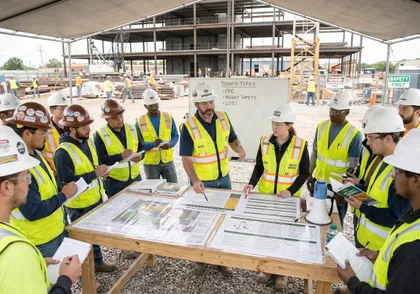
When a construction project involves workers from more than one company, more than one employer may be responsible for the same hazard. This is the multi-employer worksite doctrine. The general contractor usually carries the broadest safety duty on the site.
Every employer on a job site must provide a safe workplace under California law. This duty applies to every company on the site, not just the one whose worker was hurt. Insurers and courts evaluate what each employer did or failed to do before assigning fault.
The general contractor is usually the “controlling employer.” This party has the authority to ensure that hazards are corrected across the entire site. A general contractor cannot pin all the blame on a subcontractor. If they controlled site safety, they may still be legally responsible for the hazard.
Under Title 8 of the California Code of Regulations (§ 336.10), Cal/OSHA places each employer into one of four categories on a shared worksite, and a general contractor may fall into more than one of them:
- Creating Employer: The company that caused the hazard to exist.
- Exposing Employer: The company whose workers faced the risk, even if they did not create it.
- Controlling Employer: The company in charge of site-wide safety, usually the general contractor.
- Correcting Employer: The company assigned to fix a known violation.
Meanwhile, § 3203 of Title 8 requires every employer in California to keep a written Injury and Illness Prevention Program (IIPP). The IIPP must name who is responsible for safety, how hazards are identified and corrected, and how training is tracked. If a general contractor fails to enforce their IIPP, that failure may support a negligence claim. It could serve as evidence that the contractor did not exercise reasonable care to address unsafe conditions on the construction site, resulting in injuries and losses.
In a civil case, a general contractor that falls into more than one employer category can face far broader liability than any single subcontract would suggest. Construction accident attorneys review available records to determine the extent of general contractors’ liability.
The Privette Doctrine Vs. When General Contractors Share Fault
California law protects general contractors from lawsuits when a subcontractor’s worker gets hurt on the job. This principle is called the Privette doctrine. It breaks down when the general contractor keeps control over site safety, and their own actions cause the injury.
When a contractor hires a subcontractor, the law treats the arrangement as a shift in safety duty. The subcontractor is responsible for worker safety. If a worker is hurt, the general contractor is not liable by default.
That protection has a clear limit. The Hooker exception comes from Hooker v. Department of Transportation (2002). Under it, a general contractor may be liable if two things are true:
- They retained control over how the work was performed.
- Their own actions, or the way they exercised that control, made the site more dangerous.
Here are some scenarios where these exceptions may apply:
- The general contractor told a crew to skip fall protection to save time.
- The general contractor handed workers a broken tool, like a ladder, that they knew was faulty.
- The general contractor removed safety gear that was already in place.
- The general contractor knew about a dangerous condition but neither fixed it nor warned others, even though the subcontractor had no way to discover it on their own.
A safety rule violation alone does not automatically show fault. Victims typically must prove that the general contractor negligently exercised retained control that affirmatively contributed to the injury. California law closely regulates sites with multiple employers. These rules provide injured workers a way to hold a general contractor responsible.
Thinking, “I need a personal injury lawyer to help with my construction accident case,” is understandable in these situations. It can be difficult to handle claims involving multiple parties on your own, especially if you’re still recovering from an injury.
Why Injured Construction Workers Pursue Third-Party Claims
A third-party claim aims to pursue a liable party other than your direct employer. This party could be a general contractor, a subcontractor, an equipment maker, or a property owner. If that party’s carelessness helped cause your injury, you may sue them directly.
These claims are valid only if there’s proof that the general contractor’s negligence or unsafe job-site practices caused the injury. They also allow you to seek damages for losses that aren’t covered by workers’ compensation benefits, including:
- Full Lost Wages: The full income you lost, not a partial replacement.
- Future Earning Capacity: What a long-term injury may cost you in future work and income.
- Pain and Suffering: Compensation for the physical and emotional toll of a serious injury.
You can’t sue a general contractor just for being on the job site. Specific legal exceptions must apply first. Whether those exceptions apply depends on how the contractor was involved in your work. Construction injury lawyers often rely on evidence, such as safety reports, witness statements, photos of the job site, and OSHA findings, to determine what caused the accident and who may be responsible.
Frequently Asked Questions About Construction Injury Liability
Getting hurt on a construction site raises legal questions that can be hard to answer without a lawyer. These answers follow California law, and each one stands on its own.
Can An Independent Contractor Sue A General Contractor In California?

Yes. As an independent contractor, you are not limited to workers’ comp. You can file a personal injury lawsuit against the general contractor. Whether you can hold them liable depends on the facts, such as whether their failure to keep a job site safe directly caused your injury. It also depends on whether or not the Privette doctrine applies.
Who Is Ultimately Responsible For Safety On A Multi-Employer Construction Site?
Safety is often a shared obligation on a construction site. However, the general contractor typically bears the greatest share of responsibility. California law refers to them as the “controlling employer.” That means they must find and fix hazards across the whole site, including those created by subcontractors.
Is It Worth Suing A General Contractor After A Construction Injury?
In some cases, yes. Though settling can be faster and cheaper than suing a general contractor for your injuries, filing a lawsuit may be necessary if that contractor’s insurer refuses to agree on a settlement. That matters in cases where you sustained severe injuries and extensive losses.
What If I Was Partially At Fault For The Construction Accident?
You may still recover your losses. California uses a pure comparative fault rule. Your share of fault reduces the amount you recover. However, it does not eliminate your right to pursue compensation. Instead, a court can assign you a percentage of fault and deduct that from your potential award.
How Long Do I Have To File A Claim Against A General Contractor?
If you’re filing an insurance claim, the deadline will depend on your policy. If you’re planning to take legal action, be aware that strict legal deadlines may apply.
Under California’s statute of limitations (Code of Civil Procedure § 335.1), you generally have two years from the date of injury to file a lawsuit. Exceptions may apply in some cases, so it’s not always safe to assume that you have two years to file. If the filing window that applies to your situation closes, you may lose the right to sue, no matter how strong your case is. A lawyer can tell you how much time you have to pursue compensation.
Arash Law Provides Legal Help After A Construction Accident In California
Our construction accident attorneys at Arash Law, which is also referred to as AK Law, can review OSHA reports, examine contracts between site employers, and trace which parties had control when you were hurt. When several contractors are involved, it can be hard to determine who is at fault, but we work to uncover every party who may be liable.
However, if costs are a concern following your injury, you may be wondering, “Do lawyers only get paid if they win?” At our injury law firm, the answer is yes. Our team works on a contingency fee basis, which means we only get paid attorney’s fees if we win your case. Call (888) 488-1391 for a free initial consultation.