TL;DR: An Orinda police report comes from the agency that investigated the crash: the Contra Costa County Sheriff for local streets and the CHP for Highway 24. The report can help document fault and other crash details, but do not wait for it before filing a required DMV SR-1. The SR-1 is a separate filing due within 10 days when California’s reporting requirements apply.
Key Facts
- The Contra Costa County Sheriff’s Office Records Unit handles records for Orinda Police Services, including traffic collision reports, and is listed at 2530 Arnold Drive, Suite 170, Martinez, CA 94553.
- The Contra Costa County Sheriff’s Records & ID Unit generally has 10 days to respond to report requests. At the same time, the California Highway Patrol (CHP) says crash reports are typically available within eight (8) business days from the date of the crash.
- California Vehicle Code (CVC) §20012 limits release of collision reports to people with a proper interest in the report, including involved drivers, named injured persons, vehicle or damaged-property owners, parents of minor drivers, guardians or conservators, and authorized representatives.
- California Vehicle Code §16000 requires an SR-1 filing with the California DMV within 10 days if a crash involves injury, death, or property damage over $1,000.
- California Vehicle Code §20008 generally requires a driver involved in a crash resulting in injury or death to make or cause to be made a written report to law enforcement within 24 hours.
- Government Code §911.2 sets a six-month deadline for a government tort claim when a public entity may be liable, and California Code of Civil Procedure (CCP) §335.1 gives most traffic-accident personal injury claims a 2-year statute of limitations.
Table of Contents

After an accident in Orinda, you request your police report from whichever agency responded: the Contra Costa County Sheriff’s Office for crashes on local roads or the California Highway Patrol (CHP) for collisions on Highway 24. Because Orinda receives police services through a contract with the Contra Costa County Sheriff’s Office, rather than operating an independently staffed city police agency, many people may be unsure where to request a report.
Whether your crash occurred on a local Orinda street or Highway 24 is the single most important factor in knowing who has your report. A crash on Moraga Way or Camino Pablo is a matter for the Sheriff. A crash on Highway 24 near the Caldecott Tunnel is a CHP matter. Collision reports are generally requested from the agency that investigated the crash, so identifying the correct agency before submitting your request can help avoid delays.
What Orinda Drivers Need To Know About Getting Their Crash Report
Orinda provides police services through a contract with the Contra Costa County Sheriff’s Office rather than independently staffing its police department. The Sheriff’s Office provides patrol and investigative services throughout the city. The Contra Costa County Sheriff’s Records & ID Unit in Martinez typically maintains crash reports for collisions on local roads in Orinda.
The distinction between Sheriff and CHP jurisdictions matters when you’re trying to get your report quickly. Going to the wrong agency costs time you may not have, particularly if an insurer is pressing you for documentation or if the 10-day DMV SR-1 deadline is approaching. Knowing that the Sheriff’s Records & ID Unit is your point of contact for local road crashes and that the CHP Crash Portal handles Highway 24 collisions puts you in the right lane from the start.
Need help getting your crash report or reviewing it for errors? Arash Law’s team can request the report on your behalf, identify inaccuracies that could affect fault findings, and advise you on next steps. Call us at (888) 488-1391 for a free initial consultation.
Which Agency Filed Your Orinda Crash Report?
The specific road or freeway where your accident occurred generally controls which agency holds the report. The Contra Costa County Sheriff’s Office and the California Highway Patrol cover distinct jurisdictions in Orinda, and their records systems are completely separate.
- Contra Costa County Sheriff’s Office — Records & ID Unit: Crashes on local Orinda streets, including Moraga Way, Camino Pablo, and Orinda Way, are handled by the Contra Costa County Sheriff under the city’s law enforcement services contract. Reports prepared by Orinda Police Services are generally maintained through the Contra Costa County Sheriff’s Records Unit in Martinez.
- California Highway Patrol (CHP): Crashes on Highway 24 (the state route that runs through Orinda toward the Caldecott Tunnel and into the Lamorinda corridor) fall under CHP jurisdiction. CHP investigators file those reports in the statewide crash report system.
If you’re not certain which agency responded, check the exchange slip the officer gave you at the scene. It typically lists the agency name and the report or incident number. If you don’t have that slip, try to recall whether the officer’s vehicle was a Sheriff’s cruiser or a CHP patrol car; the markings are distinct. An attorney can also identify the correct agency and submit the request on your behalf.
How To Request Your Crash Report In Orinda
The table below shows how to contact each agency, what to bring, and what to expect.
| Category | Contra Costa County Sheriff | California Highway Patrol |
|---|---|---|
| When to Contact | Your crash occurred on a local Orinda road, such as Moraga Way, Camino Pablo, or Orinda Way. | Your crash occurred on Highway 24 or another California state freeway passing through or near Orinda. |
| Office Address | 2530 Arnold Drive, Suite 170, Martinez, CA 94553 | Request online via the CHP Crash Portal, or visit any CHP Area office with Form CHP 190. |
| Hours | Monday through Friday, 8:00 AM to 5:00 PM. Confirm hours before visiting. | Hours vary by CHP Area office. Check the specific office before visiting. |
| Request Methods | In person at the Records & ID Unit, by mail, or by email to recordsinfo@so.cccounty.us. Include your report number (if known), contact information, and a valid ID. If you do not know the report number, provide the crash date, time, location, and a brief description. | Online through the CHP Online Crash Report System (register as a Party of Interest), by mail using Form CHP 190, or in person at any CHP Area office. |
| Who May Request | Contact the Records & ID Unit directly to confirm current eligibility and identification requirements. | Eligible Parties of Interest under California Vehicle Code (CVC) §20012, including drivers, passengers, vehicle owners, property owners, parents of minors, and legal guardians, plus their authorized representatives. |
| Processing Time | The Records & ID Unit generally has 10 days to respond to requests. | CHP says traffic crash reports are typically available within eight (8) business days from the date of the crash. |
| Fees | Copy fees may apply. Confirm the current amount with the Records & ID Unit before submitting. | Fees may apply. Confirm the current amount with the CHP before submitting. |
Legal Basis: California Vehicle Code §20012 governs the release of CHP collision reports to eligible parties and their authorized representatives.
An attorney requesting a report must establish that they represent an eligible party and comply with the agency’s current documentation requirements. If you retained legal counsel, they can handle the request directly.
Step-By-Step: Requesting Your Orinda Police Report
Follow these steps to submit a complete and accurate request to the right agency.
- Identify the Crash Location: Was the collision on a local Orinda road or on Highway 24? This single question determines which process you follow.
- Determine the Responsible Agency: Sheriff’s Records & ID Unit for local roads; CHP for Highway 24 and other state freeways.
- Gather Your Request Information: Collect the report or incident number from your exchange slip, if available, along with the crash date and location, and the names of the parties involved. If you do not know the report number, you can still request the report. For a Sheriff report, provide the crash date, time, location, and a brief description so Records staff can search for it. For a CHP report, provide the approximate crash date and as much location information as possible.
- Prepare the Required Identification or Authorization: Check the investigating agency’s current requirements. CHP generally requires picture identification from an individual requester and recognizes qualifying legal representatives as Parties of Interest.
- Submit Your Request: For the Sheriff: in person at 2530 Arnold Drive, Suite 170, Martinez, CA 94553, by mail, or by email to recordsinfo@so.cccounty.us. For the CHP: register and request online at the CHP Crash Portal, submit Form CHP 190 by mail, or visit a CHP Area office in person.
- Wait for Processing: Sheriff requests receive a response within 10 days. CHP reports are typically available within eight (8) business days.
- Review the Report for Accuracy: Read the report carefully when you receive it. If you find an error or disagree with part of the report, contact the investigating agency about its correction or supplemental-statement process. CHP allows involved parties to submit a written supplemental statement identifying the portions they dispute.
Not every collision results in an investigative police report. If you are unsure whether Orinda Police Services or CHP created one, contact the agency and provide the crash date, location, and involved parties. If no report exists, the agency can explain whether another reporting procedure applies.
The specific filing and reporting deadlines that apply alongside this process, including the DMV SR-1 and statute of limitations, are explained in the deadlines section later in this guide.
The DMV SR-1 Requirement: A Separate 10-Day Deadline
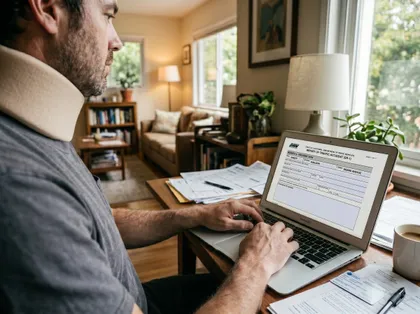
California Vehicle Code §16000 requires every driver involved in a collision resulting in injury, death, or property damage over $1,000 to file a Report of Traffic Accident (SR-1) with the California DMV within 10 days of the crash. This SR-1 filing is completely separate from your police report request. Requesting a police report does not satisfy the DMV’s SR-1 requirement, and filing an SR-1 does not get you a copy of your police report.
Failure to file a required SR-1 can result in suspension of your driving privilege. Because even seemingly minor vehicle damage can exceed $1,000, drivers should check the repair estimates before assuming that an SR-1 is unnecessary.
- Filing a police report does not satisfy the 10-day SR-1 requirement.
- Failure to file the SR-1 may result in license suspension until you comply.
- The SR-1 must be filed directly with the DMV, separately from any agency report request.
In addition to the 10-day SR-1 deadline, California Vehicle Code §20008 generally requires a driver involved in a crash resulting in injury or death to make, or cause to be made, a written report to law enforcement within 24 hours.
Legal Basis: California Vehicle Code §16000 for the SR-1 filing requirement and California Vehicle Code §20008 for the 24-hour injury report requirement.
How Your Crash Report Affects Your Injury Claim In Contra Costa County
A police report from your Orinda crash may be an important document when an insurer evaluates your claim. Personal injury cases arising from traffic collisions are generally filed in the Contra Costa County Superior Court at 725 Court Street, Martinez, CA 94553, the same city where the Sheriff’s Records & ID Unit is located. Understanding what the report contains and catching errors early can help protect your potential recovery.
Depending on the investigating agency and type of report, an official crash report may include several components that can help insurers and attorneys evaluate the collision:
- Officer’s Narrative: A written account of how the investigating officer determined the collision occurred, based on physical evidence and statements gathered at the scene.
- Scene Diagram: A visual representation of vehicle positions, travel directions, and relevant road features on the local Orinda street or Highway 24 corridor involved.
- Primary Collision Factor (PCF): The investigating officer’s professional opinion about the primary cause of the collision.
- Driver and Witness Information: Contact details and statements collected by the officer at the scene.
- Physical Evidence Observations: Notes on road conditions, vehicle damage, skid marks, and other factors observed by the officer.
California follows a pure comparative fault rule, meaning you may recover compensation for your Orinda crash even if you share some responsibility. The PCF notation in the report is not the final word on fault; it is a starting point that your attorney can challenge with additional evidence, including witness statements, scene photos, and medical records. This can be especially important when winding hillside roads make an Orinda accident claim harder to prove.
Representative Results From Arash Law Traffic Accident Cases
Arash Law has represented clients across California in serious traffic accident cases. The results below are representative outcomes from the firm’s practice; they are not specific to Orinda and are provided to illustrate the types of cases the firm handles, not to predict or guarantee results in any future case.
$12,000,000 — Auto vs. Pedestrian: Settlement reached on the courthouse steps before jury selection in a case involving a 74-year-old pedestrian struck while crossing the street, sustaining severe injuries.
$8,800,000 — Auto Vs. Auto: Settlement in a case where a company van driver’s speeding caused severe injuries to the client. Multiple depositions shifted the trajectory of the case.
Case results displayed are not a guarantee of outcome. Results depend on the unique facts of each case; different facts will produce different results. Prior results do not guarantee a similar outcome.
If your crash report contains errors or you’re unsure how it will affect your claim, Arash Law can review the report, identify problems, and take steps to correct the record before it can harm your case. Call (888) 488-1391 — no fees unless there is a recovery.
How To Evaluate Any Injury Law Firm Before Hiring
Choosing the right attorney after an Orinda crash matters. The right firm will understand Contra Costa County court procedures, have experience identifying errors in CHP and Sheriff crash reports, and be prepared to take a case to the Contra Costa County Superior Court in Martinez if a fair settlement isn’t reached. Here are behaviors and practices to look for, as well as some to avoid.
Signs Of A Strong Firm
- Willing to explain their case selection process. A firm that accepts every case without evaluation may not have the capacity to give yours the attention it needs. Ask how they decide which cases to take.
- Can name local venues and agencies. A firm handling Contra Costa County cases should be familiar with the Superior Court at 725 Court Street in Martinez, the Sheriff’s Records & ID Unit, and the CHP Crash Portal process for Highway 24 cases.
- Shows a track record of resolved cases, not just filings. Ask whether cases are typically settled or tried, and what that means for the timeline and outcome.
- Communicates fees upfront in plain language. Under California Business & Professions Code §6147, covered contingency fee agreements must be in writing and include specified information about the fee arrangement when the agreement is entered into. Any firm that can’t produce a written agreement on request is a red flag.
Behaviors That Deserve Caution
- Firms that pressure you to sign before reviewing your Orinda crash report or asking whether your accident involved a Sheriff or CHP jurisdiction road.
- Firms that have no experience with government claims under Government Code §911.2, which may apply if a Caltrans, Contra Costa County, or City of Orinda road defect contributed to your crash, and cannot explain the government claim process.
- Firms that cannot tell you who specifically will be handling your case.
- Firms that promise a specific dollar outcome; no attorney can guarantee results.
How To Verify A Firm’s Track Record
Before hiring any attorney for your traffic accident case in Orinda, take these steps to verify credentials and standing.
- Check State Bar Licensing: Check the State Bar of California’s attorney search to confirm the lawyer’s current license status and review any publicly listed disciplinary or administrative history.
- Search Contra Costa County Court Records: The court’s Public Portal includes search options, such as attorney name and bar number, to help you locate publicly available case information.
- Ask Questions Specific to Contra Costa County Practice: Does the firm know the process for the Sheriff’s Records & ID Unit for Orinda crash reports? Has anyone at the firm filed a government tort claim against a Contra Costa County public entity? These are concrete, verifiable questions, not abstract reputation claims.
- Read Third-Party Reviews With Context: Reviews that provide specific details about an attorney’s communication, professionalism, or handling of a case may be more useful than vague or anonymous comments.
Common Scenarios After An Orinda Crash
Every accident has unique facts, but certain situations occur frequently in Orinda. Here is how the report request process applies in a few typical scenarios.
Crash On Moraga Way: Who Has The Report?
A collision on Moraga Way will generally be handled through Orinda Police Services, which are provided under contract by the Contra Costa County Sheriff’s Office. Reports prepared through that service are generally maintained through the Sheriff’s Records Unit in Martinez. If you were injured on Moraga Way and need the report for your injury claim, request it in person, by email, or by mail from the unit at 2530 Arnold Drive, Suite 170, Martinez.
Have the incident number and identification available if you have them, and confirm the Sheriff’s current request requirements before submitting your request. Ask whether the report is final or whether supplemental pages are pending, since some crashes generate follow-up reports that include additional investigation notes.
Highway 24 Rear-End Near The Caldecott Tunnel
Highway 24 approaches the Caldecott Tunnel through Orinda, and crashes on this state route segment are generally handled by CHP. Your report is in the CHP statewide system and is typically available within eight (8) business days. Register at the CHP Crash Portal (crashes.chp.ca.gov) as a Party of Interest under CVC §20012, or submit Form CHP 190 by mail. If you were rear-ended on Highway 24 and the at-fault driver’s insurer is requesting a recorded statement before you’ve received and reviewed the report, consider speaking with an attorney first.
The Crash Report Contains An Error Overstating Your Fault
If the officer’s report assigns you a Primary Collision Factor that doesn’t match what actually happened, you may contact the reporting agency and ask it to review a factual error or consider additional documentation. For a sheriff report, contact the Records & ID Unit in Martinez. For a CHP report, contact the issuing CHP Area office. Bring specific documentation (photos from the scene, witness contact information, and any dashcam footage) to support your correction request. The goal is to ensure the report reflects the facts, not an assumption the officer made under time pressure at the scene.
Crash Involving A Road Defect On A Local Orinda Street
If your Orinda crash involved a pothole, broken pavement, or a malfunctioning traffic signal on a city-maintained road, you may have a claim against the responsible public entity. Pursuing a claim against the City of Orinda or Contra Costa County requires navigating a separate government tort claim process with a strict six-month deadline. A police report can be useful when preparing the claim because it may document the date, location, parties, and circumstances of the crash.
Missing the six-month deadline can jeopardize a claim, although California law provides limited procedures for seeking permission to present certain late claims. An attorney familiar with Contra Costa County public entity claims can help you meet it.
Injured Passenger: Can You Request The Report?
If you were a passenger in a vehicle involved in a Highway 24 crash, you are an eligible party under CVC §20012 and may request the CHP report directly. If your crash occurred on a local Orinda road, the report is held by the Contra Costa County Sheriff’s Records & ID Unit. Contact that unit directly to confirm current eligibility rules for passengers. As an injured passenger, you may have a claim against one or more drivers, regardless of who was found at fault in the report. An attorney can review the report alongside your medical records to assess your options.
Crash With A Driver Who Has No Insurance
If the other driver in your Orinda crash had no insurance, the police report is especially important. It can help document the other driver’s information and the circumstances of the crash and may support an uninsured motorist claim through your insurer. File your SR-1 with the DMV within the 10-day window, preserve all documentation, and report the absence of insurance to your insurer promptly. Your policy’s uninsured motorist coverage may be your primary path to compensation, and the crash report helps support that claim.
Evidence To Preserve After An Orinda Crash
Your Sheriff or CHP report is the centerpiece of your post-crash documentation, but it is not the only evidence that matters for an Orinda injury claim. The table below shows the key evidence types, why they matter, how to preserve them, and who controls them.
| Evidence Type | Why It Matters | Preservation Action | Who Controls It |
|---|---|---|---|
| Official crash report (Sheriff or CHP) | Documents the officer’s fault determination, scene details, and party information; generally forms the baseline for insurance and legal proceedings. | Request from the correct agency promptly. For the CHP: register at crashes.chp.ca.gov. For the Sheriff: contact the Records & ID Unit at 2530 Arnold Drive, Suite 170, Martinez. | Contra Costa County Sheriff’s Records & ID Unit (local roads) or CHP (Highway 24). |
| DMV SR-1 filing confirmation | Serves as proof of your filing; failure to file can result in license suspension, independent of any court or insurance outcome. | File SR-1 with the California DMV within 10 days of the crash. Retain your submission confirmation. | California DMV. |
| Scene photographs and video | Capture vehicle positions, road conditions, skid marks, and visible injuries before the scene is cleared or altered. | Take photos at the scene if you are able. Dashcam footage should be downloaded and backed up immediately. | You or your attorney. |
| Medical records and treatment notes | Help document the connection between the crash and your injuries; some insurers scrutinize the gap between a crash date and first medical treatment. | Seek medical evaluation promptly after the crash and retain all records and billing documentation. | Your treating healthcare providers. |
| Witness contact information | Eyewitness accounts can corroborate facts that the officer’s report doesn’t fully capture or that conflict with the other driver’s version. | Collect names and phone numbers at the scene; your attorney can follow up to obtain statements. | Witnesses themselves; the police report may list them. |
| Exchange the slip from the responding officer. | Identifies the agency, report number, and officer information. | Keep the original in a safe place; photograph it immediately as backup. | You. |
Filing Deadlines After An Orinda Crash
Several deadlines apply after a crash in Orinda. Missing any one of them can independently affect your rights; some create license consequences, others can cut off your right to sue.
- SR-1 With DMV (10 Days): Required if the crash involved injury, death, or property damage over $1,000. File directly with the California DMV. Filing a police report does not satisfy this requirement.
- Written Injury or Death Report (24 Hours): The driver of a vehicle involved in a crash that caused injury or death must make or arrange for a written accident report within 24 hours.
- Government Tort Claim (6 Months): If a public entity (such as the City of Orinda or Caltrans) may be liable, a government tort claim under Government Code §911.2 must be filed within six months of the incident date. This deadline runs independently and generally cannot be extended simply because you weren’t aware of the public entity’s involvement. However, a person who misses the six-month deadline may be able to apply for permission to present a late claim, generally within a reasonable time not exceeding one year after the cause of action accrues.
- Personal Injury Lawsuit (2 Years): Under California Code of Civil Procedure (CCP) §335.1, most personal injury claims arising from traffic accidents have a 2-year statute of limitations from the date of injury. If a government entity is involved, the government-claim deadline effectively controls the earlier end of the timeline.
- Injured Minors, Tolling May Apply: If you or a family member injured in the crash was a minor at the time, the statute of limitations may be tolled (paused). The government-claim rules for minors differ; an attorney familiar with Contra Costa County claims should be consulted early.
Legal Basis: California Vehicle Code §16000 for SR-1 filing; California Vehicle Code §20008 for the 24-hour injury report; Government Code §911.2 for the government tort claim; Government Code §911.4 for late-claim applications; and CCP §335.1 for the personal injury statute of limitations.
Government Claim Procedure For Orinda Public Entity Crashes
If a public road defect, signal failure, or government vehicle may have contributed to your crash, this section explains the government claim requirement that applies before you can sue.
If your Orinda crash involved a condition on a city street, a County-maintained road, or Highway 24 under Caltrans control, you may have a potential claim against a public entity (the City of Orinda, Contra Costa County, or Caltrans, for example, in cases involving a road defect or signal failure). Before filing a lawsuit against any government agency, California law requires you to file a government tort claim with the relevant public entity under Government Code §911.2.
The process for filing a government tort claim and the responsible agency depend on where and how the public road defect occurred:
- City of Orinda: Claims arising from defects on city-maintained local streets (such as Moraga Way or Camino Pablo) must be filed with the City of Orinda.
- Contra Costa County: Claims involving County-maintained roads or County vehicles go to Contra Costa County.
- State of California or Caltrans: A claim involving an alleged dangerous condition on Highway 24 must be presented through the appropriate state claim process.
- If your claim amounts to $12,500 or less, you may file directly with Caltrans.
- If your claim is over $12,500, you must file a claim with the State of California Government Claims Program.
Confirm the proper filing destination before submitting the claim.
All government tort claims must be filed within six months of the incident date. If the public entity rejects your claim, you have six months from the rejection notice to file a lawsuit. If the entity does not act within the applicable 45-day period, the claim is generally deemed rejected by operation of law. The deadline for filing suit depends on whether the entity provides a written rejection notice that complies with Government Code §913. A compliant written notice generally triggers a six-month deadline; if the required written notice is not given, Government Code §945.6 generally provides a two-year filing period.
Legal Basis: Government Code §911.2 for the 6-month claim deadline; §912.4 for the 45-day response window; and §945.6 for the post-rejection filing deadline.
What Arash Law Charges: Contingency Fees Explained
Arash Law handles Orinda personal injury cases on a contingency fee basis. You pay no attorney’s fees upfront. The firm charges a percentage of any compensation recovered in the case; if there is no recovery, there is no attorney’s fee. A contingency fee arrangement means that a client’s interests and the firm’s interests are aligned: the firm is motivated to recover as much as possible for its clients.
Under California Business & Professions Code §6147, contingency fee agreements must be in writing and must clearly disclose the percentage the attorney will receive, how expenses will be handled, and what happens if the case does not result in a recovery. Before signing any fee agreement, ask for a written copy and review it. Any reputable firm will provide one without hesitation.
What To Bring To Your First Consultation With Arash Law
Coming prepared helps an attorney evaluate your case faster. Bring or gather as many of the following as you can before your consultation:
- The exchange slip from the responding Sheriff’s deputy or CHP officer (or your notes from the scene).
- Any report number or incident number you have received.
- Photos or video from the crash scene.
- Your medical records or treatment notes from any care received after the crash.
- Your health insurance and vehicle insurance information.
- Any written communications you’ve received from insurers, including claim numbers.
- The other driver’s name, contact information, and insurance details (if you have them).
- Any correspondence from the DMV about your SR-1 filing.
Recorded Statement Warning: Do not give a recorded statement to the at-fault driver’s insurance company before consulting with an attorney. Insurers use recorded statements to lock in details that can be used to reduce or deny your Orinda injury claim. You have no legal obligation to provide one before speaking with legal counsel.
Frequently Asked Questions About Accident Police Reports In Orinda
After a crash in Orinda, the questions that come up fastest are often the most practical ones: who has your report, how long will it take, and what happens if something in the report is wrong. The answers below address the specific procedures that apply in Orinda and Contra Costa County.
How Long Does It Take To Get A Police Report In Orinda?
There is no fixed timeline for receiving a police report after an Orinda crash. For collisions investigated by the Contra Costa County Sheriff, report availability depends on the investigation and processing time. The 10-day period under the California Public Records Act generally applies to an agency’s initial response to a records request, not a deadline to provide the report.
For crashes investigated by CHP on Highway 24, California Vehicle Code § 20012 governs access to collision reports but does not require CHP to complete a report within eight business days. Serious or complex crashes may take longer. Contact the agency that investigated your collision to check the report’s status.
Who May Request A California Accident Report?
CVC § 20012 permits disclosure of certain accident reports to people with a proper interest in the report. For CHP crash reports, CHP refers to qualifying requesters as Parties of Interest. CHP lists drivers, passengers, property owners, vehicle owners, parents of minors, legal guardians, and certain authorized or legal representatives among those who may qualify.
For Sheriff reports involving crashes on Orinda local roads, contact the Contra Costa County Sheriff’s Records & ID Unit to confirm current eligibility and request requirements.
Is The Police Report The Same As The DMV SR-1 Form?
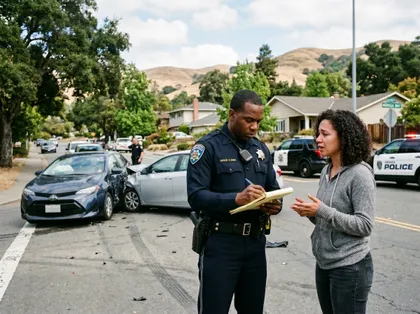
No, the police report and the DMV SR-1 are completely separate documents with different purposes and different deadlines. The police report is generated by the investigating agency (Sheriff or CHP) and documents the facts of the crash. The SR-1 is a self-reported form you file with the California DMV within 10 days of any crash involving injury, death, or property damage over $1,000. Filing one does not satisfy the obligation to file the other.
What Should I Do If The Police Report Contains An Error?
If your police report contains an error, contact the reporting agency as soon as you identify it.
- For a Sheriff report, reach out to the Contra Costa County Sheriff’s Records & ID Unit in Martinez.
- For a CHP report, contact the CHP area office that issued it.
The agency will review your request and decide whether to amend the report or prepare a supplemental report. It is not required to change the officer’s conclusions or add your statement to the official record. Bring specific supporting documentation (photos, witness contact information, and dashcam footage) when you make the correction request. An attorney can help you frame the correction in a way that helps protect your claim.
Can A Police Report Be Used As Evidence In A California Court?
Not necessarily. A police collision report is not automatically barred from court by Vehicle Code §20013. California courts have explained that §20013’s specific exclusion applies to statutorily required accident reports made by drivers, passengers, or witnesses. Whether an investigating officer’s report or particular information in it is admissible depends on California evidence rules and the circumstances of the case.
What If A Road Defect On An Orinda Street Caused My Crash?
If a pothole, damaged road surface, or malfunctioning signal on an Orinda city street or a county-maintained road contributed to your crash, you may have a claim against the responsible public entity. A claim against the City of Orinda or Contra Costa County requires filing a government tort claim under Government Code §911.2 within six months of the crash date. This deadline applies regardless of whether you are also pursuing a claim against another driver. A police report can be useful when preparing the claim because it may document the crash date, location, parties, and reported roadway conditions.
Get Help From Arash Law After Your Orinda Crash
A police report is often the first piece of evidence an insurer examines when deciding how to handle your Orinda injury claim. If the report contains errors, missing details, or an unfavorable Primary Collision Factor notation, acting quickly allows you to correct the record and help protect your potential recovery. Arash Law can obtain your report from the Contra Costa County Sheriff’s Records & ID Unit or the CHP Crash Portal, review it for inaccuracies, and take steps to address anything that could undermine your claim.
If your crash also involves a road defect, a government vehicle, or a question about public entity liability on Orinda’s streets or Highway 24, our attorneys can guide you through the government claim procedures that apply under Government Code §911.2 in Contra Costa County.
Arash Law works on a contingency fee basis, meaning the firm’s fee comes from the recovery, not from you. Make ‘em pay — call AK. Call (888) 488-1391 today for a free case review.
If English is not your first language, you may request assistance in another language when contacting the firm.
About This Guide
This guide was researched and written using verified primary sources, including the Contra Costa County Sheriff’s Office Records & ID Unit page, the California Highway Patrol’s CHP 190 collision report page and CHP Crash Portal registration page, the California DMV’s accident reporting resources, the City of Orinda’s police services page, and the California Legislature’s online statutes (California Vehicle Code §§20012, 16000, and 20008; Government Code §911.2; and CCP §335.1).
The guide focuses specifically on Orinda’s law enforcement arrangement. Orinda contracts its sworn police services through the Contra Costa County Sheriff’s Office, and the Orinda Police Department operates within the Sheriff’s Special Operations Division. Because the Orinda Police Department operates through the city’s contract with the Contra Costa County Sheriff’s Office, reports prepared through that service are handled through the sheriff’s records system. That detail distinguishes a crash report request in Orinda from the process in cities with their own police departments, and it is the core practical insight this guide is designed to deliver. The coverage of Highway 24 crash reports reflects the CHP’s statewide crash reporting system and the specific CVC §20012 eligibility rules governing who may request those records.
Sources
- Contra Costa County Sheriff’s Office — Records & ID Unit: https://www.cocosheriff.org/bureaus/support-services/records-id-unit
- Contra Costa County Sheriff’s Office — Special Operations Division: https://www.cocosheriff.org/bureaus/field-operations/special-operations-division
- California Highway Patrol — Collision Report CHP 190: https://www.chp.ca.gov/notify-chp/collision-report-chp-190
- CHP Online Crash Report System — Registration: https://crashes.chp.ca.gov/identity/account/register
- California DMV — Accident Reporting: https://www.dmv.ca.gov/portal/dmv-virtual-office/accident-reporting/
- City of Orinda — Police Services: https://www.cityoforinda.gov/173/Police
- California Vehicle Code §20012 (crash report release to Parties of Interest): https://leginfo.legislature.ca.gov/faces/codes_displaySection.xhtml?lawCode=VEH§ionNum=20012
- California Vehicle Code §16000 (SR-1 filing requirement): https://leginfo.legislature.ca.gov/faces/codes_displaySection.xhtml?lawCode=VEH§ionNum=16000
- California Vehicle Code §20008 (24-hour injury report requirement): https://leginfo.legislature.ca.gov/faces/codes_displaySection.xhtml?lawCode=VEH§ionNum=20008
- Government Code §911.2 (government tort claim — 6-month deadline): https://leginfo.legislature.ca.gov/faces/codes_displaySection.xhtml?lawCode=GOV§ionNum=911.2
- California Code of Civil Procedure §335.1 (personal injury statute of limitations): https://leginfo.legislature.ca.gov/faces/codes_displaySection.xhtml?lawCode=CCP§ionNum=335.1
- Contra Costa County Sheriff’s Office — Law Enforcement Links: https://www.cocosheriff.org/contact-us/law-enforcement-links
- Arash Law — Case Results: https://arashlaw.com/case-results/
- Arash Law — Client Testimonials: https://arashlaw.com/testimonials/
Disclaimer
This page is for general informational purposes only and does not constitute legal advice. Reading this page does not create an attorney-client relationship between you and Arash Law or any of its attorneys. The information here reflects California law as understood at the time of publication and may not apply to your specific situation. Laws and agency procedures change; confirm current requirements with the relevant agency or a licensed California attorney before acting. The results described are representative past outcomes and do not guarantee a similar result in any future case. If you have been injured in an accident, consult a licensed California personal injury attorney to discuss your specific circumstances.