Quick Answer
After a San Diego motorcycle crash, move to safety, call 911, get medical care, and preserve your bike and gear before any repairs. You have 2 years to sue a private driver, but only 6 months to file a required government claim if a public agency was involved.
Key Facts
- Vehicle Code § 16000 requires filing an SR-1 with the California Department of Motor Vehicles (DMV) within 10 days if anyone was injured or killed, or if property damage exceeded $1,000.
- Under Vehicle Code §§ 20001 and 20003, you must stop immediately after an injury crash, render reasonable aid, and exchange your name, address, vehicle registration, and driver’s license information.
- San Diego Superior Court’s Central Division uses two facilities: 1100 Union St, San Diego, CA 92101, and 330 W. Broadway, San Diego, CA 92101. Many ZIP codes file civil personal injury cases at 330 W. Broadway, Room 225, per the court’s ADM-254 list.
- Vehicle Code § 21658.1 authorizes lane splitting in California, and the article cites Li v. Yellow Cab Co. (1975) for the rule that damages can still be reduced under comparative fault.
- Government Code § 945.6 generally requires a lawsuit to be filed within six months after a written rejection notice that complies with Government Code § 913 is personally delivered or deposited in the mail.
- San Diego Metropolitan Transit System (MTS) Policy No. 51 provides that claims for money or damages against MTS are presented to the MTS Claims Administrator/Office of General Counsel, and MTS’s published address is 1255 Imperial Avenue, Suite 1000, San Diego, CA 92101.
Table of Contents

If you are involved in a motorcycle accident within the City of San Diego, focus first on safety and medical care. Then document the crash, exchange information, report the accident when required, notify your insurer, and keep records of your injuries and losses.
A motorcycle crash in the city, whether on congested downtown avenues like Broadway, busy thoroughfares such as University Avenue in North Park, Mira Mesa Boulevard, or at highway interchanges like SR-163 through Balboa Park, can be overwhelming. Motorcyclists lack the exterior frame of passenger cars, making even lower-speed city crashes dangerous.
The steps you take after a crash may affect your health, insurance claim, and ability to pursue compensation later.
Things San Diego Motorcycle Riders Need To Know After A Crash
San Diego’s riding environment is distinct from most of California. Knowing the city-specific legal procedures, reporting rules, and filing deadlines ensures your rights remain protected.
- Your filing location generally depends on the venue and the court’s ZIP Code List. San Diego Superior Court’s Central Division uses two facilities: 1100 Union St and 330 W. Broadway, San Diego, CA 92101. For civil limited and unlimited cases, East and South County are included in the Central Division at 330 W. Broadway, Room 225. Confirm your exact filing location on the San Diego Superior Court’s “Where to File” page before submitting.
- San Diego sees hundreds of people killed or injured in motorcycle-involved crashes each year. California Office of Traffic Safety (OTS) data show 349 victims killed or injured in motorcycle-involved crashes in the City of San Diego in 2023, ranking the city 4th among 15 similarly sized California cities. Major corridors such as I-5, I-8, I-15, and SR-94 also expose riders to high-speed traffic that can worsen crash severity.
- The government entity deadline is 6 months, not 2 years. If you are pursuing a claim against Caltrans, the City of San Diego, MTS, or another California public entity for personal injury or property damage, Government Code § 911.2 generally requires the claim to be presented within six months after it accrues. Missing this deadline can bar a later lawsuit against the public entity, subject to statutory procedures and exceptions.
- Hire a firm that handles government entities and private defendants. Claims against Caltrans, MTS, the City of San Diego, or another public entity can follow a different procedural path from private-party claims. Government immunity rules, claim-presentment requirements, and shorter deadlines may apply. A firm familiar with the City of San Diego Risk Management process and Caltrans claim procedures can help identify the requirements that apply to the specific public entity involved.
- Lane splitting is legal in California, but comparative fault analysis still applies to your case. The central question in any comparative fault dispute is whether the specific maneuver was reasonable given the speed and conditions at the time.
Step 1: Get To Safety, Call For Help, And Exchange Information
Move yourself out of active traffic if you can do so safely. Do not attempt to move if you suspect a serious neck, back, or other injury unless remaining where you are creates an immediate danger. If possible and safe, move the motorcycle out of the path of traffic after the crash scene has been documented or when law enforcement directs you to do so.
Calling 911 from the crash location can trigger two actions at once. It alerts emergency services and may result in a law-enforcement collision report. In San Diego, the crash location determines which agency responds and prepares the report.
The San Diego Police Department (SDPD) responds to injury crashes and certain hit-and-run collisions on city streets. Meanwhile, the California Highway Patrol (CHP) typically handles freeway incidents on I-5, I-8, I-15, SR-94, and other state routes, though the specific responding agency can vary by location and circumstances.
California law places immediate duties on drivers involved in an injury crash. Under Vehicle Code §§ 20001 and 20003, a driver must stop immediately, provide the information required by law, and render reasonable assistance to anyone injured.
Before leaving the scene, obtain as much of the following information as you safely can:
- Insurance company and policy information.
- License plate number and vehicle description.
- The registered owner’s information if the driver does not own the vehicle.
- Witness names and phone numbers.
Photograph the driver’s insurance card and license plate when appropriate rather than relying only on handwritten information. If you are physically able and it is safe, photograph or record the crash scene before leaving. Capture the vehicles, damage, roadway conditions, debris, traffic controls, skid marks, visible injuries, and nearby cameras. Step 3 explains which evidence is worth preserving.
California law requires two separate filings after a crash:
- Law-Enforcement Report: The driver of a vehicle involved in a crash resulting in injury or death generally must make or cause to be made a written report within 24 hours to CHP or, if the crash occurred within a city, to CHP or the local police department. If officers respond, ask which agency is handling the report and obtain the incident or report number when available (Vehicle Code § 20008).
- SR-1 Form (DMV): Vehicle Code § 16000 requires you to file an SR-1 with the California Department of Motor Vehicles (DMV) within 10 days if anyone was injured or killed, or if property damage to any one person exceeded $1,000. The SR-1 is a separate obligation from calling law enforcement, and failing to file can affect your driving privilege.
File your SR-1 at the California DMV accident reporting portal within the 10-day window. If you are unsure whether your crash meets the threshold, an attorney can clarify which filings apply. A San Diego personal injury lawyer can also help you navigate the reporting requirements specific to your situation.
Step 2: Get Medical Care Before Symptoms Appear
After a crash, your body releases adrenaline. This can hide pain, so you may feel fine even when you are seriously injured. Injuries like soft tissue damage, concussions, and internal bleeding may not show symptoms for hours or days. Going to an emergency room, urgent care, or a specialist right away helps you find out what injuries you have.
San Diego has several trauma centers equipped for serious motorcycle injuries:
- UC San Diego Health – Hillcrest (Level I Trauma Center).
- Scripps Memorial Hospital La Jolla (Level I Trauma Center).
- Sharp Memorial Hospital (Level II Trauma Center).
Getting proper medical attention creates a record documenting your symptoms, injuries, and treatment after the accident. Gaps in treatment may be raised in a claim when the nature, severity, or cause of an injury is disputed. Following your doctor’s treatment plan can help document your condition and recovery.
Step 3: Preserve Important Evidence Related To The Motorcycle Crash
After a motorcycle crash in San Diego, physical and digital evidence can disappear quickly. Preserve important evidence before it is repaired, discarded, overwritten, or forgotten.
If your motorcycle was towed, find out where it was taken, get the tow company’s contact information, and address storage charges promptly. Do not authorize repairs or disposal until the motorcycle and important gear have been photographed and documented.
If the crash occurred on a San Diego city street, the SDPD may have investigated it. If it happened on a freeway or state route, CHP may have responded. Keep the agency name, report number, and any officer information you receive so you can request records later.
Preservation requests should also be made promptly when useful footage or other evidence is identified. San Diego motorcycle accident lawyers may help request that relevant evidence be preserved.
| Evidence Type | Why It Matters | Retention or Action | Who Controls It |
|---|---|---|---|
| Motorcycle in post-crash condition | Damage patterns help support an expert assessment of impact angle, speed, and force. | Do not authorize repairs or disposal until the motorcycle has been documented. Consider sending a preservation request to the tow yard or other custodian. | Rider, tow yard, or repair shop |
| Helmet, jacket, and gloves | Physical deformation may help indicate where the force struck the body. | Keep in original condition; photograph before any cleaning. | Rider |
| Crash-scene photos and video | Show vehicle positions, road conditions, traffic controls, debris, skid marks, lighting, and visible injuries. | Photograph or record the scene when it is safe and medically possible. | Rider, passenger, or witness |
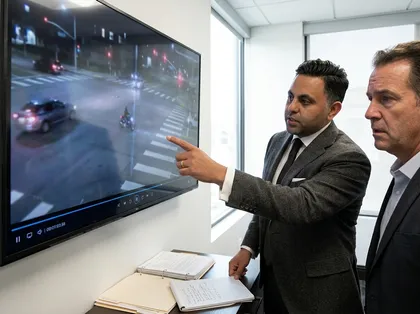
| Traffic, surveillance, and dashcam footage | Captures crash sequence; may show fault clearly. | Identify nearby cameras and seek preservation promptly. In San Diego, possible sources include businesses, homes, parking structures, MTS vehicles, nearby drivers, and some government-operated systems. | Businesses, residents, drivers, MTS, City of San Diego, or other agencies. |
| Business and dashcam video | Corroborating the crash sequence from a private vantage point. | Act immediately. Overwrite schedules vary, so act quickly. | Private businesses, other drivers |
| Police or CHP crash report | Official record that may document the parties, scene, statements, observations, and contributing factors identified during the investigation. | Request the report through the responding agency’s traffic-collision-report process after it is completed. SDPD provides reports to qualifying parties through its designated report-request process. Meanwhile, CHP provides reports through its Crash Portal or Form CHP 190. | San Diego Police Department or CHP |
| Witness names and contact information | Independent eyewitness testimony on fault. | Collect at the scene before anyone leaves. | Bystanders, other drivers |
| Road condition and maintenance records | Helps establish government entity liability for defects on city streets or Caltrans highways. | Request relevant maintenance, inspection, repair, and complaint records from the City of San Diego or Caltrans through their applicable public-records procedures. | City of San Diego, Caltrans District 11 |
If the vehicle that struck you leaves, call law enforcement and report the hit-and-run as soon as possible. Give officers any information you remember, even if incomplete, including:
- Any portion of the license plate.
- Vehicle make, model, color, or distinctive damage.
- Direction of travel.
- Description of the driver or occupants.
- Witness information.
Photograph nearby cameras and ask witnesses whether they recorded the crash. Notify your own insurer promptly as well. Uninsured motorist coverage may apply in some hit-and-run situations, but California law and the insurance policy can impose additional reporting and proof requirements.
Step 4: Keep Records Of Every Financial Loss
After a San Diego motorcycle accident, start a crash-related file or digital folder and save records as they arrive. These documents can help show how the accident affected you financially.
Do not rely on memory to recreate expenses months later. Keeping organized records from the beginning can make it easier to document your losses accurately.
| Record Type | Why It Matters | What To Keep |
|---|---|---|
| Medical expenses | Documents treatment and medical spending related to the crash. | Hospital and physician bills, therapy bills, prescription receipts, medical-equipment receipts, co-pays, and explanation-of-benefits documents. |
| Motorcycle damage | Shows the repair or replacement value of the motorcycle. | Repair estimates, insurer valuations, total-loss documents, and photographs of the damage. |
| Riding gear and accessories | Helps document the value of damaged property. | Receipts, photographs, model numbers, serial numbers, and replacement estimates for helmets, protective clothing, boots, luggage, cameras, communication equipment, and aftermarket parts. |
| Lost income | Supports claims involving missed work or reduced earnings. | Pay stubs, wage statements, work schedules, employer correspondence, missed-shift records, leave paperwork, and disability documents. |
| Out-of-pocket expenses | Tracks additional expenses caused by the crash and medical treatment. | Tow and storage invoices, rideshare receipts, rental-car invoices, parking receipts, mileage records, and receipts for medications, medical supplies, mobility aids, and other accident-related purchases. |
| Symptom and recovery notes | Documents how injuries affected daily life and work over time. | Factual notes about pain, mobility limits, sleep problems, missed activities, missed work, and assistance needed at home. |
Step 5: Notify Your Insurer, But Be Careful With Statements And Documents
Report the crash to your own insurer within the timeframe required by your policy. Your insurer may need basic information to investigate the claim and review your coverage.
The other driver’s insurer may also contact you. You generally do not have to give that insurer a recorded statement just because an adjuster asks for one.
When speaking with an insurer:
- Give basic identifying and crash information.
- Do not guess about your speed, distance, injuries, or other details.
- If you do not know an answer, say so instead of estimating.
- If you are still receiving medical care, you can explain that your injuries are still being evaluated.
An adjuster may ask you to sign a medical record authorization. Read the form carefully before signing it. A broad authorization could grant the insurer access to medical records unrelated to the motorcycle crash.
Before signing, check whether the form is limited by:
- Healthcare provider.
- Type of records.
- Subject matter.
- Time period.
You may also receive a settlement check, property-damage release, bodily-injury release, or another settlement document. Read the terms carefully. A payment for motorcycle damage does not always settle an injury claim, but some release forms may cover more than you expect. Do not sign a release or cash a settlement check unless you understand what claims you may be giving up.
Avoid posting about the crash on social media. Relevant photos, comments, or other posts may become evidence in litigation and, depending on the circumstances, be sought through discovery. Posts by friends or family may also become relevant if they concern your accident, injuries, or activities.
Talking with a San Diego car accident attorney or a motorcycle accident lawyer before giving detailed statements or signing documents can help you understand your rights and obligations.
Step 6: Know How California Fault Rules Apply To San Diego Riders
California follows a pure comparative negligence rule, as established in Li v. Yellow Cab Co. (1975). A rider can still recover compensation even if partly at fault, though their percentage of fault reduces the amount. For example, a rider found 20% at fault on a $100,000 claim may still recover $80,000.
California Civil Jury Instructions (CACI) No. 405 provides that the other party must prove you were negligent and that your negligence was a substantial factor in causing your harm.
Insurers representing drivers who hit motorcyclists frequently attempt to assign blame based on rider behavior, such as speed, lane splitting, lane position, or gear choices. Evidence that may help counter those claims includes:
- Crash reconstruction.
- Dashcam footage.
- Witness statements.
- The physical condition of the vehicles.
A San Diego motorcycle accident lawyer can help gather and preserve that evidence to challenge fault arguments.
Lane splitting is legal in California. Vehicle Code § 21658.1 defines it as riding a two-wheeled motorcycle between rows of stopped or moving vehicles. That legal permission does not eliminate comparative fault analysis. Whether a specific instance of lane splitting was safe enough to meet the reasonable care standard depends on the speed, traffic conditions, and the conduct of both the rider and other drivers at the time of the crash.
If an insurer argues that your lane splitting contributed to the collision, the relevant question is not whether lane splitting is legal. It is a question of whether the maneuver under those specific conditions was reasonable. An attorney with access to crash reconstruction experts can address that argument with evidence rather than concessions.
Step 7: Know The Applicable Deadline For Your Motorcycle Accident Claim
The deadline to file a claim depends on who caused the crash. Missing the wrong deadline can end your ability to pursue compensation, even with solid proof.
Injury Lawsuits Against Private Parties
If the at-fault party is a private individual or company, California Code of Civil Procedure § 335.1 gives you two years from the date of the crash to file a civil lawsuit. This is the standard personal injury statute of limitations in California.
Government Entity Claims: City Of San Diego, Caltrans, And MTS
If you are pursuing a qualifying claim against a California public entity, a shorter claim-presentment deadline generally applies before you can sue that entity. Government Code § 911.2 generally requires a claim for personal injury, death, or injury to personal property to be presented to the public entity within six months after the cause of action accrues.
The agency involved determines where you file:
- City of San Diego: Claims for crashes involving City-owned vehicles, street maintenance failures, or dangerous conditions on city-managed roads are filed through the City of San Diego Risk Management liability claims portal.
- Caltrans District 11: For claims of $12,500 or less involving death, personal injury, or property damage allegedly caused by Caltrans, a claimant may file directly with Caltrans using its designated claim process. Claims over $12,500 must be filed with the California Department of General Services Government Claims Program. Confirm the proper filing destination before submitting the claim.
- San Diego Metropolitan Transit System (MTS): MTS Policy No. 51 provides that claims for money or damages against MTS and its covered subsidiaries are presented to the MTS Claims Administrator/Office of General Counsel on the form provided by that office. MTS’s published address is 1255 Imperial Avenue, Suite 1000, San Diego, CA 92101. Contact the Office of General Counsel promptly for the current claim form and filing instructions.
The government entity deadline is not an extension of the private party deadline. It is a prerequisite to filing any lawsuit against that entity. Post-rejection and non-response deadlines are controlled by Gov. Code § 945.6 and can be shorter than you expect, depending on the type of notice received and the specific facts.
If the public entity sends a written rejection notice that complies with Government Code § 913, Government Code § 945.6 generally requires a lawsuit to be filed within six months after that notice is personally delivered or deposited in the mail. If no qualifying written rejection notice is provided, § 945.6 generally allows two years from the date of the accident. These lawsuit deadlines are separate from the initial six-month government claim presentment deadline.
Do not attempt to calculate these windows without an attorney. Have your lawyer confirm the exact filing deadline as soon as your government claim is acted on or the response period expires.
If a military vehicle caused the crash, the Federal Tort Claims Act (FTCA), a federal law governing claims for harm caused by U.S. government employees, controls the process. Encounters with U.S. government vehicles on local roads can occur, triggering a separate federal process with its own requirements. The FTCA has its own administrative claim requirements and deadlines. The exact procedures and time limits depend on the agency involved and the facts of the incident. Consulting a San Diego injury law firm immediately can help confirm which federal requirements apply.
Under the FTCA, a tort claim against the United States generally must be presented in writing to the appropriate federal agency within two years after the claim begins. If the agency issues a final written denial, a lawsuit generally must be filed within six months after the denial is mailed. Presenting the administrative claim is ordinarily a prerequisite to filing suit. If the agency does not finally dispose of the claim within six months, the claimant may generally treat that inaction as a denial and proceed to court.
Results Arash Law Has Recovered For Injured Clients
At Arash Law, our attorneys have years of experience representing our clients and advocating for their rights against the at-fault parties. Here are some of the motorcycle cases we have won for our clients.
| Result | Case | What Our Lawyers Did |
|---|---|---|
| $5,000,000 | Motorcycle vs. Auto | The police report initially suggested that our seriously injured client was to blame. However, our legal team conducted a deeper investigation and demonstrated that the truck driver breached his training and company protocols by making a hazardous turn that caused the crash. This evidence played a crucial role in proving that the truck driver’s conduct was a factor in the accident. |
| $1,450,000 | Motorcycle vs. Construction Contractor | Our client hit uneven pavement in a construction zone and sustained fractured ribs and head trauma. There was a disagreement over liability between the contractors and the city. Our legal team persisted in taking the case through the litigation process and to trial. Ultimately, the case was settled after the first day of the trial. |
| $1,000,000 | Motorcycle vs. Truck | Our client was involved in a motorcycle accident with a truck and was initially considered to be at fault according to the police report. However, through thorough investigation and diligent efforts, we demonstrated that the truck was actually responsible for the crash. As a result, we successfully secured the policy limits for our client. |
Disclaimer: Each case outcome is unique, and results are not guaranteed in every situation.
Available Compensation After A San Diego Motorcycle Accident
If another party caused your motorcycle accident in San Diego, you may be able to seek compensation for the financial and personal losses resulting from the crash. The types of damages available depend on the facts of your case, the injuries you suffered, and the parties involved.
Depending on the facts of your case, you may be able to pursue:
- Economic Damages: Medical bills, future care, lost income, and reduced earning capacity.
- Non-Economic Damages: Pain, suffering, and loss of enjoyment of activities.
- Punitive Damages: In cases where clear and convincing evidence establishes oppression, fraud, or malice as required by Civil Code § 3294.
If a rider dies in a crash, eligible survivors may pursue wrongful death damages under Code of Civil Procedure § 377.60. A separate survival action under § 377.30 may allow the decedent’s personal representative or successor in interest to pursue claims that survived the rider’s death, subject to the damages rules in § 377.34.
Under Proposition 213, California Civil Code § 3333.4 generally bars noneconomic damages, such as pain and suffering, when the injured person owned an involved vehicle that lacked required insurance or was operating an involved vehicle and could not establish the financial responsibility required by law. An exception applies in certain cases involving an uninsured vehicle owner injured by a driver who was convicted of DUI under Vehicle Code § 23152 or § 23153.
Frequently Asked Questions About San Diego Motorcycle Accidents
After a motorcycle crash in San Diego, you are likely dealing with pain, medical appointments, calls from adjusters, and a flood of contradictory information. The questions below address the situations riders most often face in the days and weeks after a crash. They cover California law, local agency procedures, and what your choices mean for your claim.
What If The Other Driver Had No Insurance?
Your own policy may include uninsured motorist (UM) coverage, which pays for your injuries when the at-fault driver cannot. If the at-fault driver has insurance but not enough to cover your losses, underinsured motorist (UIM) coverage may provide additional compensation, subject to your policy limits and California law.
Whether a UM or UIM claim affects your premiums depends on your specific policy and your insurer’s rating rules. An attorney or your insurance broker can review your coverage and walk you through the claim process to help you understand any potential impact.
Can I Still Recover Compensation If I Was Not Wearing A Helmet?
Yes, riding without a helmet does not bar you from seeking compensation, but it gives the defense a comparative fault argument. California Vehicle Code § 27803 requires every motorcycle rider and passenger to wear a safety helmet that meets applicable federal safety standards.
If you sustained head injuries, the other side may claim that the absence of a proper helmet made those injuries worse. Under California’s pure comparative negligence rule, your recovery for those injuries could be reduced by your share of fault. For example, injuries with no connection to helmet use, such as a broken leg, are generally not affected by that argument. Other fault factors can still affect your total recovery regardless of the helmet issue.
What If The Driver Says They Never Saw My Motorcycle?
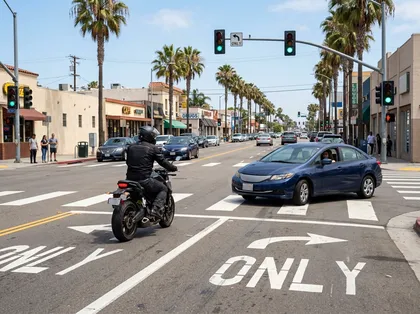
“I didn’t see you” is not a legal defense. California Vehicle Code § 22107 requires drivers to make sure a turn or lane change can be completed safely before making the move, and to signal when other vehicles may be affected. A driver who turns or changes lanes without first making sure the maneuver can be made with reasonable safety may violate that rule.
The legal question is not whether the driver saw you. It is a question of whether a careful driver exercising reasonable attention should have seen you. Witness accounts, available City of San Diego surveillance footage, private security or dashcam video, and crash reconstruction analysis can help answer that question with evidence.
Can I Move Forward If A Police Report Says I Was At Fault?
Yes. Officers write reports based on the information available at the scene, which is often incomplete. A police report is not a final determination of fault and is one piece of evidence among many. Its admissibility and weight depend on the circumstances.
A San Diego Superior Court jury considers the full body of evidence, including physical damage, video, witness testimony, and expert analysis, not just the officer’s preliminary assessment.
Should I Call The Police Even If The Crash Seems Minor?
Yes. Some injuries, including concussions, soft tissue damage, and internal bleeding, do not produce noticeable symptoms for hours or days after a crash. A police report can create an official record of information gathered after the crash, including the parties involved, statements, observations, and other available details. That record may be useful if accounts of the crash are later disputed.
Talk to Arash Law About Your San Diego Motorcycle Accident
Motorcycle crash claims in San Diego run on tight, overlapping deadlines. Those deadlines are shorter when a public agency is involved. Evidence can be lost within hours. If you have questions about the status of your case, contact Arash Law now.
Arash Law represents injured riders throughout California, including San Diego, on a contingency fee basis. You pay no attorneys’ fees unless your case ends in a recovery. There are no upfront costs to speak with us, and a free case review is at no cost to you.
Call Arash Law at (619) 431-4840 to schedule your free consultation; make ‘em pay, call AK.
Sources
- San Diego Superior Court: Where to File (Civil Cases) https://sdcourt.ca.gov/sdcourt/civil2/civilwheretofile
- City of San Diego Risk Management: Liability Claims https://sandiego.gov/riskmanagement/services/liability
- California Legislative Information: CCP § 335.1 (Statute of Limitations) https://leginfo.legislature.ca.gov/faces/codes_displaySection.xhtml?lawCode=CCP§ionNum=335.1
- California Legislative Information: Vehicle Code § 22107 (Unsafe Turns and Lane Changes) https://leginfo.legislature.ca.gov/faces/codes_displaySection.xhtml?lawCode=VEH§ionNum=22107
- California Legislative Information: Vehicle Code § 27803 (Motorcycle Helmet Requirement) https://leginfo.legislature.ca.gov/faces/codes_displaySection.xhtml?lawCode=VEH§ionNum=27803
- California Legislative Information: Government Code § 911.2 (Six-Month Government Claim Deadline) https://leginfo.legislature.ca.gov/faces/codes_displaySection.xhtml?lawCode=GOV§ionNum=911.2
- California Legislative Information: Government Code § 913 (Government Claim Rejection Notice) https://leginfo.legislature.ca.gov/faces/codes_displaySection.xhtml?lawCode=GOV§ionNum=913
- California Legislative Information: Government Code § 945.4 (Government Claim Presentment Requirement) https://leginfo.legislature.ca.gov/faces/codes_displaySection.xhtml?lawCode=GOV§ionNum=945.4
- Case Results https://arashlaw.com/case-results/
Legal basis for government claim deadlines: Gov. Code §§911.2, 945.4, and 945.6; CCP §335.1; California Civil Code §3333.4 (Proposition 213).
Legal Disclaimer
This page is for general informational purposes only and does not constitute legal advice. Reading this page does not create an attorney-client relationship between you and Arash Law or any of its attorneys. Every case is different, and the information here may not apply to your specific situation. Do not act or refrain from acting based on anything in this guide without first consulting a licensed California attorney. If you have been injured in a motorcycle accident, contact a qualified personal injury attorney as soon as possible to discuss the facts of your case.