TL;DR: Alameda Ave & Park St is among the highest-crash intersections identified in Alameda, while I-880 had the highest crash count among the Alameda County freeway corridors analyzed. Failure to yield is a frequently cited factor in pedestrian collisions in Alameda. If a dangerous public road condition contributed to a crash, a government claim generally must be presented within six months after the claim accrues.
If you were injured in a crash on an Alameda street or on a freeway serving the East Bay, you may have a personal injury claim against the driver who caused the collision and, in some cases, against a trucking company or public entity responsible for a dangerous roadway condition. Who caused the crash affects not only liability but also what evidence should be preserved and which deadlines may apply.
The city of Alameda is an island community in the East Bay, connected to Oakland by bridges and a tube. It sits at the intersection of local arterial roads and major regional freeways that carry enormous daily traffic volumes. That combination of geography and traffic density creates concentrated crash risk on a small number of corridors, and the consequences for people caught in those crashes can be life-altering.
An Alameda road-injury claim may involve California negligence law, comparative negligence, Government Code § 835 dangerous-condition liability, the Government Claims Act, trucking regulations, and litigation in the appropriate Alameda County Superior Court location. Identifying the responsible party early can determine where the claim proceeds and how quickly evidence or filing deadlines must be addressed.
Call (888) 488-1391 for a free consultation with an Alameda accident attorney.
Data Note: This page uses traffic crash data for the City of Alameda and Alameda County from the City of Alameda’s Vision Zero program, the Transportation Injury Mapping System (TIMS), and the California Crash Reporting System (CCRS). The page will be updated as more recent Alameda traffic crash statistics become available.
Five Things That Matter Most After An Alameda Road Crash
Your case may depend on several local facts that are easy to miss in the first days after a collision. These five issues can affect where your case is filed, what evidence exists, who may be responsible, and how quickly you need to act.
- Civil lawsuits involving serious Alameda injury claims may be filed at the René C. Davidson Courthouse in Oakland when that court has jurisdiction and venue is proper. Unlimited civil personal injury claims arising from Alameda crashes are handled there rather than at the George E. McDonald Hall of Justice in Alameda.
- Why It Matters: Filing location is a procedural issue, not simply a matter of choosing the courthouse closest to the crash.
- Alameda’s crash data shows unusually strong geographic concentration. The City of Alameda’s Vision Zero analysis found that 73% of crashes occurred on 20% of city streets during the 2009-2018 period. Arterial roads accounted for a disproportionately large share of crashes relative to their share of the street network.
- Why It Matters: Where a crash happened can help identify relevant roadway conditions, prior collision patterns, traffic controls, agency records, witnesses, and other evidence. Crash history alone does not prove liability for a particular collision.
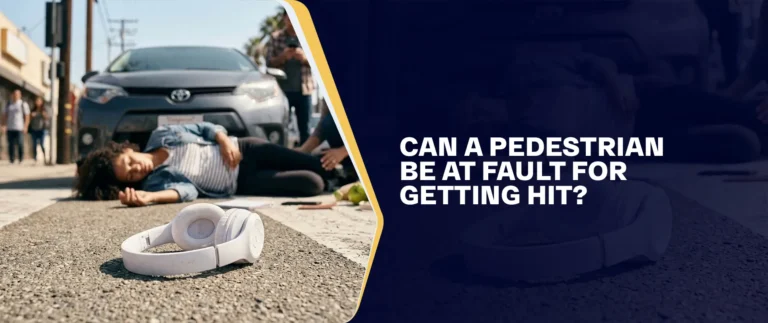
- Failure to yield is an important pedestrian-crash pattern in Alameda. City Vision Zero data identifies failure to yield the right-of-way as a frequently cited contributing factor in pedestrian collisions.
- Why It Matters: In a pedestrian claim, evidence about crosswalk visibility, signals, vehicle movement, sightlines, and available camera footage may be central to determining fault.
- Government roadway claims operate on a much shorter timeline than many private-party claims. If a road defect, broken signal, missing sign, or public agency vehicle contributed to the collision, Government Code § 911.2 may require presentation of a government claim within 6 months.
- Why It Matters: The ordinary two-year personal-injury statute for many private defendants does not replace the separate government-claim requirement.
- Preserve available video immediately. Request footage from nearby businesses, residences, involved vehicles, and other private sources. Do not rely on Caltrans traffic-camera footage. Caltrans states that its live camera video is not recorded, and the images are not saved. If a commercial truck was involved, a written litigation hold should address evidence controlled by the carrier.
- Why It Matters: A claim can become substantially harder to prove when objective evidence disappears before the parties identify that it exists.
Table of Contents

Higher-Risk Streets And Intersections In Alameda
Alameda is an island city, and its road network reflects that constraint. Traffic funnels through a limited number of arterial corridors and freeway connectors, creating conditions where high vehicle volumes, pedestrians, cyclists, and commercial trucks regularly share the same space.
The City of Alameda’s Vision Zero program published crash analysis data covering 2009–2018, identifying specific patterns across the city’s road network. Arterial roads like Park Street, the city’s main commercial spine, bear a disproportionately large share of crashes relative to their share of the total street network.
| Location or Corridor | Why It Is Relevant |
|---|---|
| Park Street | Major Alameda commercial arterial is identified within the city’s broader pattern of disproportionate arterial-road crash concentration. |
| Shoreline Drive at Grand Street | Waterfront crossing where vehicle, pedestrian, and cyclist movements converge. |
| Park Street and San Antonio Avenue | Intersection discussed in this guide in connection with broadside-collision conditions and competing road-user movements. |
| Alameda arterial road network | City Vision Zero findings show that arterials carry a disproportionate share of crashes relative to their share of the network. |
According to the Transportation Injury Mapping System (TIMS), which excludes property-damage-only crashes, the intersections below had the highest counts of mapped fatal and injury crashes in the 2020–2024 query:
| Rank | Intersection | Number of Collisions (2020-2024) |
|---|---|---|
| 1 | Alameda Ave & Park St | 24 |
| 2 | Park St & San Antonio Ave | 23 |
| 3 | Box Ct & Park St | 20 |
| 4 | Encinal Ave & Park St | 19 |
| 4 | Minturn St & Pacific Ave | 19 |
| 5 | Buena Vista Ave & Webster St | 18 |
| 5 | Buena Vista Ave & Park St | 18 |
| 5 | Pacific Ave & Park St | 18 |
| 6 | Concordia St & Pacific Ave | 17 |
| 6 | Eagle Ave & Webster St | 17 |
Crash concentration is not proof of fault. A history of collisions may provide useful context, but liability still depends on evidence showing how the specific crash happened and what each potentially responsible party knew or did.
If a traffic signal, road surface, sign, visibility obstruction, or other public-property condition contributed to a collision, maintenance records, prior complaints, inspection records, signal information, and agency notice may become relevant to a potential claim under Government Code § 835.
Higher-Risk Freeway Corridors Serving Alameda
The City of Alameda does not have an interstate freeway running through it. However, residents and visitors commonly use nearby regional freeways in Alameda County, particularly I-880, for travel to and from the city.
According to data from the California Crash Reporting System, I-880 had the highest number of reported crashes among the Alameda County freeway corridors analyzed for 2023–2025. The figures below are countywide corridor totals, not City of Alameda crash counts.
| Rank | Freeway | Number of Collisions (2023-2025) |
|---|---|---|
| 1 | I-880 | 9,750 |
| 2 | 1-580 | 7,408 |
| 3 | 1-80 | 3,185 |
| 4 | 1-680 | 2,992 |
| 5 | SR-24 | 726 |
Data note: Intersection rankings are based on TIMS fatal-and-injury collision data for 2020–2024. Freeway corridor rankings use CCRS crash data for 2023–2025. Because the sources, reporting periods, and methodologies differ, the two tables should be read independently rather than compared directly.
Higher-Crash Road Corridors In Alameda
Crash records for 2023 through 2025 show that several major streets account for particularly high numbers of reported collisions within the City of Alameda. Park Street and Central Avenue rank as the corridors with the highest number of accidents within the city.
| Rank | Corridor | Number of Collisions (2023-2025) |
|---|---|---|
| 1 | Park Street | 128 |
| 2 | Central Avenue | 127 |
| 3 | Lincoln Avenue | 115 |
| 4 | Otis Drive | 97 |
| 5 | Webster Street | 82 |
Data note: Corridor totals are based on 2023–2025 crash records supplied for this analysis and count crashes according to the recorded primary roadway. Obvious naming variants, including State Route 61 designations for portions of certain Alameda streets, were consolidated. Interstate freeway records geographically outside the City of Alameda were excluded. The figures represent raw crash counts and are not adjusted for roadway length or traffic volume.
Who Is Legally Responsible For Crashes On Alameda Roads?
Responsibility after an Alameda collision may rest with a negligent driver, a trucking company, a public entity, or more than one party. The legal analysis depends on how the crash occurred and which conduct or conditions contributed to the injuries.
When A Driver Causes The Crash
Fault in a California traffic crash is determined by negligence, the legal standard that assesses whether someone failed to exercise the reasonable care the situation required. Under California Civil Code § 1714, a person who fails to use ordinary care and causes injury to another is liable for the resulting harm.
California follows pure comparative negligence, which means your percentage of fault reduces your compensation, but you are not entirely cut off from recovery. If you are found 20% responsible for the crash, you can still recover 80% of your proven damages.
A documented history of crashes on an Alameda corridor does not automatically transfer responsibility away from the driver who caused the particular collision. Roadway evidence may support an additional claim against a public entity, but driver negligence remains a separate question.
Ab 413: The Daylighting Law And Crosswalk Visibility
The Daylighting Law, enacted as AB 413, prohibits stopping, standing, or parking within 20 feet of the vehicle-approach side of a marked or unmarked crosswalk, or within 15 feet where a curb extension is present. Beginning January 1, 2025, violations may be cited even where the curb is not painted red.
At busy Park Street crosswalks where on-street parking is common, a violation of the daylighting rule may become relevant to fault. This may happen if the improperly parked vehicle obstructs visibility and contributes to the collision.
When A Government Agency May Bear Responsibility
If a public roadway or agency vehicle contributed to your crash, this section explains the separate government-liability rules and deadlines that may apply.
When a crash results from a road defect, such as a broken traffic signal, missing signage, or pavement failure, you may have a claim against a government entity. California Government Code § 835 allows a public entity to be held liable for injuries caused by a dangerous condition of public property when the legal requirements of that statute are met.
The City of Alameda generally controls local streets, while Caltrans District 4 controls state highway right-of-way, including portions of State Route 61 within Alameda. Ownership and control of the particular roadway or traffic feature should be confirmed for each crash location.
Whether a particular location is controlled by the City, Caltrans, Alameda County, or another public entity should be confirmed early. That determination affects where records are requested and where any government claim must be presented.
How To File A Claim Against The City Of Alameda
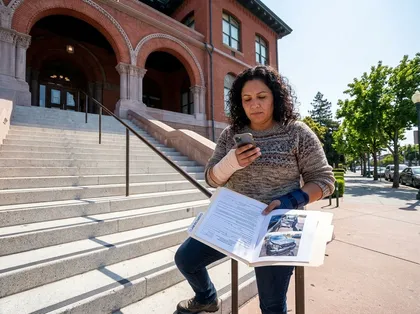
If City property or a City vehicle may have contributed, this section explains the government-claim step that comes before a lawsuit.
A potential City claim should begin with confirmation that the City of Alameda actually owned or controlled the roadway, signal, property, employee, or vehicle involved. A claim against Caltrans or another agency follows a different filing route even when the crash occurred near Alameda.
For a qualifying personal-injury claim against a California public entity, Government Code § 911.2 generally requires that the administrative claim be presented within 6 months of accrual. The claim is a prerequisite to pursuing a later lawsuit against the public entity.
The current City of Alameda claim form, submission method, filing address, and Risk Management or City Clerk instructions should be verified on the City’s official website before publication and before a claimant relies on them. Those filing details were not contained in the Alameda source materials supplied for this draft.
When A Trucking Company May Be Responsible
When a commercial truck is involved, the responsible parties may extend beyond the truck’s driver. The trucking company may be liable for negligent hiring, inadequate maintenance, or pressuring a driver to violate federal hours-of-service rules.
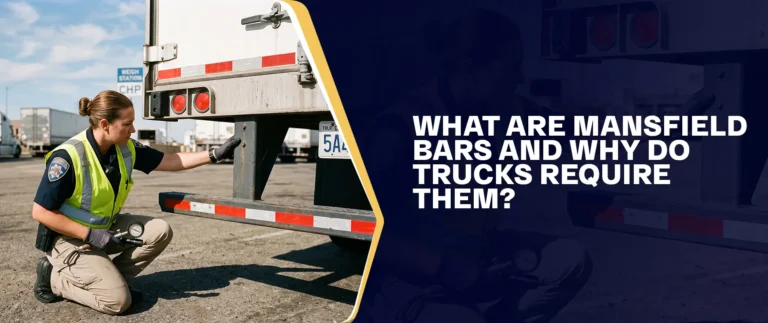
Motor carriers must retain records of duty status (RODS) and required supporting documents for at least 6 months under 49 C.F.R. § 395.8(k)(1); send a preservation letter to the carrier immediately.
That federal rule does not cover dashcam video and other telematics data, and may be overwritten within days; preservation demands should specifically request those materials as well.
Filing Deadlines For Alameda Crash Claims
Private-party and government claims can operate on different timelines after the same collision. A claimant should identify all potentially responsible parties before assuming that a single deadline governs the entire case.
- Private-Party Injury Claims: California Code of Civil Procedure § 335.1 generally provides 2 years from the date of injury to file a personal injury lawsuit.
- City Claims: If the City of Alameda may be liable, a qualifying government claim generally must be presented within 6 months under Government Code § 911.2.
- County Claims: A claim involving Alameda County may fall under the same government-claims framework, depending on the responsible entity and the nature of the claim.
- State or Caltrans Claims: A qualifying claim involving state-controlled freeway infrastructure may require presentation through the appropriate state government claims process.
-
Claims Involving Minors: If the injured person is a minor, the limitations period may be tolled (paused) until they turn 18, but the rules are fact-specific, and an attorney should confirm the applicable timeline.
The ordinary tolling rule for minors does not apply to claims against public entities or public employees that are subject to the Government Claims Act. A minor who misses the initial claim-presentation deadline may have access to the separate late-claim procedures under Government Code §§ 911.4 and 911.6, but those procedures have their own strict deadlines.
Filing an administrative claim is not necessarily the final deadline. If the public entity issues a qualifying written rejection, a separate period for filing suit may begin. If the entity does not issue a qualifying written rejection, another statutory path may apply. If the public entity gives written notice rejecting the claim in accordance with Government Code § 913, a lawsuit generally must be filed within 6 months after the rejection notice is personally delivered or mailed. If a qualifying written notice is not given, Government Code § 945.6(a)(2) generally provides 2 years from accrual to file the lawsuit.
Legal basis: Code of Civil Procedure § 335.1; Government Code § 911.2.
What To Do Right After A Crash In Alameda
Prompt action in the hours and days following a crash protects your health, your legal rights, and the evidence your claim depends on.
- Get the official crash report. On Alameda city streets, the Alameda Police Department responds and generates the report. On I-880, I-580, and other freeways, the California Highway Patrol (CHP) typically handles the report, though jurisdiction can vary by exact location.
- Seek medical attention the same day. Visit an emergency room, your primary care doctor, or an urgent-care clinic immediately. Seek medical attention promptly after a crash. Some injuries may not be immediately apparent, and a medical professional can evaluate symptoms and determine whether further care is needed.
- File the SR-1 form with the Department of Motor Vehicles (DMV) within 10 days. California law requires you to file a Report of Traffic Accident Occurring in California (SR-1) with the DMV within 10 days of the crash if anyone was injured, anyone was killed, or total property damage exceeds $1,000.
- Report to your own insurer promptly, but do not give a recorded statement to the other driver’s adjuster. Report the crash to your own insurer promptly as required by your policy. Although late notice can create coverage disputes, California generally requires an insurer relying on delayed notice to show that the delay substantially harmed its ability to investigate or protect its interests.
- Send preservation demands for available camera footage immediately. Contact the relevant City department, nearby businesses, residences, involved vehicles, and other identifiable camera operators. If the crash occurred on a freeway, seek available private surveillance, dashcam, or vehicle video. Caltrans states that its standard live traffic-camera video is not recorded or saved. If a commercial truck was involved, a written litigation hold should address evidence controlled by the carrier.
What To Preserve After An Alameda Accident And Who To Contact
If your crash involved cameras, a public roadway, or a commercial vehicle, evidence preservation may become urgent because different agencies and private parties control different records.
| Crash Situation | Likely Agency or Custodian | Records/Evidence To Request |
|---|---|---|
| Alameda city street crash | Alameda Police Department / relevant City department | Collision report, dispatch information, available camera footage |
| Crash involving an Alameda traffic signal or roadway defect | City of Alameda Public Works / Transportation functions | Signal information, maintenance records, work orders, inspection records, and prior complaints |
| Crash on I-880 or another state freeway | California Highway Patrol / Caltrans District 4 | Collision report, Caltrans incident, maintenance, and inspection records, and any private, dashcam, or vehicle video identified near the crash. |
| Commercial truck crash | Trucking company/fleet operator/vehicle owner | RODS, supporting records, maintenance records, brake records, dashcam footage, and available telematics |
| Crash near private property or a business | Property or business owner | Surveillance footage, incident records, witness information |
| Any serious crash | Witnesses and involved parties | Photos, videos, contact details, physical evidence, relevant communications |
Some electronic and video evidence can be overwritten on short retention cycles. The exact retention period varies by system, so preservation should not be delayed based on an assumed number of days.
Legal basis: California Government Code §§ 7920.000 et seq., Public Records Act; Government Code § 911.2; 49 C.F.R. § 395.8(k)(1).
Call Arash Law After An Alameda Accident
A serious Alameda crash can involve more than determining which driver made a mistake. Depending on the facts, the claim may raise issues involving crosswalk visibility, arterial road design, commercial truck records, signal maintenance, uninsured motorist coverage, and the responsibility of the City of Alameda or Caltrans.
Early identification of the potentially liable parties matters because evidence may disappear, and government-claim deadlines can expire before the ordinary private-party statute of limitations. Arash Law can investigate the collision, seek preservation of evidence, evaluate the available defendants and insurance coverage, and determine which procedural deadlines apply.
Arash Law has recovered over $1 billion for injured Californians. Call (888) 488-1391 for a free consultation.
Representative Results From Arash Law
Arash Law has represented clients in serious motor vehicle and pedestrian injury cases involving government entities, high-speed collisions, and complex litigation across California. The results below reflect cases involving significant injuries, extensive medical treatment, disputed responsibility, and matters resolved through both jury verdicts and settlements reached on the eve of trial.
$10,000,000 — Pedestrian Accident: Our firm secured a substantial financial recovery for a client who was seriously injured in a collision with a speeding vehicle. We also facilitated essential medical care from a leading medical team, enabling the client to recover and providing closure for him and his family.
$12,000,000 — Auto vs. Pedestrian: Our legal team achieved a $12 million settlement for a 74-year-old client injured by a vehicle while crossing the street. She required extensive medical treatment and a long recovery. We offered personalized legal support throughout the case, which was resolved just before jury selection began.
Case results listed are not a guarantee of outcome. Past results depend on the unique facts of each case; different facts will produce different results. These results are representative of firm-wide outcomes and are not specific to Alameda traffic cases.
Frequently Asked Questions About Alameda Crash Claims
After a crash on one of Alameda’s arterial roads or freeways, practical questions build up fast, and the answers often depend on facts specific to Alameda’s courts, agencies, and legal deadlines.
What Is The Deadline To Sue After A Crash In Alameda?
For most private-party claims, you have 2 years from the date of the crash to file a personal injury lawsuit under Code of Civil Procedure § 335.1. If a government entity may be responsible, such as for a dangerous roadway condition, malfunctioning traffic signal, or public agency vehicle, a qualifying government claim generally must be presented to the responsible entity within six months after the claim accrues before a lawsuit may proceed.
Where Does An Alameda Crash Lawsuit Get Filed?
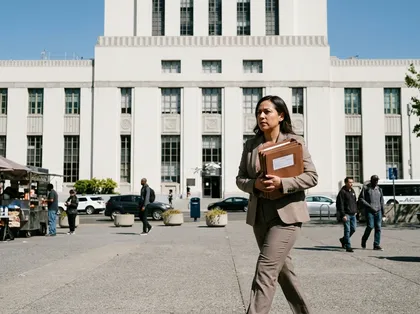
Unlimited civil personal injury cases are filed in the Alameda County Superior Court. Current court materials identify the René C. Davidson Courthouse in Oakland, Hayward Hall of Justice, and Pleasanton’s Gale-Schenone Hall of Justice as locations for new unlimited civil cases. For non-electronic civil filings, the current Local Rule 1.9 directs filings to René C. Davidson or Hayward. The George E. McDonald Hall of Justice currently houses settlement departments. The appropriate filing and assigned court location should be confirmed for the specific case.
The George E. McDonald Hall of Justice at 2233 Shore Line Drive in Alameda currently houses civil settlement departments and records-management functions. It is not listed on the current Civil Case Cover Sheet Addendum as a location for new unlimited civil filings.
Can I Recover Compensation If The Police Report Blames Me?
Yes. In California, a police report is not a legal verdict, and it carries limited weight in a civil case. Officers write reports based on what they can observe at the scene, often without access to camera footage, witness accounts gathered later, or accident reconstruction analysis.
California’s pure comparative negligence rule allows you to recover compensation even if you share some fault; your total recovery is reduced by your percentage of fault, not eliminated.
What Happens If The At-Fault Driver Had No Insurance?
Your own auto insurance policy may include uninsured motorist (UM) coverage that applies when the at-fault driver has no insurance, and underinsured motorist (UIM) coverage when their policy limits are too low to cover your damages.
An attorney can review your own policy, determine what coverage is available, and handle the claim with your insurer, which has different obligations than the other driver’s insurer.
What If A Dangerous Alameda Road Condition Contributed To The Crash?
A broken signal, missing sign, pavement problem, visibility issue, or another condition of public property may raise a potential government-liability claim. The evidence should establish which entity controlled the location, how the condition contributed to the crash, and whether the legal requirements of Government Code § 835 can be met.
Who May Control Camera Footage After An Alameda Crash?
Depending on the location, footage may be controlled by a City department, a nearby business, a private property owner, the involved vehicle, or another camera operator. Caltrans’s standard live traffic-camera video is not recorded or archived. Because other retention practices vary, preservation requests should be directed to every reasonably identifiable custodian as early as possible.
Talk To Arash Law About Your Alameda Crash Claim
Private surveillance, dashcam, and other recorded footage can disappear quickly. Caltrans traffic-camera video, however, is not recorded or archived. Many important deadlines can begin running on or soon after the crash, so waiting to investigate the applicable deadline can jeopardize a claim.
Arash Law’s Alameda personal injury attorneys represent crash victims throughout the city and across California. Our attorneys are familiar with Alameda County Superior Court procedures, the government-claim procedures that may apply to claims involving the City of Alameda and Caltrans District 4, and the evidence-preservation issues that can arise on I-880 and Alameda arterial roads.
Call Arash Law today at (888) 488-1391 for a free consultation. Make them pay — CALL AK.
About This Guide
This guide covers the key roadways, freeway corridors, and legal framework relevant to traffic crash claims in Alameda, California. It is intended to help injured people understand potential sources of liability, applicable filing deadlines, the courts that may hear these cases, and the government-claim procedures that can apply when a public entity is involved.
Court and venue information reflects the Alameda County Superior Court locations identified for civil matters arising in Alameda, including the René C. Davidson Courthouse in Oakland for unlimited civil personal injury cases. Government-claim information is based on California’s statutory framework for claims involving public entities, including the shorter administrative-claim deadline that may apply when the City of Alameda, Alameda County, Caltrans, or another government agency is responsible.
Geographic and roadway information reflects Alameda’s island street network, its arterial corridors, and regional freeway connections. The guide discusses locations and patterns identified in the City of Alameda’s Vision Zero analysis, including Park Street and other higher-crash intersections, as well as I-880 and other Alameda County freeway corridors that carry substantial passenger and commercial traffic. Legal references include Government Code §§ 835 and 911.2, Code of Civil Procedure § 335.1, Civil Code § 1714, and other rules relevant to public-entity, driver-negligence, and commercial-vehicle claims.
This guide focuses specifically on crashes in Alameda and Alameda County, California, where a constrained island road network, heavily traveled arterial streets, pedestrian and cyclist activity, and nearby freight corridors such as I-880 create traffic conditions that should be evaluated using Alameda-specific roadway, agency, and crash data rather than information drawn from another city.
Sources
- City of Alameda Vision Zero Program: Crash Data Bulletin (2009–2018 data, published 2020): https://content.govdelivery.com/accounts/caalamecity/bulletins/2a093f4
- City of Alameda Vision Zero Program: https://alamedaca.gov/departments/planning-building-and-transportation/transportation/vision-zero
- Alameda County Superior Court: René C. Davidson Courthouse: https://www.alameda.courts.ca.gov/location/oakland-rene-c-davidson-courthouse
- Alameda County Superior Court: George E. McDonald Hall of Justice: https://www.alameda.courts.ca.gov/location/alameda-george-e-mcdonald-hall-justice
- Alameda County Superior Court: Civil Division: https://www.alameda.courts.ca.gov/divisions/civil
- California Legislative Information: Government Code § 911.2: https://leginfo.legislature.ca.gov/faces/codes_displaySection.xhtml?lawCode=GOV§ionNum=911.2
- State Bar of California: Attorney Search: https://www.calbar.ca.gov/Public/Licensee-Information/Attorney-Search
- UC Berkeley SafeTREC, TIMS Query & Map/GIS Map documentation: https://tims.berkeley.edu/tools/gismap/
- California Crash Reporting System (CCRS): https://data.ca.gov/dataset/ccrs/resource/9f4fc839-122d-4595-a146-43bc4ed16f46
Legal Disclaimer
This page is for general informational purposes only and does not constitute legal advice. Reading this page does not create an attorney-client relationship between you and Arash Law. Every case is different, and the outcome of your case depends on its specific facts and circumstances.
Past results described on this page are representative and do not guarantee a similar outcome. If you have been injured in a crash, you should consult a licensed California attorney about your specific situation as soon as possible. Do not rely on this page as a substitute for professional legal advice.
Arash Law handles qualifying injury matters on a contingency-fee basis. The written fee agreement controls the applicable attorney fee and treatment of case costs. Case costs and attorney fees are separate, and responsibility for costs may depend on the terms of the agreement and the circumstances of the matter.