TL;DR: CVC § 20008 generally requires a written report within 24 hours after a crash involving injury or death. Missing the deadline can result in a traffic infraction, but it does not automatically eliminate an injury claim. A separate DMV SR-1 report is due within 10 days if damage exceeds $1,000 or if anyone was hurt. If the deadline has passed, contact the appropriate agency promptly and preserve available evidence.
If you fail to make or cause to be made a required accident report within 24 hours, you may violate California Vehicle Code (CVC) § 20008. The violation can result in a traffic infraction and a fine. For most non-common-carrier vehicles, California law places this reporting duty on the driver. A reporting delay may also create evidence issues in a later injury claim. Missing the 24-hour window does not automatically eliminate your right to file an injury claim, but it can create a gap that insurers may consider when evaluating the available evidence.
Key Facts About California Accident Reporting Deadlines
- 24-Hour Police or CHP Report: CVC § 20008 generally requires a written report within 24 hours after a crash involving injury or death. The driver must make or cause the report to be made. Failure to comply may result in a traffic infraction and fine.
- 10-Day DMV SR-1 Report: The SR-1 must generally be filed within 10 days if the crash caused injury, death, or more than $1,000 in property damage. This is separate from the 24-hour law-enforcement report, and failing to file a required SR-1 can result in suspension of driving privileges.
- Insurance Notice Is Separate: Notifying your insurer does not replace the 24-hour report or the SR-1. The policy and applicable insurance law govern the timing and requirements for giving notice to your insurer.
- Personal Injury Lawsuit Deadline: California Code of Civil Procedure § 335.1 generally gives injured people 2 years to file a personal injury lawsuit. That deadline is separate from accident-reporting requirements.
Table of Contents

What Are The Consequences Of Missing The 24-Hour Deadline?
If CVC § 20008 required a report and none was made or caused to be made within 24 hours, the violation may result in a traffic infraction and fine.
Before assuming the reporting requirement was satisfied, check what report the responding agency actually prepared and whether any report was made or caused to be made on the driver’s behalf. CVC § 20008 places the reporting duty on the driver, and California authorities distinguish required driver reports from reports independently prepared by investigating officers.
Filing a report late does not make the original report timely. However, a late report may still document the collision and create a record that can be useful later.
A separate concern applies when the owner or operator of a hit-and-run vehicle is unknown. Under Insurance Code § 11580.2, uninsured motorist (UM) coverage for an unidentified vehicle requires:
- Physical contact.
- A report to the specified law enforcement agency within 24 hours.
- A sworn statement to the insurer within 30 days.
Failing to satisfy these statutory requirements can prevent the unidentified vehicle from qualifying as an uninsured motor vehicle under California law. A late report does not necessarily end a personal injury claim, but it can affect how the claim is evaluated and proved.
When Does California Require An Accident Report Within 24 Hours?
California Vehicle Code § 20008 generally requires a written report within 24 hours when a motor vehicle crash results in injury or death.
The driver must make or cause the report to be made to:
- The California Highway Patrol (CHP): If the crash occurred outside a city.
- The CHP or the Local Police Department: If the crash occurred within a city.
The rule depends on whether the crash involved injury or death, not on the type of collision. Rear-end, T-bone, sideswipe, and other most common types of car accidents may trigger the 24-hour requirement if someone was injured.
If law enforcement responded to the scene, do not assume that a formal collision report was completed. Check with the responding agency if you are unsure whether the required written report was made.
How Does A Late Report Affect Your Personal Injury Claim?
A late accident report does not automatically invalidate a personal injury claim, but it can make the case harder to document and prove. The delay may give insurers more room to dispute the crash timeline, the cause of your injuries, and the reliability of the available evidence.
The delay may affect:
- Evidence: Surveillance footage may be overwritten, vehicles may be repaired, and witnesses may become harder to locate.
- Causation: An insurer may question whether the crash caused the claimed injuries, especially if medical treatment was also delayed.
- Credibility: A long or unexplained reporting delay may lead an insurer to examine the timeline more closely.
- Claim Documentation: If no official report exists, medical records, photographs, videos, vehicle damage, witness statements, and electronic data may become more important.
These issues do not automatically defeat a claim, but they can make disputes over fault, injuries, and causation more difficult to resolve.
Other Deadlines To Consider After A California Traffic Accident
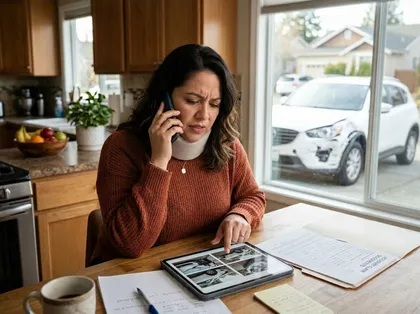
The 24-hour police or CHP report is only one of the deadlines that may apply after a crash in California. Other important deadlines include:
- 10-Day DMV SR-1: You generally must file an SR-1 with the California DMV within 10 days if the crash caused injury, death, or more than $1,000 in property damage.
- Insurance Notice: Your auto policy may require prompt notice of the crash. The exact timing depends on the policy.
- 30-Day UM Statement for Certain Hit-and-Run Claims: For some uninsured motorist claims involving an unidentified driver, California Insurance Code § 11580.2 requires a sworn statement to the insurer within 30 days, in addition to the 24-hour law-enforcement report.
These deadlines serve different purposes and do not replace one another. Missing one can create separate legal or insurance problems even if the others are met. Traffic accident lawyers can explain the reporting, insurance, and filing deadlines that may apply.
What Arash Law’s Results Show About Disputed Police Reports
An unfavorable police report does not necessarily determine the outcome of an injury claim. Arash Law’s published case history includes matters in which additional evidence was used to challenge an initial police assessment of fault. Here are some of our case results:
$2,000,000 — Pedestrian Accident: Police cited our client as the at-fault party after he was struck while jaywalking at night. Despite that unfavorable report, our attorneys secured a $2 million recovery on his behalf.
$1,000,000 — Motorcycle Accident: The police report listed our client as the party at fault in a motorcycle-versus-truck collision. Further investigation by our team showed the truck driver was actually responsible, and we recovered the available policy limits for our client.
These outcomes are not guarantees. Every case depends on its own facts and evidence. But they illustrate what experienced representation can do when the evidentiary record needs to be built or rebuilt.
What To Do If More Than 24 Hours Have Passed Since Your Crash
If you missed the 24-hour reporting window, contact the appropriate law enforcement agency promptly about making a late report, seek appropriate medical care if you were injured or develop symptoms, and preserve any remaining evidence. Delays can make it harder to establish the timeline, document injuries, and preserve evidence relevant to the claim.
- File the police or CHP report as soon as possible. Contact the CHP or the appropriate local police department and ask how to submit the report after the deadline. You may visit any CHP office in California to file a collision report, regardless of where the crash happened, though local police procedures can vary. Be accurate about when the crash happened and why the report is late. Filing late does not erase a missed deadline, but it can still create a record of the crash.
- Get medical care if you were injured. Seek appropriate medical care if you were hurt or develop symptoms after the crash. Tell the provider when the crash occurred and when your symptoms began. Medical records can help document your injuries and link them to the date of the collision.
- Preserve every piece of evidence you still have. Photograph any remaining scene evidence, your vehicle, and your visible injuries. Gather the names and contact information of any witnesses while memories are still fresh. Save all communications with the other driver and both insurers. Be cautious before giving a recorded statement to the other driver’s insurer, and if your own insurer requests one, review your policy’s duties or get legal guidance first.
- Contact an attorney. The reporting gap can complicate your claim, but it does not end it. Accident lawyers can review the reporting gap, assess the available evidence, reconstruct the timeline, and respond to causation arguments an insurer may raise.
A late report does not automatically end your claim, but delays can make evidence harder to preserve and disputes harder to resolve. Call (888) 488-1391 for a free case evaluation with Arash Law to discuss your options. Our team handles personal injury cases on a contingency fee basis, so you do not owe attorney’s fees unless we recover compensation for you.
Do Other Types Of Accidents Have A 24-Hour Reporting Deadline?
Not reporting an accident within 24 hours does not automatically prevent you from bringing a personal injury claim. However, the consequences depend on the type of accident, where it happened, and whether a separate notice or reporting rule applies.
- Work Injuries: California workers should notify their employer as soon as possible after a workplace injury. California workers’ compensation law generally requires written notice to the employer within 30 days, and delays can affect benefits or create disputes about whether the injury was work-related.
- Slip-and-Fall and Premises Liability Accidents: There is generally no statewide 24-hour reporting requirement for an ordinary slip-and-fall. However, prompt notice can help preserve surveillance footage, document the hazardous condition, and identify witnesses.
- Dog Bites and Animal Attacks: Separate reporting rules may apply. California rabies-control regulations require mammal bites to be reported to the local health officer, and local animal control or public health agencies may have additional procedures.
- Accidents on Government Property: California public-entity claims are subject to separate claim-presentation rules, including shorter deadlines that may apply well before the ordinary personal injury statute of limitations.
- Other Personal Injury Accidents: Incidents such as falling objects, negligent security, or injuries at businesses generally do not have a universal 24-hour reporting deadline, but delayed documentation can make it harder to establish when and how the injury occurred.
For many non-vehicle accidents, the bigger concern is not the first 24-hour reporting itself, but whether important evidence is preserved before it disappears or changes.
If more than 24 hours have passed, report the incident to the appropriate employer, business, property owner, insurer, or agency as soon as practical, document what happened accurately, and preserve any evidence that is still available.
Frequently Asked Questions About Accident Reporting Deadlines In California
California accident-reporting rules can involve different deadlines depending on the type of crash, the injuries involved, and the report being filed. The questions below explain how the 24-hour law-enforcement report, DMV SR-1, insurance notice, and other timing requirements may apply after an accident.
Do I Have To File My Own Report If Police Came To The Accident Scene?
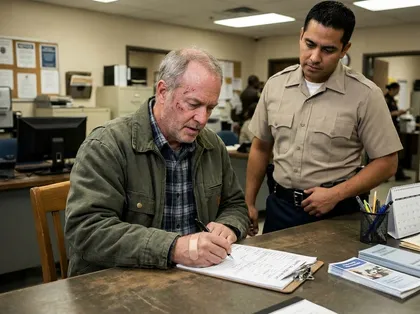
Not necessarily. CVC § 20008 requires the driver to “make or cause to be made” the required written report. An officer’s presence at the scene or preparation of an investigative collision report should not automatically be assumed to satisfy the driver’s separate statutory reporting obligation. Confirm with the responding agency what report was completed and whether any additional reports are required.
The important point is to confirm that a report was actually completed. An officer merely arriving at the scene, giving you an incident number, or assisting with an information exchange does not necessarily establish that the required written collision report exists. This does not eliminate the separate DMV SR-1 requirement when that requirement applies.
Do I Have To Report A Minor Fender Bender In California?
California Vehicle Code (CVC) § 20008’s 24-hour rule applies only to crashes involving injury or death. For property-damage-only crashes, the relevant threshold is generally the DMV SR-1. If the crash caused property damage exceeding $1,000 or any injury or death, an SR-1 must generally be filed within 10 days, subject to statutory exceptions.
If no one was hurt and the property damage was $1,000 or less, you generally do not need to file the 24-hour § 20008 report or the 10-day SR-1, though some exceptions may apply. But documenting the crash yourself is always advisable because “minor” damage can be more extensive than it appears, and some injuries are not immediately apparent.
Can I Still Report The Accident After 24 Hours?
Yes, you can contact the appropriate law enforcement agency and ask about its procedure for a late-reported collision. Agency procedures vary.
Filing late does not retroactively make the original deadline timely. However, a late report may still document the accident and provide information relevant to an insurance or injury claim.
What If I Was Too Injured To Report The Crash Within 24 Hours?
California law addresses this directly. Under CVC § 20010, if the driver is physically unable to make a required report, an occupant who was in the vehicle at the time must make it or ensure it is made. If no occupant was available or the deadline was missed anyway, contact the appropriate agency promptly, document the medical reason through your records, and speak with an attorney as soon as you are able.
Can Police Refuse To Take A Late Accident Report?
Agency procedures for late reports can vary. You may visit any CHP office in California to file a report, regardless of where the crash happened. For a local police report, contact the department that covers the area and ask about its specific procedure.
How Long Do I Have To Notify My Insurance Company After A Crash?
Insurance notice deadlines depend on your policy, and the California Department of Insurance recommends notifying your insurer promptly after a crash. Late notice can create a coverage dispute, but California generally requires an insurer relying on late notice to show the delay actually and substantially prejudiced it before it can deny coverage on that basis alone.
An insurance notice should not be confused with the 24-hour law-enforcement report or 10-day DMV SR-1. In addition, an unidentified hit-and-run UM claim may be subject to the specific statutory requirements in Insurance Code § 11580.2.
What Is The Statute Of Limitations For A Car Accident Injury Case In California?
California Code of Civil Procedure § 335.1 generally provides a two-year statute of limitations for personal injury lawsuits. In a typical car accident case, that period ordinarily runs from the date of the injury, although accrual and tolling rules can change the deadline in some circumstances. For instance, the filing deadline may be tolled while the injured person is a minor.
Government-entity claims can have different filing procedures. If a California public entity may be responsible, a written government claim generally must be presented to the appropriate public entity within six months under Government Code § 911.2. The correct agency and filing procedure depend on which public entity is involved.
Talk To Arash Law About Your California Claim
If you missed California’s 24-hour reporting deadline or aren’t sure whether you did, don’t wait. Delays can make evidence harder to preserve and may complicate your available legal and insurance options. The accident lawyers at Arash Law have recovered over $1 billion for injured clients. We work on a contingency basis; you owe no attorney’s fee unless your case resolves in your favor, and your written fee agreement explains how any case costs are handled.
Call (888) 488-1391 to speak with our team today. Your free case evaluation can begin the same day you reach out.
Arash Law. Make Them Pay, Call AK.
Sources
California Vehicle Code § 20008 (24-hour reporting requirement for injury and fatal crashes):
https://leginfo.legislature.ca.gov/faces/codes_displaySection.xhtml?lawCode=VEH§ionNum=20008California Vehicle Code § 20010 (reporting by an occupant when the driver is physically incapable):
https://leginfo.legislature.ca.gov/faces/codes_displaySection.xhtml?lawCode=VEH§ionNum=20010California Vehicle Code § 16000 (DMV accident-reporting requirement and 10-day deadline):
https://leginfo.legislature.ca.gov/faces/codes_displaySection.xhtml?lawCode=VEH§ionNum=16000California Department of Motor Vehicles — Report of Traffic Accident Occurring in California (SR-1):
https://www.dmv.ca.gov/portal/dmv-virtual-office/accident-reporting/California DMV — California Driver Handbook, Financial Responsibility, Insurance Requirements, and Collisions:
https://www.dmv.ca.gov/portal/handbook/california-driver-handbook/financial-responsibility-insurance-requirements-and-collisions/California Insurance Code § 11580.2 (uninsured motorist coverage and unidentified hit-and-run requirements):
https://leginfo.legislature.ca.gov/faces/codes_displaySection.xhtml?lawCode=INS§ionNum=11580.2California Code of Civil Procedure § 335.1 (two-year personal injury statute of limitations):
https://leginfo.legislature.ca.gov/faces/codes_displaySection.xhtml?lawCode=CCP§ionNum=335.1California Government Code § 911.2 (six-month public-entity claim-presentment deadline for personal injury and death claims):
https://leginfo.legislature.ca.gov/faces/codes_displaySection.xhtml?lawCode=GOV§ionNum=911.2California Labor Code § 5400 (30-day workers’ compensation injury-notice requirement):
https://leginfo.legislature.ca.gov/faces/codes_displaySection.xhtml?lawCode=LAB§ionNum=5400California Department of Industrial Relations, Division of Workers’ Compensation — I Was Injured at Work:
https://www.dir.ca.gov/dwc/InjuredWorker.htmCalifornia Department of Public Health — Rabies Information for Local Health Departments (17 CCR § 2606 mammal-bite reporting):
https://www.cdph.ca.gov/Programs/CID/DCDC/Pages/RabiesLHDs.aspxCalifornia Highway Patrol — Frequently Asked Questions (collision-report filing procedures):
https://www.chp.ca.gov/faq/California Department of Insurance: So You’ve Had an Accident, What’s Next?
https://www.insurance.ca.gov/01-consumers/105-type/95-guides/01-auto/hadaccident.cfmPitzer College v. Indian Harbor Insurance Co. (2019) 8 Cal. 5th 93 (California’s notice-prejudice rule): https://www4.courts.ca.gov/opinions/archive/S239510.PDF
Disclaimer
Past results do not guarantee future outcomes. Every case is different. The information on this page is for general educational purposes and does not constitute legal advice. No attorney-client relationship is formed by reading or relying on this content. If you were injured, consult a licensed California personal injury attorney about your specific situation. Arash Law. (888) 488-1391.