TL;DR: If you are injured at a Target store in California, seek medical care, report the incident, and preserve evidence promptly. You may have a premises liability claim if Target created the dangerous condition, knew about it, or should have discovered it through reasonable care. Strict filing deadlines apply.
Key Facts
- California Law: Every property owner, including Target, generally has a duty to use reasonable care in maintaining its premises, a standard established by Civil Code § 1714 and affirmed by the California Supreme Court in Rowland v. Christian, 69 Cal. 2d 108 (1968).
- Notice Requirements: When Target did not create the hazardous condition, a successful claim may require showing Target either knew about it (actual notice) or should have discovered it through reasonable inspections (constructive notice).
- California’s Pure Comparative Negligence Rule: Injured shoppers can recover even if they share some fault.
- Filing Deadlines: California law generally gives you two years from the date of your injury to file a premises liability lawsuit against a private retailer like Target under Code of Civil Procedure § 335.1. If a public entity is responsible, a separate pre-suit claim deadline may apply under the Government Claims Act.
Table of Contents

If you are injured at a Target store in California, you may be able to pursue a premises liability claim against Target. The steps you take in the first 24 to 72 hours can materially affect your ability to preserve evidence. Whether Target knew about the hazard or should have discovered it through reasonable inspections may affect the notice analysis in a premises liability claim. Acting quickly can help preserve the incident report, surveillance footage, and witness information.
Injuries at Target and other retail stores can result from many hazards, including slippery floors, falling merchandise, defective equipment, and unsafe parking areas. Falls are one example of how serious these incidents can become.
According to the California Department of Public Health (CDPH), falls caused 2,521 deaths, 114,427 hospitalizations, and 317,582 emergency department visits among Californians aged 65 and older in 2023. While these figures cover falls statewide rather than Target stores specifically, they show the potential severity of injuries caused by unsafe conditions.
What To Do If You Are Injured At A Target In California
If you are injured at a Target store in California, take these steps immediately: seek medical care, file a written incident report with store management, photograph the hazard, and contact an attorney to preserve surveillance footage before it is overwritten. Evidence disappears quickly in a retail environment: a spill gets mopped, a hazard gets fixed, and surveillance footage gets overwritten.
1. Get Medical Care Right Away
Seek medical evaluation promptly after the accident, even if you initially feel fine. Some injuries may not cause obvious symptoms right away. Concussions, disc injuries, and internal injuries can sometimes have delayed or subtle symptoms. Prompt treatment protects your health and creates a medical record documenting your injuries after the accident. Tell your doctors exactly how the accident occurred and describe every symptom, even minor ones.
2. Report The Incident Before Leaving
Promptly alert a Target store manager and ask them to document the incident before you leave. An incident report, if prepared, can create a written record that the event occurred and may include details about the hazard and witnesses. Provide only basic factual information about what happened. Do not speculate about causes, accept blame, or minimize your injuries. Ask whether you can obtain a copy of any report that is prepared. If one is not provided, write down the name, position, and time of every employee you spoke with.
3. Document The Scene Thoroughly
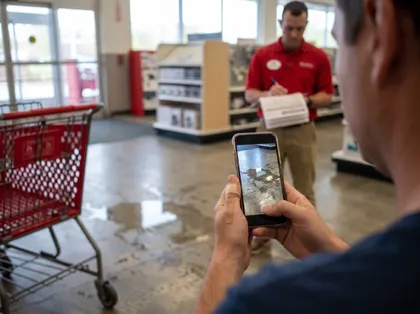
Before the hazard is cleaned up or repaired, document everything with your phone. Take wide shots, close-ups, and photos that show scale. Capture the exact hazard, the surrounding area, any warning signs that are present, and the absence of warning signs near the hazard. Video can also help capture the full context of the condition. Look around for visible security cameras. Your attorney can send a preservation demand asking Target to retain relevant surveillance footage before it may be overwritten.
4. Collect Witness Information
If any other customers or employees witnessed the accident, politely ask for their names and phone numbers. A short note on your phone is enough. Witness memories fade quickly, and people move on. Act before they leave the store.
5. Preserve Your Clothing And Shoes
Keep the uncleaned clothing and footwear you were wearing when the accident happened. Do not wash, repair, or discard them before consulting an attorney. The condition of your footwear or clothing may become relevant if Target argues that it contributed to the fall. Preserving these items can provide physical evidence about their condition at the time of the accident.
6. Keep Your Case Off Social Media
After a personal injury claim is underway, even a brief post about your “minor accident” or a photo showing you at a family event may be reviewed and used as evidence if it relates to your injuries, recovery, or the accident. Avoid posting about the incident, your injuries, or your recovery while your claim is pending.
7. Consult A California Premises Liability Lawyer
Consider speaking with a premises liability attorney after a serious injury at Target. A lawyer can investigate the cause of the incident, identify potentially responsible parties, and review whether Target knew or should have known about the hazard. Your lawyer can also request surveillance footage, inspection records, incident reports, and other evidence that may support your claim.
Injured at a Target store? Contact Arash Law for a free case evaluation, no obligation.
Call (888) 488-1391 for a free case evaluation, available 24 hours a day.
Target’s Legal Responsibility Under California Premises Liability Law
California Civil Code § 1714 generally requires property owners and occupiers, including retailers such as Target, to exercise reasonable care to avoid causing injury to others. In Rowland v. Christian, 69 Cal. 2d 108 (1968), the California Supreme Court emphasized ordinary negligence principles rather than relying on traditional classifications such as invitee, licensee, and trespasser.
For shoppers injured at Target, a premises liability claim generally requires proof of four elements: duty, breach, causation, and damages.
1. Duty Of Care
Target generally owes customers a duty to use reasonable care to keep its premises reasonably safe. That duty can apply to areas under Target’s control, including store aisles, entrances, walkways, and parking areas.
Reasonable care may include inspecting areas for hazards, addressing dangerous conditions within a reasonable time, and, when appropriate, warning customers about known hazards. The specific precautions required depend on the circumstances.
2. Breach Of Duty
A breach may occur when Target creates a dangerous condition or fails to take reasonable steps to discover, correct, or warn about one.
Examples may include:
- Failing to address a known spill within a reasonable time.
- Failing to conduct reasonable inspections for hazards.
- Leaving merchandise or other obstacles in customer walkways.
- Failing to provide an appropriate warning about a known hazard.
- Allowing an unsafe condition in a parking area to remain unaddressed.
When Target did not create the dangerous condition, notice can become an important part of proving breach.
- Actual notice means Target knew about the hazard, such as through an employee’s observation or a customer report.
- Constructive notice may exist when a hazard remains long enough that Target should have discovered it through reasonable inspections.
California courts do not impose a fixed period that automatically establishes constructive notice. In Ortega v. Kmart Corp. (2001) 26 Cal.4th 1200, the California Supreme Court held that evidence showing a store failed to inspect an area within a reasonable period may support an inference that the condition existed long enough to be discovered.
Inspection and maintenance records may help show whether Target reasonably monitored the area and how long a hazard may have existed. An attorney can also send a preservation demand requesting that Target retain relevant records and surveillance footage.
3. Causation
Showing that a dangerous condition existed is not enough by itself. The injured shopper must also show that Target’s breach was a substantial factor in causing the injury.
For example, a shopper who slipped on a spill would need evidence connecting the fall and resulting injuries to that condition. Photos, surveillance footage, witness statements, incident records, and medical records may help establish that connection.
4. Damages
Finally, the injured shopper must have suffered legally compensable harm as a result of the incident. Depending on the circumstances, damages may include:
- Medical expenses.
- Lost income and reduced earning capacity.
- Pain and suffering.
- Physical limitations or disability.
- Other accident-related economic and non-economic losses.
The value and availability of damages depend on the injuries, supporting evidence, and facts of the individual claim.
Types Of Accidents That Can Happen At Target Stores
Target stores have many areas where accidents can occur, from busy aisles and entrances to parking lots. Shoppers may suffer injuries from slippery floors, falling merchandise, defective equipment, security-related incidents, or unsafe conditions outside the store.
Slip-And-Fall And Trip-And-Fall Incidents
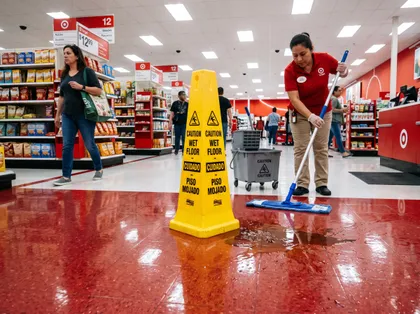
Wet floors from spills, mopping, or rainwater tracked in during California’s rainy season are common hazards. During wet weather, a store that fails to use reasonable measures, such as adequate matting or, when appropriate, warnings, may be held responsible if that failure contributes to a shopper’s injury. If you fall at Target, you may sustain severe injuries and have a premises liability case. Target slip-and-fall attorneys can investigate the condition, available warnings, and evidence of whether Target knew or should have known about the hazard.
Falling Merchandise
Improperly stocked shelves and overloaded displays pose danger. When heavy items are placed on high shelves without proper bracing or safety barriers, they can fall and strike customers, causing concussions, fractures, or internal injuries. Target generally has a duty to use reasonable care in maintaining product displays so they do not create an unreasonable risk of injury.
Defective Store Equipment
Broken shopping carts with sharp edges or malfunctioning wheels, automatic sliding doors that close too quickly or fail to detect a person, and malfunctioning escalators or elevators can all trap or injure customers. Target generally has a duty to use reasonable care in inspecting and maintaining equipment under its control. Depending on the circumstances, manufacturers, maintenance contractors, or other parties may also share responsibility.
Inadequate Security
Target stores may have parking lots, entrances, and other areas where customers could face security risks. Factors that may be relevant to an inadequate security claim include:
- Inadequate lighting in areas used by customers.
- Prior similar criminal incidents.
- Other indications of foreseeable criminal activity.
- Whether reasonable security measures were taken under the circumstances.
California courts have recognized that retailers may have a duty to take reasonable measures against foreseeable criminal conduct. The required precautions depend in part on the foreseeability of the criminal conduct and the burden imposed by the proposed security measures.
Parking Lot Hazards
Target shoppers may encounter unsafe conditions while crossing a parking lot or approaching a store entrance. Potential hazards include:
- Potholes or damaged pavement.
- Uneven walking surfaces.
- Inadequate lighting.
- Unsafe or poorly maintained pedestrian areas.
Target generally has a duty to exercise reasonable care regarding parking areas it owns or controls. At some Target locations, a landlord, property manager, or another party may instead be responsible for maintaining all or part of the parking area.
What If Target Says Your Injury Was Your Fault?
If Target claims that your actions contributed to your injury, you may still recover compensation. California follows a pure comparative negligence rule. Your compensation is reduced according to your percentage of fault. For example, if a court finds you 25% responsible for the incident that caused your injury, you may still recover 75% of your total damages.
Target may argue that you share responsibility for your injury. Depending on the facts, arguments may include:
- The hazard was open and obvious.
- You were distracted or not paying attention.
- You entered an area not open to customers.
- Your actions contributed to your injury.
These arguments do not necessarily bar recovery. An open and obvious condition also does not automatically eliminate Target’s potential liability. The effect depends on the circumstances, including whether Target should have anticipated that the condition could still cause harm.
Target employees injured while working may face different fault and benefits issues. Target workplace injury lawyers can review whether workers’ compensation or another legal remedy applies.
Evidence can help establish how your injury occurred and respond to comparative fault arguments. Useful evidence may include:
- Photos or videos of the hazard and the surrounding area.
- Witness names and contact information.
- The store’s incident report.
- Available surveillance footage.
- Evidence showing whether warnings were present.
Be careful about the statements you make after the incident. Comments such as “I’m okay” or “maybe I wasn’t watching” may become evidence relevant to your injuries or share of fault. Keep your statements factual and limited to what you directly observed.
If You Are A Target Employee: Workers’ Compensation In California
If you were injured while working at a Target store as a team member, stock associate, cashier, or in any other employee role, California workers’ compensation is generally your primary legal remedy against Target. This system is a no-fault program administered by the Department of Industrial Relations’ Division of Workers’ Compensation (DIR/DWC).
Workers’ compensation disputes are generally heard by workers’ compensation judges at DWC district offices, with decisions subject to review by the Workers’ Compensation Appeals Board (WCAB).
- Who Qualifies: Most employees whose injuries arise out of and occur in the course of their employment may be eligible for workers’ compensation benefits under California law. Whether a particular worker qualifies, including someone classified as a temporary, seasonal, or independent contractor, depends on specific facts about the working arrangement. An attorney or the DIR/DWC can provide information about classification issues that affect eligibility.
- What the Benefits Cover:
- Medical treatment reasonably required to cure or relieve the effects of the work injury.
- Temporary disability payments may be available if the injury prevents you from working while you recover. The amount and duration depend on your wages and medical status.
- Permanent disability benefits may be available if the work injury causes lasting impairment.
- How to File:
- Report the injury to your supervisor promptly. California law generally requires notice of a work injury within 30 days. Failing to provide timely notice can affect your right to benefits, although exceptions may apply.
- Request a DWC-1 claim form. Your employer must give or mail you a claim form within one working day of learning about your injury. If your employer does not provide one, you can obtain the form from the DIR/DWC.
- Get medical care and tell your treating providers the injury is work-related. Your employer may have a Medical Provider Network (MPN). Ask your employer or the DIR/DWC for information about provider choice.
- Do Not Miss the Filing Deadline: Reporting the injury within 30 days is not the only deadline that may apply. California Labor Code § 5405 generally requires workers’ compensation proceedings to be commenced within one year of certain triggering events, including the date of injury, although later benefit payments or medical treatment can affect how the deadline is calculated. Because exceptions and different rules may apply, injured employees should not delay filing their claim.
Workers’ compensation generally limits an employee’s claim against the employer. Still, it does not necessarily preclude a separate personal injury claim against someone other than the employer who caused the injury. For example, a Target employee injured by defective equipment, a negligent delivery driver, or a third-party contractor may have a claim against that responsible party in addition to workers’ compensation benefits. California Labor Code § 3852 preserves an injured employee’s right to pursue damages against a responsible third party.
California Labor Code §132a prohibits Target from retaliating against you for filing a workers’ compensation claim or testifying in another worker’s case. If you experience retaliation, remedies may be available through the WCAB. Consult an attorney for the specific remedies that apply to your situation.
Case Results From Premises Liability Claims Similar To Target Injuries
The results below involve premises liability cases with circumstances that may also arise at large retail stores, such as unsafe property conditions, inadequate lighting, and security-related incidents. The $41.95 million verdict involved Walmart; the publicly available summaries of the other cases do not identify the retailer or property involved.
| Case Result | What Happened to Our Client | How Our Lawyers Helped |
|---|---|---|
| $41,950,000 (Personal Injury/Walmart Store) |
A homeless man attacked a husband and wife with an unsecured baseball bat while they were shopping at Walmart. | Our lawyers pursued Walmart for its responsibility for the incident. The jury assigned 50% of the fault to Walmart, resulting in a judgment against the company that exceeded $30 million. |
| $3,500,000 (Premises Liability) |
Inadequate lighting contributed to our client’s fall and spinal injury. | Our legal team pursued compensation for the unsafe property condition and secured a $3.5 million settlement for our client. |
| $1,000,000 (Assault and Battery/Big-Box Retailer) |
Our client suffered injuries after being assaulted while shopping at a big-box retailer. | Our lawyers took over the case after another firm declined to continue it. We presented evidence involving inadequate security and the store’s prior notice of violent incidents, ultimately obtaining a $1 million recovery. |
| Past results do not guarantee future outcomes. Every case is different, and results depend on the specific facts and evidence involved. | ||
These cases illustrate legal issues that may also arise when someone is injured at a Target store. Target injury claims can involve many circumstances, including unsafe property conditions, security incidents, and slip-and-fall accidents.
For those injured in a fall, Target slip-and-fall settlement amounts can vary based on the severity of the injuries, evidence of liability, and other case-specific factors. Our premises liability lawyers can investigate what happened, preserve available evidence, and pursue compensation based on the facts of the claim.
California’s Statute Of Limitations For Target Injury Claims
If you are injured at a Target store in California, you generally have two years from the date of your injury to file a personal injury lawsuit under California Code of Civil Procedure § 335.1. The deadline commonly applies to claims involving falls, falling merchandise, unsafe store equipment, and other injuries caused by dangerous conditions at Target.
Some circumstances can affect the two-year deadline:
- Delayed Discovery: In limited circumstances, the deadline may begin when you discovered, or reasonably should have discovered, the injury and its wrongful cause. Delayed symptoms alone do not necessarily postpone the deadline. Whether the discovery rule applies depends on the specific facts and whether you acted with reasonable diligence.
- Injured Minors: For many personal injury claims involving a child injured at Target, the statute of limitations may be tolled while the child is under 18. Special rules and exceptions can affect the filing deadline.
Do not assume that an insurance claim with Target extends the time to file a lawsuit. Settlement discussions generally do not stop the statute of limitations from running. Identifying the applicable deadline early can help protect your right to pursue compensation.
Frequently Asked Questions About Target Injuries In California
If you were injured at a Target store in California, you may have questions about what happens next and how to protect your rights. The following FAQs address unsafe store conditions, medical bills, incident reports, disputed injuries, and workers’ compensation for injured Target employees.
What Constitutes A Hazardous Condition At A Target Store?
A hazardous condition is a condition that creates an unreasonable risk of harm to shoppers, employees, or others lawfully present at a Target store. Examples include wet floors without appropriate warnings, dangerously unstable merchandise, broken equipment, damaged flooring, and poorly lit areas that create a risk of injury. When Target did not create the condition, whether it knew or should have known about the hazard can be important in establishing liability.
Who Pays My Medical Bills After A Target Accident?
Target does not automatically pay your medical bills while an injury claim is pending. Your private health insurance, Medicare, or Medi-Cal may cover eligible medical care according to the terms of your coverage. Some health plans and government programs may have reimbursement or lien rights against a settlement or judgment. An attorney can identify valid reimbursement claims and account for them when evaluating a potential settlement.
Should A Target Manager Always Prepare An Incident Report?
Ask a Target manager to document the incident before you leave the store. If the manager does not prepare a report, follow the steps in Step 2 above. Provide basic factual information about what happened and ask for a copy of any report the manager prepares. Because the contents of an incident report can vary, keep your record of the hazard, witnesses, employees you spoke with, and other important details.
What If Target Says My Injury Was Minor Or That I’m Exaggerating?
If Target disputes the severity of your injury, an attorney can review your medical records, treatment needs, lost income, and other evidence to evaluate your damages before you accept a settlement offer. An early offer may not account for ongoing treatment, future medical needs, lost earnings, or pain and suffering. Once you accept a settlement and sign a release, you generally cannot pursue additional compensation for claims covered by that release.
Can I Lose My Job At Target For Filing A Workers’ Compensation Claim?
California law prohibits Target from discriminating against you because you filed or intended to file a workers’ compensation claim. However, filing a claim does not prevent Target from taking employment action for a separate lawful reason. If you believe Target took action against you because of your workers’ compensation claim, remedies may be available under California Labor Code § 132a. Speak with a lawyer to review what happened and determine what legal options may be available.
Talk To Arash Law About Your California Target Injury Claim
If you suffered an injury at a Target store in California due to someone else’s negligence, you have legal options. If your injuries affect your ability to work, sleep, or manage daily life, those effects may be relevant to damages beyond your immediate medical bills, including lost income and pain and suffering.
Arash Law can handle the process by investigating the incident, sending preservation demands for surveillance footage and inspection records, negotiating with the parties handling the claim, and, if necessary, taking the case to trial.
Our premises liability team has experience handling injury claims involving businesses and property owners and can evaluate the facts and evidence in a Target injury claim. There are no attorney’s fees unless we recover compensation for you, subject to a written contingency-fee agreement as required by California law.
Call Arash Law at (888) 488-1391 for a free case evaluation. We are available 24 hours a day.
Arash Law. Make ‘em pay. Call AK.
Sources
California Department of Public Health (CDPH), Falls Prevention Program: statewide data on falls as the leading cause of injury-related emergency department visits, hospitalizations, and deaths among California adults aged 65 and older.
California Judicial Branch Self-Help Center, “Deadlines to Sue Someone”: CCP §335.1 two-year statute of limitations; Government Code §911.2 six-month government-entity claim deadline; minor tolling guidance.
selfhelp.courts.ca.gov
California Department of Industrial Relations / Division of Workers’ Compensation (DIR/DWC), workers’ compensation system overview and injured worker resources.
dir.ca.gov
Rowland v. Christian, 69 Cal. 2d 108 (1968): California Supreme Court, foundational premises liability reasonable-person standard; UC Berkeley School of Law archive.
law.berkeley.edu
California Department of Health Care Services (DHCS), Personal Injury Program: information on insurer reimbursement rights applicable when state programs cover care after a third-party incident.
dhcs.ca.gov
Disclaimer
Past results do not guarantee future outcomes. Every case is different. The information on this page is for general educational purposes and does not constitute legal advice. Reading or relying on this content does not create an attorney-client relationship. If you were injured, consult our California personal injury attorney about your specific situation. Call Arash Law at (888) 488-1391.