TL;DR: To get accident video from a delivery driver witness, identify who holds the recording and send a written request asking that they preserve the original footage and provide a complete, unedited copy. Keep records of your requests and responses. If the holder refuses or cannot be identified, an attorney can investigate further and assess available legal options.
To obtain the accident video from a delivery driver who witnessed your crash in California, first identify who owns or controls the recording. The driver may have footage on a personal phone or dashcam, while an employer or fleet operator may manage a company-installed camera. Once you identify the recording holder, send a written request asking them to preserve the original footage and voluntarily provide a complete, unedited copy, including available video before and after the collision.
Acting promptly may help prevent valuable accident evidence from being lost. Some dashcams and fleet systems automatically overwrite older recordings, while others store files locally or in the cloud. Because retention periods vary, request preservation as soon as possible and keep records of your communications. If the holder refuses to share the footage or cannot be identified, a California personal injury attorney can investigate further and evaluate whether formal discovery procedures may be available.
Table of Contents

A Delivery Driver Witnessed My Accident and May Have Video. How Can I Identify Who Holds It and Ask For a Complete Copy Before It Is Lost?
To get accident video from a delivery driver witness in California, first determine whether the driver, employer, or fleet operator controls the recording. You can do so by taking these steps:
- Ask the delivery driver whether the footage was captured on a personal phone, personal dashcam, or company-installed camera.
- Find out where the recording is stored and who can access, retrieve, or preserve it.
- If the driver does not control the footage, ask for the appropriate supervisor, fleet operator, or records department.
Send the recording holder a written request to preserve the original video and voluntarily provide a complete, unedited copy, including available footage before and after the crash. Include the accident date, time, location, and vehicle details.
If the holder cannot be identified or refuses to share the footage, a California traffic accident attorney can investigate further and assess available legal options. Act promptly: some recordings may be automatically deleted or overwritten.
Key Facts About Preserving Delivery Driver Crash Footage in California
- The delivery driver may be a witness rather than a defendant. The delivery driver’s involvement as a witness does not establish that they caused or contributed to the accident.
- The driver may not control the recording. A personal recording could be accessible to the driver, while an employer, fleet operator, or technology provider may manage a company camera system.
- Footage can be overwritten or deleted. Footage retention depends on the recording device, storage capacity, settings, and whether the file has already been saved.
- A preservation request is different from a demand for immediate disclosure. A written request can ask the holder to protect the original recording and voluntarily provide a copy. It does not automatically compel an independent witness to comply.
- A complete recording may contain more information than the collision itself. Available footage before and after the impact, other camera views, audio, timestamps, and metadata may provide additional context.
- A traffic accident attorney may investigate further if voluntary efforts fail. California law provides procedures for seeking evidence from non-parties during litigation, subject to applicable requirements.
Who Actually Holds the Delivery Driver’s Accident Video?
The delivery driver who witnessed your crash may not be the person who possesses or controls the video. The driver may know whether a camera captured the accident, but an employer, fleet operator, or another person may have access to the actual recording. Identifying the correct recording holder is one part of gathering evidence for a personal injury claim, as it will help you send preservation and voluntary disclosure requests to someone who can act on them.
Identifying the Witness vs. the Recording Holder
The witness is the delivery driver who saw the accident, while the recording holder is the person or organization that possesses or controls the video. They may be the same person, depending on the recording device and storage system.
| Recording Type | Delivery Driver Witness | Possible Recording Holder |
|---|---|---|
| Personal phone | May have recorded the crash using their phone. | The delivery driver or another person with access to the saved or transferred file. |
| Personal dashcam | May know whether their dashcam captured the collision. | The delivery driver or someone with access to the camera, memory card, or connected account. |
| Company-installed camera | May know a camera was installed but lack access to its recordings. | The employer, fleet operator, or authorized records department. |
| Third-party fleet system | May know the vehicle uses a recording system but not how the footage is stored. | An authorized fleet administrator or technology provider, depending on system arrangements. |
To identify the recording holder, collect:
- The delivery driver’s name and contact information.
- Details about the delivery vehicle.
- The delivery driver’s known employer.
Ask whether the accident was recorded, where the footage is stored, and who can retrieve or preserve it. If the driver does not have access to the recording, ask for the appropriate supervisor, fleet operator, or records department. Keep a record of your inquiries and responses.
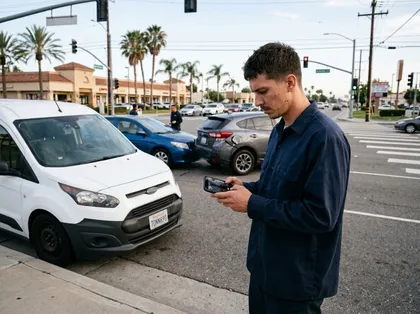
The recording device does not establish who legally controls the footage or can release it. Do not assume Amazon, DoorDash, Uber Eats, or another delivery platform holds the recording simply because the driver was making deliveries.
How Can You Request the Complete Accident Video Before It Is Lost?
You can request the complete accident video by sending the recording holder a written preservation request, sometimes called a spoliation letter. This document will ask them to save the original file and voluntarily provide the full, unedited recording.
A specific written request helps the holder identify the footage that needs to be preserved and documents your preservation efforts. Before sending it, gather the following information when available:
- Date and approximate time of the accident.
- Street address, intersection, or other identifiable location.
- Camera angle or approximate position of the delivery vehicle.
- Make, color, and license plate numbers of the vehicles involved.
- Any known information about the recording device or storage system.
- Your contact information for a response.
The request does not need complicated legal terminology. You can use this example:
“A delivery driver witnessed a collision involving [Vehicle A] and [Vehicle B] on [Date] at approximately [Time] near [Location]. If you possess or control any recording of this incident, please preserve the original, unedited video, along with available footage before and after the collision, audio, timestamps, and associated metadata. Please do not delete, alter, or overwrite the recording. I would also appreciate confirmation of whether the footage exists and whether a complete copy can be provided voluntarily.”
Do not delay the request simply because some details are missing. Some dashcams and fleet cameras automatically overwrite older footage. Retention periods can also vary depending on the device, storage capacity, and recording settings. Tell the recording holder what you know and explain when information is approximate.
What Should You Include When Requesting a Complete Copy?
A request for the complete copy of a recording should ask for the original digital file, including available footage before and after the collision, rather than only a short clip or screenshot. The original or native file may retain information useful for evaluating the recording’s source and authenticity.
When available, request:
- The Original Video File: Ask for the recording in its existing or native digital format rather than an edited or compressed copy.
- Footage Before and After the Accident: Request several minutes of available recording before and after the collision.
- Additional Camera Views: Ask whether other cameras on the vehicle or recording system captured the incident.
- Available Audio: Request relevant audio if it was lawfully recorded and retained.
- Timestamps and Associated Metadata: Request recording times, GPS coordinates, speed data, and any other information captured by the system.
- Information About Missing Footage: Ask whether any portions were deleted, overwritten, corrupted, or excluded.
- Preservation of the Original: Request that the holder retain the source file even if a separate viewing copy is provided.
Not every recording contains GPS coordinates, speed data, audio, or detailed file history. The information available depends on the device and recording settings. Compressed files or screenshots may also omit information contained in the original recording.
How Should You Document Your Preservation Request?
Keep a written record of every preservation request, follow-up, and response to show who you contacted, when you contacted them, and what you requested.
Record the following information:
- Date and Time: When you sent the request or followed up.
- Recipient Details: The person’s name, position, and organization, if known.
- Contact Method: Whether you used email, phone, text message, or written correspondence.
- Request Details: What footage you asked the holder to preserve or provide.
- Response Received: Whether the holder confirmed the recording, agreed to preserve it, declined, or referred you to someone else.
Keep copies of your requests, responses, and any confirmation that the video has been preserved. If you obtain the recording, note who sent it, when and how you received it, and where you saved it.
Do not alter the original file. These records help document your preservation efforts and track how the evidence was handled.
Why Request Footage Before and After the Crash?
Footage before and after the collision may provide context that a short recording of the impact alone cannot show. Depending on what the camera captured, it may reveal vehicle positions, traffic signals, lane changes, braking movements, road conditions, or events immediately after the crash.
The recording’s usefulness depends on its actual contents. A delivery driver’s camera may not have captured the entire collision, and the footage should not be assumed to establish fault before it is reviewed.
Need help preserving accident video before it’s lost? If a delivery driver witnessed your accident, identifying who holds the recording and requesting preservation can be time-sensitive. Arash Law’s California traffic accident attorneys can help investigate potential recording holders, request that footage be preserved, and assess available options for obtaining a complete copy of the footage.
Call (888) 488-1391 for a free initial consultation.
When Can an Attorney Investigate Further to Obtain Delivery Driver Witness Video?
Traffic accident lawyers can investigate further when the delivery driver cannot be contacted, the recording holder is unknown, or voluntary requests to preserve or share the footage are unsuccessful. Legal assistance may also be useful when a recording could be deleted or overwritten before the correct holder is identified.
What Can an Attorney Do to Locate and Preserve the Recording?
An attorney can help identify potential recording holders, request preservation, and determine whether additional legal steps are appropriate.
Depending on the circumstances, counsel may:
- Locate the recording holder. Review witness details, vehicle information, and available records to identify who may possess or control the footage. Attorneys may also assist in obtaining California traffic accident reports, which may contain information about the delivery driver if they were a witness.
- Contact the appropriate person. Reach out to the driver, employer, fleet operator, or records department to request information about the recording.
- Request preservation. Send a written request identifying the crash and asking the holder to retain the original video and any available metadata.
- Investigate other copies. Determine whether footage may also exist on a memory card, backup device, company server, or cloud account.
- Evaluate legal options. Assess whether litigation and formal discovery procedures may be appropriate if voluntary efforts fail.
A lawyer cannot guarantee that a recording exists, remains available, or can be obtained. The available options depend on who controls the footage, how it is stored, and the circumstances of the claim.
Can an Attorney Subpoena Accident Video From a Delivery Driver in California?
Yes. A California personal injury attorney may be able to obtain accident video through formal civil discovery after a lawsuit is filed, provided the applicable legal requirements are met. The procedure depends on whether an individual witness, employer, fleet operator, or another organization holds the recording.
An attorney may pursue the following steps:
- Request company-held footage. A deposition subpoena for business records may be used to seek relevant video from a company or fleet operator. The subpoena must describe the requested records with reasonable particularity and may specify the desired electronic format (California Code of Civil Procedure (CCP) § 2020.410).
- Seek personally held recordings. Video stored on a witness’s personal phone or dashcam may require a different authorized discovery procedure.
- Meet subpoena requirements. Applicable rules may require proper service, advance notice, production deadlines, fees, and opportunities for objections. Business-records production also involves qualifications for deposition officers (CCP § 2020.420).
- Address noncompliance. If the holder fails to comply with a properly issued subpoena, an attorney may seek enforcement by the court. Courts may impose authorized sanctions for misuse of the discovery process when applicable legal requirements are satisfied (CCP § 2023.030).
- Investigate missing footage. If the original recording was deleted or overwritten, an attorney may check whether another copy exists on a backup device, cloud account, or company system. Recovery is not guaranteed.
Does a Preservation Letter Require the Holder to Provide the Video?
No. A preservation letter does not automatically compel an independent delivery-driver witness or another recording holder to preserve or release footage.
The letter can serve as documentation of when the holder was informed that the recording may be relevant to an accident claim. However, the legal consequences of failing to preserve evidence depend on the holder’s obligations and the circumstances.
California law permits a court or jury to consider a party’s willful suppression of evidence when drawing certain inferences. However, this rule does not automatically apply to an independent witness who ignores a preservation request. Likewise, failing to respond to a voluntary request is not the same as violating a properly issued subpoena.
Requesting preservation early remains important because formal discovery may take longer than the footage remains available. Even a properly issued subpoena cannot recover a recording that has been permanently lost.
Why Should You Preserve Accident Video Before California Filing Deadlines?
In California, victims injured in a traffic accident generally have two years to file a personal injury lawsuit against a private party (CCP § 335.1) and six months to present a claim to a responsible public entity (Gov. Code § 911.2), barring statutory exceptions. These filing deadlines typically begin on the date of accrual, which is usually the date of the accident. Preserving footage of a crash before they approach matters because accident video may be deleted or overwritten long before then.
Requesting preservation early may help protect evidence of vehicle movements, road conditions, and other circumstances relevant to fault. However, the state’s legal filing deadlines do not determine how long a delivery driver or recording holder retains accident footage.
A camera may overwrite the recording before an attorney can obtain it through formal discovery. Similarly, sending a preservation request does not extend California’s filing deadlines or automatically require an independent witness to retain the footage.
How Preserving Accident Footage Has Mattered in Arash Law Cases
Preserving video evidence of an accident can help attorneys investigate disputed liability and identify information that may affect a personal injury claim. One of Arash Law’s previous case results illustrates the importance of obtaining and reviewing such evidence:
This case involved a fatal workplace accident. We represented the spouse of a worker crushed between trailers while guiding a truck driver trying to park in a tight space.
The defense argued that our client’s husband voluntarily stepped behind a moving trailer. However, our team used video of the accident to establish that there were safety failures at the facility where the death occurred.
We resolved the case for $2.2 million.
Although this case did not arise from a traffic accident, it highlights why securing evidence matters when fault is disputed. If a delivery driver witnessed your accident and may have video, identifying the recording holder promptly may help preserve evidence relevant to your claim.
Past results do not guarantee future outcomes. Every case depends on its specific facts and evidence.
Frequently Asked Questions About Getting Accident Video From a Delivery Driver in California
What if I Don’t Know the Delivery Driver’s Name?
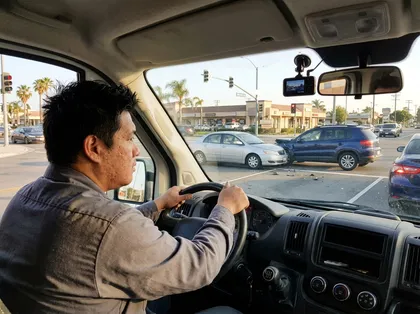
You may still be able to identify the delivery driver who witnessed your accident. Check collision reports, witness statements, photographs, or available surveillance footage for identifying details, such as the delivery vehicle’s license plate number or company markings.
A California traffic accident attorney can help investigate the driver’s identity, determine who may have the recording, and request that the footage be preserved before it is deleted or overwritten.
Is Dashcam Footage Legal and Admissible in California?
Yes. Dashcams are generally legal in California. Their footage may be admissible in personal injury cases if it is relevant, authenticated, and otherwise complies with evidence rules. A party generally must establish that the recording is relevant and authentic, meaning it accurately represents what it is claimed to show (California Evidence Code §§ 350, 1400–1401).
An attorney can review how the footage was recorded, obtained, and preserved to assess whether it may be used as evidence.
Do Independent Delivery Drivers Have to Share Personal Dashcam Video at the Scene?
No. An independent delivery driver who witnessed your accident is generally not required to share personal dashcam footage at the scene. The driver may provide it voluntarily, but witnessing a collision does not automatically establish liability. If the driver refuses to share the recording, an attorney can assess whether formal discovery procedures may be available after a lawsuit is filed.
How Long Does It Take to Get Video Footage From an Accident?
You may receive accident video within days if the recording holder voluntarily agrees to provide a copy. However, obtaining footage through a subpoena can take several weeks or longer. The timeline depends on who holds the recording, whether it remains available, and whether formal legal procedures are necessary.
In California, a business-records subpoena generally must allow at least 20 days after issuance or 15 days after service before production, whichever is later. Additional notice requirements or objections may extend the process (CCP § 2020.410).
Can I Force a Private Business to Hand Over Security Footage Without Filing a Lawsuit?
A voluntary request generally cannot force a private business to release its recording. Formal civil discovery typically becomes available after litigation begins. An attorney may also evaluate whether a separate, legally authorized procedure applies to the particular circumstances. A preservation letter alone cannot force a witness or recording holder to release the footage.
What if the Recording Holder Deletes the Footage After Receiving My Request?
The legal consequences depend on who deleted the footage, whether that person had a duty to preserve it, and the circumstances of the deletion.
California Evidence Code § 413 may permit certain inferences when a party to a case willfully suppresses evidence. Discovery sanctions may also be available for qualifying misuse of the discovery process.
Neither consequence automatically applies to an independent witness solely because the witness received a voluntary preservation request.
What if the Video Was Automatically Overwritten?
Automatically overwritten footage may no longer be recoverable from the original recording device. An attorney may investigate whether another copy exists on a memory card, a backup drive, a cloud account, or a company system. Recovery depends on the storage system and the circumstances. There is no guarantee deleted footage can be restored.
How Do Victims Afford Legal Help to Get Subpoenas and Pursue Evidence?
Accident victims may be able to afford legal help through a contingency fee arrangement, which generally means they do not pay attorney fees upfront. Instead, the attorney receives an agreed percentage of the compensation recovered.
This arrangement can help injured victims pursue preservation requests, subpoenas, and other evidence-gathering procedures without paying hourly attorney fees. Litigation costs and expenses are addressed separately in the written fee agreement (California Business and Professions Code § 6147).
Talk to Arash Law About Your California Crash Evidence
If a delivery driver witnessed your crash and may have video, Arash Law’s California personal injury attorneys can help identify the recording holder and request that the original footage be preserved. Our team can review witness information, contact potential recording holders, and request a complete copy.
If the footage is unavailable or the holder refuses to cooperate, our traffic accident lawyers can investigate other possible sources of the recording and assess further legal options. Call (888) 488-1391 to discuss your accident and how we may help preserve relevant evidence. Our hotline is available 24/7.
Sources
- California Code of Civil Procedure § 2020.410 — Deposition Subpoenas for Business Records. Governs subpoenas for business records, including electronically stored information, record descriptions, production formats, and applicable production timelines.
https://leginfo.legislature.ca.gov/faces/codes_displaySection.xhtml?lawCode=CCP§ionNum=2020.410.- California Code of Civil Procedure § 2020.420 — Deposition Officer Qualifications. Establishes requirements for deposition officers handling business-records-only subpoenas.
https://leginfo.legislature.ca.gov/faces/codes_displaySection.xhtml?lawCode=CCP§ionNum=2020.420.- California Code of Civil Procedure § 2023.030 — Discovery Sanctions. Addresses sanctions that courts may impose for qualifying misuse of the discovery process when authorized by law.
https://leginfo.legislature.ca.gov/faces/codes_displaySection.xhtml?lawCode=CCP§ionNum=2023.030.- California Evidence Code § 413 — Willful Suppression of Evidence. Allows consideration of a party’s willful suppression of evidence when determining what inferences may be drawn.
https://leginfo.legislature.ca.gov/faces/codes_displaySection.xhtml?lawCode=EVID§ionNum=413.- California Evidence Code § 350 — Relevance of Evidence. Provides that irrelevant evidence is not admissible.
https://leginfo.legislature.ca.gov/faces/codes_displaySection.xhtml?lawCode=EVID§ionNum=350.- California Evidence Code §§ 1400–1401 — Authentication of Evidence. Defines authentication and establishes authentication requirements for documentary evidence, including applicable video recordings.
https://leginfo.legislature.ca.gov/faces/codes_displaySection.xhtml?lawCode=EVID§ionNum=1400.
https://leginfo.legislature.ca.gov/faces/codes_displaySection.xhtml?lawCode=EVID§ionNum=1401.- California Code of Civil Procedure § 335.1 — Personal Injury Filing Deadline. Generally establishes a two-year deadline for personal injury and wrongful death lawsuits.
https://leginfo.legislature.ca.gov/faces/codes_displaySection.xhtml?lawCode=CCP§ionNum=335.1.- California Government Code § 911.2 — Government Claim-Presentation Deadline. Generally requires claims against public entities involving personal injury or damage to personal property to be presented within six months, subject to applicable rules and exceptions.
https://leginfo.legislature.ca.gov/faces/codes_displaySection.xhtml?lawCode=GOV§ionNum=911.2.- California Courts — Subpoena Business Records. Provides practical information about business-records subpoenas, production deadlines, notice requirements, and records costs.
https://selfhelp.courts.ca.gov/subpoena/business-records- California Highway Patrol — Request a Crash Report. Explains eligibility, the CHP Crash Portal, and Form CHP 190 for requesting collision reports.
https://www.chp.ca.gov/traffic/request-a-crash-report/- California Business and Professions Code § 6147 — Contingency Fee Agreements. Establishes requirements for written contingency fee agreements, including provisions concerning fees and litigation costs.
https://leginfo.legislature.ca.gov/faces/codes_displaySection.xhtml?lawCode=BPC§ionNum=6147.Disclaimer
The information provided is for general educational purposes and does not constitute legal advice. The availability of accident recordings, preservation obligations, discovery procedures, and filing deadlines depends on the circumstances of each case.