TL;DR: Employers are responsible for their employees’ car accidents when the crash happens within the scope of employment. If a worker injures others while doing job duties, the employer may share liability, with larger insurance policies covering the harm, and proof matters.
Highlights:
- Call police and get an official crash report number.
- Photograph vehicles, plates, damage, injuries, road signs, and skid marks.
- Ask the driver who they work for and what task they were doing.
- Collect witness names, phone numbers, and short written or recorded statements.
- Document work clues: uniforms, logos, delivery items, dispatch texts, route sheets.
- Seek medical care promptly, even if symptoms feel minor.
- Notify your insurer and avoid contacting the other insurer alone.
Tip: Save dashcam footage, app logs, and messages immediately, and when describing what happened, stick to observable facts and avoid guessing about fault.
Table of Contents
Car accidents have the potential to result in significant legal action to seek damages, and many people assume that when they are involved in a collision caused by another driver, the other motorist will be responsible for covering the damages. While liability usually falls on people who cause motor vehicle crashes, certain cases can become more complicated. If the at-fault driver was using a company-owned vehicle or driving for work, it raises the question of whether employers are responsible for their employees’ car accidents.
One major possible complication can involve a person who was either driving a company vehicle or was driving while they were on the clock. When driving is related to a person’s job duties, employers can sometimes be held liable for accidents that occur during work activities, depending on the situation.
Car accidents occur at all hours of the day, meaning people can be involved in collisions late at night, early in the morning, or in the middle of the afternoon. Certain drivers may be performing duties for employers, such as people who are making deliveries, transporting passengers, or otherwise carrying goods on behalf of an employer.
Employers can be found liable in these cases when their hiring practices lead to employing negligent drivers or not investing in properly training drivers. Many motor vehicle accident cases involving employees who were driving for work purposes may result in employer liability, but this is not automatic.
Employers can potentially be held responsible for injury claims and property damage resulting from car accidents involving their employees. In many cases, employers may attempt to argue that the employees were not driving for work purposes, so the employer should not be liable for any damages.
Whether employers are responsible for their employees’ car accidents can depend on a variety of factors, including whether the employee was driving within the scope of their employment at the time of the crash. A driver operating in the scope of their employment is a key factor in these kinds of cases, as it means the driver was performing work-related tasks during the collision. If the accident occurred during work-related activities, both the negligent driver and the employer may share liability. In such cases, the employer’s insurance limits may provide additional compensation for victims.
If you sustained injuries in this type of crash, consider consulting Arash Law. Our firm can guide you through your options for pursuing compensation for your losses. Our experienced California accident lawyer works to identify potentially liable parties and pursue accountability for the damage they caused. We can help you navigate the complexities of determining whether employers are responsible for their employees’ car accidents.
Actions To Take Following Car Accidents Involving Employee Drivers
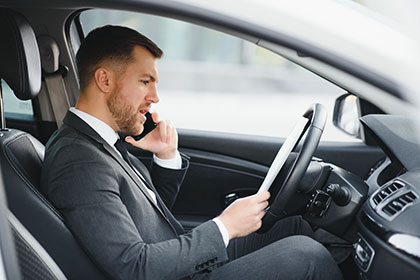 Fault is not always clear in California car accidents, so try to avoid making any statements about the causes of accidents to prevent unintentionally admitting fault.
Call the local police department to report a wreck, and then try to take as many pictures as you can of the entire crash scene. If medical professionals are present, take advantage of any first aid screening and seek medical attention to check your own health.
If a person is driving a company vehicle or was driving while they were on the clock, an employer is not automatically liable for damages in these cases. Many crashes end up being the fault of other drivers or even third parties.
Our car accident lawyers can investigate your case and assess whether you have a viable claim. We can help clarify whether employer liability applies and assist you throughout the claims process.
Factors That Determine Employer Liability For Employees’ Car Accidents
There are generally three types of situations in which employers may be held liable for their employees’ car accidents.
Employer Negligence
An employer may be found responsible for an accident if they negligently hire an unqualified driver or fail to properly supervise an employee. Businesses have a duty to hire qualified employees and take reasonable steps to prevent risks to the public.
A good example of this kind of issue would be an employer hiring a driver despite the applicant having a history of being arrested for driving under the influence (DUI). In such cases, employers can be held liable for damages if the same driver causes an accident as a result of a DUI offense.
Employer obligations also extend to verifying that a person has a valid driver’s license and automobile insurance, in addition to a driving record that does not have any recent major violations. Employers should also consider utilizing drug or alcohol testing for driver employees.
There may be other instances of employers violating strict state or federal regulations relating to drivers. For example, federal hours of service (HOS) regulations relate to the maximum amount of time drivers are allowed to be on duty, including their driving time and rest periods.
Respondeat Superior
Also known as the master-servant rule, respondeat superior is the legal doctrine that may hold employers liable for the negligent actions of their employees when those actions are performed within the scope of employment. To prove a respondeat superior claim, it must generally be shown that the act occurred during the course of employment, was related to job duties, and was at least partly intended to benefit the employer.
Federal courts have differing interpretations of respondeat superior, with the United States Court of Appeals for the Fifth Circuit and the United States Court of Appeals for the Eleventh Circuit both applying it, but the United States Court of Appeals for the Second Circuit, the United States Court of Appeals for the Seventh Circuit, and the United States Court of Appeals for the Ninth Circuit instead applying the concept of collective knowledge, while the United States Court of Appeals for the Sixth Circuit applies neither. In Ashcroft v. Iqbal, 556 U.S. 662 (2009), the United States Supreme Court held that plaintiffs must present a “plausible” cause of action and senior government officials cannot be held liable for the unconstitutional conduct of their subordinates under a theory of respondeat superior.
A respondeat superior claim is typically limited to employee actions that occur within the scope of an employee’s employment. An employee must have been performing some function of their work duties for a person to hold an employer liable.
Vicarious Liability
Respondeat superior is essentially a doctrine of vicarious liability for the acts of agents. Vicarious liability refers to cases in which an agency or employer is responsible for the actions of their agent or employee, or another third party whose actions they have the ability to control.
Knowledge is not a required element of vicarious liability, meaning an employer can be found liable for actions of which they had no knowledge. For example, an employer can be held liable for an accident in which their employee runs a stop sign, even though they were unaware of the violation.
An employer can be found liable for damages when an agent or employee’s actions were within their duties as an agent or employee, an accident occurs while the agent or employee is working for the agency or employer, an agent or employee was performing a task they were supposed to perform for the agency or employer, and the agency or employer stood to benefit from the agent or employee’s actions. Employers may not be held liable when such situations do not apply to their cases, though liability determinations are based on the specific circumstances of each case and the relevant legal standards.
Determining The Scope Of Employment
When accidents occur in the course of a person’s employment, the period is referred to as the scope and course of employment. Agencies or employers may face liability for third parties harmed by agents or employees when agents or employees were acting within the scope of their employment.
If only an employee is sued, the employee can seek indemnification from an employer when their conduct was within the course and scope of their employment. If only the employer is sued, the employer may try to avoid liability by claiming the employee’s conduct was outside of the scope of their authority.
Additional Liability Concerns
Taylor v. Roseville Toyota, Inc., 138 Cal. App.4th 994, 42 Cal. Rptr. 3d 68 (Cal. Ct. App. 2006) was a California Third District Court of Appeal decision in which a driver and passenger in a motor vehicle filed an action against an employee of Roseville Toyota who was driving a car owned by Roseville Toyota on a personal errand on his lunch break when he rear-ended a vehicle stopped at a stoplight. Roseville Toyota was found liable for $277,662 in damages but appealed the judgment.
Much of the case focused on Roseville Toyota and permissive use under California Vehicle § 17150. The Court of Appeal concluded that Roseville Toyota gave permission to the employee to use the vehicle at the time of the accident.
The so-called coming and going rules dictate that employers will generally not be liable for car accidents that occur while employees are driving during non-working hours, such as when they are coming to or going from work. There can still be certain exceptions in these cases that can allow for employer liability in limited exceptions.
Employers may be found liable for travel that is described as being “incidental” to a person’s job duties, including when employees must travel to or from company events. When employers require employees to use personal vehicles for work, pay employees for commuting time, or employees travel as part of their duties using a personal car, employers can be held liable for accidents that occur during such work-related travel.
People also need to understand how special risks can apply in their cases, as one case involved an employee who suffered a work-related injury and was then involved in a motor vehicle accident on the way home. The employer was ultimately found liable for the accident because they should have had concerns about the employee’s ability to drive safely following the accident.
Employers who are concerned about the potential liability for their employees’ car accidents should consider reviewing their company policies and internal controls relating to motor vehicles. This can include rules that prohibit employees from using cell phones while driving, offer training on safe driving practices, confirm all vehicles are adequately insured, and regularly check employees’ driving records.
When Are Employees Liable For Accidents
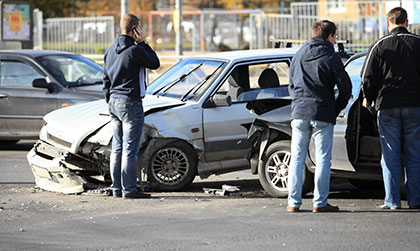 When employers are not found liable for car accidents, employees may be personally responsible if:
- Activities Were Not in the Scope and Course of Employment — Any car accident in which an employee was not actively involved in performing assigned duties as part of their employment will mean the employee themselves may be held personally liable for all damages connected to the accident.
- There’s Willful Misconduct — Employees may also be found liable for their own instances of personal misconduct relating to their accidents, meaning an employer may not be held liable for a collision that is the result of an employee knowingly or willfully violating a traffic law.
- Independent Contractors Are Involved — One of the first distinctions employers will often seek to make following accidents involving company cars is whether drivers are independent contractors. An independent contractor is not an employee, and an employer generally cannot be held liable for the actions of an independent contractor, though exceptions may apply under specific circumstances.
How Vicarious Liability Relates To The Actions Of Employees
Many car accidents can involve complex claims for damages because it is possible that a third party not directly involved in the actual crash may be liable. For example, motor vehicle manufacturers can be found liable for certain vehicle defects that cause collisions.
This page has discussed the theories of respondeat superior and vicarious liability, which mirror one another in many ways. Vicarious liability is a legal theory that holds employers liable for the actions of their employees in certain cases.
Employers can be held liable for multiple situations in which their drivers cause motor vehicle accidents, and victims can be occupants of other automobiles, pedestrians, bicyclists, motorcyclists, or other parties.
Determining Whether A Driver Was ‘On The Job’
People cannot assume a person was working, even when they were fully in uniform at the time of the collision. The general rule, as it relates to many car accident claims, is that people will be considered to have been working when they were actively performing duties associated with their jobs.
A person may be considered to be on the job when they are driving during work hours, but are actually handling personal matters and driving their personal vehicle. People who run their own errands during work hours may not have work-related injury claims unless they happen to do anything that is work-related.
Driving to and from home is not considered to be driving for work purposes. People can be driving for work in these situations when their jobs require them to make additional stops.
Employees VS Independent Contractors
The modern economy has become known as the “gig economy,” with many people accepting temporary jobs delivering a wide variety of goods. Many of these individuals are taking on jobs that will classify them as independent contractors.
The distinction of this title is important because independent contractors are not employees of the companies for which they are working. An accident with a DoorDash, Grubhub, or Uber Eats driver will not automatically make those companies liable for the accident.
All of that said, there may be situations in which companies face liability for certain accidents resulting from employer negligence.
The Verge reported that Amazon Logistics was a defendant in 119 vehicle injury lawsuits in 2021 alone.
Knowing When Employees Are Acting Within The Scope And Course Of Their Employment
When a driver is an actual employee of a company, only the actions they take while performing work-related duties are considered to be within the scope and course of their employment. For example, a food delivery driver will use their car to deliver food for their employer, and any accident that occurs while making deliveries may be considered within the scope and course of employment, depending on the specifics of the case.
If a food delivery driver is no longer working and goes to a local bar to drink alcohol before causing a drunk driving crash, the employer will not be liable because the alcohol consumption was not in the scope and course of employment. A driver may be held personally liable for all damages, and injured victims may be able to file lawsuits against the driver.
Other Examples Of Employer Negligence
Employers have obligations, such as hiring qualified employees, providing adequate training, and establishing safety rules and policies to promote safe driving. When respondeat superior and vicarious liability do not apply, an injured individual may still have the option to pursue a negligence claim.
Employers can still be held liable for negligence when they have duties to other parties, they breach their duty, the breach causes a person’s injuries, and the injuries result in damages.
Common Kinds Of Employer Negligence
As mentioned above, the three common kinds of employer negligence in motor vehicle accident cases generally relate to the following:
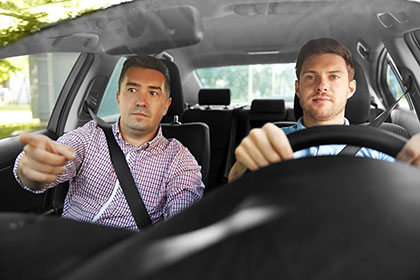
- Hiring Employees — All employers must be diligent in their hiring processes to hire qualified individuals for the job. An employer must review a person’s driving record. Other criminal records can also be a reason for concern in some cases. Employers may face liability for failure to exercise proper oversight in the hiring process.
- Training Employees — Employers must provide sufficient training for employees, especially when operating vehicles or navigating specific routes is required. Some accident victims may claim that inadequate training was a contributing factor to the accident.
- Allowing Employees to Drive — Employers may face liability if they permit individuals to drive who are unqualified or present safety risks, such as employees with a history of accidents, inadequate driving skills, violations of driving regulations, or those assigned unsafe vehicles.
How Workers’ Compensation Differs From Liability Insurance
People who suffer injuries while they are on the job can often experience confusion about what rights they have in these cases. While lawsuits and other legal actions in connection with an accident are one thing, the matter of workers’ compensation is another.
Workers’ compensation (also known as workers’ comp) is a system providing insurance coverage to employees who suffer injuries on the job. In many cases, workers’ comp will cover a person’s medical bills and also pay a portion of their lost wages.
People who suffer injuries while driving personal vehicles for work-related purposes may still be eligible for workers’ compensation. Consult an experienced car accident attorney about your options.
Liability insurance generally covers damages suffered by individuals who are not named in the insurance policy when a claim is made against the insured.
Many work-related car accidents are covered under an employer’s liability insurance, so employees are typically not personally liable for damages when acting within the scope of their employment. Liability insurance may cover various damages, including medical bills, lost wages, and even pain and suffering.
A general liability policy covers a wide range of business-related incidents and accidents, but vehicle accidents involving company vehicles are typically covered by commercial auto policies. Commercial auto insurance provides protection similar to personal auto policies, but often includes higher coverage limits and is tailored to meet business needs.
People who are actively driving as part of their work but do not think their employers are providing adequate insurance coverage may want to take additional steps to help protect themselves. It is important to understand that a car insurance carrier can deny an accident claim if a person uses their vehicle for work purposes without informing the insurer.
In these types of cases, people can benefit from an insurance endorsement known as a rider that will add, delete, exclude, or change insurance coverage. A rider can be an important provision for a person using a vehicle for business purposes that may result in increased insurance rates, but also offers additional protection.
An attorney can help deal with insurance companies and review settlement offers on your behalf. Our work injury lawyers will assess your damages and work towards fair compensation that reflects your actual losses.
When Workers’ Compensation Is Applicable
Employers are generally required to pay workers’ compensation to injured employees who are hurt while they are driving for the employer. The workers’ compensation may provide for both medical expense coverage and part of a person’s lost wages, depending on the specifics of the case.
Workers’ compensation gets paid regardless of whether the employee or employer was at fault for the injury. There are a few specific exceptions to this rule, though, in which an employee’s behavior may cause their benefits to be withheld. Additionally, an employer is not required to provide workers’ compensation if an employee’s injury claim is not connected to their job responsibilities.
What To Do After Crashes In Company Vehicles
Below are some steps you can take if you sustained injuries in a car accident involving a company vehicle. These steps are provided for informational purposes only and do not constitute legal advice.
- Call the Police — The police report from your accident can help support your case. Contact law enforcement promptly so that an official report can be completed.
- Collect Evidence — While you are at the scene of the crash, take as many photographs as you can of everything involved in the wreck. Also, exchange information with other drivers and look for any possible witnesses with whom you should also exchange contact information.
- Seek Medical Attention — Visit a hospital, even when you do not think you suffered an injury. Many injuries have delayed symptoms, and seeing a doctor days or weeks after a collision may cause potential problems.
- Notify Your Insurer — Report the collisions to your own insurance company. The insurers will usually commence their own investigations. Avoid contacting another party’s insurance company without legal representation.
- Consider Legal Action — Consult with a personal injury lawyer to determine if you have a claim and understand your legal options. Our car accident lawyers can evaluate your case and help you pursue compensation for your losses.
Common Kinds Of Damages For Which An Employer Can Be Liable
When employers are determined to be liable for motor vehicle accidents, they can be subject to paying various kinds of damages. People may seek compensation for different types of costs incurred as a result of a collision.
Common types of damages in these cases include property damage claims for the motor vehicle involved in the accident, as well as claims for any other personal items that were damaged at the time of the incident. Other common types of damages relating to injuries in these cases may include:
- Past and future medical bills
- Past and future lost wages.
- Ambulance costs
- Follow-up doctor visit costs
- Rehabilitation
- Medicinal needs
- Pain and suffering
- Emotional distress
- Mental anguish
Damages In Commercial Auto Accident Cases
When work-related vehicles are involved in motor vehicle accidents, victims may be eligible to pursue various kinds of damages. Damages, in many cases, are considered compensatory, meaning they aim to restore individuals to their original condition, and damages may be either economic or non-economic.
Economic damages refer to the financial losses a person incurs following an accident, commonly including medical bills and lost wages. Non-economic damages are more subjective because they lack an inherent monetary value and often encompass pain and suffering.
Additional damages in cases of wrongful death can involve potential compensation for eligible families who have lost loved ones.
How Coming And Going Rules Work
The phrase “coming and going” relates to people who are in the process of arriving at and leaving workplaces. In such situations, employers are generally not held liable for motor vehicle accidents connected to a person driving to or from work.
The distinction is important because a person who is involved in an accident with a company vehicle may have no claim against the employer if the vehicle was not being used for work purposes.
Understanding The Complexity Of Employer Liability
Many employers in the United States are required to carry some form of workers’ compensation insurance, although specific requirements vary by state. An employer’s liability insurance policy may cover the costs of legal expenses relating to possible injury or negligence claims.
All insurance policies have specific limits that cap the amount they will pay. If you are nearing these policy limits, it is advisable to consult an auto accident attorney to explore your options for seeking accountability from employers and pursuing fair compensation.
Dealing With Insurance Companies
In many car accident cases, negotiations typically take place between the insurance companies representing the drivers involved. Insurers have a responsibility to prioritize their financial interests and will carefully review the circumstances of an accident to establish liability.
Even when a business can be held liable for a wreck, the company will typically have an insurance company representing its interests. There can be insurance concerns when a negligent driver does not have automobile insurance or when the limits of their policy are not enough to cover the damages.
Regarding potential employer liability, insurance companies will review the facts and may present arguments as to why an employer should not be held liable. This is why it may be wise to have legal representation that can advocate for your rights during negotiations and litigation, if needed.
While insurance companies may not immediately offer a settlement, the likelihood of reaching a settlement may increase as a trial date approaches, since going to trial can entail high costs for both parties. As a result, many cases are resolved through settlements before reaching litigation.
Frequently Asked Questions (FAQs) About Employers Paying For Car Accidents
Car accidents involving employees can raise questions about responsibility and compensation. In many cases, employers may be held liable for incidents caused by their employees while on the job. Below, our motor vehicle accident attorneys, who also handle work-related traffic crash cases, answer some common questions to help clarify how liability works.
Are Employers Responsible For Their Employees’ Car Accidents While Driving Company Cars?
Companies may be held liable for accidents involving company cars under the legal doctrine of respondeat superior, subject to specific legal requirements and exceptions. If an employee causes an accident while performing job-related duties, the employer may be found responsible for all resulting damages, even if the accident was due to the employee’s own negligence. However, this liability generally does not apply if the employee was using the company car for personal purposes outside the scope of their employment.
Are Employers Responsible For Their Employees’ Car Accidents While Driving Private Vehicles To Perform Work Duties?
Employers may be held liable for car accidents that occur while employees are performing work-related duties, even when the employees are using their own vehicles, although this would still depend on the applicable law and specific circumstances. Employer liability remains in place even when people are driving their own cars. However, if the employee was engaged in personal activities outside of their work responsibilities, the employer is typically not liable.
Are Employers Responsible For Paying For Injuries To Other People Involved In Their Employees’ Car Accidents, As Well As Drivers?
An employer can be held liable for injuries stemming from an accident involving their employees within the scope of their employment, whether it is another driver, one of their passengers, a pedestrian, a bicyclist, a motorcyclist, or any other person. However, liability still depends on the specific circumstances of each case.
Are Employers Responsible For Paying For Personal Injuries To Employees Who Were Driving When Accidents Occurred?
Employers can be held responsible for personal injuries provided that an employee was driving for work purposes at the time of the accident. This will be true regardless of the cause of the accident, even when a crash was the result of an employee’s own negligence.
Are Employers Responsible For Paying For Property Damage As Well?
Property damage is a common claim in motor vehicle accidents because these accidents often result in significant damage to vehicles. Depending on the specifics of the case, employers may be held liable for property damage claims arising from their employees’ accidents.
What Happens When Substance Abuse Is Involved With An Employee’s Poor Judgment In Connection To A Car Accident?
Anybody who is accused of driving under the influence of alcohol or drugs will want to retain the services of a criminal defense attorney. People can face possible criminal charges when they cause accidents after being intoxicated, and penalties in these cases can be quite steep. When a person is using a prescription or other lawful medication, they may have certain defenses against criminal charges. Even when a person is accused of having been under the influence of alcohol or drugs, there can be several errors with police testing that may invalidate test results.
What Happens When An Employee Is Speeding When An Accident Occurs? Will The Employer Still Be Responsible For The Car Accident?
Employer liability for an employee’s car accident, even if speeding is involved, generally depends on whether the employee was performing work-related duties at the time of the incident. If the accident results in bodily injuries, it’s important to seek professional guidance. Traffic accident lawyers, who also handle work-related car collisions, can help victims understand their rights, navigate insurance claims, and pursue compensation when an employer or employee’s actions contribute to an accident.
What Happens When Employees Mix Personal Errands With Business Duties When They Get Into Car Accidents? Are Employers Still Responsible For Car Accidents?
Employer liability in these situations is not always straightforward. If an employee was primarily engaged in personal errands at the time of the accident, the employer is generally not liable. However, if the employee was performing both work-related and personal tasks, liability may still exist depending on the specific circumstances. Liability depends on the specific circumstances of the accident and whether the employee was acting within the scope of their employment at the time of the collision.
Are Employers Liable For Accident Costs Incurred During An Employee’s Commute? What If Employees Use Company Cars For Their Commutes?
Again, the time people spend driving to and from work does not count as a work-related drive, meaning that employers typically cannot be held responsible for their employees’ car accidents that occur during these drives, even when they are driving company vehicles.
The one exception to this rule applies if an employer asks an employee to visit a destination for employment purposes. In such cases, the employer can be held liable for accidents that occur during that trip. Still, liability depends on the facts and whether the employee was acting within the scope of their employment.
Contact Our Experienced Car Accident Lawyers In California
 When you have been involved in any kind of car accident that involves possible employer liability, reach out to our car accident attorneys to understand your legal options. The team at Arash Law, managed and led by Arash Khorsandi, Esq., has years of experience handling various types of car accident claims, advocating for the rights of our clients against at-fault parties.
Our vehicle accident lawyers can conduct an independent investigation into your crash, and we will work to help hold the employer responsible for all damages when it is clear that the employer is responsible for their employees’ car accidents. We also handle other workplace injury cases, including Home Depot incidents, forklift accidents, and construction site injuries. You can call (888) 488-1391 or contact us online to schedule a free initial consultation.