TL;DR: Icy winter roads don’t automatically cancel liability in California. If another driver failed to slow down or follow safely for conditions, you may have a case. You may also have a claim against Caltrans or a city if they knew about dangerous icing and failed to treat or warn, but government claims can have a 6-month deadline.
Highlights:
- Get medical care promptly and follow up, even for “minor” symptoms.
- Photograph ice, skid marks, signage, lighting, and vehicle positions immediately.
- Collect witness names and numbers, plus all drivers’ insurance details.
- Report the crash and request the police report number before leaving.
- Preserve dashcam footage, phone photos, tow receipts, and repair estimates.
- Request road treatment logs if Caltrans or a city may be involved.
- Calendar deadlines – 2 years for most injury claims, 6 months for government claims.
Tip: Back up all photos and video with timestamps, and in statements stick to what you observed and avoid guessing.
Table of Contents
Yes, you may still have a case even if icy roads contributed to the crash. Winter weather does not automatically remove responsibility. In California, if a driver failed to adjust to road conditions or another party allowed unsafe conditions to exist, they may still be liable for any resulting accidents.
Although there is a higher chance of car accidents on icy roads, many crashes occur because a negligent driver didn’t adjust to the road and weather conditions. Negligence in driving includes speeding, tailgating, driving on worn tires, or ignoring ice warnings from the California Highway Patrol.
Poor visibility, slick pavements, and sudden loss of traction require extra caution from drivers and road managers. A claim may be valid if the accident involved factors such as:
- Worn or unsafe tires.
- Speeding or reckless driving under the conditions.
- Following too closely on icy roads.
- Failing to address or warn others about known hazardous road conditions.
Here’s what you can do after a car accident due to icy winter roads in California:
- Seek medical care, even if your injuries seem minor.
- Document road and weather conditions.
- Report the accident and obtain a police report.
- Preserve any evidence related to the crash.
Car Accidents Caused By Icy Roads: When You May Have A Case
Winter weather creates hazardous road conditions. However, it does not excuse unsafe driving behaviors. Icy roads affect vehicle response, increase stopping distances, and reduce driver control. When traction decreases, braking distances lengthen, and steering becomes unpredictable. Under these conditions, even minor steering or braking inputs can cause a vehicle to slide.
The risk is greater with black ice, which blends into the road surface and is difficult to see. A NOAA study reports that it often forms overnight in shaded areas, as well as on bridges or overpasses. Many drivers do not realize it is present until they lose control of the vehicle, especially during early morning or pre-dawn drives.
Winter road accidents occur more frequently than one might expect. A significant number of these crashes are also preventable. The U.S. Department of Transportation states that about 24% of weather-related accidents occur annually on snowy, slushy, or icy pavement. Of these, 15% happen during snowfall or sleet.
These incidents result in over 1,300 deaths and more than 116,800 people injured annually. According to the AAA Foundation for Traffic Safety, hazards such as bad weather and sloppy road conditions further contribute to half a million accidents and more than 2,000 fatalities on the road every winter. This data covers states like California, where drivers may be less prepared for icy conditions.
During winter, drivers must be more cautious, as there may be more:
- Rear-end collisions from longer stopping distances.
- Vehicles sliding through intersections despite braking.
- Multi-car crashes during freezing mornings or winter storms.
These crashes often raise the same issue: whether drivers took reasonable safety precautions given the road conditions.
How To Determine If You Have A Valid Car Accident Case
After a car accident on icy roads, one of the first questions people ask is whether they have a valid case. Weather can make driving more dangerous, but it is not the sole deciding factor. You should consider your legal options if the crash involved another driver’s unsafe choices, poor maintenance, or failure to respond reasonably to known winter risks. If someone’s conduct went beyond what icy conditions alone would cause, you may have grounds to pursue a claim.
When The Other Driver May Be At Fault
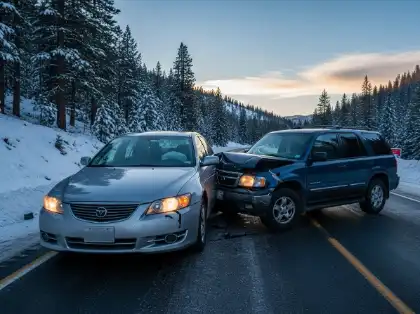
Another driver may be responsible if they failed to adjust their driving to match icy conditions. According to the National Highway Traffic Safety Administration (NHTSA), an estimated 101,390 police-reported traffic crashes occurred during snow or sleet conditions in 2023. This report emphasizes the importance of maintaining a safe following distance on icy roads. Doing so can give you extra stopping time. That could help prevent rear-end collisions in slippery conditions.
The California Vehicle Code also requires drivers to use headlights when conditions prevent them from clearly seeing a person or another vehicle on the highway from a distance of 1,000 feet. It also states that no person shall drive at a speed greater than is reasonable or prudent, given the weather, visibility, traffic, and road surface conditions. Driving below the posted speed limit can still be considered unsafe if it puts people or property at risk.
A driver may be considered negligent in an accident if they:
- Drove too fast on icy or slick roads.
- Followed another vehicle too closely, reducing their stopping distance.
- Failed to clear snow or ice from windows or mirrors.
- Used worn or unsafe tires, such as those that don’t meet the Department of Transportation’s definition of snow tires, despite knowing the risks.
- Ignored weather advisories or road warnings.
- Drove without headlights in poor visibility areas.
- Made sudden or unsafe lane changes.
Even if icy winter roads played a role, you can pursue a claim if another driver’s negligence contributed to your accident. In these situations, speaking with a skilled car accident lawyer can be beneficial.
When Third Parties May Be Liable
In some situations, responsibility extends beyond the drivers involved. Icy road accidents can also result from failures by those responsible for road safety or vehicle maintenance.
Third parties that may be liable include:
- Government agencies that did not salt roads or warn drivers about known icy conditions.
- Designers or contractors responsible for road layouts that are prone to dangerous icing.
- Commercial vehicle owners or fleet operators who did not maintain vehicles for winter driving.
If unsafe road conditions, delayed maintenance, or insufficient warnings contributed to your accident, you may have a valid claim against a third party. Determining liability often depends on how long the hazard has existed and whether third parties took precautions to mitigate the risk.
How California’s Comparative Negligence Law Applies
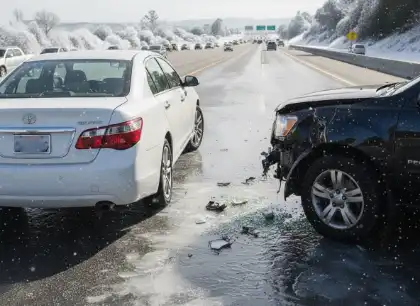
California uses a pure comparative negligence system to determine responsibility after a car accident. The court reviews the evidence and assigns a percentage of fault to each party based on their actions leading up to the crash. Responsibility is not all-or-nothing, and more than one party may share liability.
Under this system:
- The court determines how the accident happened.
- Each party is assigned a percentage of fault.
- Compensation is adjusted based on those fault percentages.
If the court finds that you share responsibility for the accident:
- You can still pursue compensation for your injuries and losses.
- Your percentage of fault reduces your potential compensation.
For instance:
- Total Damages: $100,000
- Fault Assigned to You: 30%
- Potential Recovery: $70,000
This rule comes from the California Supreme Court case Li v. Yellow Cab Co., which replaced the old rule that barred recovery if a person shared any fault. Due to this decision, courts now allow injured individuals to pursue damages even when they share responsibility for the crash.
This approach is especially relevant in icy road accidents, where multiple factors often contribute to a crash and can affect winter driving liability. Under this rule, even if the court assigns you some fault, you may still pursue compensation if another party’s actions played a role in causing the accident.
Common Winter Car Accident Injuries
Slippery surfaces, poor visibility, and cold temperatures increase the risk of serious harm in winter car accidents. Below are some of the most common injuries drivers and passengers may sustain:
- Whiplash — Neck injuries from sudden stops or collisions are common in rear-end accidents on slippery roads.
- Back & Spine Injuries — Some victims sustain herniated discs and muscle strains from abrupt impacts or awkward movements. Many people seek chiropractic care to manage pain and promote recovery after such injuries.
- Head Injuries — A victim may suffer concussions or traumatic brain injuries if their head hits the steering wheel, dashboard, or windows.
- Frostbite or Hypothermia — The risk of this injury increases if you get stranded in freezing temperatures after a crash.
- Psychological Injuries — Anxiety, PTSD, or emotional distress can result from the traumatic event.
These injuries can be more severe when crashes occur during poor weather conditions. In many work-related accidents caused by rain and other weather conditions, driving hazards such as slick roads and reduced visibility play a significant role in the occurrence of injuries.
Cold temperatures and damp conditions can also worsen symptoms after a crash, which is why many people notice the impact of weather on injury-related aches during recovery. Understanding how weather affects both the accident itself and the resulting injuries can help explain why winter-related car accident injuries often require ongoing medical attention.
Types Of Evidence That Can Help Strengthen An Icy Winter Road Accident Case
Evidence is essential after a crash on icy roads. It helps show what happened and who may be responsible. Winter conditions change fast, so collecting proof early can help support your case.
Evidence that can strengthen your claim includes:
- Photos & Videos From the Scene — These can show ice, snow buildup, untreated roads, vehicle damage, skid marks, and the final positions of the vehicles.
- Images of Weather Condition — Photos of falling snow, fog, or low visibility can support your account of the conditions at the time of the accident.
- Official Weather Reports — Official weather data from the time and location of the accident can confirm the presence of snow, ice, or low visibility, backing up your claims.
- Road Treatment Logs — Records showing when and how the roads were treated (or not) with salt or sand can highlight issues with road maintenance.
- Crash Reconstruction Analysis — Experts analyze the scene, vehicle damage, and data. Their insights can support your account of events.
If your claim gets denied, an accident lawyer can review the evidence and explain why. They can identify potential issues or overlooked details that could impact liability and compensation.
Insurance Claim Guidance For Icy Winter Road Accidents
Insurance claims after a winter road crash often receive closer scrutiny. When ice or snow is involved, adjusters look beyond the fact that the weather was bad. They also focus on whether each driver acted reasonably under the conditions, consistent with standard California claims practices.
Here are a few factors that insurance adjusters typically look at:
- Driver Behavior — Whether you slowed down, increased following distance, used headlights in low visibility, and maintained control of your vehicle.
- Road & Weather Conditions — Evidence of ice, snow, poor visibility, or untreated roads at the time of the crash.
- Vehicle Condition — Tire condition, working lights, and whether you cleaned windows and mirrors.
- Police Reports & Statements — Official reports often carry weight in determining how the accident happened.
- Consistency of Evidence — Photos, videos, witness statements, and weather data should align with your account of the crash.
Under California car insurance practices, these factors may give insurers valid grounds to delay, deny, or dispute your claim. In the case of icy winter road accidents, adjusters may question claims if you cite the weather as the only cause of a crash. Providing evidence helps show whether another driver failed to adjust or whether a third party contributed to unsafe conditions. Clear proof is vital in winter accidents, where liability often depends on how drivers responded to known risks rather than the presence of ice alone.
Who Pays My ER Bill Before The Settlement?
Right after a crash, the bills don’t wait. Ambulance rides, ER visits, X-rays, and follow-up care often arrive weeks or months before any settlement. So, who actually pays while your case is still open?
Here’s a simple roadmap for insurance payments under California law:
- Med-Pay (Medical Payments Coverage) — If you have Med-Pay on your auto policy, this is usually the first place to look. This optional policy can help cover ER bills, ambulance fees, imaging costs, and other immediate medical expenses, regardless of who is at fault for the crash.
California drivers typically choose between lower or higher Med-Pay limits when setting up an auto insurance policy. For example:
- Basic Coverage — Liability-only policy with about $2,000 in Medical Payments
- Standard Coverage — Full coverage with higher limits, often around $5,000 in Medical Payments
- Your Health Insurance — If Med-Pay runs out or you don’t have it, your health insurance often steps in. You may still owe:
- Co-pays for ER or specialist visits.
- Deductibles before coverage kicks in.
- Coinsurance for a percentage of the bill.
Later, your health insurer may assert a lien, meaning they ask to be reimbursed from any settlement related to the accident.
- Medical Liens — In some cases, doctors or hospitals agree to treat you under a lien. They wait to get paid until the case resolves. Liens can help you access care when cash is tight. However, they must be reviewed carefully because repayment is deducted from the settlement.
- Out-of-Pocket Costs — Even with insurance, you might pay some costs upfront — especially co-pays, prescriptions, or therapy sessions. These expenses are often tracked as part of your injury claim.
Every case is different. Payment responsibility can shift depending on insurance, fault, and available policy. Understanding which coverage applies can help reduce stress and enable you to make informed decisions about treatment.
Steps To Take After A Car Accident On Icy Winter Roads
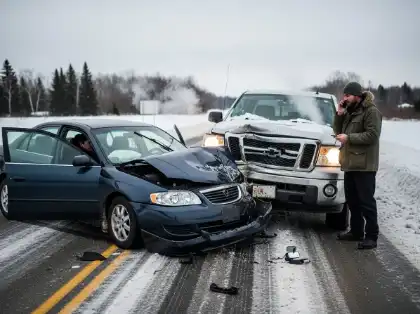
Being involved in a car accident on icy roads can be a stressful and confusing experience. It’s essential to remain calm and take the proper steps to ensure everyone’s safety and protect your interests. Here’s what you can do:
- Check for injuries and call 911 if anyone is hurt.
- Move to a safe location if possible, but don’t leave the scene.
- Turn on hazard lights to alert other drivers.
- Take photos or videos of the road, vehicles, and surrounding weather conditions.
- Get the names, contact numbers, and insurance details of the other driver(s).
- Gather contact information from anyone who witnessed the accident.
- File a police report to create an official record of the crash.
- Notify your insurance company as soon as possible.
- Seek medical attention even if injuries seem minor.
- Consult a lawyer if you have questions about your rights or need guidance on next steps.
If you are seeking legal advice on your specific situation, consult an experienced car accident lawyer.
How To Stay Safe During Winter Travel
Winter road trips can be risky, especially when driving in cold or icy conditions. Planning can help reduce unexpected hazards and lower your chances of getting stranded or injured.
Before driving, you can prepare by doing the following:
- Check local weather forecasts and travel warnings for your route and destination by visiting the National Weather Service website.
- Stay alert for winter hazards. Be cautious of ice storms, heavy snow, and poor road conditions.
- Look up current traffic and road reports before heading out. In particular, check whether there are any delays or closures on your route. As part of its winter operations, Caltrans often sets up checkpoints to screen trucks, control congestion, and verify whether all vehicles entering roads with black ice are equipped with chains.
If roads are unsafe, consider delaying non-essential trips until conditions improve. When travel is necessary, plan for potential delays and bring supplies in case you encounter issues.
It also helps to:
- Share your route and expected arrival time with someone you trust.
- Let them know to check on you if you do not arrive as planned.
- Always carry winter emergency supplies in your car, including warm clothing and blankets.
Simple preparation steps like these can make winter travel safer and help you handle unexpected problems on the road. It’s also important to understand why accidents happen on road trips and how to avoid them, especially when planning long journeys in unpredictable winter weather.
For more information on how to safely navigate California roads during hazardous weather, check out these winter driving tips from the California Department of Transportation.
FAQs: Winter Weather Accidents In California
Winter road accidents often raise questions about fault and legal options. You might even be looking for free accident lawyer advice. Below are quick answers to common concerns after a crash in icy road conditions.
For answers to more legal questions, you can visit our FAQ page. If you have concerns specific to your case, contact Arash Law for a free initial consultation.
I Got Into A Car Accident Due To Icy Winter Roads. Do I Have A Case?
Yes, you might still have a case, even if icy roads contributed to your accident. If you drove carefully or another driver was at fault, you could be eligible for compensation, even if your insurer denies your claim. Whether a claim is viable depends on the specific facts of the accident. To discuss your case, consult a personal injury attorney. They can assess the validity of your claim.
What If Both Drivers Made Mistakes Due To Icy Roads?
California uses “pure comparative negligence” for car accidents. If both drivers make mistakes on icy roads, the court determines the degree of fault for each driver. Then, they adjust the compensation based on those percentages. The percentage of fault assigned to each party depends on the specific circumstances of the case.
For example, if the court finds you 30% at fault and the other driver 70%, you can still recover 70% of the damages you incurred. A car accident lawyer can review your situation and help you understand how this rule may apply to your case.
Can I Still Pursue A Case If My Car Skidded On Black Ice?
Yes, you can still pursue a case if you slid on black ice in California. A black ice accident lawyer can help identify fault, depending on whether you or others acted reasonably given the road conditions at the time. Even if you share some blame, you may still seek damages under California’s comparative negligence rules. Consider consulting an injury lawyer who can review your case and discuss your legal options.
Are You Insured If You Crash In The Snow?
If you have collision or comprehensive coverage, your insurance may cover a crash that occurs in the snow. Eligibility depends on your policy and the circumstances surrounding the accident. Insurers will review whether you were driving appropriately for the conditions.
If you are not insured, you will generally be responsible for any damages or costs yourself. Always drive carefully and ensure you have the proper insurance coverage.
How Much Is A Car Accident Lawyer In California?
Most car accident lawyers in California operate on a contingency fee policy. That means they only get paid a percentage of the amount recovered in your car accident, whether through a settlement or a court award, and only if you obtain one. So if you’re asking, “Do lawyers only get paid if they win?” the answer under this payment structure is yes. You won’t have to pay the attorney’s fee if they don’t recover compensation for you.
The exact fee depends on the details of each case and the agreement you make with your accident attorney. If you’re thinking, “I need a personal injury lawyer,” and want a detailed explanation of how contingency fees work, you can ask our lawyers at Arash Law for more information during your free initial consultation.
How Long Do I Have To File A Case After A Car Accident On Icy Winter Roads?
In California, you generally have two years from the date of an accident, such as a crash caused by icy road conditions, to file a personal injury lawsuit. This timeline applies in most cases involving private individuals or companies.
The timeline can be much shorter if a government agency is involved. For example, if icy road conditions were caused by delayed sanding, poor drainage, or lack of maintenance by Caltrans, a city, or a county, you must first file a government claim. In this case, you must file an administrative claim within six months of the incident. Missing this earlier deadline can affect your ability to pursue a case later.
Since deadlines vary depending on the parties involved, it’s essential to identify potential government liability as early as possible.
Can I Sue The City Or County If The Road Was Not Salted?
Yes, you may be able to pursue a claim against a city, county, or state agency after a car accident if a road was not salted or treated in a reasonable amount of time. For instance, you may be able to file a Caltrans road-salt claim. In such a scenario, government liability depends on factors such as notice of the hazard and whether they took reasonable steps to address the icy conditions. Special notice requirements and deadlines apply, so these cases often require early review and attention.
Winter Crash Due To Someone Else’s Negligence? You Might Have A Case
A winter car accident can leave you dealing with injuries, repairs, and a lot of uncertainty, especially when icy roads are involved. If you believe someone else’s negligence contributed to your crash, learning how California law applies may help you better understand your options.
You can start by filling out our “Do I Have A Case?” form to get general insights into your options. You can also contact the AK Law Firm at (888) 488-1391 to request a free initial consultation. Our California injury attorneys can review the details of your accident and help you better understand what to do next.