TL;DR: If you were injured during medical transportation, the cause determines your type of claim. Negligent driving may support a traffic accident claim, while errors involving professional medical care may fall under medical malpractice. Loading and wheelchair securement injuries depend on the duties involved.
If you were injured during medical transportation, your legal options depend on the cause of the incident. A collision involving an ambulance or medical transport vehicle may support a traffic accident claim. However, injuries caused by improper professional medical care generally fall under medical negligence.
The distinction becomes less clear when injuries occur during loading, patient transfers, or wheelchair securement. Depending on the circumstances, these incidents may involve transportation safety failures, professional medical duties, or both.
California law considers what the responsible person was doing when the injury occurred, not simply whether the vehicle was an ambulance or another medical transport vehicle. This distinction affects which legal rules, insurance policies, and filing deadlines may apply.
If negligent driving caused your injuries during medical transportation, a traffic accident attorney can help you understand your legal options. Injuries involving professional medical care may require a separate evaluation under California’s medical malpractice laws.
Table of Contents

An Injury Involved Medical Transportation. What Facts Help Identify Whether the Issue Concerns Driving, Transfer or Securement, or Professional Care?
Start with when the injury occurred, what caused it, and what each transport worker was doing. Vehicle records, equipment inspections, witness accounts, and medical records can help identify contributing failures.
Your role also matters. An ambulance patient, another motorist, and an injured transport employee may have different legal options.
- Driving Facts: Gather proof of the collisions, sudden stops, sharp turns, vehicle speed, and road conditions. Dashcam footage, GPS data, vehicle logs, and witnesses may help explain the vehicle’s movement and the driver’s response.
- Transfer and Securement Facts: Identify whether the injury occurred during lifting, loading, unloading, or movement inside the vehicle. Inspect wheelchair anchors, stretcher locks, straps, brakes, and lifts. Review staff assistance and patient-specific handling instructions.
- Professional Care Facts: Determine whether the injury involved medical treatment or monitoring rather than vehicle operation. Patient care reports and medical instructions may help clarify whether professional healthcare duties were involved. These issues may require review by a medical malpractice attorney.
These facts can overlap. A sudden stop may reveal inadequate wheelchair securement, while a transfer injury may require precautions dictated by the patient’s condition.
A jolt or fall alone does not establish negligence. Missing documentation may warrant further investigation, but it does not, on its own, prove improper care. The evidence must connect the alleged failure to the injury.
Key Facts About Getting Injured During Medical Transportation
- Unsafe driving during medical transport usually raises ordinary negligence questions. In Gutierrez v. Tostado (2025) 18 Cal.5th 222, the California Supreme Court applied ordinary negligence rules to a third-party ambulance collision.
- Not all injuries during medical transportation are traffic accident claims. If the injury resulted from improper professional medical care rather than negligent driving, medical malpractice laws and filing deadlines under California Code of Civil Procedure § 340.5 may apply.
- Patient transfers need review of medical instructions and worker duties. In Nava v. Saddleback Memorial Medical Center (2016) 4 Cal. App. 5th 285, the court applied professional negligence rules to a medically directed gurney transfer.
- Medical transportation services do not all follow identical negligence rules. In Flores v. Presbyterian Intercommunity Hospital (2016) 63 Cal.4th 75, the court distinguished medical care duties from general safety duties.
- Government-operated medical transport services can trigger earlier claim presentation deadlines. Government Code § 911.2 generally requires that a written personal injury claim be presented within six months.
How Can You Tell Whether You Have a Traffic Accident Claim or a Medical-Negligence Claim?
The following examples illustrate how injuries during medical transportation may fall under different legal rules, depending on the cause.
| Situation | Possible Cause | Possible Type of Claim |
|---|---|---|
| An ambulance strikes another vehicle. | Speeding, distracted driving, or another driving error. | Traffic accident claim |
| A patient is injured when a medical transport vehicle crashes. | Negligence by the transport driver or another motorist. | Potential traffic accident claim |
| A wheelchair passenger falls during transit. | Improper wheelchair securement or unsafe vehicle movement. | Ordinary negligence or medical negligence, depending on the duties involved |
| A patient falls during a medically directed transfer. | Failure to follow professional patient-handling requirements. | Potential medical malpractice claim |
| A patient suffers harm because necessary medical treatment was not provided. | Improper professional medical care. | Medical malpractice claim, outside Arash Law’s practice |
The key is identifying what caused the injury. A traffic accident claim generally involves negligence in a vehicle accident, like unsafe driving or another transportation-related safety failure. Failures involving professional medical care may fall under medical malpractice laws. Some incidents, particularly patient transfers and wheelchair securement failures, require a closer look at the worker’s responsibilities.
When is it a Traffic Accident Claim?
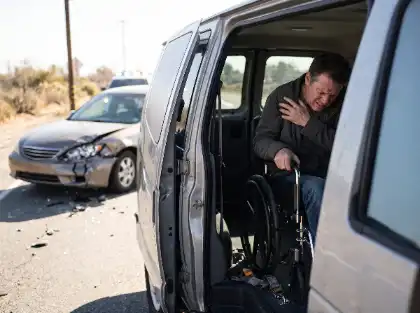 You may have a traffic accident claim if negligent driving caused your injury during medical transportation. Depending on the circumstances, you may pursue compensation from the responsible driver and their employer.
In Gutierrez v. Tostado (2025) 18 Cal.5th 222, an ambulance rear-ended a motorist’s truck while transporting a patient. California’s Supreme Court held that the motorist’s claim involved ordinary negligence because it concerned the driver’s general duty to drive safely.
The driver’s medical training did not make the claim one for medical negligence. However, if you were a patient inside the ambulance, the ruling does not automatically determine which rules apply to your claim.
Under California Vehicle Code § 21055, emergency ambulance drivers may disregard certain traffic rules when they meet the law’s requirements. Section 21056 still requires them to drive with due regard for your safety and the safety of other road users.
If a public employee injured you during a qualifying emergency response, § 17004 may protect the employee from personal liability. However, you may still have a claim against their public employer.
Your legal options depend on the driver’s conduct, the emergency circumstances, and whether the employer is a private company or public entity.
When Is It a Medical-Negligence Claim?
An injury may constitute medical negligence when a qualified healthcare provider fails to meet standards of professional care during transport. For example, a patient might suffer harm because necessary treatment or monitoring was not provided.
These cases differ from traffic accident claims because they involve professional medical duties rather than ordinary driving or transportation safety.
Medical malpractice claims have separate legal requirements and filing deadlines. If your injury resulted from improper professional medical care, consider consulting an attorney who handles medical malpractice cases.
Can Both Claims Apply to the Same Incident?
Yes. A medical transportation incident can involve separate acts of negligence.
For example, an ambulance driver may cause a collision through unsafe driving. If a patient then suffers additional harm because a paramedic failed to provide proper medical treatment, the incident may involve both traffic negligence and medical malpractice.
Each claim requires proof of the responsible party’s negligence and the harm it caused. Different defendants, insurers, and deadlines may apply.
Evidence can help establish which type of negligence caused your injury. Collision reports, camera footage, and witness statements may show unsafe driving. Medical orders, patient care reports, and expert testimony may help establish that professional care was improper.
For transfer or restraint injuries, both types of evidence may be necessary. Equipment records and staff instructions can help determine whether the worker violated a general safety duty or professional care requirements.
If the incident involved negligent driving, a traffic accident lawyer can evaluate the circumstances of the collision and potential liability. Any separate injuries resulting from improper professional medical care may require evaluation by a medical malpractice attorney.
Does Non-Emergency Medical Transportation Change the Type of Claim?
No. Using non-emergency medical transportation (NEMT) does not automatically make your injury claim a medical-negligence case. The cause of your injury and the worker’s duties determine which rules apply.
Under Medi-Cal, NEMT includes ambulance, wheelchair van, and litter van services for eligible patients who cannot use ordinary transportation. Non-medical transportation (NMT) includes rides in cars, taxis, and other public or private vehicles.
- Unsafe Driving: A crash caused by negligent driving may support a traffic accident claim.
- Transfers and Securement: Loading injuries or improperly attached wheelchair restraints may involve ordinary or professional negligence, depending on the duties involved.
- Professional Care: If the injury resulted from improper treatment or monitoring by a qualifying healthcare provider, medical malpractice rules may apply.
- Heightened Passenger Safety Duties: If your provider qualifies as a common carrier, Civil Code § 2100 requires the utmost care and diligence in the safe carriage of passengers. This duty may apply to driving, boarding, securement, and unloading, even when medical malpractice rules do not apply.
What if You Were Injured During Loading, Transfer, or Wheelchair Securement?
Loading and securement injuries may involve ordinary negligence or professional medical negligence. The difference depends on whether the worker failed a general safety duty or a professional care duty.
For example:
- A driver may fail to attach wheelchair restraints before driving. That failure may involve ordinary transportation safety.
- A patient may require special positioning per medical instructions. Ignoring those instructions could raise questions of professional negligence.
In Nava v. Saddleback Memorial Medical Center (2016) 4 Cal. App. 5th 285, a patient fell when a gurney tipped during a medically directed hospital transfer. The court applied the professional negligence deadline.
Similarly, Flores v. Presbyterian Intercommunity Hospital (2016) 63 Cal.4th 75 involved a bed rail ordered for a patient’s medical condition. The California Supreme Court found that the equipment was directly related to professional care.
Not every equipment failure involves medical negligence. A defective wheelchair lift or stretcher mechanism may also support a product liability claim against a responsible manufacturer or seller.
A transportation-related injury does not automatically qualify as medical malpractice simply because it occurred in an ambulance or involved medical equipment. Likewise, not every patient-handling injury falls under ordinary negligence. The circumstances determine which legal rules apply. If negligent driving caused the injury, Arash Law can help evaluate a potential traffic accident claim.
Who Could Be Responsible for Your Medical Transportation Injury?
The parties who may be responsible depend on what caused your injury. A traffic accident claim generally involves negligent driving or transportation-related safety failures, while a medical malpractice claim involves improper professional medical care. Different parties may be liable even when the injuries occurred during the same trip.
- Potentially Liable Parties in Traffic Accident Claims: If negligent driving or unsafe transportation conditions caused your injury, potentially responsible parties may include:
- Transport Driver: A driver may be responsible for speeding, distracted driving, unsafe turns, or other negligent driving behaviors.
- Medical Transportation Company: The company may be liable for its driver’s negligence or its own failures involving driver training, vehicle maintenance, or transportation safety.
- Other Motorists: Another driver may be responsible if their actions caused or contributed to a collision involving the medical transport vehicle.
- Vehicle Manufacturers or Maintenance Providers: These parties may be liable if a defective vehicle component or negligent maintenance contributed to the accident.
- Potentially Liable Parties in Medical Malpractice Claims: If the injury resulted from improper professional medical care during transportation, responsibility may involve:
- Healthcare Providers: Paramedics, nurses, or other qualifying medical professionals may be liable if they fail to meet applicable professional care standards.
- Medical Facilities: A hospital or healthcare facility may be responsible for qualifying negligence involving medically directed patient transfers or other professional care.
- Medical Transportation Companies: A company that provides professional medical services may face liability for qualifying negligence by its healthcare personnel.
Some incidents involve both transportation safety failures and professional medical care. For example, negligent driving may cause a collision, while a separate failure in patient care may contribute to additional injuries.
Determining responsibility requires examining each party’s actions and how they contributed to the harm. The applicable legal rules depend on whether the conduct involved ordinary transportation safety or professional medical duties.
Does the Type of Claim Affect Insurance Coverage?
Yes. The insurance coverage available after a medical transportation injury depends on what caused the incident and who was responsible.
If negligent driving caused a collision, the following insurance policies may be relevant:
- Commercial Auto Insurance: A medical transportation company’s policy may cover qualifying accidents involving its drivers or vehicles.
- Another Driver’s Liability Insurance: If a different motorist caused the collision, that driver’s insurance may provide compensation.
- Uninsured/Underinsured Motorist Coverage: Applicable coverage may provide additional protection when the at-fault driver has insufficient insurance or no insurance, depending on the policy and circumstances.
In contrast, injuries caused by improper professional medical care may involve professional liability insurance and different legal requirements.
Identifying the cause of the injury helps determine which insurance policies may apply. A traffic accident attorney can review auto liability coverage related to negligent driving, while claims involving professional medical care may require a separate insurance and legal evaluation.
What Should You Do After an Injury During Medical Transportation?
If you were injured in a collision involving an ambulance or another medical transport vehicle, getting medical attention and preserving evidence can help protect your rights.
These steps can help document the incident and determine whether a traffic accident claim may apply.
- Get medical attention. Explain how the incident occurred and describe any new or worsening symptoms.
- Report the incident. Notify the transportation company or medical facility and request its incident information.
- Identify the people involved. Record the driver’s name, transport company, medical staff, and witnesses when possible.
- Preserve evidence. Keep photographs, messages, appointment records, and transportation receipts.
- Request relevant records. Ask about available collision reports, transport records, and patient care reports.
- Seek legal guidance. If negligent driving caused your injury, a car accident attorney can review the collision, responsible parties, and filing deadlines.
Arash Law represents injured Californians in personal injury matters, including traffic collisions and commercial vehicle accidents. If your injury resulted from negligent driving, our team can assess your potential claim.
Call Arash Law at (888) 488-1391 for a free initial case evaluation. Our team is available 24 hours a day, seven days a week.
Can You Recover Compensation Under Either Type of Claim?
Yes. Both traffic accident and medical negligence claims may provide compensation when another party’s negligence causes injury. However, different laws govern these claims, and the available damages depend on the circumstances.
If you were injured in a traffic accident involving an ambulance or medical transport vehicle, you may be able to seek compensation for:
- Medical Expenses: Emergency treatment, hospitalization, rehabilitation, medication, and future medical care needed because of your accident injuries.
- Lost Income: Wages lost during recovery and reduced earning capacity if your transportation injuries affect your future ability to work.
- Pain and Suffering: Physical pain, emotional distress, and reduced quality of life resulting from injuries sustained during transportation.
- Property Damage: Repair or replacement costs for personal belongings, mobility devices, or other property damaged during the medical transportation incident.
Punitive damages may also be available in rare cases involving oppression, fraud, or malice, including conduct showing a willful and conscious disregard for others’ rights or safety. These grounds must be proven by clear and convincing evidence.
If a traffic accident causes someone’s death, eligible family members may be able to pursue wrongful death compensation under Code of Civil Procedure §§ 377.60 and 377.61.
What if the injury involved medical malpractice? Medical malpractice claims may allow recovery of certain similar losses, but they follow different legal rules, including limits on some non-economic damages under Civil Code § 3333.2.
The compensation available depends on the type of claim, the nature of the injuries, and the applicable California laws.
Important Filing Deadlines to Remember After a Medical Transportation Injury
California sets different filing deadlines for ordinary traffic negligence, medical negligence, and claims against government agencies. Missing these deadlines may prevent you from pursuing compensation.
| Claim type | General deadline | If you miss it |
|---|---|---|
| Ordinary personal injury | 2 years from the injury date (California Code of Civil Procedure § 335.1). | You may lose the right to sue. |
| Medical malpractice | 1 year after discovery or 3 years from injury, whichever comes first, subject to exceptions (California Code of Civil Procedure § 340.5). | Different rules apply. Consult a medical malpractice attorney. |
| Government personal injury claim | Written claim generally required within 6 months (Gov. Code § 911.2). | You may lose the right to sue the public entity. |
| Property damage | 3 years from the damage date (CCP § 338). | You may lose the right to recover property damages. |
Knowing these deadlines also helps you preserve evidence before it disappears. Ambulance footage may be overwritten, while dispatch logs, medical records, and witness information may become harder to obtain.
Medical malpractice claims have additional requirements. California Code of Civil Procedure § 364 generally requires written notice to the healthcare provider at least 90 days before filing a medical malpractice lawsuit. Special timing rules may apply.
Lawsuit Deadlines After a Government Claim
After presenting a government claim, you must also meet the deadline for filing your lawsuit:
- Compliant Written Rejection: You generally have 6 months from the date the rejection notice is delivered or mailed to sue.
- No Compliant Written Rejection: You generally have two years from when your claim arose to sue.
- No Agency Action: Your claim is generally considered rejected if the agency does not act within 45 days. This does not, by itself, trigger the six-month lawsuit deadline.
These rules appear in Government Code §§ 912.4, 913, and 945.6. Exceptions or extensions may apply depending on your circumstances.
Frequently Asked Questions About Medical Transport Injury Claims in California
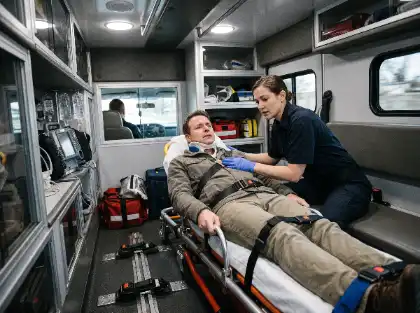
Can I File a Traffic Accident Claim if I Was a Patient Inside the Ambulance?
Yes. You may have a traffic accident claim if negligent driving caused your injury inside an ambulance. However, the driver’s duties and the circumstances require review. Your legal claim depends on the conduct that caused your injury.
What if the Medical Transport Company Says My Existing Condition Caused My Injury?
You may still have a claim if another party’s negligence caused a new injury or worsened an existing condition. For example, you may have needed medical transportation due to a prior back injury. A collision or unsafe transfer could cause additional harm.
Medical records before and after the incident can help establish the change in your condition.
What if I Signed a Medical Transportation Consent Form?
A medical transportation consent form does not automatically prevent you from filing an injury claim. The document’s effect depends on its terms, the circumstances, and applicable California law. Some forms acknowledge transportation risks without releasing every negligence claim.
An attorney can review the agreement to determine whether it affects your rights.
Can I Still Recover Compensation if I Was Partly Responsible?
Yes. California generally allows injured people to recover compensation even when they share responsibility.
Under the state’s pure comparative negligence system, your share of fault generally reduces your recovery. For example, a 20% share of fault may reduce recoverable damages by that same percentage.
The court or parties must determine fault based on the evidence.
Can I File a Claim if I Was Injured While Working as a Medical Transport Driver?
You may qualify for workers’ compensation benefits when an injury occurs during covered employment. A separate personal injury claim may apply if a negligent third party caused the incident. For example, another motorist may cause a crash while you transport a patient.
Workers’ compensation and third-party claims follow different rules and deadlines.
How Much Does It Cost to Hire a Lawyer for a Medical Transportation Injury?
Many personal injury lawyers handle accepted cases under contingency-fee agreements. Under this arrangement, attorneys’ fees depend on the financial recovery.
California Business and Professions Code § 6147 generally requires a written contingency-fee agreement. The agreement must explain the fee terms and how costs are handled.
Contact Arash Law About Your Medical Transportation Injury Claim
If you were injured in a traffic accident involving an ambulance or medical transport vehicle, you may have grounds to seek compensation from the responsible party. Whether you were a patient, passenger, pedestrian, or another motorist, your legal options depend on how the accident occurred and who was at fault.
Arash Law represents injured Californians in traffic accident cases, including qualifying collisions involving commercial and medical transportation vehicles. Our attorneys can review the circumstances of the crash, identify potentially liable parties, and evaluate applicable insurance coverage.
Injuries involving professional medical care may raise different legal questions, depending on the circumstances. Understanding what caused the injury can help determine which laws apply and what legal options may be available.
If negligent driving caused your injuries, contact Arash Law for a free initial case evaluation. Call (888) 488-1391. Our team is available 24 hours a day, seven days a week.
Sources
- Gutierrez v. Tostado (2025) 18 Cal.5th 222. Ordinary negligence in ambulance collisions. https://courts.ca.gov/opinion/published-extended-post/2025-07-31/s283128
- Nava v. Saddleback Memorial Medical Center (2016) 4 Cal. App. 5th 285. Professional negligence during patient transportation involving a gurney. https://www4.courts.ca.gov/opinions/archive/G052218.PDF
- Flores v. Presbyterian Intercommunity Hospital (2016) 63 Cal.4th 75. Medical equipment and professional care duties. https://scocal.stanford.edu/opinion/flores-v-presbyterian-intercommunity-hospital-34470/
- Li v. Yellow Cab Co. (1975) 13 Cal.3d 804. California’s pure comparative negligence rule. https://scocal.stanford.edu/opinion/li-v-yellow-cab-co-27850/
- Woods v. Young (1991) 53 Cal.3d 315. Tolling when pre-suit notice is served in the final 90 days.
https://scocal.stanford.edu/opinion/woods-v-young-31075/- California Legislative Information: Civil Code §§ 2100, 3294, 3333.2; Code of Civil Procedure §§ 335.1, 338, 340.5, 364, 425.13, 377.60, 377.61; Government Code §§ 818, 911.2, 912.4, 913, 945.6; Vehicle Code §§ 17004, 21055, 21056; Labor Code §§ 3600, 3852; Business and Professions Code § 6147.
https://leginfo.legislature.ca.gov/faces/codes.xhtml- California Department of Health Care Services, Medi-Cal Transportation Services. NEMT and NMT definitions.
https://www.dhcs.ca.gov/services/medi-cal/Pages/Transportation.aspx- California Courts, Deadlines to Sue Someone. Personal injury and property damage deadlines. https://selfhelp.courts.ca.gov/civil-lawsuit/statute-limitations
- California Courts, Suing a Healthcare Provider. Medical malpractice filing requirements. https://selfhelp.courts.ca.gov/civil-lawsuit/medical-malpractice
- California Courts, Government Claims. Claims against public entities. https://selfhelp.courts.ca.gov/civil-lawsuit/government-claim
Disclaimer
Arash Law handles traffic accident and other personal injury cases. The information on this page is for general educational purposes and does not constitute legal advice. No attorney-client relationship is formed by reading or relying on this content. If you were injured, consult a licensed California personal injury attorney about your specific situation. Arash Law: (888) 488-1391.