TL;DR: If you get hurt doing construction on someone’s property, you may be able to file a workers’ compensation, premises liability, or third-party claim, depending on who is at fault. These claims can help cover medical bills, lost wages, and other losses.
Highlights:
- Get medical care right away and follow the treatment plan.
- Report the injury to your employer within 30 days.
- Ask for and complete the DWC-1 workers’ comp claim form promptly.
- Document the scene – photos, equipment, hazards, and job site details.
- Collect witness names and contact info while memories are fresh.
- Track every expense and missed workday to support wage-loss claims.
- Check fast deadlines: 1 year (workers’ comp), 2 years (third-party), 6 months (government claim).
Tip: Keep a simple written timeline of what happened and your symptoms, and share only facts with insurers.
Table of Contents
Getting hurt while doing construction on someone else’s property can leave you facing medical bills, missed work, and uncertainty about your legal rights. In California, you may be able to pursue compensation through workers’ compensation, premises liability, or a third-party personal injury claim, depending on how and where the accident happened and who was responsible.
Workers’ compensation can cover medical expenses and a portion of lost wages without requiring proof of fault, while premises liability holds property owners accountable for unsafe conditions. Third-party claims may apply when someone other than your employer, such as a contractor or equipment manufacturer, causes your injury.
Acting quickly is important, as legal deadlines can be short. The experienced construction injury lawyers at Arash Law can review your situation, identify who may be potentially liable, and guide you through filing the right claim for your case.
Fast facts on construction injury claims:
- You may be able to qualify for more than one type of claim, depending on the specifics of your case.
- Workers’ comp provides medical coverage and partial income replacement.
- Unsafe property conditions can create owner liability.
- Faulty tools or third-party negligence may allow separate claims.
- Missing filing deadlines can hinder your ability to pursue compensation.
What To Do After A Construction Injury
Getting hurt while working on someone else’s property can feel overwhelming. There are several things to consider to determine who should be held liable. For instance, the California Labor Code protects your safety as an employee. Meanwhile, property owners may be held responsible for keeping their premises safe for others under the California Civil Code.
Consider these steps to help protect both your health and your legal rights:
- Get Medical Care — See a doctor promptly, even if the injury seems minor. Some symptoms take time to appear. Getting medical care also creates a record that may help with a workers’ compensation claim or lawsuit.
- Report the Injury — Tell your supervisor or employer about the injury immediately. If the incident leaves you unconscious, prevents you from performing your duties, or limits your ability to work, report the injury to OSHA. This allows them to create an official report that may be needed to file a workers’ compensation claim.
If your injury happened in California and your employer fails to report it, you can contact Cal/OSHA by:- Calling (866) 924-9757.
- Filing online at the Cal/OSHA complaint page.
- Visiting or emailing your nearest Cal/OSHA office. Find locations here.
- Gather Important Information — Compile any evidence that shows what happened. Keep the following:
- Date, time, place, and how the injury occurred.
- Names and numbers of anyone who saw what happened.
- Medical records, treatment summaries, and prescriptions.
- Company name and job site details.
- Photos or videos of the scene, equipment, or any hazards.
- Talk to a Lawyer — If you’re unsure about your rights or what kind of claim to file, you can talk to a construction accident lawyer. They work to identify potentially liable parties and guide you through the process.
Types Of Claims You May Be Eligible To File
In California, injured workers may have more than one legal option depending on how the accident happened, who was involved, and where it occurred. Two common paths include workers’ compensation and personal injury. In some cases, you may be able to file both.
The legal remedies available depend on your situation. Understanding how each type of claim works can help you decide what to do next.
Workers’ Compensation Claim
The Labor Code generally requires employers to carry workers’ compensation insurance, a safety net for injured employees. This coverage helps injured workers with medical care and lost income, no matter who caused the accident.
You do not need to establish fault to receive these benefits. Here’s what workers’ comp may cover:
| Benefit | What It Covers |
| Medical Care | Doctor visits, hospital stays, prescriptions, therapy, and other approved treatment. |
| Temporary Disability Benefits | Payments if your injury keeps you from doing your regular job while you recover. |
| Permanent Disability Benefits | If you don’t fully recover and your injury causes long-lasting problems, you may be able to receive long-term payments. |
| Supplemental Job Displacement Benefits | A voucher for job training if you can’t return to your old job with the same employer. |
| Death Benefits | Financial help for family members if a worker dies due to a job-related injury or illness. |
After filing, your employer must give you a copy of the completed claim form within one working day. Keep this for your records.
Mistakes like waiting too long, leaving out details, or skipping medical care may affect your benefits. Talking to a personal injury lawyer early can help you stay on track.
If there is evidence of serious and willful misconduct from the employer, the injured employee may be eligible for a 50% increase in compensation. Construction accident attorneys can be familiar with how OSHA enforces its standards in these situations. They can analyze your case and determine if it applies to you.
How To File A Workers’ Compensation Claim
Workers’ comp helps pay for your medical care and lost wages without needing to establish who caused the work injury. Here are general steps that workers may follow when pursuing a workers’ compensation claim:
- Report the Injury to Your Employer — Tell your employer about the injury within 30 days. Reporting it sooner helps protect your right to file a claim. As per CAL/OSHA, employers must report injuries promptly, but no later than eight hours after becoming aware of a death or serious injury or illness.
- Get Medical Treatment — Your employer may send you to a specific doctor, or you may choose your own, depending on the situation. Be honest about what happened and follow the treatment plan.
- Fill Out the Claim Form — Your employer should give you a DWC-1 form. Fill it out and return it to them quickly.
- Wait for a Response — The insurance company should review your claim. If approved, you may receive payments for medical treatments and partial wages.
- Consult with a Lawyer — If your claim gets denied or delayed, a workers’ compensation attorney can help you appeal the decision and guide you through the next steps.
Personal Injury Claim
Workers’ compensation may not cover all of your losses after a construction injury. If someone other than your employer caused the accident, you may have another legal option. You might be able to file a personal injury or third-party claim against other liable parties, such as:
- The Property Owner
- Contractor
- Equipment Manufacturer
- Other Individuals
Depending on the facts of your case and applicable law, you may be able to seek the following damages in a personal injury claim:
- Economic — These are financial damages, which may include:
- Medical Bills
- Past And Future Lost Income
- Ongoing Medical Treatment
- Damaged Property
- Out-of-Pocket Expenses
- Non-Economic — These are personal damages that may be harder to calculate. Common examples are:
- Disfigurement
- Loss of Enjoyment of Life
- Pain And Suffering
- Mental Anguish
- Emotional Distress
- Loss of Companionship
- Inconvenience
- Physical Impairment
A personal injury attorney can review what happened, explain whether a third-party claim might apply, and guide you on what to consider moving forward.
Your Legal Deadlines For Filing Claims
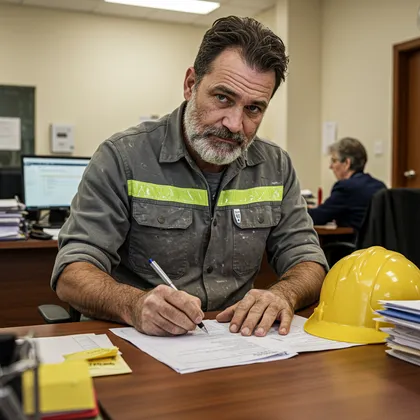
If you suffer a construction injury on someone else’s property, you may have different legal options. Each option comes with a deadline, known as the statute of limitations. Missing these deadlines can prevent you from filing a claim or receiving benefits.
- Workers’ Compensation — Under the California Labor Code, construction workers have a one-year deadline to file a workers’ compensation claim, starting from the latest of these dates:
- The date you got hurt.
- Last instance of receiving medical care for the injury.
- Recent disability payments related to the injury.
Reporting your injury early and asking for a claim form helps you meet important requirements for filing a workers’ compensation claim. If you run into delays or get denied benefits, you can talk to an attorney who handles workers’ compensation cases.
- Third-Party Claim — A third-party claim is different from workers’ comp. It applies when someone other than your employer caused or contributed to your injury. California’s deadline to file a personal injury lawsuit is two years from the accident date. However, there are some exceptions, including:
- If the person or company responsible is part of a government agency, you may only have 6 months to file a notice of claim.
If the statutory deadline expires, you may not be able to pursue your claim. A personal injury lawyer can review your situation and explain your legal options. They can also help you understand the difference between workers’ compensation and a personal injury lawsuit.
Who Can Be Held Responsible For A Construction Injury?
If you get hurt while working on someone else’s property, more than one party may be potentially responsible, depending on the circumstances. Here are common parties that may be involved in construction accident claims:
- Property Owners — Property owners may be held accountable if they fail to keep the site reasonably safe. This includes being responsible for providing work conditions free from fall risks. Liability may arise if they:
- Knew about a hazard and didn’t fix it.
- Failed to warn workers about hidden dangers.
- Didn’t follow basic safety codes.
- Allowed unsafe conditions like exposed wires, broken stairs, or weak flooring.
- General Contractors & Subcontractors — Contractors manage the worksite and must provide a safe environment. They may share liability if they:
- Ignore safety rules or skip inspections.
- Fail to provide proper tools or protective gear.
- Allow risky tasks without protection.
- Don’t train workers on safe practices.
- Third Parties — This group includes vendors, delivery drivers, equipment manufacturers, or other companies not directly overseeing the site. They may be held responsible if they:
- Supply faulty tools or machinery.
- Create hazards during visits or deliveries.
- Provide unsafe products used on the job.
- Act carelessly and cause an onsite accident.
A construction accident lawyer can investigate what happened, identify potentially responsible parties, and help you understand your legal options.
Understand The Legal Grounds For A Construction Injury Claim

If you get hurt while doing construction on someone else’s property, several legal rules may affect who is responsible. These laws also guide what kind of claim you may be able to file.
Construction injury cases may often be based on one or more of the following legal grounds:
Vicarious Liability
Under a rule called vicarious liability, an employer may be held accountable for actions taken by their employees on the job. For example, if a driver from another company causes a collision while performing their duties and injures you, employers can be held legally responsible for their employees’ car accidents.
This rule applies when the employee is acting within the scope of their duties. In such cases, car accident lawyers may examine employee records to determine whether the driver was acting within the scope of employment, which could allow the employer to be held vicariously liable under third-party liability principles.
Premises Liability
Under California law, property owners must keep their premises reasonably safe for all lawful visitors, including construction workers. They may be held liable if they:
- Ignore dangerous conditions like loose wires, open holes, or weak structures.
- Fail to warn workers about hidden hazards.
- Delay fixing known safety issues.
- Control the worksite, but don’t follow safety protocols.
Even everyday fixtures can become job-site hazards when they aren’t serviced on time. A misaligned automatic gate or garage door with a broken spring can slam shut without warning, crushing hands or materials and exposing the property owner to premises liability claims.
In construction zones, this might involve unsecured ladders, poorly stored tools, or failure to block off hazardous areas.
If a property owner fails to take reasonable safety measures and that results in your injury, you may be able to file a premises liability claim under California law. Consulting experienced San Diego construction accident lawyers can help you understand your rights, identify liable parties, and navigate the claims process.
Product Liability
Sometimes, a construction injury happens because of a faulty tool or defective equipment. In these cases, you may have grounds for a product liability claim.
There are three main types of product defects:
- Manufacturing Defects — The product was made with flaws or poor materials.
- Design Defects — The product was built according to a dangerous or unsafe design.
- Warning Defects — The product didn’t have clear safety instructions or warnings.
Product liability claims may apply to defective power tools, ladders, safety gear, scaffolding, or heavy machinery. Product liability laws may apply when these products fail and cause an injury on the job, especially on a property someone else controls.
In some cases, more than one legal theory may apply. For example, your injury may involve both an unsafe worksite and defective equipment. A work injury lawyer can review your case, explain your options, and help you understand the available steps.
Frequently Asked Questions About Construction Injuries On Someone’s Property
This section answers common questions about construction injuries on someone else’s property and covers common concerns about workers’ compensation, personal injury claims, and third-party liability. Contact Arash Law to schedule a free initial consultation with one of our personal injury lawyers and for answers specific to your case.
What Happens If I Get Hurt Doing Construction On Someone’s Property?
You may be able to file a claim for your injuries and other damages. Depending on the context of your case, this can be through workers’ compensation, a personal injury claim, or premises liability. Prioritizing medical attention, reporting the incident, and gathering evidence are necessary to pursue a claim.
Construction injury cases can range from straightforward to highly complex, especially when multiple parties or insurance companies are involved. Many people ask, “Should I hire a construction accident attorney?” Understanding the benefits of hiring a construction accident lawyer can help you get through these challenges. A lawyer for personal injury cases can review your case, determine available options, and assist with investigations and negotiations to pursue the compensation you may be eligible for.
What If You Are Paid As An Independent Contractor?
In such a case, you may not be eligible for workers’ compensation benefits. An option would be to file a personal injury claim if negligence or premises liability law applies. However, if there is a misclassification involved, you may still be able to pursue a workers’ compensation claim. Your options would depend on the specific circumstances of your case.
A personal injury lawyer who is also familiar with the intricacies of workers’ compensation claims can provide clear guidance. Schedule a free case review to understand your legal options.
How Can A Construction Injury Lawyer Help Me?
A construction accident lawyer can guide you through the legal process after an accident. They can:
- Look into how the accident happened and figure out who is responsible.
- Help you file a workers’ compensation claim, a personal injury lawsuit, or an appeal.
- Talk with insurance companies or other parties on your behalf.
Many personal injury lawyers who handle workers’ comp cases charge a contingency fee, collecting attorneys’ fees only if they recover compensation for the client. If there’s no compensation, you won’t owe them for their legal services. During your consultation, your attorney can explain how this fee arrangement work.
So, if you’re unsure about your rights and think, “I need a personal injury lawyer,” you’re not alone. Weighing the pros and cons of hiring a workers’ compensation attorney for your construction injury is not as simple. Legal procedures can be overwhelming while you’re healing. Injury attorneys can help you stay informed and navigate the process.
Should I Seek Medical Attention After A Construction Accident In California?
Seeking a doctor after any construction accident, even if the injury seems minor, is crucial. Some injuries take time to show symptoms, and getting checked early can help avoid bigger problems later.
A medical record can serve as important evidence in a workers’ compensation or personal injury case.
In California, employers must provide workers’ compensation insurance. It helps cover medical care and other benefits if you get hurt on the job. If someone other than your employer caused the accident, you may also be able to file a personal injury claim. You can also talk to a construction accident lawyer to better understand your legal options and what steps you may take next.
How Common Are Third-Party Claims After A Construction Injury On Someone’s Property?
Third-party claims are common after construction accidents, especially when the injury happens on someone else’s property. You might have a third-party claim if:
- A property owner failed to fix a dangerous condition on the site.
- A contractor or subcontractor didn’t follow safety rules.
- A delivery driver created a hazard while dropping off materials.
- A tool or machine failed because of a defect from the manufacturer.
Since construction projects often involve many parties, someone outside your employer may play a role in the accident. A personal injury attorney can help you understand if a third-party claim applies to your situation.
What Happens If My Employer Is Uninsured And I’m Hurt On The Job?
You may still have options if your employer doesn’t have workers’ compensation insurance. You can file a claim in California with the Uninsured Employers Benefits Trust Fund (UEBTF). This state-run fund allows injured workers to seek benefits when their employer breaks the law by not carrying insurance.
You may also be able to sue your employer in civil court for your medical bills, lost wages, and other damages. A personal injury attorney can explain how these options work.
Can I Sue My Employer And Still Collect Workers’ Comp?
You generally cannot sue your employer if you are pursuing workers’ compensation benefits. California law states that workers’ compensation is the exclusive remedy for workplace injuries. This rule limits the employee’s capacity to sue if they are able to collect benefits. However, there are rare exceptions where a lawsuit may be possible. Here are some instances:
- Serious and Willful Misconduct — If your employer deliberately removed safety features or ignored known risks that caused your injury.
- Dual Capacity — When your employer was acting in a role other than as your employer, such as manufacturing defective products.
- Fraudulent Concealment — If your employer knowingly concealed your work-related injury or the fact of exposure to harmful substances, and that concealment aggravated or worsened your condition.
- Lack of Workers’ Comp Insurance — If your employer failed to provide the required workers’ compensation insurance, you may be able to file a lawsuit. The exclusive remedy rule does not apply if the employer fails to provide insurance. In such a case, victims may be able to seek benefits through UEBTF and still pursue a personal injury claim against the employer.
Consult a lawyer who is familiar with workers’ compensation and personal injury claims. They can assess your situation and provide legal support based on what your case needs.
Do I Pay Taxes On A Workers’ Comp Settlement?
No. Workers’ compensation benefits are non-taxable under the Internal Revenue Code. Taxes may only apply under certain exceptions. If your settlement includes interest for late payment, that portion might be taxable. Other exceptions could also apply. To get clear guidance, consider consulting a workers’ compensation attorney or tax professional about your specific case.
Injured While Working On Someone’s Property? Consult With A Lawyer
A premises liability lawyer can walk you through your legal options after an injury on someone else’s property. At AK Law, we offer free initial consultations to help you understand what steps may be available based on where and how your injury happened.
If you’re not sure whether your case qualifies, complete our “Do I Have A Case? form here, and one of our case managers can reach out to you.
Our team handles construction-related cases with a personalized, client-centered approach, regardless of immigration status, age, gender, and nationality. We’ll work to address your questions, concerns, and next steps. If you cannot travel, we can arrange to meet with you at your home or in the hospital.
Call (888) 488-1391 to schedule your free initial consultation and learn about your legal options.