TL;DR: Insurers determine who was at fault by reviewing police reports, vehicle damage, witness statements, dashcam video, and EDR data under California’s pure comparative negligence rules. This allows you to recover compensation even if you share some blame, but reduces your award by your assigned fault percentage. This makes evidence preservation and legal representation critical to challenging an unfair fault assignment.
Highlights:
- Photograph vehicle damage, skid marks, and road conditions before cars are moved.
- Save dashcam clips and request nearby traffic or business footage immediately.
- Ask witnesses for names, phone numbers, and a brief written or recorded statement.
- File the DMV SR-1 within 10 days for injury, death, or over $1,000 in property damage.
- Stick to objective facts with police and insurers; avoid guessing about speed or fault.
- Review the police report for errors and promptly submit a written dispute if needed.
- Confirm whether UM/UIM coverage applies if the other driver is uninsured or underinsured.
Tip: Keep originals and backups of every file (photos, videos, repair estimates, medical notes) and write down who had access to them.
Table of Contents
Insurance companies determine fault by conducting a liability investigation. A claims adjuster reviews the available evidence, applies the relevant traffic and negligence laws, and decides whose actions most likely caused or contributed to the accident. The insurer may assign all fault to a single person or divide it among multiple parties.
Determining fault in an accident is essential for insurers to process claims. In California, the state follows a pure comparative negligence system, which allows for shared responsibility. The fault percentage directly affects how much the insurer will pay.
How Adjusters Investigate Car Accidents In California
After a car crash, an adjuster reviews evidence to determine whether negligence played a role. The adjuster looks at how the other driver behaved and whether that behavior caused your injuries. Negligence has four elements, and the adjuster must find evidence to support each one:
- Duty of Care: Every driver must follow traffic laws and drive safely to avoid harming others.
- Breach: The driver breached that duty by being careless, for example, by speeding or running a red light.
- Causation: The driver’s carelessness was a substantial factor in causing the crash and your injuries.
- Damages: You suffered real harm, such as medical bills, lost wages, or pain.
To establish each element, the adjuster must collect specific types of proof from the crash scene.
California generally requires insurers to accept or deny a claim, in whole or in part, within 40 calendar days after receiving proof of claim. If more time is needed, the insurer must explain in writing why within that period and send further written notices every 30 calendar days until it decides or until notice of legal action is served, subject to regulatory exceptions.
The Evidence Insurers Use To Prove Fault
Insurers examine the circumstances of the incident to determine fault and consider factors such as traffic laws, accident reports, and driver behavior. They also rely on photographs and expert testimonies to establish liability. Ultimately, the goal is to determine each party’s percentage of fault.
The Police Report
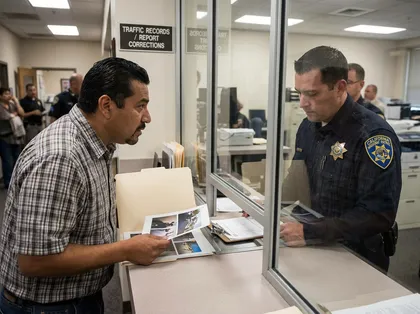
The officer’s report and any traffic citation may influence an insurer’s investigation, but neither conclusively establishes civil fault. Vehicle Code § 20013 narrowly excludes statutorily required accident reports and statements in those reports from evidence at trial; it does not categorically exclude every part of an officer’s investigation.
Vehicle Damage Location
Where the damage is on your car can help show how the crash happened. Qualified reconstruction experts may use crush measurements, impact angles, EDR information, and other evidence to estimate collision dynamics.
Witness Statements
An independent witness can be persuasive, particularly when physical or digital evidence supports a detailed, consistent account.
Digital Evidence
Dashcam footage, available intersection-camera footage, and EDR data may help reconstruct a crash. In vehicles equipped with an EDR, the device may record limited information, such as indicated speed, accelerator input, and brake status for a short period before impact. Adjusters consider this evidence with witness accounts and other evidence; it does not automatically override them.
Medical Records
Medical records prove what the crash did to your body. Bills and notes from your hospital, primary care doctor, or chiropractor show the full scope of your injuries. These records establish your damages, meaning the compensation you can seek for your injuries and losses.
When drivers tell different stories, hard evidence often plays the deciding role in how adjusters assign fault. Together, physical and digital give adjusters a clear account of the crash.
If your accident occurred at an intersection, intersection accident attorneys can help you gather the necessary evidence to build a strong claim.
How California’s Shared Fault Law Impacts Your Claim
A crash may be attributed entirely to one party or divided among multiple parties, depending on the evidence.
California follows pure comparative negligence under Li v. Yellow Cab Co., which interpreted Civil Code § 1714. You can still recover damages if you share some fault, but your assigned percentage reduces your recoverable damages. If a factfinder assigns you 20% of the fault, your recoverable damages are generally reduced by 20%.
Because comparative fault affects claim value, an insurer may argue that the evidence supports assigning some fault to you. California regulations require insurers to conduct a thorough, fair, and objective investigation before evaluating liability.
How A Personal Injury Lawyer Protects Your Claim
The adjuster’s initial fault call is not final. It is a starting point for negotiation. Fault percentages do not always reflect what the evidence actually shows, and that gap can affect how much they offer. A personal injury lawyer protects your claim by gathering evidence, challenging unfair decisions, and keeping the case on track.
Below are things that car accident lawyers do to help injured victims:
- Investigate the accident. Your lawyer can review police reports, inspect evidence, speak with witnesses, find video footage, and work with experts.
- Preserve important evidence. Your lawyer can send preservation letters to individuals and businesses, requesting that they preserve videos, records, vehicle data, and other evidence.
- Document your damages. Your lawyer can collect medical bills, wage records, repair costs, and proof of how the injury affects your daily life.
- Challenge an unfair fault decision. If the insurer places too much blame on you, your lawyer can point out errors and provide evidence that supports your side.
- Deal with the insurance company. Your lawyer can answer questions, send documents, negotiate a settlement, and help prevent the insurer from using your words against you.
- Go to trial when necessary. If negotiations fail, your lawyer may take your case to court. After filing a lawsuit, the lawyer can request documents, question witnesses under oath, and subpoena relevant evidence, subject to procedural and privacy rules.
A lawyer cannot guarantee a particular result. Still, careful investigation, strong documentation, and timely action can place you in a better position to challenge disputed fault and pursue fair compensation.
At Arash Law, we represent injured Californians and advocate for their rights. Below are our past case results, which reflect thorough work and fast action on evidence.
- $17,900,000 — The clients suffered significant injuries, with one facing permanent damage. Our attorneys secured a $17.9 million verdict after challenging the County of LA’s attempts to shift blame.
- $8,800,000 — After a speeding van driver caused severe injuries, we aggressively pursued accountability. Key depositions transformed the case, leading to a significant resolution for our client.
- $6,000,000 — A drunk driver caused a fatal head-on collision, claiming the life of a mother. We successfully obtained the maximum policy limits for our grieving client.
Disclaimer: Past results do not guarantee or predict future outcomes. Every case depends on its own facts, evidence, law, and available coverage.
Frequently Asked Questions
After a crash, you may be unsure which reports you need to file, what your statements at the scene mean for your claim, or whether you can challenge an early fault decision. These answers address commonly asked questions after a personal injury.
Why Shouldn’t You Admit Fault At The Scene?
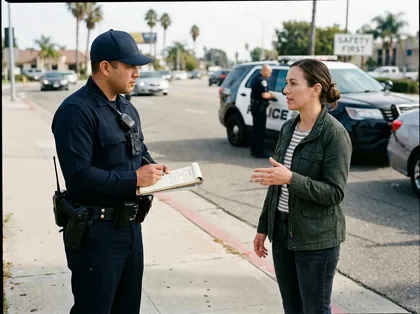
It is generally a good idea not to admit fault at the scene. Insurers may consider statements such as “I didn’t see you” when reviewing the claim. A simple expression of concern or sympathy does not always prove fault, but a direct admission may be used against you.
Be careful when giving a recorded statement. You may not know all the facts right after a crash. The other driver may have been speeding, distracted, or running a red light. The other driver’s insurer may use your words to challenge your claim. Your own insurer may also request a statement, and your policy may require you to cooperate.
Consider getting legal advice before giving a detailed recorded statement if injuries or disputed fault are involved.
What If The At-Fault Driver Is Uninsured?
If the driver who hit you has no insurance, you may instead rely on your own uninsured motorist coverage. If applicable, UM bodily injury coverage may help pay damages related to your injuries, such as medical expenses, lost income, and pain and suffering, subject to the policy’s terms and limits. Vehicle damage requires applicable collision or uninsured motorist property damage coverage.
Without applicable UM coverage, you may need to pursue the uninsured driver or investigate whether another responsible party or source of coverage is available.
California also limits compensation for some uninsured drivers who suffer injuries in a crash. Proposition 213, found in Civil Code § 3333.4, generally bars an uninsured vehicle owner from recovering noneconomic damages, even when another driver was at fault. An exception may apply when the at-fault driver violated California’s DUI laws and was convicted of that offense.
An attorney can help you pursue available UM benefits and investigate other possible sources of compensation.
Can An Insurance Company Change Its Mind About Who Is At Fault?
Yes. An initial fault decision is not a legal judgment, and it is not final. Insurers make early calls based only on the evidence they have at the time, and that picture can shift.
New evidence can change how an adjuster reads the case. Dashcam footage, an uncontacted witness, or repair records pointing to a different impact point are all examples. A formal demand letter can place the claimant’s position and supporting evidence before the insurer. If the insurer denies or disputes the claim, California regulations generally require it to communicate that position in writing. If the insurer still refuses to reconsider, an attorney can advise whether a lawsuit is the right next step under California law.
How Long Do I Have To File A Personal Injury Claim?
California generally gives individuals a two-year filing deadline to file a personal injury lawsuit. When a government entity is involved, you have six months to file an administrative claim.
In limited cases, a filing deadline may be tolled. Minority can toll some private personal-injury limitations periods, but not the public-entity claim-presentation requirement. In motor-vehicle cases, a defendant’s absence from California does not automatically toll the deadline when statutory service is available.
Contact Arash Law For A Free Case Review
Determining fault in an insurance claim is a meticulous process. Insurers rely on various factors to assess the circumstances surrounding the event. The goal is to reach a fair resolution that accurately reflects each party’s liability.
Arash Law offers a free case review to help you understand your options, with no pressure or obligation to hire us. Arash Law also operates under the name AK Law. If you decide to move forward, the firm works on a contingency fee basis, meaning you pay no legal fees unless we win or settle your case. You focus on healing; our legal team focuses on your claim.
Call us at (888) 488-1391 to speak with a team member about your case at no cost.