TL;DR: How to value a car after an accident starts with determining its actual cash value before repairs and comparing repair costs to that amount. Drivers who underestimate depreciation or ignore insurance total loss rules can lose money and weaken claims against the at fault party before any settlement.
Highlights:
- Check for safety hazards; tow the car if it is unroadworthy.
- Get repair estimates from multiple shops – you choose the mechanic.
- Compare repair costs to your car’s actual cash value (ACV).
- Look up market value with Kelley Blue Book and NADA Guides.
- Collect mileage, maintenance records, and mechanic statements to support higher value.
- Review original or extended warranty for covered repair costs.
- If totaled in California, expect a salvage title before rebuilding and registering.
Tip: Photograph all damage and keep every estimate, invoice, and inspection record so you can stick to documented facts if the insurer disputes value or repairs.
Table of Contents
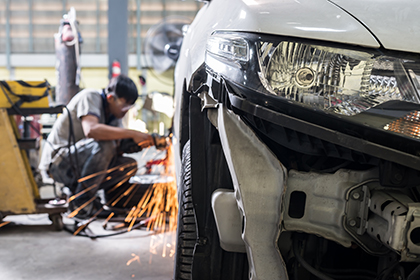
If you were involved in a car accident and your vehicle sustained damage, you have several options for pursuing repairs. This situation, though, becomes considerably more challenging if your insurance coverage is insufficient, and making a claim may result in higher premiums. Fortunately, a straightforward option exists for selling an accident-damaged car online. Still, you can explore alternative actions to resolve the collision damage caused to your car.
You are left with a challenging decision — to repair or sell your damaged vehicle — especially when dealing with potential insurance hitches. Arash Law is dedicated to assisting you in making informed decisions that may impact your rights. Our experienced California car accident lawyers provide comprehensive legal advice and support to help you navigate the claims-filing process. Our lawyers can guide you throughout the process. Consult an attorney for help. For a free initial consultation, contact us at (888) 488-1391 or complete our “Do I Have A Case?” form.
If you are the sole party involved in the accident, you can personally cover the expenses for repairing your vehicle without the need to file an insurance claim. Sometimes, this approach is the proper course of action. Still, it is essential to consider whether it is financially viable after calculating the diminished value your car has incurred due to the accident. Before proceeding, you need to assess your car’s post-accident value.
How To Value A Car After An Accident
Following a car accident, it’s vital to determine the appropriate steps to take. To retain ownership of your vehicle, it must meet safety inspection standards, which, in certain states, necessitate annual evaluations. In California, drivers are required to undergo a vehicle inspection every two years. Failing to complete the emissions test can result in various penalties, including fines and denial of registration. To comply with this requirement, you must take your vehicle to a licensed inspection station near you.
Consequently, it is imperative to rectify any damages so that the vehicle complies with safety regulations, as continuing to operate it in its current condition with loose or hanging parts may not be permissible.
The Value Of A Damaged Car Versus The Cost Of Repairs
Even if you diligently address all repairs advised by your mechanic, your vehicle will probably experience depreciation due to the incurred damage. The presence of an automobile accident can be revealed in a vehicle history report (VHR). Notably, many mechanics may report to VHR companies the maintenance work they perform on your vehicle, even if it was not involved in an accident. Consequently, even when the repairs are executed to perfection, the overall value of your car may still be negatively affected.
When restoring or replacing your vehicle, you should consider these factors. Moreover, you should investigate whether your original or extended warranty might cover any required repairs.
Following an automobile accident, it is important to pursue appropriate compensation for either the repairs or the value of your car, particularly if it is declared a total loss.
Know Your Car’s Value

Various resources are available to ascertain the present value of your car for insurance evaluation purposes, including industry standards such as Kelley Blue Book and the National Association of Automobile Dealers’ NADA Guides.
It is essential to recognize that under standard auto insurance policies, repair costs exceeding the assessed cash value of the vehicle render it eligible for classification as “totaled.” Consequently, it falls within the purview of your insurance provider to determine whether they will cover the cost of repairs or designate the vehicle as a total loss, compensating you based on its book value.
However, there may be an opportunity to present a case indicating that the vehicle’s components are worth more than the book value suggests, potentially resulting in a higher settlement. Evidence such as mileage records, maintenance histories, and sworn statements from certified mechanics demonstrating that your vehicle is worth more than its make and model is typically required to substantiate such a claim.
Keeping all records that could confirm these estimates is vital to understanding the value of your vehicle. A comprehensive knowledge of your vehicle’s worth through engaging in preliminary research is pivotal in determining whether repairing it after a car accident is the practical and cost-effective solution. Equipped with this information, you can assert your rights to pursue appropriate compensation for necessary repairs so that your vehicle can get back on the road.
Our experienced accident lawyers at Arash Law provide support throughout the legal process. We help you make informed decisions and pursue compensation for repairs, advocating for the timely resolution of your vehicle damage claim.
Understanding The Extent Of Repairs: Minor Vs. Major
Let’s begin by assessing the extent of the damage. The situation is favorable if the damage is minor, such as paint chips, surface scratches, or minor dents. A qualified mechanic can readily rectify these issues.
Similarly, small and easily replaceable vehicle components, such as windows or damaged headlights, are also cost-effective to repair. The acquisition of such small parts is straightforward, and their restoration by a professional presents no significant challenges.
Is It Safe And Legal To Operate An Unrepaired Vehicle After A Collision?
Responsible drivers are legally mandated to safely operate their motor vehicles, safeguarding the well-being of others sharing the roadways. When driving a car categorized as “unroadworthy,” be aware of the following potential consequences:
- If you’re pulled over by law enforcement, they may note the condition of your vehicle.
- Should your insurance company learn you were operating a hazardous vehicle, they might take action.
- If you’re involved in another accident, the condition of your car could affect claims or liability.
- Any of the above situations may lead to your insurance coverage being invalidated.
Therefore, maintaining your vehicle in roadworthy condition helps avoid complications.
Exercising caution is imperative if your vehicle is classified as a “total loss” rather than pursuing repairs. Specifically, it is not advisable to attempt to transport your car to a salvage yard personally if the following conditions are present: non-functioning headlights and tail lights, damaged side mirrors, sharp and jagged frame edges, fluid leaks, damage near the gas tank, severe windshield cracks, misaligned wheels, or a non-locking hood.
When in doubt, it is prudent to arrange for professional towing services. It is worth noting that many insurance companies are willing to cover the associated costs.
You Don’t Have To Repair Your Car Right Away If You Disagree With The Insurance Company
Insurance companies cannot choose a specific mechanic for vehicle repairs on your behalf, although they may suggest obtaining estimates from multiple sources. It is common for your insurance provider to opt for the auto body shop offering the lowest estimate. Still, you retain the right to express concerns if you believe a particular shop may not provide the proper service for your vehicle. The adjuster or agent assigned to your claim may ask for your preferences so they can properly communicate if you believe another auto body shop is able to offer you more appropriate repairs. Advocating for your interests is entirely acceptable.
In states with a no-fault insurance system, your insurance company typically covers the costs of vehicle repairs up to the appraised value of your car or the limits specified in your policy, regardless of fault attribution for the accident. Suppose the cost of repairs surpasses the amount mandated by the insurer. In that case, they may categorize your vehicle as a “total loss,” liquidating it for parts and disbursing the vehicle’s value as “actual cash value.” A replacement vehicle can then be procured at your convenience.
On the contrary, California is among the 38 states that do not adhere to a no-fault policy. In such states, the party responsible for the accident becomes liable for covering the associated damages.
As California mandates the identification of the at-fault party in an accident, it results in comparatively lower car insurance rates than in other states. Additionally, it’s important to note that the aftermath of an accident may entail protracted and costly legal disputes. Given the necessity to establish fault, it is highly advisable to engage the services of an attorney to navigate any intricate legal aspects of the case.
Insurance companies in fault-based states will likely scrutinize claims made by victims seeking compensation, which can result in a settlement offer that may be less than what the claimant seeks. A qualified car accident attorney from Arash Law can initiate an insurance claim, setting a foundation for your case against the at-fault party.
It is essential to understand that the value attributed to your car is not equivalent to its purchase price but corresponds to its worth at the time of the accident. Should you find the insurer’s offer dissatisfactory, you maintain the prerogative to submit a counteroffer through a formal demand letter.
Could I Lose Insurance If I Don’t Repair The Car?

The insurance company will require repairs if you want to maintain comprehensive or collision coverage for your vehicle. Their rationale behind this requirement lies in their reluctance to insure a car for prospective physical damage if it already has unaddressed prior damage.
The potential for a subsequent accident to aggravate any pre-existing damage is a significant concern. If the insurance company has already disbursed compensation for the pre-existing damage, they would be reluctant to reimburse any further damage that has been compounded.
Standard practice dictates that the insurance company will mandate the removal of physical damage coverage for a vehicle that has not undergone repairs. Typically, the validation of repair completion involves issuing a claim check payable to both you and the chosen body shop tasked with the necessary repairs.
When considering repurchasing your totaled vehicle, it is essential to address any issues that pose substantial safety risks. Additionally, requirements for restoring a vehicle to roadworthy condition may vary from one state to another. In California, when a car is involved in an accident and the insurance company declares it a total loss, the vehicle obtains a salvage title. It’s important to note that a total loss doesn’t necessarily mean the car is entirely inoperable or destroyed; rather, it signifies that the cost of repairing the car exceeds its actual value, making it uneconomical to repair.
Having a salvage title can pose challenges when it comes to insuring your vehicle. Suppose your vehicle is designated as salvage after being declared a total loss or being junked. If you wish to restore and re-register it, the Department of Motor Vehicles (DMV) can provide a branded title and registration once the vehicle is rebuilt and complies with specified requirements.
The auto collision lawyers at Arash Law can help you understand this intricate legal requirement and guide you through the process. Contact us to explore your options and seek fair compensation for your losses.
When Is It Not Worth Repairing A Car?
As a vehicle ages and demands increasingly frequent and costly repairs, individuals often grapple with whether to continue maintaining it or opt for a new one. While varying opinions exist regarding when a car becomes economically unviable for repair, some fundamental guidelines can offer insight. Suppose a substantial repair is projected to surpass half of the car’s current value, or the vehicle’s reliability has deteriorated to the extent that it jeopardizes safety. In that case, consider an upgrade.
Choosing Between Repair & Replacement
The appropriateness of the decision — whether to pursue repairs or opt for a replacement — hinges upon the extent of the damage incurred. In cases where there exist minor imperfections, such as small dents that can be readily rectified, it is generally advisable to proceed with repairing the damaged vehicle. This recommendation is particularly relevant when your insurance provider covers the repair costs.
However, if the damage encompasses significant structural or mechanical impairment, notably affecting the frame, body, or engine, it is prudent to contemplate acquiring a new vehicle.
When the extent of the damage is of such magnitude that the insurance company deems the cost of repairs disproportionate to the car’s overall value, it is often judicious to heed their counsel rather than persist in driving a salvage vehicle.
Ultimately, the decision to pursue repair or replacement remains at your discretion. In some cases, it is in your interest to accept the compensation provided by your insurance company and allocate it toward acquiring another vehicle.
Contact Arash Law For A Free Initial Consultation With A Lawyer
Car accidents can be challenging and expensive, encompassing repair costs and medical bills. You may feel overwhelmed by the additional burden of vehicle repairs while you attempt to recover physically and emotionally from the unfortunate incident you have suffered.

At Arash Law, under the direction of Arash Khorsandi, Esq., our team of car crash lawyers is dedicated to shouldering the weight of your concerns, allowing you to concentrate solely on your well-being. Leave the complex details and legal issues to us, and we will advocate for your rights while helping you pursue fair compensation.
Our practice encompasses various areas of personal injury law, including navigating challenging car accident cases on California’s roads. We extend our services to numerous locations throughout the state, including Los Angeles, San Jose, San Francisco, Sacramento, San Diego, Bakersfield, Fresno, Anaheim, Riverside, San Luis Obispo, Santa Ana, Oceanside, Santa Rosa, Glendale, Fremont, San Bernardino, and Visalia, among others.
For a complimentary initial consultation, contact Arash Law at (888) 488-1391 or send us a message through the chat box to schedule an appointment.