TL;DR: If you get injured in a California public park, you may be able to file a claim against the government agency that manages it. You must show that a dangerous condition contributed to your injury. You must also follow strict deadlines, including filing a government claim within six months.
Highlights:
- Get medical care and follow-up treatment, and keep discharge instructions.
- Report the incident to staff or a ranger, and request an incident report.
- Photograph/video the hazard, lighting, signage, and surrounding area before changes.
- Collect witness names, phone numbers, and brief statements if they agree.
- Write a timeline with date, time, exact location, and what happened.
- Identify the responsible public entity and submit its correct claim form.
- Calendar lawsuit deadlines: 6 months after written denial or 2 years if no response.
Tip: Preserve evidence (shoes, clothing, photos, medical records) and when giving statements to agencies or insurers, stick to facts and avoid guessing.
Table of Contents
If you get hurt in a California public park, you may file a claim against the government agency responsible for maintaining it. Cities, counties, state parks, and federal agencies must maintain public spaces in a reasonably safe condition for visitors. You might be eligible to file a claim if a dangerous condition caused your injury.
Common hazards in public parks include broken walkways, damaged playground equipment, falling tree branches, inadequate lighting, and unsafe areas that have not been repaired or marked. Government agencies have strict reporting and filing rules. The steps you take after the accident can determine whether you can file a claim.
- Seek medical attention immediately, even if the injury appears minor.
- Report the accident to park staff, a ranger, or local authorities.
- Take photos and videos of the hazard, your injuries, and the surrounding area.
- Obtain names and contact information from any witnesses.
- Write down what happened, including the date, time, and exact location.
- Keep all medical records, bills, and documents related to your injury.
- Consult a personal injury lawyer who can determine whether you can file a claim against the government agency responsible for the park.
The injury attorneys at AK Law handle park-related injury cases and understand the unique rules that apply when government property is involved. To discuss your situation, call (888) 488-1391 to schedule a free initial consultation.
What Happens Legally After A Public Park Injury?
If a dangerous condition in a public park contributed to your injury, you may pursue a claim under California premises liability law and the California Tort Claims Act (CTCA). This process involves stricter procedural rules than a claim against a private business. You must initially file an administrative government claim before you can file a lawsuit.
A Hazardous Condition Causes Your Injury
The legal process typically begins when a dangerous condition on public property contributes to your injury. Under the CTCA, a “dangerous condition” is any hazard on public property that creates a serious risk of injury, even when people use the area carefully.
Examples of dangerous conditions in public parks include:
- Broken or uneven sidewalks on a walking path.
- Loose or damaged playground equipment.
- Poor or missing lighting in a parking lot or pathway.
- Falling branches from neglected trees.
- Unmarked drop-offs, holes, or other hidden hazards.
You Report And Document The Incident
After the injury, report what happened and document the details. Doing so can help establish the time and location of the accident. You should:
- Report the incident to park staff, a park ranger, security personnel, or local law enforcement.
- Request an incident or occurrence report, if available.
- Take photos and videos of the hazard, your injuries, and the surrounding area.
- Record the date, time, and exact location within the park.
This information can later support your claim that the accident happened on public property and that a dangerous condition existed at the time.
If you decide to file a claim and need legal assistance, consider contacting Arash Law. Skilled injury attorneys can help identify which public entity manages the park, such as a city, county, state agency, or federal department. This way, you can determine where to file your claim. They can also review which deadlines apply and whether the hazard meets California’s definition of a “dangerous condition of public property.”
You File A Government Claim
Before you can sue a public entity in California for personal injury, you generally must file a government claim under the CTCA. The California Government Code establishes a six-month statute of limitations for claims relating to injury to a person or damage to personal property.
At this step, you should:
- Identify the agency responsible for managing the park.
- Locate the correct claim form, often available on the city, county, or state website.
- Provide the required information, including:
- Your name and mailing address.
- Date, time, and location of the incident.
- Description of how the accident occurred.
- Description of your injuries and losses.
- Names of any involved employees, if known.
- The amount of damages you claim, or an estimate.
For claims against the State of California, many individuals use the Government Claims Program, which provides claim forms and instructions online. For local parks, the city or county typically posts claim instructions on its own website.
The Agency Reviews The Claim And Responds
Once the agency receives your claim, it typically has 45 days to respond. During this time, it may:
- Accept the claim and offer payment or resolution.
- Reject the claim in whole or in part.
- Request more information or clarification.
- Take no action. This may be considered a denial after the response period has ended.
This review stage does not always involve negotiation. However, it provides the agency a formal chance to consider your claims before a lawsuit begins.
If The Claim Gets Denied, You May File A Lawsuit
If the public entity rejects your claim in writing or if they do not respond within the allowed time, you can move forward with a lawsuit. Strict deadlines apply here as well:
- If you receive a written denial, you generally have six months from that date to file a lawsuit in court. California’s Government Code sets this timeline.
- If the agency does not respond at all, you may have up to two years from the accident date to file a lawsuit. However, these timing rules can be complex.
At this point, your case moves forward to the court system. A judge or jury may then decide whether:
- The condition on the property was legally “dangerous.”
- The public entity was aware of or should have been aware of the hazard.
- The entity failed to take reasonable steps to repair or warn of the issue.
- The dangerous condition contributed to your injuries and losses.
If you miss the six-month claim deadline or the time limit to sue after a denial, the court may dismiss your case. This outcome can happen even if you have a credible claim.
Due to these strict rules, many injured people consult a personal injury lawyer early. These legal professionals can help determine which deadlines apply and which agency to file with. They can also help you understand how to file a personal injury claim against a public agency.
| What Is a Dangerous Condition on Public Property? |
|---|
| A dangerous condition on public property is a hazard on government-owned land that poses a serious risk of injury, even when people use the area with care. Examples include broken walkways, poor lighting, damaged playground equipment, or unmarked hazards. These are dangerous when a public agency fails to repair them or warn visitors. |
How Government Immunity Affects Park Injury Claims
Government agencies have certain protections that private property owners do not. These protections are called immunity laws. They limit when you can hold a public entity responsible for injuries in public parks.
Immunity may apply to:
- Natural conditions on unimproved property, such as uneven soil, loose rocks, or natural terrain.
- Recreational activities that involve some risk.
- Emergency actions taken by public employees.
- Design decisions that were approved by the proper authority.
These exceptions are important because they depend on whether the agency took reasonable steps to maintain the property and warn visitors about risks.
Who May Be Responsible For Your Injury
Multiple parties may be responsible for injuries in a public park. Liability generally depends on who managed the area, who created the hazard, and who failed to fix it.
Parties who may be responsible include:
- City or County Parks Departments — Broken sidewalks, damaged equipment, or ignored complaints may show that the city or county is responsible.
- California State Parks — The California Department of Parks and Recreation manages all state parks, trails, beaches, and campgrounds across California. Unsafe trails, deteriorating structures, or unfixed hazards may make the state responsible.
- National Park Service (Federal Government) — Injuries in national parks fall under federal law and the Federal Tort Claims Act (FTCA). Liability may arise if federal employees fail to maintain facilities or warn visitors about known risks.
- Park Employees — Employees may share responsibility if they fail to mark hazards, ignore reports, or create unsafe conditions through their actions or failure to act.
- Contractors & Landscapers — Private companies hired for tree trimming, landscaping, repairs, or construction may be responsible if their work creates or leaves a dangerous condition.
- Playground or Equipment Manufacturers — Manufacturers may be responsible if defective playground equipment or park structures cause an injury.
- Event Organizers — Groups hosting events must create safe areas for their attendees. Unsafe stages, cables, tents, or sports setups can create liability for the organizer.
- Dog Owners & Other Park Visitors — Visitors may be responsible if their uncontrolled pets or careless actions cause injuries. California has strict liability rules for dog owners. Generally, dog owners are responsible for bites that happen in public areas.
Common Accidents And Injuries In Public Parks
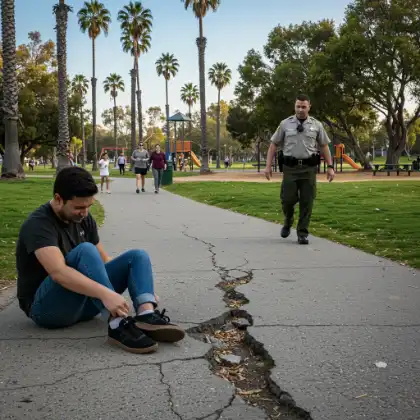
Public parks offer a variety of activities and open spaces. However, they can create different risks. Hazards can exist in walkways, play areas, sports zones, or picnic spots. Knowing the common types of accidents can help you understand how injuries happen.
Here are a few:
- Slip-and-falls on wet walkways, algae, or irrigation runoff.
- Trips and falls caused by broken sidewalks or debris.
- Playground accidents from broken swings, slides, or climbing structures.
- Dog bites and animal attacks.
- Tree-related accidents from falling limbs or untrimmed trees.
- Sports injuries from collisions or unsafe equipment.
- Picnic area incidents, such as collapsible tables or falling objects.
- Crimes or sexual assaults in poorly lit areas.
These accidents can result in a wide range of injuries. The type and severity of the incident depend on the circumstances and the park’s condition. Many can have long-lasting effects. Some of the common bodily injuries include:
- Head injuries
- Brain injuries
- Bone Fractures
- Soft tissue injuries
- Back injuries
- Spinal cord injuries
- Cuts and lacerations
- Dog bite wounds
- Burn injuries
- Joint injuries
Understanding the type of accident and injury you’ve experienced can help you determine the next steps and whether you should file a claim.
Parking Lot Accidents In Public Parks
Parking lots are one of the most overlooked danger zones in public parks. These spaces combine moving vehicles, pedestrians, cyclists, and limited visibility, which increases the risk of serious accidents.
Some of the common causes of parking lot accidents include:
- Poor lighting that makes pedestrians hard to see at night.
- Faded or missing crosswalk markings.
- Blind corners and obstructed sightlines.
- Lack of speed control measures.
- Distracted or speeding drivers backing out of parking spaces.
Motor vehicle incidents in parking lots may involve issues that car accident lawyers routinely handle. Even though these crashes may happen at lower speeds, they can still lead to head injuries, fractures, and soft tissue damage. If you need legal assistance, you can reach out to a parking lot accident lawyer.
You can also review our parking lot safety guide to reduce your risk. It can help you understand where accidents commonly occur and what warning signs to look out for when walking or driving through parking areas.
How A Personal Injury Lawyer Can Help With Your Public Park Claim
Personal injury attorneys can help you by:
- Investigating the Hazard — A lawyer for injury cases may help by:
- Inspecting the accident scene.
- Reviewing maintenance logs, prior complaints, and park records.
- Locating and interviewing witnesses.
- Getting videos, photos, or surveillance footage, when available.
- Identifying which government agency controls the property.
- Consulting experts for playground, tree safety, or structural analysis.
- Handling Government Filing Requirements — An accident lawyer can assist you by:
- Preparing and filing your CTCA or FTCA claim.
- Tracking all deadlines and statutory time limits.
- Organizing all photos, medical records, and other documents.
- Communicating with government agencies or insurance representatives.
- Responding to immunity defenses that public entities may use.
- Guiding You Through Settlement or Litigation — Based on how the agency responds, an injury attorney can:
- Negotiate a fair settlement if the agency is willing to settle.
- File a lawsuit if the government denies the claim.
- Represent you throughout the court process.
- Handle federal cases, where a judge makes the decision instead of a jury.
How To Reduce Your Risk Of Getting Hurt In Public Parks
Accidents aren’t always preventable. However, some practical habits can make your park visits safer. The following steps can help you stay aware of your surroundings and avoid areas that may put you at risk.
- Stay alert. Avoid distractions like phones. Pay attention to walkways, playground areas, and other park visitors. That way, you can spot hazards early.
- Inspect playground structures, benches, and exercise stations before using them to ensure they are safe and in good condition. If something looks loose, broken, or unstable, do not use it.
- Supervise children closely. They may not see loose bolts, uneven surfaces, or hot equipment. Stay nearby so you can react quickly if something unexpected happens.
- Use well-lit paths. Poor lighting makes it hard to see cracks, branches, or debris. Stay in brighter areas to reduce your risk of tripping or facing unsafe situations.
- Report unsafe conditions to park authorities if you see broken equipment, exposed roots, damaged pavement, or other hazards. Many cities, including Los Angeles, allow people to file complaints online through their websites.
- Wear appropriate shoes. Shoes with good support can help prevent slips and falls on uneven or wet ground.
- Stay in designated areas. Trails, walkways, and fenced zones are usually maintained more often and marked for safety compared to other unmonitored areas.
Public Park Injury FAQs
If you get injured in a public park, you may have questions. You may wonder who is responsible, how government claims work, and whether you can file a personal injury case. Here are common questions people ask after park injuries.
For other legal concerns, you can visit our main FAQ page. You can also contact Arash Law for a free case review.
What Happens If I Get Hurt At A Public Park?
If you sustain an injury at a public park in California, you may be able to file a claim against the government agency responsible for maintaining it. Cities, counties, the state, or the federal government must keep public spaces in a reasonably safe condition. The agency may be legally responsible if a dangerous condition caused your injury.
Take these steps after the accident:
- Seek medical attention.
- Report the incident to park staff, rangers, or local authorities.
- Document the hazard and your injuries.
- Collect witness information.
- Keep all records related to the incident.
- Consult a personal injury attorney to understand the CTCA or FTCA filing requirements.
Which Agencies Are Considered Government Entities In Injury Claims?
Government entities include any public agency that owns, operates, or maintains the property where you got injured. In public park cases, this may include:
- City or county parks departments.
- California Department of Parks and Recreation (state parks).
- National Park Service (federal parks).
- Local government divisions, such as public works or recreation departments.
These agencies must follow the CTCA or the FTCA. The applicable law depends on which entity controls the park.
How Does Government Responsibility Differ From Private Property Responsibility?
Special laws, shorter deadlines, and immunity rules govern government responsibility. Claims against public agencies must follow the CTCA, whereas claims against private businesses or homeowners typically proceed through insurance or civil court.
| Feature | Government Property (Public Parks) |
Private Property (Businesses, Homes, Stores) |
| Initial Process | You must initially file a government claim before filing any lawsuit. | No government claim required. |
| Deadline to Start the Process | Six months for most injury claims. | Standard two-year statute of limitations for personal injury. |
| Legal Protections | Public entities may be immune from liability in certain situations. | No immunity in most negligence claims. |
| Control of Property | Managed by city, county, state, or federal agencies. | Controlled by private owners or businesses. |
| Investigation Requirements | The agency reviews the claim before court involvement. | Insurance companies investigate directly. |
| Warning and Repair Duties | Must maintain property with reasonable care and respond to known hazards. | Same duty of care, but governed by general premises liability rules. |
| Ability to Sue | You can only file a lawsuit after a claim rejection or if there is no response to your claim. | You can file a lawsuit anytime within the statute of limitations. |
Can I Pursue A Claim Against The Federal Government For A Park-Related Injury?
Yes. You can file a claim against the federal government if your injury happened in a national park or another federal area. These cases follow the FTCA. This law sets specific rules and deadlines for filing and reviewing claims.
A federal claim generally requires:
- Filing an FTCA administrative claim with the appropriate federal agency.
- Providing details about the incident and the resulting injuries and damages.
- Waiting for the agency’s response before filing a lawsuit.
- Knowing that a judge, not a jury, usually decides federal cases.
FTCA procedures are strict and have tight deadlines. As a result, many people ask, “Do I need a personal injury lawyer?” It’s not required to hire one, but having legal guidance can be beneficial when filing claims correctly, meeting deadlines, and identifying the appropriate federal agency.
How Do I Know If I Actually Have A Personal Injury Claim?
You may have a personal injury case if an unsafe condition in the park caused your injury and the responsible agency failed to address it. The key question is: Should the agency have repaired, inspected, or marked the hazard before the accident?
You may consider a claim if:
- There was a clear hazard, such as broken equipment, uneven walkways, or poor lighting.
- The agency responsible for the park failed to address the hazard or warn visitors about it.
- The unsafe condition caused or contributed to your injury.
- You have medical bills, missed work, or other losses related to the incident.
If you are unsure whether your situation qualifies, please complete our “Do I Have A Case?” form. One of our personal injury lawyers will review the details and explain your options based on your situation.
Can I Still Pursue Compensation If I Was Partially At Fault For The Accident?
Yes. California follows pure comparative negligence. This principle allows you to seek compensation, even if the court finds you up to 99% responsible for the accident. The court will reduce the money you receive based on your percentage of fault.
For example, if your losses total $20,000 and the court finds you 20% at fault, you may recover 80%, or $16,000. If you are not sure how fault may affect your case, you may seek free accident lawyer advice to understand your options from a legal perspective. If you choose to work with our team, our accident attorneys can help you navigate the claims process with pure comparative negligence in mind.
What Damages Can Victims Pursue After A Public Park Injury?
California law allows victims to seek damages after getting injured at a public park. These losses can cover both the financial and personal impact of the accident. Available damages in a personal injury case may include:
- Medical costs, including emergency care, doctor visits, medication, and physical therapy.
- Lost income if the injury affected your ability to work.
- Ongoing medical care, including physical therapy and continued treatment.
- Pain and suffering from physical discomfort or limitations.
- Emotional distress, including anxiety, trauma, or trouble sleeping.
- Permanent disability or scars that cause long-term or visible changes.
The damages you can pursue depend on how the injury affects your health, daily activities, and ability to work.
Discuss Your Public Park-Related Injury Case With A Lawyer
An injury in a California public park can lead to unexpected medical bills, lost wages, and long-term stress. When a government agency is involved, the filing rules are more complex. You also face stricter deadlines.
If this describes your situation, speak with the accident lawyers at the AK Law Firm. We handle public park injury cases. You can call us at (888) 488-1391 for a free initial consultation. We will review your situation and explain your options in accordance with California law. We can help you understand which deadlines apply to your case.