TL;DR: To report a hit-and-run accident in California, call 911 or local police immediately and provide details about the fleeing vehicle. If anyone is injured or damage exceeds $1,000, drivers must file an SR-1 with DMV within 10 days to preserve evidence and protect insurance claims.
Highlights:
- Call 911 or local police immediately and request an incident report number.
- Write down fleeing vehicle details – plate, make, color, distinguishing marks.
- Photograph damage, debris, roadway marks, and intersections from multiple angles.
- Ask witnesses for names, phone numbers, and a quick summary of events.
- Notify your insurer promptly and ask about collision, UM/UIM, and deductibles.
- File DMV Form SR-1 within 10 days if injury/death or $1,000+ damage.
- Keep medical records, repair estimates, and missed-work proof in one folder.
Tip: Save photos, receipts, and medical notes, and give insurers only factual details you know.
Table of Contents
No car accident is ever an ideal situation, but things can quickly become more challenging when the person at fault for the collision decides to leave the scene of the crash. When a person flees the scene of a motor vehicle accident, it is known as a “hit-and-run” collision, and alleged offenders can face criminal penalties in such cases.
If you find yourself involved in a hit-and-run accident, it is crucial to know how to report the incident properly. One of the first steps you can take is to contact the local police department as soon as possible. Reporting the incident to the police is essential in helping to locate the other driver and filing a compensation claim against them.
People involved in hit-and-run accidents don’t need to panic; instead, they can contact the local police department and their insurance carrier. Those who maintain full coverage on their automobiles may be able to pursue compensation for their losses, even if the driver isn’t found.
Last year, the insurance research and analysis website ValuePenguin reported that California had the largest share of fatal hit-and-runs, with 17 percent of the American total and 2,948 crashes causing 3,056 deaths. The state’s 8.8 fatal hit-and-runs for every 10 billion miles traveled was higher than all other states except for the District of Columbia and Arizona.
Dealing with the aftermath of a hit-and-run accident can be frustrating. People who are dealing with significant damage to their vehicles, medical bills, and other concerns can consider working with the skilled personal injury attorneys at Arash Law.
Defining Hit-And-Run Accidents In California
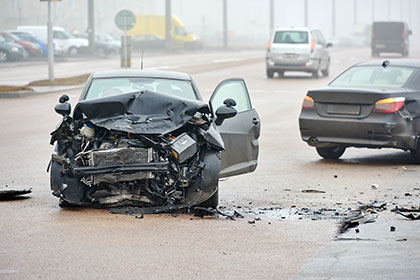
The simplest definition of a hit-and-run accident is when a person involved in a motor vehicle accident leaves the scene of the crash without stopping to exchange any information. If you have been involved in a hit-and-run accident, it is essential to report it to the authorities as soon as possible.
In this article, we will discuss how to report a hit-and-run accident in California. Hit-and-run accidents do not necessarily need to involve other vehicles with passengers. Some people may strike parked cars and fail to leave identifying information, which also constitutes a hit-and-run accident. All drivers in California are expected to provide reasonable assistance to other people, including other drivers, passengers, and pedestrians who need medical attention after a car accident.
California will grant certain exceptions to people leaving the scenes of accidents, such as those who depart to receive medical attention. People should still try to inform the other parties involved in an accident of what they are doing and give contact information before leaving the scene. It is also important to understand that a hit-and-run accident charge is not necessarily based on who was at fault for a crash.
A person can still commit a hit-and-run offense when they leave the scene of a crash that was caused by another party. Leaving the scene of an accident can cause numerous problems later on, as it may lead to speculations about their motives for departing.
People who leave the scene of a crash are often presumed guilty, and it will be more difficult to convince an insurance company that a person was not responsible for an accident. According to the annual report from the California Office of Traffic Safety (OTS), there have been more than 20,000 hit-and-run crashes in California every year between 2016 and 2019, with more than 25,000 injuries and over 300 fatal crashes causing more than 300 deaths.
If you have been involved in a hit-and-run accident, it is crucial to report it to the police immediately. You can report a hit-and-run accident in California by calling 911 or the local police department. Provide as much information as possible, such as the location of the accident, a description of the vehicle that fled the scene, and any other details that could help the authorities identify the driver responsible for the accident.
California has multiple state laws relating to hit-and-run crimes, with California Vehicle Code § 20002 making a hit-and-run a misdemeanor punishable by up to six months in the county jail or a fine of up to $1,000. California Vehicle Code § 20001 applies when a driver leaves the scene of an accident without leaving identifying information, and a person other than the driver suffers an injury or is killed.
Possible Causes Of Hit-and-Run Accidents
Hit-and-run accidents can stem from various forms of driver negligence. To seek legal guidance, you can work with a hit-and-run accident lawyer from the experienced team at Arash Law. We can help you investigate the events that led to the accident, identify the actual cause, and prove it in court if necessary.
The common reasons why at-fault parties flee the scene of the accident include, but are not limited to:
- Driving under the influence (DUI) of drugs or alcohol.
- Distracted driving.
- Revoked or suspended licenses.
- Unlicensed car or driver.
- Uninsured vehicles.
- Self-preservation.
- Road rage or aggressive driving.
The Difference Between Misdemeanor And Felony Charges In California
The two state laws creating hit-and-run offenses are California Vehicle Code § 20002 and California Vehicle Code § 20001, with the former being a misdemeanor and the latter being a felony. A misdemeanor collision customarily involves a driver who did not realize an accident occurred, caused no property damage, or only damaged their own vehicle.
When people leave scenes of crashes without leaving identifying information, and another person suffers an injury or dies, then the crime will be a felony. Felony cases always carry steeper penalties than misdemeanor offenses.
Consequences Of Hit-and-Run Accidents In California

If you are wondering what the possible penalties can be for a hit-and-run offense in California, several factors need to be addressed. A misdemeanor is again punishable by up to six months in the county jail or a fine of up to $1,000.
When a person is convicted of a felony, the fine can increase to $10,000 in some cases. It is also possible that a person can be sentenced to up to three years in state prison or four years in cases of death or serious injury. Additional penalties may include several years of probation, driver’s license suspensions, participation in alcohol and drug education programs, and restitution to victims.
A person who causes significant bodily injury can also have a strike placed on their record. For a prosecutor to convict a person of a misdemeanor hit-and-run, they must prove beyond a reasonable doubt the following elements of the crime listed in CALCRIM 2150:
- A person was involved in an accident while driving a motor vehicle.
- The accident caused damage to another person’s property.
- The person knew they were involved in an accident causing damage or knew from the nature of the accident that it was probable that property was damaged.
- The person willfully failed to stop immediately at the scene of the accident or failed to provide the owner of the damaged property with identifying information.
Beyond the criminal penalties that people can face for hit-and-run convictions, there can be many other possible drawbacks to being accused of a hit-and-run offense. A person can probably expect increased premiums or canceled coverage by their insurance provider, two points on their driving record, and possible lawsuits from other parties involved in the accident.
California Car Accident Reporting Requirements
Knowing how to report a hit-and-run accident is crucial because leaving the scene of an accident is a criminal offense in California. If you are a victim of a hit-and-run accident, you should immediately report it to the police and follow the steps outlined by the DMV. Failure to report a hit-and-run accident can result in serious consequences.
In addition to reporting a hit-and-run accident to the DMV, it is also essential to report it to your insurance company. Your insurance company will need to know the details of the accident to help you file a claim and provide you with the necessary coverage. Reporting a hit-and-run accident can be a complex process, but it is essential to follow the proper steps to protect your rights and pursue the compensation available within your policy limits. A hit-and-run accident lawyer can also help you gather evidence and handle communication with insurers on your behalf.
The California Department of Motor Vehicles (DMV) states that people who are reporting collisions to the DMV should use an SR-1 form. A person or their insurance agent, broker, or legal representative must complete an SR-1 and send it to the DMV within ten days when another person suffers an injury or killed, or property damage is more than $1,000, and an SR-1 report is required in addition to any other report made to the police, California Highway Patrol (CHP), or insurance company.
A person involved in a motor vehicle collision in California will have to show a peace officer their driver’s license, vehicle registration card, and evidence of financial responsibility, including their insurance company name and policy number. The information you will want to collect from the other party will include the following:
- Driver’s date of birth.
- Driver’s license number and state.
- Driver’s name and address.
- Vehicle license plate number and state.
- Driver’s insurance company name.
- Insurance policy number and expiration date.
- Policyholder’s name and address.
- Vehicle owner’s name and address.
- Injuries or property damage.
The SR-1 will be seeking both drivers’ names, driver’s license numbers, addresses, dates of birth, telephone numbers, vehicle information, insurance company information, and injury or death information.
Steps To Take After A Hit-and-Run
When a hit-and-run accident occurs, the times in which people act are broken into two areas. The first part of a hit-and-run accident is the clear, immediate aftermath of any collision, but the second part will be the days and weeks that follow a crash.
People need to be aware of the steps to take during each one of these phases. There are important duties for people both immediately after an accident occurs and several days later.
What You Should Do At Scenes Of Hit-and-Runs
When you have been involved in a motor vehicle accident, and the other driver leaves the scene, your first phone call should be to the local police department. It is always important to get the police involved as soon as possible because police departments can take a number of steps to try to apprehend alleged offenders in these cases.
People should also try to write down whatever they can remember about the car with which they were involved in an accident. This information may include:
- The make, model, and color of the vehicle.
- Unique or identifying marks on the car.
- The license plate number.
- The driver’s appearance.
- The circumstances of the crash.
People should make an effort to preserve any evidence that may remain after a hit-and-run collision. Always look for witnesses who saw your collision and try to get their contact information.
You can also take as many pictures of your accident as possible. Try to take photographs from different angles and distances.
Steps To Take After Hit-And-Run Accidents
When a person suffers injuries in a hit-and-run accident, they can still try to seek damages from their own insurance company. You may still pursue compensation for medical bills, lost wages, or other accident-related losses in these cases.
Seeking compensation from the negligent driver can be challenging until they are apprehended. However, people can still pursue financial reparation for hit-and-run accidents through their full coverage, uninsured, or underinsured motorist policies. If a person does want to file a lawsuit against a negligent driver who is located later, they will generally have two years to do so.
People involved in these accidents can work with the personal injury lawyers at Arash Law, who can walk you through your legal options to pursue compensation. You will want to be cooperative with law enforcement efforts relating to your investigation.
Hit-And-Run Insurance Issues In California
Drivers in California maintaining the minimum amount of liability coverage for automobile accidents may not enjoy any coverage in a hit-and-run accident because their coverage only extends to other drivers, not themselves. Additional coverage, such as collision or comprehensive, will dictate whether a person can seek damages if the at-fault driver cannot be located or identified.
A person will still have to pay a deductible when filing a claim under their collision or comprehensive policy. Another very valuable form of coverage to have in these cases can be uninsured or underinsured motorist coverage.
The uninsured or underinsured policies can be beneficial when negligent drivers are found but do not have adequate insurance coverage. They can also help when the drivers cannot be located.
Frequent Causes Of Motor Vehicle Collisions In California
There are many possible causes for crashes in California, and some of the most common reasons tend to include:
- Speed violations.
- DUI.
- Distracted driving.
- Driving on the wrong side of the road.
- Improper turns.
- Inclement weather.
- Violation of the right-of-way rules.
- Motor vehicle defects.
- Violations of stop signals and signs.
- Cell phone use.
Understanding Traffic Lanes In California
The California DMV notes that traffic lanes are usually referred to by number, with the left or “fast” lane being known as the “Number 1 Lane,” the lane to its right being the “Number 2 Lane,” and then the “Number 3 Lane,” and so on. People should always drive in the lane offering the smoothest flow of traffic.
If a person can choose among three lanes, they should pick the middle lane for the smoothest driving. Driving faster or passing will use the left lane, but driving slowly will use the right lane.
When people are approaching motor vehicle collisions, it can be important to know how to get around the wrecks. Look for law enforcement officers directing traffic and try to follow their orders.
What You Should Do If You Are Involved In A Collision
Any time a person is involved in any kind of collision in California, the first thing they need to do is stop. Pull over as close as possible to a crash scene and ensure everybody is OK.
People should always call 9-1-1 as soon as possible to report accidents to the California Highway Patrol (CHP). Be prepared to show your driver’s license, vehicle registration card, evidence of financial responsibility, and current address to police officers, other drivers, or other people involved.
Evidence of financial responsibility refers to proof of insurance. A person who does not have proof of financial responsibility will receive a citation and a fine.
A person should consider doing the following:
- Stop your motor vehicle as close as possible to the scene of the accident. Provide your name, address, and driving information to other people involved in the wreck. See if anybody is in need of assistance. Be aware that failure to move a vehicle or have it removed from a street or highway can lead to a peace officer or authorized personnel having your vehicle removed and impounded.
- When a hit-and-run involves an injured animal instead of a person, then a driver should see if the animal has an owner. When there is no owner for an animal, then a person can call the nearest humane society, police department, or CHP. People should not try to help injured animals or leave them to die.
- In cases in which a driver strikes a parked car, a person will want to try to locate the owner of the parked car. If a vehicle owner cannot be located, then a person may have to leave a note on the vehicle that includes all of their personal information and report the collision to the police or CHP.
- A person must report their collision in writing to the local police or CHP when any person dies or suffers injuries, when law enforcement was not present at the scene. If a driver of a vehicle involved in a collision is physically unable to report a collision to the police or CHP, then any occupant who was in the vehicle at the time of the collision can make the report on their behalf.
An insurance agent, broker, or legal representative must also report the collision by completing a Report of Traffic Accident Occurring in California (SR-1) to the DMV within 10 days when there is over $1,000 in damage to the property of any person.
How Collisions Get Reported To The DMV
Again, people who are reporting collisions to the DMV must do so using SR-1 forms. A person or their insurance agent, broker, or legal representative must complete an SR-1 and send it to the DMV within 10 days when a person suffers an injury or is killed, or property damage is more than $1,000.
SR-1 reports are required in addition to any other reports made to the police, CHP, or insurance companies. SR-1 forms are available at DMV field offices, CHP offices, or online at www.dmv.ca.gov.
An SR-1 is required whether a person caused a collision or not, and even if the collision occurred on private property. A person’s driving privilege will be suspended if they do not complete an SR-1 form or do not have the proper insurance coverage at the time of the vehicle collision.
Every vehicle collision reported to the DMV by law enforcement shows on a person’s driving record unless the reporting officer says another person was at fault. Unless there is a corresponding law enforcement report on file indicating another person was at fault, every vehicle collision reported by you or another party in the collision will also show on your driver record if at least one of the following occurs:
- A vehicle or property involved has over $1,000 in damage.
- An individual suffers an injury or dies.
Fault for collisions is not as important in California, as the DMV retains all accident information.
Information You Provide On SR-1
The SR-1 is broken into the reporting party’s and the other party’s information. These should include any injuries, deaths, and damage to property. The basic information is as follows:
- Number of vehicles.
- Date of accident.
- Accident location.
Both the injured and the at-fault party’s information should include:
- Time of accident.
- Driver’s name.
- Driver’s license number.
- Driver’s address.
- Driver’s date of birth.
- Driver’s telephone number.
- Driver’s vehicle make, model, and license plate.
- Driver’s insurance company information.
Information about injuries and losses should include:
- Name and address of the injured or deceased person.
- List of damage caused to property.
- Property owner’s name and address.
When Police Do Not Need To Be Contacted
Certain situations in California may allow people to avoid involving the police. For example, a collision causing less than $1,000 in damage and no injuries usually means neither party has to report the accident to the police.
In such cases, people can exchange their contact and insurance information before following up with their insurance companies. Most people are not adept at estimating damage, so you may want to hesitate about deciding whether the damage is less than $1,000 because, in actuality, it is not hard to amass $1,000 in damage.
Even when police are not contacted following an automobile accident in California, the people involved in the collision still need to be certain to get all of the other driver’s identifying information in case an insurance claim has to be filed later. It will be crucial to have this information later on.
Reporting Car Accidents To Insurance Companies

People should always report their accidents to their own insurance companies, but people should not assume that seeking damages from their own provider will always be a straightforward process. Working with an experienced attorney can help you seek compensation during the claims process and help address any disputes should they arise.
If you are dealing with any kind of injury or death claim following an accident, you may find it beneficial to work with a skilled personal injury attorney at Arash Law, especially when dealing with an insurance company. An insurer can be quick to offer you a lump sum settlement to resolve your case, but an accident lawyer at Arash Law can help you assess whether a settlement is actually worth accepting for your hit-and-run accident.
After you report a hit-and-run crash to your insurance company, the insurer also has a vested interest in apprehending the alleged offender in such cases. By reporting a hit-and-run accident to police and insurance companies, a person can have multiple other parties assisting in locating an alleged offender.
If the at-fault driver is located, then their insurance policy could pay for the damages you incurred from the accident. When the other driver does not have car insurance or does not have adequate car insurance, then people may have to turn to their uninsured or underinsured policies.
A person may wish to be more wary when contacting the insurance company for another driver, however, because such insurers work to uphold their client’s own interests. This could potentially result in disputes during the claims process. You might not want to enter these types of conversations without legal representation.
Most people can report their car accidents to their insurance companies simply by calling the contact numbers listed on their insurance documentation. Some insurance companies may have mobile apps through which people can report and document crashes.
When insurance documentation is not available at the scene of a crash, what follows is a short list of contact information for some of the most commonly used auto insurance companies in California:
- American Automobile Association (AAA) (800) 924-6141 | Report Online
- American International Group (AIG) (877) 638-4244 | Report Online
- Allstate (800) 255-7818 | Report Online
- Esurance (800) 378-7262 | Report Online
- Farmers (800) 327-6377 | Report Online
- Geico (800) 861-8380 | Report Online
- Liberty Mutual (800) 837-5254 | Report Online
- Mercury (800) 503-3724 | Report Online
- Nationwide (877) 669-6877 | Report Online
- Progressive (800) 888-7764 | Report Online
- Travelers (800) 842-5075 | Report Online
- United Services Automobile Association (USAA) (800) 531-8111 | Report Online
Reporting Your Car Accident To The DMV In California
Under California law, motorists must report car accidents to the DMV within ten (10) days if a person is killed in an accident, the monetary value of the damage caused by the crash is $1,000 or more, or any person suffers an injury. A good general rule in these cases is to report every crash since virtually all collisions have the potential to cause at least $1,000 in damage.
The result is that even minor collisions can involve more than $1,000 in damage because replacing even a single part of an automobile might be prohibitively expensive. For example, collisions might damage bumpers that can easily cost several thousand dollars to replace.
When considering the wide range of possible damages that may extend from a motor vehicle accident in California, there is no reason not to file an SR-1 just to be safe. The process of filing an SR-1 is not terribly complex.
A person can fill out Form SR-1 themselves, or their insurance agent may do so for them. If a person suffers serious injuries that hospitalize them, a car accident lawyer at Arash Law can handle the SR-1 for them.
It is most important for a Form SR-1 to be completed and submitted within the 10-day grace period. People who want security may prefer to personally deliver their SR-1 to a DMV office, but the process can also be completed online.
Understanding The Importance Of Reporting A Car Accident
People involved in minor collisions may be tempted to think there is no reason to involve law enforcement or make things more complicated. The truth is that there is always a benefit to reporting a motor vehicle accident.
When you report a car accident, it will immediately begin the investigation process into your collision. It can also help provide the evidence you will need if you happen to file a personal injury claim later on.
When you report your accident, you could also take the first step in the process of pursuing compensation. Furthermore, you might give yourself more leeway to comply with legal requirements.
When you file your report, you can specify that another driver was at fault. People don’t need to avoid filing reports for fear of increases in premiums because insurance companies cannot raise rates solely based on crash reports.
Anyone who suffers severe injuries or whose loved one died in a car accident in California may be eligible to file an injury claim with the help of an experienced personal injury lawyer at Arash Law. If you have a case, we can help seek compensation on your behalf. When you hire an attorney, they can commence an independent investigation into your crash and work to identify the driver. Aside from that, we can help you explore your other options for pursuing compensation.
While you have every right to tackle your hit-and-run accident case on your own, having legal representation can be helpful to your claim. Settlement offers from insurance companies can be enough to make many people take a step back because the amounts may seem large, but it is important to consider whether a settlement will actually be enough to cover an entire lifetime of costs a person may be facing. Injury attorneys can help assess your current and future losses, review these offers, and help you decide whether you should accept or counter them.
Schedule a free case review with a hit & run accident attorney at Arash Law so you can identify the appropriate course of action for your case. If you suffered serious injuries or your loved one was killed in a hit-and-run accident in California, contact Arash Law for legal representation.
If you hire our lawyers for accident cases, you pay no attorneys’ fees unless you’re able to collect a settlement or award. Our fee structure aims to help you access legal counsel without upfront legal fees. Call us at (888) 488-1391 or contact us online for a free initial consultation.