TL;DR: Yes, fault in a car accident is determined by police reports, photos, video footage, and witness statements showing how the crash occurred and who caused it. California law allows injured individuals to pursue compensation when another party is at fault.
Highlights:
- Call police and request a copy of the crash report.
- Photograph vehicle damage, skid marks, traffic signals, and road conditions.
- Collect witness names, phone numbers, and brief on-scene observations.
- Seek medical care promptly and keep records of all treatment.
- Notify your insurer quickly and describe events in clear, factual terms.
- Avoid social media posts that conflict with your reported injuries.
- Track California deadlines – 2 years (injury), 3 years (property damage).
Tip: Save original photos, videos, and messages, and when speaking to insurers, stick to what you directly observed and experienced, avoiding guesses about speed or fault.
Table of Contents
Determining who is at fault in a car accident starts with the evidence. Police reports, photos, videos, skid marks, and witness accounts help reconstruct the collision and determine who was at fault. Investigators and insurance companies review these details to understand the drivers’ actions, any violations, and the exact moment the vehicles collided.
In California, fault determines who pays for medical care, property damage, therapy (such as chiropractic treatments), and other accident-related losses. When disputes arise or multiple parties contributed to the crash, victims often think, “I need a personal injury lawyer to help me understand my claim.”
An attorney can assess the evidence and provide free accident lawyer advice about your next steps without determining guilt for you. Their role is to review what happened, identify who may be responsible, and guide you as your case moves forward.
In such cases, our team at AK Law Firm can manage the legal aspects of your case. We can help victims pursue compensation after a car accident. To discuss your case, call us at (888) 488-1391.
The evidence collected after a crash helps explain how the collision occurred and who may be responsible. These key details support fault assessments and help clarify the actions that led to the impact.
- Police reports and photos show how the crash happened.
- Videos and skid marks help clarify driver actions.
- Witness statements provide an account of what occurred in real time.
- Evidence determines who is at fault in a car accident.
- California rules affect compensation and shared negligence.
- Lawyers help interpret evidence when fault is disputed.
Taken together, these facts provide a clearer timeline of the incident and support the reconstruction of events. When aligned with California’s fault rules, they help identify who may bear legal responsibility for the crash.
How To Determine Fault In A Car Accident
Car accident lawyers can show many types of evidence to establish fault in a crash. It isn’t always easy to tell who was at fault in a vehicle accident. The following processes can help insurance companies, lawyers, and courts evaluate who can be at fault in a car collision:
Gathering Evidence
Presenting credible evidence is central to determining liability in a car accident. What is available depends on the circumstances, but common sources include:
- Police Reports — Officers document statements, traffic violations, weather, and road conditions. This report offers an independent account of the crash, and requesting a copy helps support your version of events. Even when a car accident has no police report, other forms of proof may still establish fault.
- Eyewitness Accounts — Witnesses can describe the collision as it happened. Because they are present at the moment of impact, their observations often help clarify how the crash unfolded.
- Evidence from the Scene — Photos, videos, skid marks, and vehicle damage help show impact points, driver actions, and conditions at the time.
- Skid marks reveal speed and braking patterns.
- Vehicle damage indicates where and how contact occurred.
- Video footage provides a direct visual record, whether from dashcams or traffic cameras.
- Airbag deployment details can reveal the force and timing, and may also indicate a defective airbag if deployment occurs unexpectedly.
Car accident claim lawyers and insurers review these materials to understand how the collision occurred and who is responsible.
Evaluating Evidence And Investigation
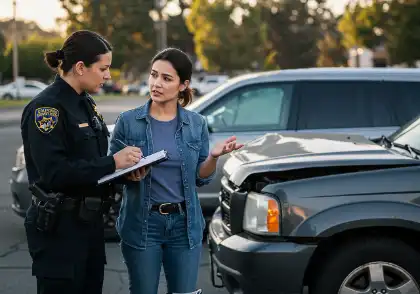
After evidence is collected, each party reviews it to determine who is liable. Victims may receive support from motor vehicle accident lawyers during this process. The following groups commonly conduct investigations:
- Law Enforcement — Police respond when there are injuries, property damage, or fatalities. They document the scene, speak with those involved, and compile a report based on available evidence. Hit-and-run cases may require additional follow-up if the liable driver cannot be identified.
- Insurance Companies — Insurers review the claim to confirm whether their policyholder is responsible for damages. Their assessment typically includes statements, photos, and repair estimates.
- Injury Lawyers — Attorneys who handle personal injury cases may perform independent reviews to clarify fault. They can work with reconstruction specialists and forensic experts when needed to understand how the crash occurred.
Once evidence is evaluated, parties may negotiate compensation. When the fault is clear, discussions are simpler; when several parties are involved, negotiations can take longer.
Evaluating Applicable Laws And Establishing Negligence
Traffic violations such as speeding or running a red light can impact liability if the violation contributes to the crash. However, negligence can also arise from simple carelessness, even when no law is broken. Common types of car accidents include:
- Rear-End Crashes — Tailgating violates the California Vehicle Code and often places fault on the following driver. Rear-end accident lawyers may also examine whether the leading driver contributed to the incident through brake-checking or other reckless behavior.
- Multi-Vehicle Collision — More than one driver may be responsible. Investigators review the sequence of impacts and use reports, witness statements, and expert analysis to determine fault.
- Right Turn Accidents — Right-turning drivers must yield to oncoming traffic. The fault may shift if the other driver entered the intersection while the light was still red. Failure-to-yield accident attorneys consider these circumstances when assessing blame.
- Left Turn Accidents — In left-turn accidents, the turning driver is usually at fault because they must wait for a green turn arrow that grants right-of-way. Fault may shift if the other motorist sped through the intersection or ran a red light.
- Parking Lot Accidents — In parking lot accidents, drivers backing up must yield and move carefully. However, another motorist may be responsible if they sped through the lane or blocked visibility.
- Drunk Driving Accidents — California bars driving with a BAC of 0.08% or more, but impairment must be tied to the crash to establish liability. A drunk driving accident lawyer can review the evidence to determine how alcohol factored into the collision.
- Commercial Vehicle Collisions — In commercial vehicle accidents, fault often falls on the driver. However, companies may also share responsibility if scheduling pressures or hours-of-service violations (in the case of truck accidents) contributed to the crash under California law.
Car accidents can occur in various situations, including at a car wash. Lawyers in car accident cases examine the laws and facts to determine who is liable for the accident. They assess the situation to give a fair evaluation of liability. In most cases, negligence is a major factor.
Negligence In Car Accidents
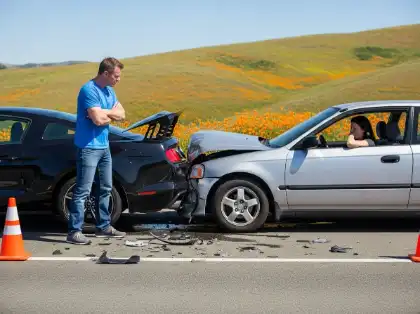
In typical car accident cases, the basis for establishing liability is negligence. Carelessness occurs when one person harms another by failing to take reasonable care or exercise sufficient caution in a given situation. To demonstrate negligence, the victim must show that:
- The Driver Owed a Duty of Care — They had a responsibility to drive safely and follow the law.
- The Driver Breached That Duty — They failed to act as a reasonably careful person would, such as by violating a traffic rule or driving carelessly.
- The Breach Caused the Accident — The unsafe action directly led to the collision.
- The Victim Suffered Damages — These damages include injuries, death, or other losses resulting from the accident.
Assessment of liability is not always straightforward, and considering other factors is an integral part of the decision-making process. Here are some categories of negligence:
- Non-Statutory Negligence — Carelessness can lead to liability even if no law is broken. A driver may follow traffic rules yet still be negligent if they drive while overly tired and fail to pay proper attention.
- Statutory Negligence — When breaking a safety law contributes to a crash, statutory negligence may apply. Under negligence per se, the violation itself can serve as evidence of negligence without the need to prove the usual standard of care.
- Comparative Negligence — More than one party can share fault after a collision. California follows pure comparative negligence, meaning a driver may still pursue damages even if they bear most of the responsibility, depending on the evidence.
Parties may resolve the matter through a settlement; however, the case can proceed to court if an agreement is not reached. An injury lawyer can manage the legal process, gather evidence, and help establish liability.
Who May Be At Fault In A Car Accident?
After evaluating the presence of negligence, insurance companies or courts can determine who is liable, based on the facts of the case. Depending on the circumstances, there are different liable parties in a car accident:
- Driver — Drivers are typically held responsible for car accidents. The evidence determines their liability, such as whether they drove negligently or recklessly.
- Vehicle Owner — In most cases, car insurance follows the vehicle, not the driver. If one person is driving a car owned by someone else, the car owner’s insurance may be responsible for covering damages, depending on the situation.
- Third Parties — There are instances where another party contributed to the accident. These may include:
- Employers or Companies — When a worker causes a crash, including in truck or commercial vehicle accidents. In Uber collisions or Lyft accidents, liability may arise if the company fails to screen or supervise its drivers.
- Vehicle or Parts Manufacturers — May be liable when defective components or mechanical failure contribute to a crash. In that case, product liability could apply instead.
- Government Entities or Contractors — May be held liable when dangerous road conditions, poor maintenance, or a government vehicle cause or contribute to an incident.
If the accident involves a fleeing driver, establishing liability may become more complicated. This situation can be difficult if the authorities fail to locate the potentially at-fault driver. In such cases, hit-and-run accident attorneys can guide victims through their possible options. One option for some people is to pursue an uninsured motorist (UM) insurance claim.
Attorneys who handle uninsured motorist accidents can explain how this type of claim can help victims obtain coverage if the liable party flees the scene. Nevertheless, this may not apply to all, especially if the victim does not have this policy.
Car accident lawyers can check the evidence to find who might be responsible in your case. Once you retain one, you may ask for free accident lawyer advice about your legal options in seeking compensation.
Why Determining Fault Matters In A Car Accident
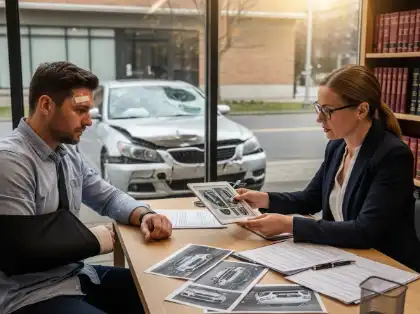
Determining fault is central to the claims process because it identifies who bears legal and financial responsibility for the crash. It establishes who pays for medical treatment, vehicle repairs, and other documented losses, and it guides insurance coverage, whether the claim involves a private driver, a commercial party, or, in some cases, a government agency.
Fault also clarifies legal accountability. When evidence shows a traffic violation or negligent conduct, the responsible party may face civil consequences. If a death occurs, fault determines who must compensate surviving family members. When both drivers contributed to the collision, each party’s recovery is reduced proportionately. Under California’s pure comparative negligence rule, a driver 30% at fault may recover only 70% of their losses.
Compensatory Damages After A Car Accident
If a driver is found liable, you may seek various types of compensation for the harm you suffered. Many victims also ask, “How much are most car accident settlements?” The answer depends on the specific losses you can document, including both economic and non-economic damages.
Economic losses
- Medical treatment and hospital care.
- Rehabilitation, including physical therapy or chiropractic care.
- Lost income during recovery.
- Property damage, including vehicle repair or replacement.
Non-economic losses
- Pain and suffering.
- Disruption to daily life.
- Emotional effects tied to the crash.
If the car accident led to a fatality, eligible family members may be able to pursue a wrongful death claim. Wrongful death lawyers can help surviving family members assess their losses. They can also help them through the filing process of their claim. Losses may include:
- Funeral and burial costs.
- Loss of financial support.
- Loss of gifts and benefits.
A car accident attorney can help victims evaluate the damages they may pursue. Through available documentation and evidence, they can justify these losses to the insurer or the court.
Common Practices Of Insurance Companies When Determining Fault In A Car Accident
Most car accident claims are settled before trial, so it is helpful to understand how insurers review fault and losses. Many people consider getting a lawyer for a car accident because insurers rely on detailed investigations and may dispute certain aspects of a claim. Common practices include:
- On-scene response teams to collect photos, statements, and initial evidence.
- Medical review requests to confirm that the treatment is directly related to the crash.
- Expert consultations with reconstructionists or medical professionals when needed.
- Recorded statement requests to clarify the facts of the collision.
- Processing delays occur in complex cases while additional investigation is conducted.
- Early settlement offers that may not reflect the full extent of documented losses.
- Social media checks to verify consistency with reported injuries and activity.
Insurers must act in good faith, but disputes can arise during the review process. If concerns arise regarding fault or settlement value, car accident lawyers can help clarify the evidence and explain the available options. To know if you have a valid claim, complete our “Do I Have A Case?” form.
Steps That Can Help Your Car Accident Claim And Fault Assessment
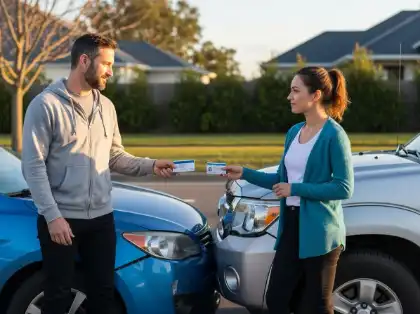
The following recommendations are provided for informational purposes only and should not be considered legal advice.
Taking clear, organized steps after a crash can support your case, strengthen fault assessment, and guide you through early steps to file a personal injury claim if injuries are involved.
- File a police report to document the scene and the involved drivers.
- Seek medical care to verify and record accident-related injuries.
- Take photos of vehicle damage, road conditions, and surroundings.
- Exchange information with the other driver and any witnesses.
- Notify your insurer promptly and provide factual, clear details.
- Consult a personal injury lawyer if injuries or questions about fault create complications.
These actions help preserve key evidence and provide reliable information in the event that fault or coverage is later disputed.
Role Of Car Accident Lawyers In Identifying Who Is At Fault
Lawyers focusing on car accidents can review evidence and help determine who may be responsible. Their work often includes:
- Gathering records, reports, and photos.
- Obtaining harder-to-access footage and documents.
- Reviewing eyewitness accounts.
- Consulting medical professionals.
- Working with reconstruction specialists.
After analysis, lawyers may:
- File claims against liable parties.
- Negotiate with insurers.
- Represent clients in court if required.
This type of support often helps people understand why it is worth getting an attorney for a car accident, especially when the cause of the crash or the responsible party is not immediately clear.
Frequently Asked Questions About How To Tell Who Is At Fault In A Car Accident
It is common for car accident victims to feel overwhelmed about their options and certain processes. Our injury law firm tries to address some of the common legal questions victims may have, particularly about who may be at fault.
How Do You Tell Who Is At Fault In A Car Accident?
Determining fault requires a careful review of all available evidence. Details such as skid marks, footage of the collision, witness accounts, and the precise position of car damage are among this evidence. Other documents, such as police reports, traffic tickets, and job details, can help establish who is at fault. Assessing facts is necessary for determining liability in car accidents. If it is challenging to determine fault in your case, consider consulting an accident lawyer to evaluate your case.
Can Fault Be Challenged?
Yes. Parties involved in an accident have the right to dispute claims. However, the outcome of this depends on the evidence that a party can provide. For example, if you are disputing fault, you must provide clear evidence to support your position. A car accident lawyer helps gather and present evidence to support their client’s case. Legal support is especially useful when it’s hard to determine who is at fault.
What If Multiple Parties Were Responsible For The Auto Accident?
When several drivers are involved, determining fault becomes more complex and depends on the state’s negligence rules.
- Comparative Negligence — Fault is divided by percentage, and compensation is reduced accordingly. States like California follow pure comparative negligence, allowing recovery even when a driver is mostly at fault. Others follow the modified comparative negligence approach, where recovery is barred once fault exceeds a set threshold, such as 50%.
- Contributory Negligence — In a few states, even minimal fault can prevent any recovery.
Because standards differ and multi-party crashes can be challenging to evaluate, an auto accident attorney can review the evidence and explain how fault may impact the available compensation.
What Is The Deadline For Car Accident Injury Claims In California?
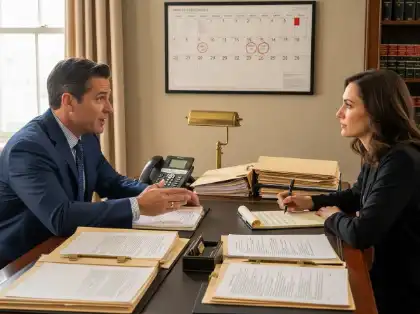
In California, injured victims generally have two years to file a claim. If the case involves only property damage, the deadline is three years. Limited exceptions may extend the timeline:
- Minors — The clock starts at age 18.
- Delayed Injury Discovery — Time begins when the injury is identified or reasonably should have been.
- Wrongful Death — Families have two years from the date of death.
If you are unsure which deadline applies, a personal injury attorney can review the facts and explain the timing.
How Long Does It Take An Insurance Company To Determine Fault?
The timeline for an insurance company to determine fault after a car accident can vary widely. Some cases resolve in a few days, while others can take weeks or even months. The duration depends on factors such as:
- The Complexity of the Accident — Some cases are more complicated to process than others.
- The Availability of Evidence — Other pieces of evidence may be harder to obtain or take longer to finalize.
- Involvement of Multiple Parties — When dealing with multiple individuals, settlement negotiations may take time.
It’s normal to seek a quick solution, especially with rising medical bills and losses. However, it is essential to conduct a thorough assessment of the evidence and liability. Submitting all the required documents, witness statements, and proof helps the insurance company make a fair and quick decision.
Car Accident Lawyers Can Help With The Assessment Of Fault
A car accident lawyer can provide legal support when it comes to identifying who is potentially at fault. If you find yourself suffering from losses after a car accident, consider getting legal support. If you are wondering, “Do lawyers only get paid if they win?” Most of them do.
Here at Arash Law, our car accident attorneys work on a contingency fee basis. This arrangement means that we only charge you attorney’s fees if we obtain compensation on your behalf. However, you may still be responsible for certain case-related costs regardless of the conclusion of the case. One of our accident attorneys can explain this fee structure during your onboarding process.
Proper documentation is crucial when establishing fault in a car accident. To learn about your possible legal options, please call us at (888) 488-1391 or complete our contact form. We offer a free initial consultation for accident victims who want to understand the legal aspects of their case.