TL;DR: If you disagree with an insurance company’s damage estimate, you can request a breakdown, get independent repair quotes, and submit a counteroffer with proof. In California, a car accident lawyer can help dispute low offers, address delays, and advocate for your rights.
Highlights:
- Photograph all damage and save towing, rental, and repair receipts.
- Track insurer timelines: 15 days acknowledge, 40 days accept/deny after documents, 30 days pay.
- Ask the adjuster for the written valuation/estimate methodology and inputs.
- If total loss, submit service records, upgrades, and comparable market listings.
- If “betterment” is cited, get a mechanic note confirming parts are not upgrades.
- Check your policy for an appraisal clause and demand appraisal if needed.
- If the process stays unfair, file a complaint with the California Department of Insurance.
Tip: Keep all claim communications in writing and stick to verifiable facts, avoiding guesses.
Table of Contents
When an insurance company gives you a repair estimate that you don’t agree with, you may question how the estimate was calculated, get outside opinions from licensed repair shops, and push back with supporting evidence. If the issue remains unresolved, a lawyer can step in to help you review the estimate and pursue an outcome based on the evidence.
Here are some things to consider doing if the insurance company’s estimate doesn’t seem right:
- Don’t accept the first offer unquestioningly.
- Request explanation and supporting documentation.
- Get independent estimates from a trusted repair shop or licensed mechanic.
- Submit a counteroffer with additional documents to support your claim.
Speak with experienced car accident lawyers to explore your options.
Depending on the situation, either the at-fault driver’s insurance or your own policy may cover the damages, and knowing if getting rear-ended affects insurance can help you understand your options. Here’s how that usually works:
- At-Fault Driver’s Insurance — This applies if the other driver is found legally responsible and has active liability coverage. Their insurer may be held responsible for paying for your vehicle damage if:
- You are not at fault for the accident.
- There is clear proof that the policyholder caused the accident.
- The damage is within the policy’s coverage limits.
- Your Own Insurance — In some situations, you may be able to file a claim with your insurer if:
- The other driver has no insurance, and you have uninsured motorist coverage.
- The other driver’s insurance does not cover all your damages, and you have underinsured motorist protection.
- It was a hit-and-run, and you have uninsured motorist coverage.
- There is a dispute about fault, and you want your car repaired right away using your collision coverage.
If an adjuster sends you their estimate, remember you’re not required to accept the first offer. Take the time to review the offer and gather evidence. If you need guidance in reviewing the damage estimate, call Arash Law at (888) 488-1391 to determine whether the offer reflects your actual losses.
How To Dispute An Insurance Company’s Car Damage Estimate
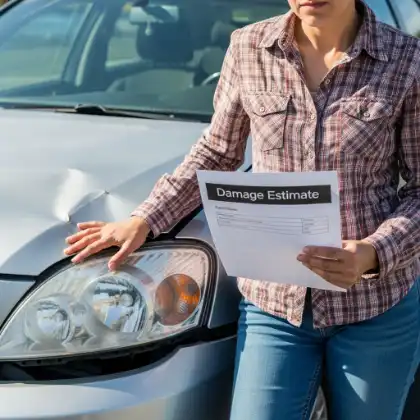
What should you do if your car gets damaged and your insurance company’s repair estimate doesn’t reflect the true extent of the damage? You may be able to dispute the evaluation and push for an accurate assessment of your car’s repair needs. Here’s a quick checklist on how to dispute estimates from insurers:
- Review the estimate carefully.
- Communicate your concerns with the insurer.
- Obtain independent estimates.
- Submit an alternative offer backed by evidence.
Car accident lawyers may assist in creating dispute letters. Negotiation is a normal part of the claims process, and preparation is key. To demonstrate your case, you may do the following:
- Understand Why Insurance Estimates Are Low — Estimates can be low due to policy limits, missing info, or overlooked damage. Ask for a breakdown, point out errors, and explain why you disagree. A car accident lawyer can help draft this response and support you during negotiations.
- Get Independent Repair Estimates — You can get estimates from a licensed repair shop or appraiser. Aim for at least three quotes and compare them to the insurer’s offer. Let your insurance company know early to help avoid delays.
- Present a Counteroffer — After gathering evidence, send a counteroffer with photos, repair estimates, and the police report. Stay polite and clear. A car wreck lawyer can handle the negotiation if needed.
- Watch Out for the “Betterment Argument” — An insurance company may reduce your payout if repairs are deemed to enhance your car beyond its condition before the accident. Obtaining written documentation from your mechanic regarding whether the replacement part is an upgrade can help clarify the situation during the claim review process.
- Understand Total Loss Rules — Sometimes, repairing your car after a crash may not be worth it. If repairing your vehicle costs more than its market value, the insurance company may declare it a total loss. Instead of covering the repair, they will offer a cash payout equal to your car’s fair market value at the time of the crash. To dispute a total loss designation or a low offer:
- Gather Documentation — Provide receipts for recent repairs, photos of upgrades, and service records.
- Use Market Listings — Show comparable vehicles listed for higher values to support your claim.
- Request a Detailed Valuation Report — Ask how the insurer calculated your car’s value and whether they accounted for its condition and mileage.
California follows a total loss formula that compares repair costs and salvage value to your car’s actual cash value. If you believe their numbers are off, a car accident attorney can help you evaluate the insurer’s math and help you pursue compensation based on your injuries and losses.
- Consider Legal Support — You can hire a car accident attorney if you’re still unhappy with the offer and feel the process is unfair or too complex. Lawyers for car accident claims can assist you in:
- Determining an appropriate appraisal of your car’s damage.
- Collecting important evidence that may help address low offers.
- Handling negotiations and advocating for your rights.
Keep in mind that negotiating with insurance companies can take time, much like how long it takes to settle a semi-truck accident, where multiple factors affect the timeline.
- Get the Settlement in Writing — Get the final settlement terms in writing. It should list the amount, what it covers, and any conditions. Review it carefully and ask questions if anything is unclear. A lawyer can help you understand the terms before you sign.
Your Rights When Dealing With Insurance Companies In California
According to the California Department of Insurance (CDI), insurers are required to meet specific obligations during the claims process. They must handle your claim in an honest and fair manner. If your policy covers the damage, the insurer must:
- Explain Your Coverage — They should tell you what your policy covers, what it doesn’t, and how your benefits work.
- Respond Quickly — They must acknowledge your claim within 15 days and accept or deny it within 40 days after receiving your documents.
- Pay Approved Claims Fast — If they approve your claim, they have 30 days to send the payment.
- Cover Reasonable Costs — These include towing, taxes, transfer fees, and other costs related to your car’s repair or replacement.
- Communicate Clearly — They must return your calls and give clear updates on the status of your claim.
While you can’t sue the other driver’s insurance company for “bad faith,” they still must handle your claim fairly if their driver caused the crash. You can only bring a bad-faith claim against your insurer.
Suppose you feel your insurance company didn’t meet its responsibilities. In that case, you may be able to take legal action, similar to what you would do if you disagreed with a QME report in a workers’ comp case, where formal dispute steps are available. Carlsbad personal injury lawyers can help you determine if your rights were violated and what steps to take next.
Signs Of Insurer Bad Faith

If the company refuses to reconsider or ignores your proof without a good reason, they may be acting in bad faith. Examples include:
- Delaying your payout without a good reason.
- Failing to investigate your claim fully.
- Ignoring your calls or not updating you.
- Denying your claim without a proper explanation.
- Misrepresenting what your policy covers.
- Refusing a fair settlement offer for a valid claim.
Note: If your insurance company delays or denies a valid claim, you may have the option to file a dispute in small claims court. You may also be able to pursue legal action against the insurer for any breach of its duties under California law. Lawyers for car accidents can investigate your case and determine if the insurance company acted in bad faith.
File A Complaint With The California Department Of Insurance
If you have tried to dispute your car insurance adjuster’s offer and still think the company is acting unfairly, you can file a complaint with the California Department of Insurance. The CDI requires insurance companies to follow state laws and treat customers fairly. They review complaints and determine if an insurance company broke the rules.
Before you file a complaint, gather all the important documents, such as:
- Police accident reports.
- Emails or letters from your insurance company.
- Proof of car damage and repair estimates.
- Other paperwork that supports your case.
Write a clear, step-by-step explanation of your claim and the problems you had. The CDI takes complaints seriously, especially regarding claim denials or settlements that do not reflect the value of the damage reported.
The agency only enforces regulations, and only the claimants may directly file a legal action against the insurance company. Car accident lawyers may use the findings of the CDI to help support a bad faith claim.
Deadline For Filing Bad Faith Claims
If your insurance company delays your claim or gives you an unfair damage estimate without a valid reason, you may have a bad-faith case. In California, these claims usually fall under breach of a written contract, meaning the insurer didn’t follow the terms of your policy.
You typically have four years from the date your claim was denied to file a bad faith lawsuit.
Filing a civil case may take time and resources. If you’re unsure whether your situation qualifies, fill out our “Do I Have A Case?” form here. Our car accident lawyers can review your claim and explain what steps you can take.
How The Appraisal Clause Can Help Settle Disputes

When there is a dispute over how much an insurance company will pay if your car is declared a total loss after an accident, the appraisal clause may be used. If your car insurance policy includes this clause, you can formally demand a third-party appraisal to settle a disagreement over the payout offer.
Here’s how it works:
- You may be able to demand an appraisal if you believe the insurance company undervalued your total loss.
- Both you and the insurer select an independent appraiser.
- These appraisers try to agree on a fair market value for your vehicle.
- If they can’t reach a consensus, they bring in a neutral umpire who makes the final, binding decision.
The result of this process is legally binding, meaning the insurer must honor the outcome. You’ll need to pay the appraiser fee and possibly an umpire fee.
The appraisal clause can be beneficial when you’re facing a low or unfair damage estimate and want an impartial resolution without filing a lawsuit. However, not all policies include this clause, so review your insurance documents or speak with a car accident lawyer to see if it applies to your situation.
Frequently Asked Questions About Unfair Car Damage Estimates
Disputes over car damage estimates are more common than many drivers realize. Below are some of the common questions about the claims process for auto collisions.
Whether you’re dealing with a low offer or delays in your claim, our car accident attorneys can help you understand your rights and options. Contact us if you have any inquiries.
What Compensation Can I Pursue From A Bad Faith Claim?
If your insurance company acted in bad faith by refusing to pay a valid claim under your policy, you may have grounds to seek compensation. Depending on your situation, this may include:
- The full amount you should have received under your coverage.
- Any out-of-pocket costs you paid because the insurer failed to act.
- Legal costs of trying to seek the benefits you were promised.
- Damages for emotional distress caused by the delay or denial.
- In serious cases, the insurer may face punitive damages if it knowingly and willfully withheld payment.
Refusing to pay for covered losses without a fair reason seriously violates the insurer’s duty under California law. Car accident attorneys can review available evidence and documentation to assess whether a bad faith claim may be supported. They can also assist you in calculating the damages you incurred. Out-of-pocket costs may include expenses not covered by auto policies, so understanding whether health insurance covers car accident injuries can also help.
How Does The Insurance Company Evaluate Vehicle Damage?

When you file a claim, the insurance company sends an adjuster to look at your car. The adjuster will:
- Check the damage.
- Take photos of the vehicle.
- Write a report with a repair estimate.
If the repair shop finds more damage during the process, they will contact the insurance company for approval to fix it. The insurance company might send another adjuster to check or ask for more repair quotes. Once the final estimate is approved and you agree with it, you can give the repair shop permission to start fixing your car.
What Is A Diminished Value Claim In California?
Even if the repairs fully restore the car’s function and appearance, its resale value often drops because it already has an accident history. Buyers may offer less money because they think it’s not safe to buy a car that has been in an accident. They may worry about hidden issues or poor-quality work, even if the car seems fine. A diminished value claim seeks compensation for this loss in market value.
In California, you may be able to pursue a diminished value claim against the at-fault driver’s insurance company. Many first-party auto policies exclude this type of compensation. When deciding on the diminished value, insurance companies look at the following:
- The car’s accident history.
- The severity of the damage.
- The quality of the repairs.
What Is Subrogation?
Subrogation is when your insurance company pays for your repairs and then seeks reimbursement from the driver who caused the accident. You may be asked to provide information to support this process. Signing a release for the at-fault driver before your insurer recovers its costs may affect your ability to seek reimbursement for your deductible.
What Is The Appraisal Clause?
Many standard auto insurance policies include an appraisal clause, which applies when you and the insurer can’t agree on the value of a total loss. Under this clause, both sides hire independent appraisers.
If those appraisers still can’t agree, both parties can choose a neutral third-party umpire. A decision agreed upon by any two of the three becomes binding. Each side pays for its appraiser and splits the umpire’s fee equally.
What Is A “Covered Risk”?
A covered risk is an event, condition, or type of damage that your insurance policy specifically agrees to protect you against. If the loss falls under a covered risk, your insurance company should pay for repairs or other expenses up to the policy limits. For example, if your auto policy includes collision coverage, property damage from a motor vehicle accident is a covered risk.
In California, courts look at the exact words in your insurance policy to decide if a risk is covered. They use these words to figure out what you could reasonably expect from your coverage. If the wording is unclear or open to interpretation, the court may side with you, the policyholder.
When Should I Consider Hiring An Attorney?
You may want to consider hiring an attorney if you encounter any of the following:
- Serious Injuries — Traumatic brain injuries, fractures, or long-term care needs can complicate claims. Auto accident lawyers work to review all medical costs and take them into account when filing a claim.
- Disputed Liability — If fault is unclear, attorneys can gather evidence and clarify responsibilities.
- Low Damage Estimates — If repair or replacement costs exceed the insurer’s estimate, attorneys can obtain independent appraisals and supporting documentation.
- Delays or Denials — If you encounter delays or denials in your claim, legal guidance can help identify next steps. Uber accident lawyers often handle cases where rideshare policies complicate coverage.
- Complex Policies — Vehicles like motorcycles may have unique coverage issues. Motorcycle accident lawyers can help interpret policies and consider all damages.
Professional guidance can help address disputes and clarify your options. Personal injury attorneys can review your claim, collect evidence, negotiate with insurers, and represent your interests.
Reach Out To Arash Law To Help Address A Damage Estimate

If you believe your insurance company undervalued your car damage, our experienced lawyers for car accident claims are ready to help. Arash Law works with independent professionals to assess the true cost of your vehicle damage. We also investigate whether the insurance company has acted in bad faith or unfairly delayed your claim.
If you’ve been thinking, “I need a personal injury lawyer,” consider consulting an attorney to explore your options. Many clients also ask, “Does auto insurance pay for an accident attorney?” This is a key question that can impact how legal costs are handled. With years of experience handling these cases, we are committed to helping clients seek compensation for their injuries and losses from the at-fault parties.
Call us at (888) 488-1391 for a free initial consultation. We work on a contingency fee basis. You don’t pay attorneys’ fees up front. Our car accident attorneys only get paid if we recover compensation on your behalf. We will also explain the details of your fee arrangement before you sign with us.