TL;DR: Yes, you can sue a homeowner after being injured at a Christmas party if their negligence caused your injury. California premises liability law holds homeowners responsible when guests get hurt due to unsafe conditions, but evidence is essential to prove their fault.
Highlights:
- Get medical care quickly to document injuries and start a treatment record.
- Photograph or video the hazard before it’s cleaned or repaired.
- Report the incident to the homeowner, then confirm details in writing.
- Save damaged clothing, shoes, and all bills, receipts, and prescriptions.
- Collect witness names and ask whether any doorbell or security footage exists.
- Ask about the homeowner’s policy medical payments (Coverage F) and liability limits.
- Track California’s 2-year filing deadline; minors and delayed discovery can extend.
Tip: When speaking with insurers, stick to what you know firsthand and keep copies of everything you submit.
Table of Contents
You can sue a homeowner after being injured at a Christmas party if evidence shows their negligence contributed to the incident. California’s premises liability rules require property owners to correct or warn guests about unsafe conditions that they knew, or should have known, about. A homeowner may be responsible if they:
- Were aware or should reasonably have been aware of a hazard.
- Failed to repair, block off, or warn visitors about the danger.
- Did not maintain safe conditions that a reasonable homeowner would have addressed.
However, suing is not the only option. Many homeowners have insurance that may cover medical bills or losses related to injuries. If an insurance company disputes liability or refuses to pay a fair amount of compensation, a lawsuit may become necessary, depending on the unique facts of the case.
If you are unsure whether you have a claim after a Christmas party injury, our premises liability attorneys at the AK Law Firm can evaluate the circumstances and explain your options. Call (888) 488-1391 or complete our contact form to schedule a free initial consultation.
Understanding Homeowner Liability For Christmas Party Injuries
Under the California Civil Code, homeowners must use reasonable care to keep their property safe for guests. Visitors fall into three general categories:
- Invitees — Invitees enter for the homeowner’s benefit or a mutual purpose. Homeowners owe them a high duty of care, including inspecting the premises and addressing hazards.
- Licensees — Licensees enter for their own purposes, such as friends attending a Christmas party. Homeowners must warn them of known dangers that may not be obvious.
- Trespassers — Trespassers enter the property without permission. Homeowners generally owe them minimal duties, except for avoiding intentional harm. Special considerations may apply to child trespassers.
Most Christmas party guests qualify as invitees or licensees, meaning the homeowner must maintain safe conditions and warn them about any hazards they are aware of. Injured guests may file a personal injury claim if they sustained injuries due to unsafe conditions on someone else’s property.
It’s also important to note that homeowners can be liable if someone gets hurt while working on their property. These situations might arise during Christmas parties if the homeowner has hired a catering company or brought in a contractor to make repairs before the event.
When Does A Homeowner Become Liable For The Injuries At A Christmas Party?
To prove negligence in a premises liability case, all of the following must be shown:
- Duty of Care — The homeowner was responsible for maintaining a reasonably safe environment.
- Breach of Duty — They knew or should have known about a dangerous condition and failed to fix it or warn guests.
- Causation — Their inaction directly contributed to the injury.
- Damages — The victim suffered measurable losses, including medical bills and lost wages.
Injuries can also occur at vacation rentals, such as Airbnb properties used for holiday gatherings. Airbnb accident lawyers can help victims understand how to pursue compensation for their claims. Often, insurance can cover liability for vacation rentals.
Homeowners may also be liable for injuries caused by intentional acts or pranks if they failed to control unsafe behavior or ignored obvious risks. Injury attorneys can help identify which legal concepts apply.
Typical Hazards That Can Cause Injuries During A Christmas Party At Home
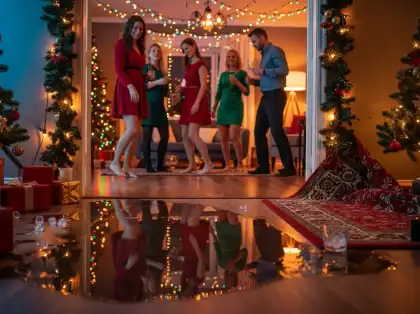
Holiday gatherings create conditions that increase the likelihood of hazards. Common risks include:
- Slippery Floors — Indoor spills, wet walkways, and slick patios can create fall risks if not promptly addressed. Slip-and-fall accident lawyers can assess if the owner ignored these hazards.
- Falling Objects — Improperly secured decorations, shelves, or holiday displays may fall and cause head injuries, fractures, or other serious harm.
- Burns — Fireplaces, candles, and cooking areas can cause burn injuries when homeowners fail to take reasonable safety precautions.
- Toy-Related Injuries — Dangerous or defective toys can cause choking or cuts, especially for children. Homeowners may be liable if they knowingly provide unsafe items. If the toy itself is faulty, the claim may shift toward product liability, which holds manufacturers, distributors, and retailers responsible for hazardous products. This applies even when the homeowner did nothing wrong.
- Dog Bite Incidents — California follows a strict liability rule for dog bites. If the homeowner’s dog bites a guest, they are generally responsible, even if the animal had no history of aggression. Liability may also arise if a homeowner knowingly allows a dangerous dog on the property.
- Other Risks — Choking hazards, unsafe party games, or overcrowded areas may create liability when homeowners fail to take reasonable steps to keep guests safe. Special parties with access to a swimming pool introduce additional dangers. In the event of an accident, swimming pool accident lawyers can help clarify liability and explore compensation options.
Social Host Liability And Alcohol-Related Injuries
Alcohol can contribute to accidents or altercations. Liability depends on the circumstances:
- Intoxication-Related Conflicts — If a homeowner continues serving visibly intoxicated guests who later cause harm, liability may arise depending on the circumstances surrounding the incident.
- Driving under the Influence — California’s dram shop laws limit social host liability. Still, homeowners may be responsible if they knowingly provide alcohol to minors who later injure themselves or others in a car crash.
Alcohol-related cases can be complicated, but skilled car accident lawyers can assess liability based on the facts of your case. If the accident occurs on your way home, such as during a rideshare trip, the homeowner is typically not liable. In such cases, passengers can sue Uber or Lyft, depending on how the accident occurred.
What Can You Do To Support Your Injury Claim Against The Homeowner?
If you think negligence caused your injuries, it may help to know what you should do if you’re injured on someone else’s property. These general steps can help strengthen your potential holiday party injury claim:
- Get Prompt Medical Attention — Prompt treatment documents your injuries and helps support your claim.
- Document the Scene — Photograph hazards such as spills, broken stairs, or loose decorations. For instance, if someone is hurt because of a slippery floor, slip-and-fall lawyers can examine photos or videos to determine whether the floor actually contributed to the accident.
- Report the Incident — Notify the homeowner and follow up in writing to create a record.
- Preserve Evidence — Keep damaged clothing, receipts, and medical bills, including costs for chiropractic care, physical therapy, or other treatment.
- Follow the Treatment Plan — Consistent care helps prevent disputes about your recovery.
- Consult a Premises Liability Attorney — A personal injury lawyer can gather evidence, review insurance coverage, and advise you on next steps. Some examples of proof needed:
- Witness statements
- Photos, videos, or surveillance footage
- Maintenance records
- Building code references
Premises liability lawyers can also estimate damages to determine the potential value of a claim. If necessary, they can assist in filing a lawsuit against the homeowner.
When To Contact A Personal Injury Attorney

It is normal to wonder, “Do I need a personal injury lawyer?” after an accident at a Christmas party. You may need lawyers who handle injury cases if:
- Your injury is catastrophic and causes long-term disability or requires surgery.
- Insurance offers are too low to cover losses.
- The homeowner denies responsibility or blames you.
- Multiple insurance providers are involved.
- Your claim is delayed, undervalued, or denied.
Accident lawyers can evaluate fault, gather supporting evidence, and explain your legal rights.
Frequently Asked Questions (FAQs)
Below are some answers to frequently asked legal questions about getting injured on someone else’s property. If you need personalized guidance, call us at (888) 488-1391 to schedule a free initial consultation with one of our experienced accident lawyers.
Can You Sue A Homeowner After Being Injured At A Christmas Party?
Yes, you can sue a homeowner if your injury resulted from unsafe conditions on their property, and you can show that their negligence contributed to the incident. In California, premises liability applies when someone gets injured because a property owner fails to maintain reasonably safe conditions or to warn guests about known hazards. If evidence shows that the homeowner did not take reasonable steps to address a dangerous condition, they may be legally responsible for the resulting injuries.
Does Homeowners Insurance Cover Injuries To Guests?
Homeowner’s insurance typically covers injuries to visitors at a California home. According to the California Department of Insurance, this policy (under Coverage F) covers accidental injuries on your property. It pays for reasonable medical expenses. If a guest slips and gets injured at your Christmas party, this policy might help cover their medical bills. However, medical payments coverage does not apply when:
- You or anyone in your household sustained the injuries.
- There is business activity involved in the incident.
- The harm is intentional.
This coverage does not replace health insurance. It also depends on the specific terms of the policy. A premises liability lawyer can help victims review the policy and determine what damages they can pursue.
What Is The Deadline To File A Personal Injury Claim In California?
Victims typically have two years from the date of the accident to file a personal injury claim in California, as mandated by the statute of limitations. In some instances, exceptions may apply:
- For minor victims, the two-year period will not begin until they turn 18. Nevertheless, parents or legal guardians can pursue a case on their behalf until then.
- For delayed discovery injuries, the statute of limitations begins from the date of discovery of the injury, not the date of the incident.
An attorney who focuses on injury cases can explain this legal deadline and assess what may apply to your case. They can also assist with the filing process, taking into account these potential deadlines.
How Much Does A Lawyer Charge In California?
The cost depends on the complexity of the case. If the case requires further investigation and additional resources, the amount of attorney’s fees may be affected. If the case gets to court, the process may take longer, which may also impact the cost.
Most personal injury lawyers work on a contingency fee basis. Under this arrangement, they only get paid if they can recover compensation for your injury case, and you won’t have to pay upfront attorney’s fees. So, if you wonder, “Do lawyers only get paid if they win?” they do under this type of fee structure. Note that clients may still be responsible for certain costs associated with their cases, even if the outcome is unfavorable to them.
What Happens If Both The Guest And The Homeowner Share Fault?
California uses a pure comparative negligence system. This tort principle means that victims can still pursue compensation even if they share some degree of fault. However, the amount they can receive from the settlement will depend on their portion of blame. Take, for example, a slip-and-fall accident. If you were 20% at fault due to carelessness, the court would reduce your damages by 20%.
These situations can be challenging to handle. Victims may consider seeking free legal advice from an accident lawyer to understand their options. Injury lawyers can provide valuable guidance and advocate for a fair assessment of liability.
Can I Still Sue, Even If I Signed A Waiver To Attend The Party?
Yes, you may still be able to sue in certain situations. Waivers do not protect homeowners from claims involving gross negligence, known unsafe conditions, or intentional harm. The strength of the waiver also depends on its composition and whether it applies to the specific incident in question. Attorneys for personal injury cases can review the waiver to determine whether it limits your rights.
Injured At A Christmas Party? Talk To Our Premises Liability Lawyers
People injured at holiday events can seek compensation if negligence contributed to their injuries. Homeowners can be held responsible if they fail to address hazards or warn guests about unsafe conditions. Potential damages for injuries include medical expenses, lost wages, and emotional distress.
Our injury attorneys for premises liability cases can help victims understand their situation and evaluate potential claims. If you are unsure whether your case is valid, you can complete our “Do I Have A Case?” form for a free assessment. Call our injury law firm at (888) 488-1391 to schedule a free initial consultation.